Haircare Guide — Finasteride and Minoxidil for Hair Loss Treatment
Hair loss affects millions worldwide - approximately 85 percent of men and 50 percent of women experience noticeable hair loss during their lifetime. Modern medicine offers effective treatments backed by decades of research. This comprehensive guide covers the two main FDA-approved treatments: finasteride (Finax, Finpecia, Propecia, Healpecia, Prosacar) and minoxidil (Morr, Lonitab, Minoxiboon) - with mechanisms, expected results, side effects, and safety.
🧬 Understanding Hair Biology
The average human scalp contains 100,000-150,000 hair follicles, each cycling independently through growth phases. Losing 50-100 hairs daily is normal - the concern is when regrowth cannot keep pace with loss.
The Hair Growth Cycle
- Anagen phase (growth): 2-7 years - 85-90 percent of hairs at any time
- Catagen phase (transition): 2-3 weeks - hair stops growing
- Telogen phase (rest): 3-4 months - old hair shed
- Exogen phase (shedding): hair falls out naturally
- New cycle begins
Hair Structure
- Follicle - deep skin structure producing hair
- Papilla - blood supply at base
- Bulb - actively dividing cells
- Shaft - visible hair portion
- Cortex - main hair material
- Cuticle - protective outer layer
- Sebaceous gland - produces natural oils
Fascinating hair facts:
- Hair grows approximately 1 cm per month
- Hair color comes from melanin (eumelanin dark, pheomelanin red)
- Second fastest growing tissue in the body
- Hair strand strength supports 100 grams
- Full head of hair could support 12 tons
- Hair is dead tissue - only follicles are alive
- Genetics determine color, texture, pattern loss
- Blondes have more hairs (140,000) than brunettes (110,000) or redheads (90,000)
📊 Hair Loss Statistics
| Statistic | Numbers |
|---|---|
| Men affected by androgenetic alopecia | Approximately 50 percent by age 50 |
| Women affected | Approximately 40 percent by age 50 |
| Men affected by age 35 | Approximately 40 percent |
| Global male pattern baldness | Over 800 million men |
| Normal daily hair loss | 50-100 hairs per day |
| Hair loss market globally | Over 8 billion USD annually |
| Finasteride effectiveness | 83 percent see maintenance or regrowth |
| Minoxidil effectiveness | 60-70 percent see improvement |
| Time to visible results | 3-6 months typically |
| Alopecia areata prevalence | 2 percent lifetime risk |
🧠 Types of Hair Loss
Androgenetic Alopecia (Pattern Baldness)
Most common type - genetically determined, hormone-mediated hair loss.
- Male pattern: receding hairline, crown thinning, "M" shape
- Female pattern: diffuse thinning on top, part widening
- Progressive over years
- Related to DHT (dihydrotestosterone)
- Genetic predisposition strong
- Responsive to finasteride and minoxidil
Telogen Effluvium
- Sudden diffuse hair shedding
- Triggered by stress, illness, childbirth, medications
- Usually temporary
- Recovery in 6-12 months typically
- Not permanent
Alopecia Areata
- Autoimmune condition
- Sudden round bald patches
- Can progress to total baldness (alopecia totalis)
- Different treatment approach
- Sometimes spontaneous recovery
- Newer treatments available (JAK inhibitors)
Traction Alopecia
- Caused by tight hairstyles
- Braids, ponytails, extensions
- Reversible if caught early
- Permanent if chronic
- Prevention through gentle styling
Anagen Effluvium
- Rapid hair loss during growth phase
- Usually from chemotherapy
- Radiation therapy
- Poisoning
- Usually reversible after cause removed
Cicatricial (Scarring) Alopecia
- Permanent hair loss with scarring
- Various inflammatory causes
- Requires specialist care
- Early treatment important
- Scarring irreversible
💊 Finasteride - Complete Guide
Finasteride is a 5-alpha reductase inhibitor - a hormone-based treatment for male pattern baldness. Approved by FDA in 1997 for hair loss, based on decades of prostate research.
How Finasteride Works
- Blocks Type II 5-alpha reductase enzyme
- Prevents testosterone conversion to DHT (dihydrotestosterone)
- Reduces scalp DHT levels by 60-70 percent
- Serum DHT reduced by 70 percent
- Protects follicles from DHT damage
- Follicles recover and produce thicker hair
- Miniaturization process reversed
Finasteride Products on RXshop.md
- Propecia
- Original brand-name finasteride from Merck. First finasteride approved for hair loss (1997). Gold standard reference product.
- Finpecia (1mg)
- Generic finasteride from Cipla. Established brand internationally. Same active ingredient at same dose.
- Finax (1mg)
- Generic finasteride from Dr. Reddy Laboratories. Cost-effective alternative to brand-name Propecia.
- Healpecia (5mg)
- Higher dose finasteride from Healing Pharma. Higher-strength option (may be split as needed under medical guidance).
- Prosacar (5mg - Fincar)
- Higher-strength finasteride from Cipla (Fincar). Commonly used in various medical contexts.

Expected Results with Finasteride
| Timeframe | Expected Effect |
|---|---|
| First month | DHT levels drop, may see initial shedding |
| 3 months | Hair loss slowing |
| 6 months | Visible improvements begin |
| 12 months | Peak visible effect (thicker, denser hair) |
| Long-term | Continued maintenance requires ongoing use |
Side Effects
Finasteride side effects (uncommon):
- Decreased libido - approximately 2 percent
- Erectile difficulties - approximately 1-2 percent
- Decreased ejaculate volume
- Breast tenderness or enlargement (rare)
- Skin rash (rare)
- Depression or mood changes (reported)
- Post-finasteride syndrome - persistent symptoms (rare, controversial)
Important Warnings
Finasteride critical warnings:
- NEVER for pregnant women - causes birth defects in male fetuses
- Women should NOT handle crushed/broken tablets
- Not indicated for women (women use different treatments)
- Reduces PSA levels by 50 percent (affects prostate cancer screening)
- Report to doctor if planning PSA test
- Discontinue if planning family (allow washout)
💧 Minoxidil - Complete Guide
Minoxidil was originally developed as a blood pressure medication in the 1960s. When hair growth appeared as a side effect, the topical formulation was developed for hair loss in 1988.
How Minoxidil Works
- Direct vasodilator effect on scalp
- Increases blood flow to follicles
- Opens potassium channels
- Prolongs anagen (growth) phase
- Shortens telogen (resting) phase
- Stimulates dormant follicles
- Increases follicle size
- Requires conversion to minoxidil sulfate (active form)
Minoxidil Products on RXshop.md
- Morr (12.5% topical solution, 60ml)
- High-strength topical minoxidil from Intas Pharmaceuticals. Applied directly to scalp twice daily. Standard formulation.
- Lonitab (2.5mg oral)
- Low-dose oral minoxidil. Alternative for those who cannot use topical. Off-label use for hair loss (originally for hypertension).
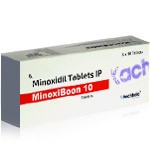
- Minoxiboon (10mg oral)
- Higher-dose oral minoxidil from Kachhela Pharmaceuticals. Requires careful dosing and medical supervision.

Topical Minoxidil Application
- Clean and dry scalp before applying
- Apply directly to affected areas
- Use fingertips to massage into scalp gently
- Do NOT rinse off
- Wash hands immediately after
- Wait for solution to dry (30 minutes minimum) before styling
- Apply twice daily (morning and evening)
- Consistency is critical
Oral Minoxidil Considerations
Oral minoxidil precautions:
- Off-label use for hair loss
- Originally a potent blood pressure medication
- Requires medical supervision
- Cardiac effects possible
- Blood pressure monitoring important
- Start with low dose
- Not for cardiac patients without evaluation
- Watch for fluid retention
- Report chest pain immediately
Minoxidil Side Effects
Common side effects:
- Topical: scalp irritation, itching, dryness, flaking
- Initial shedding ("dread shed") in first 2-8 weeks - actually indicates working
- Facial hair growth (from contact with face)
- Contact dermatitis in some people
- Oral: unwanted body hair growth, fluid retention, rapid heart rate
- Rare: chest pain, headache, dizziness
⚖ Finasteride vs Minoxidil Comparison
| Feature | Finasteride | Minoxidil |
|---|---|---|
| Type | Oral tablet | Topical (or oral off-label) |
| Mechanism | Blocks DHT production | Vasodilator, prolongs growth |
| Approved for | Men only | Men and women |
| Effectiveness | 83 percent see improvement | 60-70 percent see improvement |
| Application | Once daily orally | Twice daily topically |
| Time to results | 3-6 months | 3-6 months |
| Best for | Crown thinning, prevention | Overall thinning |
| Convenience | Very convenient (pill) | Less convenient (twice daily) |
| Main side effects | Sexual (low percent) | Scalp irritation |
| Duration of use | Lifelong for continued effect | Lifelong for continued effect |
🤝 Combination Therapy
Using finasteride AND minoxidil together is standard practice for maximum results. Combined approach addresses hair loss through different mechanisms.
Why Combined Treatment Works Better
- Different mechanisms complement each other
- Finasteride prevents further loss
- Minoxidil promotes new growth
- Higher combined success rates
- Better regrowth patterns
- Standard of care for advanced pattern loss
Combined Treatment Regimen
- Finasteride 1mg oral once daily
- Minoxidil 12.5% topical twice daily
- Consistent daily use
- Give 6-12 months for results
- Continue indefinitely for maintenance

👨 Male Pattern Baldness Details
Norwood Scale (Male Pattern Baldness Stages)
| Stage | Description |
|---|---|
| Type 1 | No significant hair loss |
| Type 2 | Slight temple recession |
| Type 3 | Significant temple recession, deeper "M" shape |
| Type 4 | Frontal and crown loss with connecting bridge |
| Type 5 | Advanced loss, thin bridge separates areas |
| Type 6 | Bridge disappears, wider bald area |
| Type 7 | Most severe, only sides and back remain |
Genetics of Male Pattern Baldness
- Complex polygenic inheritance
- NOT solely from mother side (common myth)
- Multiple genes involved
- Both parents contribute
- AR gene on X chromosome major factor
- PAX1 gene also implicated
- Runs in families
- Not always predictable
Best Time to Start Treatment
- Earlier the better - preventing loss easier than regrowing
- Once notice thinning or receding
- Before extensive loss
- Age is not limiting factor
- Most effective at Norwood 2-4
- Advanced loss (6-7) harder to treat
👩 Female Hair Loss
Female Pattern Hair Loss (FPHL)
- Diffuse thinning over top of scalp
- Part gets wider
- Ponytail feels thinner
- Frontal hairline usually preserved
- Ludwig Scale for classification
- Onset often around menopause
- Can begin in 20s or 30s
Treatment Options for Women
- Topical minoxidil - approved, effective for women
- Various strengths available
- Finasteride NOT approved for women (pregnancy risk)
- Spironolactone (off-label, prescription)
- Nutritional evaluation
- Hormone evaluation
- PRP (platelet-rich plasma)
- Hair transplant if candidate
Common Causes of Hair Loss in Women
- Genetic (female pattern)
- Hormonal changes (menopause, postpartum, thyroid)
- Iron deficiency
- Vitamin deficiencies
- Stress
- Autoimmune conditions
- Medications (chemotherapy, blood thinners)
- Hair styling practices
- Weight loss
🍴 Nutrition and Hair Health
Key Nutrients
| Nutrient | Function | Sources |
|---|---|---|
| Protein | Keratin building block | Meat, fish, eggs, legumes |
| Iron | Oxygen delivery to follicles | Red meat, spinach, lentils |
| Zinc | Hair growth and repair | Seafood, seeds, nuts |
| Biotin (B7) | Keratin production | Eggs, nuts, seeds |
| Vitamin D | Follicle cycling | Sunlight, fatty fish, fortified foods |
| Omega-3 fatty acids | Scalp health | Fatty fish, flaxseeds, walnuts |
| Vitamin B12 | Cell division | Meat, dairy, fortified foods |
Scalp Care Tips
- Gentle cleansing (not excessive washing)
- Avoid harsh chemicals
- Use sulfate-free shampoos
- Massage scalp regularly (increases blood flow)
- Avoid tight hairstyles
- Protect from sun exposure
- Reduce heat styling
- Address dandruff/scalp conditions
- Wash pillowcases regularly
- Sleep on satin/silk pillowcases
🤔 Common Myths About Hair Loss
- Myth: Baldness comes from mother side only
- Fact: Both parents contribute. Multiple genes involved. Simple X-linked inheritance not accurate. Complex polygenic pattern.
- Myth: Wearing hats causes hair loss
- Fact: Normal hat wearing does NOT cause hair loss. Extremely tight hats causing constant pulling might contribute to traction alopecia over years.
- Myth: Frequent shampooing causes hair loss
- Fact: Shampooing doesn't cause hair loss - already-shed hairs are simply washed out. Cleanliness supports healthy scalp environment.
- Myth: Cutting hair makes it grow faster
- Fact: Hair grows from follicles at fixed rate. Cutting affects appearance/thickness but NOT growth rate. Trimming prevents split ends damage.
- Myth: Stress alone causes permanent hair loss
- Fact: Stress causes telogen effluvium - USUALLY REVERSIBLE. Chronic severe stress may worsen genetic hair loss patterns.
- Myth: Natural remedies as effective as medications
- Fact: Only finasteride and minoxidil are FDA-approved with proven efficacy. Natural remedies may support health but rarely reverse pattern baldness.
🚨 When to See a Doctor
See doctor promptly for:
- Sudden or patchy hair loss
- Hair loss with other symptoms (fatigue, weight changes)
- Scalp itching, redness, or scaling
- Painful areas on scalp
- Signs of infection
- Rapid extensive shedding
- Suspected medication side effects
- Hair loss beginning in childhood
- Family history of severe hair loss
What to Expect at Evaluation
- Detailed history
- Physical examination of scalp
- Family history assessment
- Possible pull test
- Blood tests (thyroid, iron, hormones, vitamin D)
- Scalp biopsy sometimes
- Trichoscopy (magnified scalp examination)
- Treatment plan discussion
Advanced Treatment Options
- Hair transplantation - permanent restoration
- PRP (platelet-rich plasma) - concentrated growth factors
- Low-level laser therapy - light-based stimulation
- Scalp micropigmentation - cosmetic solution
- Prescription medications beyond OTC options
- Newer therapies - JAK inhibitors for alopecia areata
🌟 Key Takeaways
Essential points about hair loss treatment:
- Two FDA-approved treatments: finasteride and minoxidil
- Finasteride (Propecia, Finpecia, Finax, Healpecia, Prosacar) - oral, DHT blocker
- Minoxidil (Morr, Lonitab, Minoxiboon) - topical/oral vasodilator
- Combined therapy most effective
- Results take 3-6 months to appear
- Continuous use required for maintenance
- Early treatment gives best results
- Finasteride NOT for pregnant women or women trying to conceive
- Sexual side effects with finasteride uncommon but possible
- Topical minoxidil safer than oral
- Oral minoxidil requires medical supervision
- Address nutrition and scalp health
- Multiple causes of hair loss - accurate diagnosis important
- Advanced options: transplant, PRP, laser
- Manage expectations - treatment slows/reverses but not always cures
- Consistent use crucial for results
Important Medical Disclaimer: This educational guide provides general information about hair loss and hair care medications and does not constitute individualized medical advice. Finasteride is FDA-approved for men with androgenetic alopecia and is CONTRAINDICATED in women, especially those pregnant or of childbearing age - can cause birth defects in male fetuses even from handling crushed tablets. Sexual side effects (decreased libido, erectile difficulties) occur in small percentage of men and usually resolve with discontinuation, though rare persistent effects reported (post-finasteride syndrome remains researched). Reduces PSA by 50 percent - inform doctors before prostate cancer screening. Topical minoxidil (Morr) is FDA-approved for both men and women. Oral minoxidil (Lonitab, Minoxiboon) originally developed as antihypertensive medication - hair growth is off-label use requiring careful medical supervision with blood pressure monitoring, especially at higher doses. Cardiac side effects possible including tachycardia, fluid retention, potential heart failure exacerbation. Not for patients with cardiac conditions without specialist evaluation. Both medications require continuous use for maintenance - discontinuation results in hair loss returning. Combination therapy standard for maximum results. Individual response varies. Complete evaluation important to rule out other causes of hair loss (thyroid disease, nutrient deficiencies, autoimmune conditions). Advanced hair loss may benefit from transplant surgery. Emotional impact of hair loss real - support and counseling available. All medications require prescription and appropriate medical evaluation. Information here should complement but never replace direct professional guidance from qualified dermatologists and healthcare providers.
More Hair Care Medications