Cacosmia and Parosmia: Why Things Smell Rotten and What Helps Your Sense of Smell Recover

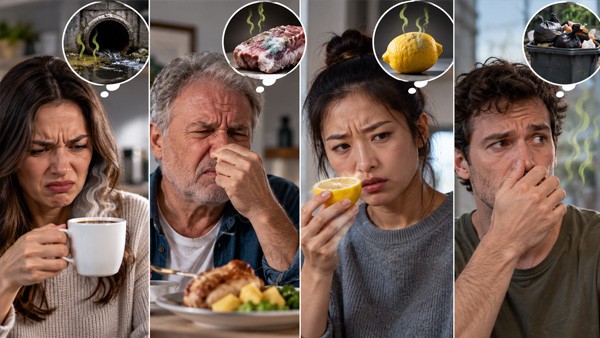

Imagine your morning coffee smelling like sewage, fresh bread like burning rubber, or a rotten smell that follows you from room to room while nobody else notices it. These experiences are more common than most people realise, and they have names.
Cacosmia means perceiving a foul, unpleasant smell. Sometimes the smell is real and comes from inside the body, such as an infected sinus. Sometimes it is a distortion. Parosmia is when familiar smells are distorted, usually into something disgusting. Phantosmia is smelling something that is not there at all.
Since the COVID-19 pandemic, millions of people have experienced parosmia while their sense of smell recovered. This guide explains the causes, how to tell a real smell from a distorted one, what helps recovery, and when a smell problem needs medical attention.
👃 Three different problems
| What you experience | Typical causes | |
|---|---|---|
| Real foul smell (objective cacosmia) | A genuine bad smell from your own nose, sinuses, mouth or throat; sometimes others notice it too | Bacterial sinus infection, dental abscess, tonsil stones, a foreign object in a child's nose |
| Parosmia | Everyday smells turn wrong and unpleasant: coffee, onion, meat, toothpaste, perfume | Recovery after viral infections including COVID-19, head injury, sinus disease |
| Phantosmia | A smell with no source, often burning, smoke or rotten, appearing in episodes | Sinus disease, migraine, seizures, and rarely a brain tumour |
A useful first question is whether anyone else can smell it. If a family member notices bad breath or a smell from your nose, the source is probably real. If only you smell it, and it changes depending on what you eat or smell, a distortion is more likely.
🦠 When the smell is real: sinus and mouth
A persistent foul smell or taste, especially on one side, with thick discoloured mucus, facial pain and a blocked nose, points to a bacterial sinus infection. Other real sources include:
- 🦷 Dental problems — an abscessed tooth, particularly an upper back tooth whose roots sit near the sinus
- 👃 A foreign object — in young children, a smelly discharge from one nostril often means something has been pushed up the nose
- 🧫 Tonsil stones — small, foul-smelling deposits in the tonsils
- 💨 Chronic sinus disease and nasal polyps
These respond to treating the cause: sinus care, dental treatment, or removal of the object. How bacterial sinusitis is recognised, and when antibiotics really help, is covered in our guide to bacterial sinusitis.
🧬 Parosmia after a virus
The smell nerves in the top of the nose regrow after damage. Viral infections, COVID-19 above all, can injure the supporting cells there. As the nerves reconnect during recovery, some of the wiring goes wrong for a while, and certain smells get misread as foul.
The typical story is loss of smell during the illness, then partial return weeks to months later, followed by parosmia. It is unpleasant, but it is often a sign of recovery rather than damage getting worse. Most people improve over months, though for some it lasts a year or two.
| Common triggers | Why |
|---|---|
| Coffee, onion, garlic | Contain strong sulphur compounds that the recovering system misreads |
| Cooked meat and eggs | Complex aromas that often turn disgusting |
| Toothpaste and mint | Frequent daily trigger |
| Perfume and cleaning products | Strong synthetic scents |
🧠 Phantom smells
Smelling burning toast, smoke or something rotten with no source can have several causes. Sinus disease is common. Migraine can bring a smell as part of its aura. Brief, sudden episodes of a strong smell, sometimes with a strange feeling, confusion or a pause in awareness, can be a type of seizure and need assessment. Rarely, a tumour affecting the smell pathways is found.
Phantom smells that come with headaches, seizures, changes in vision, weakness, or changes in memory or personality should be checked promptly. Phantosmia alone, especially after a cold, is usually benign.
🔬 How it is assessed
A doctor asks about when the problem started, recent infections, head injury, which smells are affected, and whether others notice the smell. Looking inside the nose, sometimes with a thin camera, checks for polyps or infection. Smell tests can measure how much smell is lost. Imaging of the sinuses or brain is arranged when the history or examination suggests it.
💊 Treatment
Smell training
The most useful treatment for post-viral parosmia and smell loss is smell training. It is simple and costs almost nothing:
- Choose four distinct scents, traditionally rose, lemon, clove and eucalyptus, in small jars
- Twice a day, sniff each one gently for about 20 seconds while concentrating on what it should smell like
- Continue for at least three months, and longer if improving
- Switching to a new set of scents after a few months may help further
Trials show more people recover useful smell with training than without it. It does not work overnight, and consistency matters more than technique.
Treating the nose and sinuses
When sinus inflammation or nasal polyps are part of the picture, a steroid nasal spray used daily reduces swelling and can help smell return. Salt-water rinses clear mucus. Antibiotics help only when there is a genuine bacterial infection. A steroid spray is available as Flomist (Fluticasone). Using it with the head tilted forward and the nozzle pointed slightly away from the centre of the nose helps it reach the right place.
Other options
For severe polyps, a short course of steroid tablets or surgery may be offered. Various supplements and newer procedures are being studied for post-viral smell loss, but none is yet proven. Smoking harms smell recovery, so stopping helps.
🍽️ Coping day to day
- Find safe foods
- Plain rice, pasta, bread, many fruits, and cold foods often smell less, because heat releases more aroma.
- Eat foods cold or at room temperature
- Less steam means less smell.
- Avoid your triggers for now
- Swap mint toothpaste for an unflavoured one, and let someone else make the coffee.
- Watch your weight and nutrition
- Severe food aversion can lead to weight loss. If eating becomes a struggle, see a doctor or dietitian.
- Look after your mood
- Losing the pleasure of food and smells can be surprisingly depressing. That is a real effect and worth mentioning to a doctor.
🔥 Safety when your smell is unreliable. Fit and test smoke alarms, and a gas alarm if you use gas. Check food by date rather than by smell. Be careful with cleaning chemicals, and ask someone else if you are unsure whether something is burning.
💬 Smell problems that are not distortion
Some people feel ill from ordinary smells like perfume or cleaning products without distortion. That is a different problem, discussed in our guide to multiple chemical sensitivity. Loss of smell without distortion, especially in older adults, can be an early feature of Parkinsons disease and is worth mentioning to a doctor.
📞 When to see a doctor
- A foul smell with fever, facial pain or swelling, or thick discharge from one side of the nose
- A child with smelly discharge from one nostril
- Phantom smells with headaches, seizures, confusion, vision changes or weakness — promptly
- Smell problems after a head injury
- No improvement after several months of smell training
- Weight loss or low mood because of food aversion
- Nosebleeds or a blocked nose on one side that does not clear
❓ Frequently asked questions
What is the difference between cacosmia and parosmia?
Cacosmia means perceiving a foul smell, which may be real, such as from an infected sinus, or a distortion. Parosmia is when familiar smells are distorted, usually into something unpleasant. Phantosmia is smelling something that is not there.
Why does everything smell bad after COVID?
The virus can damage cells in the smell area of the nose. As the nerves regrow, some connections go wrong for a while and certain smells are misread as foul. It is often a sign of recovery and usually improves over months.
How long does parosmia last?
Most people improve within months. For some it lasts a year or two. Smell training, done consistently twice a day for at least three months, improves the chance of recovery.
How do I do smell training?
Use four distinct scents such as rose, lemon, clove and eucalyptus. Twice a day, sniff each gently for about 20 seconds while focusing on what it should smell like. Keep going for at least three months, and consider changing scents after a few months.
Why do I smell something rotten in my nose?
Often a bacterial sinus infection, especially with thick discoloured mucus and facial pain on one side. Dental abscesses and tonsil stones can also cause it. If others can smell it too, the source is probably real.
Can a nasal spray help my sense of smell?
If swelling from sinus inflammation or nasal polyps is blocking smell, a daily steroid nasal spray can help it return. It is less helpful for post-viral nerve damage, where smell training is the main treatment.
Is smelling burning toast a sign of a stroke?
That is a common myth. Phantom burning smells are more often due to sinus problems, migraine or, occasionally, a type of seizure. Stroke is recognised by sudden weakness, facial droop, speech problems or loss of balance. Phantom smells with such symptoms need emergency care.
What foods are easier to eat with parosmia?
Plain, bland and cold foods usually smell less: rice, pasta, bread, many fruits and cold dishes. Coffee, onion, garlic, cooked meat and eggs are the most common triggers.
When are phantom smells serious?
When they come with headaches, brief episodes of confusion or lost awareness, seizures, vision changes, weakness, or changes in memory or personality. These need prompt medical assessment.
How can I stay safe if I cannot trust my sense of smell?
Fit and test smoke and gas alarms, check food by its date rather than its smell, and ask someone else if you are unsure whether something is burning or spoiled.
📑 Sources and editorial
- Position papers on olfactory dysfunction, including parosmia and phantosmia
- Trials of olfactory training after viral smell loss
- Studies of smell recovery after COVID-19
- Guidelines on chronic rhinosinusitis and nasal polyps, including intranasal corticosteroids
- Reviews of phantosmia and its neurological causes
- Related reading: bacterial sinusitis, multiple chemical sensitivity
- Related products: Flomist (Fluticasone)
- RXshop Editorial Team — reviewed by Emily Chen, MD, Internal Medicine
Medical Disclaimer: The information in this article is for educational and informational purposes only and is not a substitute for professional medical advice, diagnosis, or treatment. Always seek guidance from a qualified healthcare provider with any questions you may have regarding a medical condition, and before starting, stopping or changing any medication.