Head Injury and Concussion: What to Do and What Follows

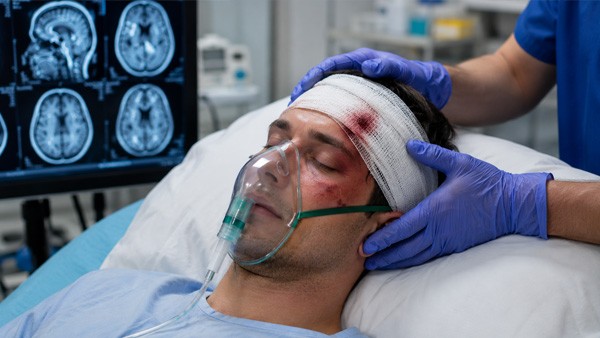
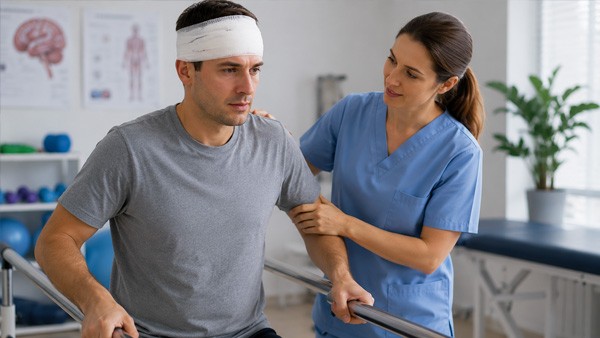
Most head injuries are minor and need nothing beyond observation. A small number look identical in the first hour and are not, and telling them apart is what this article is mainly for.
The second thing it covers is what happens afterwards — because the advice given for concussion has changed substantially, and the version most people still follow makes recovery slower rather than faster.
🔴 Go to hospital after a head injury if any of these apply: loss of consciousness at any point; being confused, drowsy or difficult to rouse; repeated vomiting; a seizure; severe or worsening headache; weakness, numbness or difficulty speaking; clear fluid or blood from the nose or ear; unequal pupils; a visible dent in the skull; or the person is on a blood thinner. Also go if the injury involved a fall from height, a vehicle, or a significant blow, and if there is anything you are uncertain about in a child or an older person.
⏱️ The window that matters
Two specific scenarios cause deaths that were preventable, and both involve someone who initially seemed fine.
The lucid interval. Bleeding between the skull and the outer covering of the brain — an extradural haematoma, usually from a torn artery after a blow to the side of the head — classically produces a brief loss of consciousness, then a period of apparently normal alertness lasting minutes to hours, then rapid deterioration as the clot expands. The person walks and talks, everyone relaxes, and then they become drowsy and deteriorate quickly. It is highly treatable if operated on in time and lethal if not.
Blood thinners. Anyone taking warfarin, a direct oral anticoagulant such as apixaban or rivaroxaban, or an antiplatelet such as clopidogrel, needs assessment after any head injury — including one that seemed trivial and produced no symptoms at all. Bleeding can develop slowly over hours or days, and the threshold for scanning is deliberately much lower in this group. This is one of the most consistently missed situations in head injury care, because the injury itself looks minor and the person feels well.
The same lower threshold applies to older people, in whom bleeding can develop gradually over weeks after a minor knock, presenting later as confusion, headache, unsteadiness or personality change rather than as an obvious emergency.
🧠 What actually happens to the brain
Injury occurs in two phases, and the distinction explains why hospital care is organised as it is.
Primary injury happens at the moment of impact — tearing, bruising and stretching of tissue as the brain moves within the skull. Rapid acceleration and deceleration shears nerve fibres, and the brain striking the inside of the skull produces bruising both at the site of impact and on the opposite side. Nothing can be done about this after it has occurred.
Secondary injury develops over hours and days — swelling, raised pressure inside the skull, reduced blood flow, low oxygen, seizures, and chemical cascades that kill cells that survived the impact. This is what treatment targets, and it is why someone with a significant head injury is monitored intensively rather than simply left to recover.
📊 Severity
Severity is graded largely by the Glasgow Coma Scale, which scores eye opening, verbal response and movement.
| Severity | Features |
|---|---|
| Mild | Brief or no loss of consciousness, brief or no memory loss around the event, normal or near-normal responsiveness. Includes concussion, and accounts for the large majority |
| Moderate | Longer loss of consciousness, reduced responsiveness, memory gap of hours |
| Severe | Prolonged unconsciousness, markedly reduced responsiveness, memory gap of a day or more |
The word mild is misleading and causes real problems. It describes the initial clinical picture, not the consequences. A mild traumatic brain injury can produce symptoms lasting months and can substantially disrupt work, study and relationships. Being told it was mild, and therefore expecting to be fine in a few days, is a frequent source of distress when recovery takes longer.
🤕 Concussion
Concussion is a functional disturbance of brain function following an impact, without visible structural damage on standard scans. A normal CT does not mean nothing happened — it means there is no bleeding, which is what the scan is looking for.
Loss of consciousness is not required, and most concussions do not involve it. Symptoms fall into four groups:
| Group | Symptoms |
|---|---|
| Physical | Headache, nausea, dizziness, balance problems, light and noise sensitivity, blurred vision, fatigue |
| Cognitive | Feeling slowed or in a fog, difficulty concentrating, memory problems, difficulty finding words |
| Emotional | Irritability, low mood, anxiety, emotional lability |
| Sleep | Sleeping more or less than usual, difficulty falling asleep |
Symptoms may appear immediately or develop over hours, which is why someone who seems fine at the roadside can be clearly unwell that evening.
🛏️ What has changed about rest
This is the most practically important update in the whole subject.
The old advice was complete physical and cognitive rest — a dark room, no screens, no reading, no exercise — until symptoms had entirely resolved.
That advice is now known to slow recovery. Trials found that prolonged strict rest produced more symptoms and longer recovery than earlier gradual return to activity. Extended inactivity causes deconditioning, sleep disruption, social isolation and anxiety, all of which generate symptoms indistinguishable from those of the injury itself.
Current guidance is:
- Relative rest for the first twenty-four to forty-eight hours — reduced activity, not a darkened room
- Then gradual reintroduction of activity, including light exercise such as walking, at a level that does not markedly worsen symptoms
- Mild symptom increase during activity is acceptable and does not indicate further damage; a marked increase means backing off and trying a lower level
- Screens and reading reintroduced gradually rather than banned
- Sleep protected, since sleep disruption worsens everything
- Alcohol avoided during recovery
Sub-symptom-threshold aerobic exercise, introduced early, now has good evidence for speeding recovery, which is close to the opposite of what was advised a decade ago.
⚠️ Returning to sport is different from returning to ordinary life and follows its own graduated protocol. The absolute rule is that nobody returns to play on the same day as a suspected concussion — if in doubt, sit them out. A second impact before the first has resolved carries a small but catastrophic risk of severe brain swelling, particularly in adolescents, and repeated concussions have cumulative effects. Return progresses step by step through light exercise, sport-specific drills, non-contact training, full contact and finally competition, with each stage requiring the person to remain symptom-free before moving on.
🔄 When symptoms persist
Most concussions resolve within two weeks in adults and somewhat longer in children and adolescents. A meaningful minority — commonly estimated at somewhere between ten and thirty per cent — have symptoms lasting beyond a month.
Persistent symptoms are real and are frequently maintained by factors other than the original injury. Understanding that is the key to treating them, because it identifies things that can actually be changed:
- Sleep disruption, which produces headache, poor concentration and irritability by itself
- Anxiety about the symptoms, which increases attention to them and amplifies them — a well-documented loop
- Deconditioning from prolonged inactivity
- Neck injury sustained at the same time, which causes headache and dizziness independently and is frequently overlooked
- Vestibular and visual problems, which respond to specific rehabilitation
- Low mood, common after brain injury and treatable
- Ongoing litigation or workplace disputes, which are associated with slower recovery for understandable reasons
The treatable elements here matter more than the label. Vestibular rehabilitation, vision therapy, graded exercise, treating the neck, addressing sleep and treating mood all have evidence, and doing nothing while waiting for time to pass is the least effective approach.
🏥 Moderate and severe injury
Hospital care focuses on preventing secondary injury: maintaining oxygen and blood pressure, controlling pressure inside the skull, treating seizures, and surgery to remove clots or relieve pressure where needed.
Recovery from severe injury is measured in months and years rather than weeks, and it does continue for a long time — improvement after the first year is common and the older assumption that recovery plateaus at six months has not held up.
Rehabilitation is multidisciplinary by necessity: physiotherapy for movement and balance, occupational therapy for daily function and return to work, speech and language therapy for communication and swallowing, neuropsychology for cognitive and emotional difficulties, and family support, which is consistently the most under-provided element.
🧪 The long-term consequences worth knowing about
Several of these are treatable and are frequently not looked for.
Post-traumatic epilepsy. Seizures can develop months or years after a moderate or severe injury, particularly with penetrating injury, bleeding or early seizures. Treatment is with standard antiepileptic drugs. Preventive medication in the first week after severe injury reduces early seizures but does not prevent epilepsy developing later.
Spasticity. Damage to the pathways running from brain to spinal cord produces increased muscle tone, which limits movement, causes pain and leads to permanent shortening of muscles if untreated. It is managed with physiotherapy, stretching and positioning, and with medication — tizanidine and baclofen orally, botulinum toxin injections for focal problems, and an intrathecal pump in severe cases. This is covered in detail in the guide to muscle spasticity.
Pituitary dysfunction. This deserves particular attention because it is common after moderate and severe injury, easily missed, and entirely treatable. The pituitary gland sits in a vulnerable position and damage to it produces fatigue, low mood, reduced libido, weight change, cold intolerance and poor concentration — symptoms that get attributed to the brain injury itself and are never investigated. Hormone testing after significant head injury is worth asking about specifically, since replacement can transform how someone feels.
Mood and behaviour. Depression, anxiety, irritability and reduced impulse control are common, are consequences of the injury rather than of the person character, and respond to treatment. Personality change is among the hardest aspects for families.
Cognitive difficulty. Attention, memory, processing speed and executive function are most affected. Strategies and external structure help more than trying to restore the underlying capacity.
Fatigue. Persistent, disproportionate and among the most disabling long-term effects, and frequently misread as laziness or low motivation.
Later risk. Traumatic brain injury is associated with increased risk of dementia and of Parkinson disease in later life. On chronic traumatic encephalopathy — the condition described in athletes with repeated head impacts — the honest position is that it is real, that it can currently only be diagnosed after death, that how commonly repeated impacts lead to it is not established, and that most of the strongest claims made about it go beyond what the evidence supports. That uncertainty is a reason to reduce unnecessary head impacts in sport rather than a reason for individual alarm.
👥 Groups that differ
Children take longer to recover from concussion than adults, need a graduated return to school as well as to sport, and are the group in whom a second impact before recovery carries the greatest risk. In infants, a bulging fontanelle, persistent crying, refusing feeds or unusual drowsiness are the signs to act on.
Older adults bleed more readily, more often take anticoagulants, and can deteriorate gradually over weeks after a minor injury. Any change in confusion, unsteadiness, headache or personality in the weeks after a fall warrants assessment even if the fall seemed unimportant at the time.
Alcohol complicates everything. It causes head injuries, and it then makes assessment far harder because drowsiness and confusion get attributed to intoxication. Assuming someone is just drunk is a recognised route to a missed intracranial bleed, and anyone with a head injury and altered consciousness deserves assessment regardless of how much they have drunk.
🛡️ Prevention
Unusually for a serious condition, a large share of this is preventable.
Helmets for cycling, motorcycling, skiing, climbing and equestrian activity substantially reduce serious head injury.
Seatbelts and appropriate child restraints, correctly fitted for the child size rather than age assumptions.
Falls prevention in older people — balance and strength exercise, home hazards, vision, footwear and medication review — addresses the commonest cause of head injury in that group.
Not driving or operating machinery under the influence, since alcohol is involved in a large proportion of these injuries.
Sport rules and practice — limiting contact in training, enforcing removal from play after suspected concussion, and taking return-to-play protocols seriously rather than as paperwork.
✅ If one thing from this article is worth keeping: after any head injury, do not assume that feeling fine an hour later settles the question. Someone with a slowly expanding bleed can look and behave entirely normally for hours before deteriorating quickly. Anyone on a blood thinner should be assessed after even a minor knock, older people can deteriorate over weeks, and drowsiness developing hours later is the sign that matters most.
🚨 When to seek help urgently
- Increasing drowsiness or difficulty waking the person
- Confusion, disorientation or unusual behaviour
- Worsening or severe headache
- Repeated vomiting
- A seizure
- Weakness, numbness or difficulty speaking
- Unequal pupils or double vision
- Clear fluid or blood from the nose or ear
- Any head injury in someone on anticoagulants or antiplatelets
- Any deterioration in the days or weeks afterwards, particularly in an older person
Medication used for spasticity and other long-term consequences of brain injury is stocked in the muscle relaxer category, including Zanaflex (tizanidine). Acute head injury is assessed and treated in hospital, and nothing available without that assessment substitutes for it.
❓ Frequently asked questions
When does a head injury need hospital assessment?
Loss of consciousness at any point, confusion or drowsiness, repeated vomiting, a seizure, severe or worsening headache, weakness or difficulty speaking, clear fluid or blood from nose or ear, unequal pupils, a visible dent in the skull, or being on a blood thinner. Also after a fall from height or a vehicle collision, and whenever there is uncertainty about a child or an older person.
He seemed fine and then got worse. What happened?
Possibly a lucid interval. Bleeding between the skull and the brain covering classically produces brief unconsciousness, then a period of apparently normal alertness lasting minutes to hours, then rapid deterioration as the clot expands. The person walks and talks, everyone relaxes, and then drowsiness sets in. It is highly treatable if operated on in time, which is why feeling fine an hour later does not settle the question.
I take a blood thinner and banged my head. Does it matter?
Yes, and it should be assessed even if the injury seemed trivial and produced no symptoms. Warfarin, direct oral anticoagulants and antiplatelets such as clopidogrel all mean bleeding can develop slowly over hours or days, and the threshold for scanning is deliberately much lower in this group. It is one of the most consistently missed situations, precisely because the injury looks minor and the person feels well.
Should I rest in a dark room after a concussion?
No — that advice has been reversed. Trials found prolonged strict rest produced more symptoms and longer recovery than earlier gradual return to activity, because extended inactivity causes deconditioning, sleep disruption, isolation and anxiety that generate symptoms indistinguishable from the injury. Current guidance is relative rest for twenty-four to forty-eight hours, then gradual reintroduction of activity including light exercise.
My scan was normal. Does that mean nothing happened?
No — it means there is no bleeding, which is what the scan looks for. Concussion is a functional disturbance of brain function without visible structural damage on standard imaging, so a normal CT is entirely compatible with a genuine concussion producing real symptoms. It is reassuring about the dangerous complications rather than evidence that the injury was imaginary.
Can you have a concussion without losing consciousness?
Yes, and most concussions do not involve loss of consciousness. Symptoms fall into four groups: physical — headache, nausea, dizziness, light and noise sensitivity; cognitive — feeling in a fog, poor concentration and memory; emotional — irritability and low mood; and sleep changes. They may appear immediately or develop over hours, which is why someone fine at the scene can be clearly unwell that evening.
When can someone return to sport?
Never on the same day as a suspected concussion — if in doubt, sit them out. A second impact before the first has resolved carries a small but catastrophic risk of severe brain swelling, particularly in adolescents. Return follows a graduated protocol: light exercise, sport-specific drills, non-contact training, full contact, then competition, remaining symptom-free before progressing at each stage.
My symptoms have lasted more than a month. Is that normal?
It happens in a meaningful minority, commonly estimated between ten and thirty per cent. The symptoms are real, and they are frequently maintained by factors other than the original injury — sleep disruption, anxiety about the symptoms which amplifies them, deconditioning, an overlooked neck injury, vestibular or visual problems, and low mood. Each of those is treatable, which is why waiting passively is the least effective approach.
Why does mild brain injury cause such lasting problems?
Because mild describes the initial clinical picture rather than the consequences. It refers to brief or absent loss of consciousness and near-normal responsiveness at assessment, not to how much disruption follows. A mild injury can produce symptoms lasting months and substantially affect work, study and relationships. Being told it was mild and expecting to be fine within days is a frequent source of distress.
Should hormones be checked after a serious head injury?
It is worth asking about specifically. Pituitary dysfunction is common after moderate and severe injury, easily missed and entirely treatable. Damage produces fatigue, low mood, reduced libido, weight change, cold intolerance and poor concentration — symptoms routinely attributed to the brain injury itself and never investigated. Hormone replacement can transform how someone feels.
Can seizures start later?
Yes. Post-traumatic epilepsy can develop months or years after a moderate or severe injury, particularly with penetrating injury, intracranial bleeding or seizures in the first week. It is treated with standard antiepileptic drugs. Preventive medication given in the first week after severe injury reduces early seizures but does not prevent epilepsy developing later.
Does recovery stop after six months?
No, and that older assumption has not held up. Improvement after severe injury continues well beyond the first year, and rehabilitation remains worthwhile long after the point where people are often told progress has plateaued. Recovery is measured in months and years rather than weeks, and the multidisciplinary input that drives it should not be withdrawn on a calendar basis.
📑 Sources and editorial
- NICE guideline on head injury assessment and early management
- Amsterdam and preceding international consensus statements on concussion in sport
- Trial evidence on early activity versus strict rest following concussion
- Canadian CT Head Rule and related decision instruments
- Evidence on anticoagulant-associated intracranial haemorrhage after minor head injury
- Literature on post-traumatic hypopituitarism and its under-recognition
- Research on post-traumatic epilepsy and on long-term neurodegenerative risk after brain injury
- Related reading: muscle spasticity, seizures and epilepsy
- Related products: muscle relaxer category
- RXshop Editorial Team — reviewed by James Carter, MD, Neurology
Medical Disclaimer: The information in this article is for educational and informational purposes only and is not a substitute for professional medical advice, diagnosis, or treatment. Always seek guidance from a qualified healthcare provider with any questions you may have regarding a medical condition, and before starting, stopping or changing any medication.