Buy Waklert (Armodafinil 150mg) Online - Original Nuvigil Brand Sun Pharma Generic R-Enantiomer Wakefulness Promoter

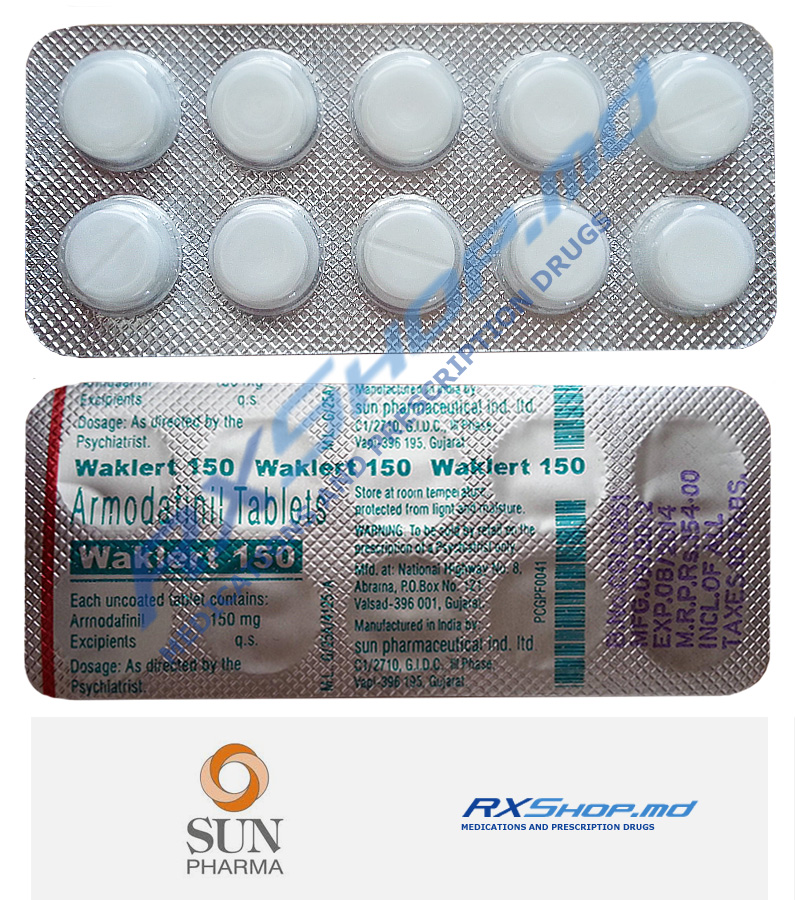
Waklert (Armodafinil 150 mg) represents the R-enantiomer wakefulness-promoting therapy - the more potent and longer-acting successor to modafinil for excessive daytime sleepiness management. Originally developed as Nuvigil by Cephalon (later acquired by Teva Pharmaceuticals in 2011) and FDA-approved in 2007 as the first single R-enantiomer wakefulness promoter, armodafinil provides more selective pharmacology than racemic modafinil with longer clinical duration. Waklert on rxshop.md is manufactured by Sun Pharmaceutical Industries Ltd - world 4th largest specialty generic pharmaceutical company headquartered in Mumbai India with WHO-GMP certification, US FDA-inspected manufacturing facilities, EU-GMP certification, and comprehensive CNS product portfolio.
Armodafinil works as a selective wakefulness-promoting agent through multiple central nervous system pathways. First, armodafinil inhibits dopamine reuptake at the dopamine transporter (DAT) with higher selectivity than amphetamines and substantially reduced abuse potential. Second, armodafinil activates hypothalamic orexin/hypocretin neurons promoting arousal and sustained wakefulness. Third, armodafinil modulates histamine H1 signaling through tuberomammillary nucleus activation supporting alertness. Fourth, armodafinil enhances norepinephrine transmission in wake-promoting brain regions. Fifth, armodafinil reduces GABA-mediated inhibition in cortical wakefulness pathways. Combined effects produce sustained wakefulness without the euphoria, jitteriness, or post-effect crash of classical amphetamine stimulants.
Waklert primary FDA indications include narcolepsy for reduction of excessive daytime sleepiness and sleep attacks, obstructive sleep apnea (OSA) adjunctive therapy to CPAP for residual sleepiness, and shift work sleep disorder (SWSD) for improved wakefulness during scheduled awake periods. Common off-label uses include ADHD in adults for focus without stimulant effects, depression augmentation particularly for fatigue and apathy symptoms, chronic fatigue syndrome, jet lag management, and cognitive enhancement in select populations.
Waklert at 150 mg strength provides efficacy equivalent to modafinil 200 mg with longer duration of action (armodafinil half-life approximately 15 hours vs modafinil 12 hours) enabling more consistent all-day wakefulness with single morning dosing. Schedule IV controlled substance requiring prescription. Standard dosing: 150 mg once daily in the morning for narcolepsy and OSA; 150 mg one hour before shift start for SWSD. Available in four pack sizes - 30, 100 (bestseller), 200, and 300 tablets accommodating extended long-term wakefulness therapy.
Free prescription
Discrete packaging
Have questions?
Quality Assurance
- Excessive Daytime Sleepiness: Persistent difficulty staying awake during appropriate wake hours affecting work performance and safety;
- Obstructive Sleep Apnea: Sleep disorder with breathing pauses causing fragmented sleep and residual daytime sleepiness;
- Shift Work Sleep Disorder: Circadian rhythm disorder in night-shift workers causing sleepiness during scheduled awake periods;
- Cataplexy Support: Sudden muscle weakness triggered by strong emotions commonly occurring with narcolepsy diagnosis;
- ADHD in Adults: Off-label use for attention deficit hyperactivity disorder providing focus without amphetamine effects;
- Depression Augmentation: Off-label augmentation therapy for depression with prominent fatigue and apathy symptoms;
- Chronic Fatigue Syndrome: Off-label use for debilitating chronic fatigue with post-exertional malaise disorders;
- Jet Lag Management: Off-label use for circadian disruption from rapid transmeridian travel affecting alertness;
- Cognitive Enhancement: Off-label use for cognitive performance in sleep-deprived states requiring sustained attention;
- Sleep Deprivation Effects: Countering acute sleep deprivation effects in essential occupations requiring sustained alertness;
- Multiple Sclerosis Fatigue: Off-label use for debilitating fatigue in multiple sclerosis affecting quality of life;
- Post Anesthesia Sedation: Off-label use for reversal of persistent post-anesthesia sedation in selected patients;
- Parkinson Disease Fatigue: Off-label use for daytime sleepiness in Parkinson disease affecting daily functioning;
- Idiopathic Hypersomnia: Chronic disorder of excessive daytime sleepiness without clear underlying cause;
- Sleep Attacks Prevention: Prevention of sudden overwhelming sleep episodes disrupting activities and posing safety risks;
- Wakefulness Promotion: Selective wakefulness enhancement without stimulant euphoria or classical amphetamine effects;
- CPAP Adjunctive Therapy: Combined with CPAP for obstructive sleep apnea patients with residual daytime sleepiness;
- Night Shift Alertness: Improved alertness during scheduled night-shift work hours requiring sustained attention;
- Long Duration Wakefulness: Extended wakefulness benefit from longer half-life R-enantiomer compared to racemic modafinil.
- Less Daytime Sleepiness: Substantial reduction in excessive daytime sleepiness across narcolepsy and OSA populations;
- Better Focus: Improved sustained attention and concentration during work and study activities;
- Better Cognitive Performance: Improved cognitive function in sleep-deprived states enabling productive work performance;
- Fewer Sleep Attacks: Reduced frequency of sudden overwhelming sleep episodes in narcolepsy patients over months;
- Longer Duration Effect: Extended duration of action from 15-hour half-life vs modafinil 12-hour half-life;
- Once Daily Convenience: Simple once-daily morning dosing provides all-day wakefulness benefit;
- Better Work Performance: Improved workplace productivity and safety through sustained alertness during work hours;
- Better Driving Safety: Reduced drowsy driving risk in patients with narcolepsy or OSA affecting road safety;
- Better Quality of Life: Substantial quality of life improvements from reduced excessive sleepiness symptoms;
- Better Mood Stability: Improved mood as chronic exhaustion resolves supporting daily functioning improvements;
- Better Social Functioning: Improved social engagement as daytime alertness enables interactions and relationships;
- Less Fatigue: Reduced chronic fatigue in narcolepsy CFS and MS populations affecting daily life;
- Better Motivation: Improved motivation and engagement in activities previously abandoned due to sleepiness;
- Improved Reaction Time: Faster reaction times in sleep-deprived states supporting safety and performance;
- Better Memory Function: Improved working memory and consolidation during sustained wakefulness states;
- Lower Abuse Potential: Substantially lower euphoria and abuse potential than classical amphetamine stimulants;
- Better Shift Work Adaptation: Improved adaptation to night shift schedules for shift work sleep disorder patients;
- Less Depression Fatigue: Off-label reduction in depression-related fatigue and apathy as augmentation therapy;
- Better Overall Alertness: Substantially improved daytime alertness enabling engagement in activities previously affected.
Generic Waklert (Armodafinil 150 mg) Medication guide:
📖 What Waklert Is and How It Works
Waklert is a brand of armodafinil, a wakefulness-promoting agent (eugeroic) manufactured by Sun Pharma. Armodafinil is the R-enantiomer of modafinil - the biologically more active mirror-image of the parent racemic molecule. It was developed by Cephalon and approved by the US FDA in 2007 as Nuvigil, based on evidence that the R-enantiomer alone provided sustained daytime alertness with somewhat cleaner pharmacokinetics than the racemic mixture. Since patent expiration, generic armodafinil is available worldwide, and Waklert (Sun Pharma) is one of the widely-used generic products.
Armodafinil is not a classical stimulant like amphetamines or methylphenidate. Its exact mechanism remains incompletely understood after decades of investigation - but it appears to work through weak dopamine reuptake inhibition combined with effects on histamine, orexin (hypocretin), glutamate, and other wake-promoting neurotransmitter systems. The result is sustained daytime alertness without the peripheral sympathetic stimulation or the "up-down" pattern typical of amphetamines. Onset is within 1-2 hours of dosing; effect lasts 12-15 hours from a single morning dose.
The three FDA-approved uses of Waklert
- 😴 Narcolepsy - excessive daytime sleepiness from this neurological sleep disorder
- 🤪 Obstructive sleep apnea (OSA) with residual excessive sleepiness despite adequate CPAP therapy
- 🌙 Shift work sleep disorder - excessive sleepiness from working outside normal daytime hours
These are the only FDA-approved indications. Extensive off-label use has developed - cognitive enhancement, fatigue in multiple sclerosis or chronic conditions, adjunctive treatment in depression, jet lag management. Most of this off-label use is not evidence-supported to the standard required for approval, and use outside approved indications should be discussed carefully with the treating team. The EMA restricted modafinil indications to narcolepsy alone in 2010 after safety review - reflecting European regulatory caution about broader use.
Armodafinil is a Schedule IV controlled substance in the US and equivalent scheduling elsewhere. It has dependence potential (much lower than amphetamines but present). Prescription oversight, standard controlled substance handling, and careful client selection matter. Off-label recreational or performance-enhancing use is not supported by regulatory approval and carries the same safety concerns as approved use, without the medical monitoring context.
Standard adult dose is 150 mg once daily in the morning (or 1 hour before shift for shift work). Some clients use 250 mg for narcolepsy. Half-life is approximately 15 hours - longer than modafinil (12-15 hours) - which is why once-daily morning dosing works. Metabolism is primarily hepatic via CYP3A4/5. Armodafinil is itself a moderate CYP3A4 inducer and CYP2C19 inhibitor - this drives its most clinically important drug interactions (contraceptive failure being the most critical).
Common side effects include headache (very common - 15-20 percent), nausea, dizziness, insomnia (if taken too late in the day), anxiety, and dry mouth. Serious rare effects include severe skin reactions (Stevens-Johnson syndrome, toxic epidermal necrolysis, DRESS syndrome), psychiatric effects (mania, psychosis, aggression), cardiovascular effects (modest blood pressure and heart rate increase), and rare angioedema. Most clients tolerate armodafinil well but serious signals warrant vigilance.
This guide walks through what armodafinil does, the specific FDA-approved settings where it fits, the practical morning dosing, the critical contraceptive failure drug interaction, the serious skin reaction warning signs, the psychiatric and cardiovascular considerations, and how armodafinil fits alongside modern alternatives like solriamfetol and pitolisant. Treat this guide as a companion to what your sleep specialist, neurologist, or general practitioner tells you.
💊 Why Doctors Prescribe Waklert - Approved Indications
Armodafinil has three FDA-approved indications, all in sleep-wake disorders. Understanding which indication drove your prescription shapes what you are trying to achieve and how to measure success.
Narcolepsy - the primary indication
Narcolepsy is a neurological disorder of sleep-wake regulation, usually caused by loss of hypocretin (orexin) neurons in the hypothalamus. Excessive daytime sleepiness is the cardinal symptom. Armodafinil is one of the standard first-line treatments for narcolepsy sleepiness (alongside modafinil, sodium oxybate, pitolisant, solriamfetol). Section 3 covers this indication.
OSA with residual sleepiness
Obstructive sleep apnea causes disrupted sleep and consequent daytime sleepiness. CPAP therapy is primary treatment. Some clients on adequately-used CPAP still have residual daytime sleepiness. Armodafinil is FDA-approved as adjunct therapy - not a CPAP replacement. Section 4 covers this indication.
Shift work sleep disorder
Working outside conventional daytime hours (particularly rotating shifts, permanent night shift) can cause chronic sleep disruption and excessive sleepiness during the work shift. Armodafinil is FDA-approved to promote alertness during scheduled shift periods. Section 5 covers this indication.
Off-label uses - common but not evidence-approved
- Cognitive enhancement - studies inconsistent; not approved use
- Multiple sclerosis fatigue - some evidence but variable; specialty use
- Depression augmentation - modafinil/armodafinil in resistant depression; limited evidence
- ADHD - not first-line; occasional adjunct
- Chronic fatigue syndrome - limited evidence
- Cancer-related fatigue - specific specialty use in some settings
- Jet lag - not routine but sometimes used
- Idiopathic hypersomnia - similar mechanism target; not formally approved for this in US
Why the distinction matters
Approved indications have strong evidence for benefit exceeding risk. Off-label use often lacks this evidence and may carry the same side effect risks (Stevens-Johnson syndrome, cardiovascular effects, dependence) without the same benefit certainty. Off-label use should not be assumed to be as safe or effective as approved use. Recreational or performance-enhancing use is outside medical oversight entirely and carries additional risks.
Where armodafinil does NOT fit
- Everyday tiredness from insufficient sleep - fix the sleep instead
- Anxiety or panic disorders - can worsen these
- Bipolar disorder without careful specialist input - mania risk
- Weight loss - not approved and stimulant effects modest
- General cognitive enhancement in healthy people
- Replacement for good sleep hygiene, CPAP, or lifestyle
Ask your treating team what specific indication drove your armodafinil prescription, what the treatment target is (specific alertness improvement, sleepiness scale reduction, work performance), and what other measures (CPAP, sleep schedule optimisation) should continue alongside. Armodafinil works best as part of a comprehensive sleep-wake strategy.
😴 Waklert for Narcolepsy - Primary Indication
Narcolepsy is the primary indication for armodafinil. Understanding narcolepsy itself explains what the drug is trying to address.
Narcolepsy fundamentals
- Neurological disorder of sleep-wake regulation
- Prevalence - approximately 1 in 2,000 in general population
- Onset typically in teens to young adulthood
- Type 1 narcolepsy - hypocretin (orexin) deficiency; cataplexy present
- Type 2 narcolepsy - hypocretin levels preserved; no cataplexy
- Chronic lifelong condition requiring ongoing management
The classic narcolepsy pentad
- Excessive daytime sleepiness (EDS) - the most common symptom; irresistible sleep episodes
- Cataplexy - sudden loss of muscle tone triggered by strong emotions; type 1 only
- Hypnagogic/hypnopompic hallucinations - vivid dreamlike experiences on falling asleep or waking
- Sleep paralysis - inability to move when falling asleep or waking
- Disrupted nocturnal sleep - often fragmented despite daytime sleepiness
How diagnosis is made
- Clinical history of excessive daytime sleepiness
- Polysomnography (overnight sleep study) - rule out other causes
- Multiple Sleep Latency Test (MSLT) - measures how quickly the person falls asleep during structured daytime naps; short latency + sleep-onset REM periods characteristic
- CSF hypocretin measurement in some cases for type 1 confirmation
- HLA-DQB1*06:02 - most narcolepsy type 1 clients have this genetic marker
Armodafinil for narcolepsy sleepiness
Armodafinil substantially improves daytime alertness in narcolepsy. Multiple Sleep Latency Test scores typically improve by several minutes. Subjective sleepiness measures (Epworth Sleepiness Scale) improve substantially. Quality of life measures improve. Effect is sustained across the day from a morning dose. However, armodafinil does not treat cataplexy - separate therapy (sodium oxybate, pitolisant, venlafaxine) is needed for that.
Modern narcolepsy pharmacotherapy landscape
- Wakefulness-promoting agents - armodafinil, modafinil, solriamfetol, pitolisant
- Traditional stimulants - methylphenidate, amphetamines - second-line
- Sodium oxybate (Xyrem, Xywav) - dual benefit for cataplexy and EDS; taken at night
- Cataplexy-specific - sodium oxybate, pitolisant, venlafaxine, clomipramine
- Emerging orexin agonists - orexin-2 agonists (danavorexton and others) in trials; direct replacement of missing hypocretin signal
Practical narcolepsy management alongside armodafinil
- Regular sleep schedule with adequate nocturnal sleep
- Scheduled brief daytime naps
- Avoid alcohol and unnecessary sedatives
- Driving safety assessment - cannot rely solely on medication
- Cataplexy triggers management
- Psychosocial support - narcolepsy substantially affects daily life
- Regular sleep specialist follow-up
Narcolepsy is the clearest and most established armodafinil indication. Combined with good sleep hygiene, scheduled naps, and other therapies where needed (particularly for cataplexy), armodafinil substantially improves daytime function and quality of life.
🤪 Waklert for OSA with Residual Sleepiness
Obstructive sleep apnea (OSA) with residual excessive sleepiness on CPAP therapy is the second FDA-approved indication. Armodafinil is adjunct to CPAP, not a replacement.
Obstructive sleep apnea fundamentals
- Repeated collapse of upper airway during sleep
- Fragmented sleep from arousals; unrefreshing sleep
- Excessive daytime sleepiness common symptom
- Prevalence high - 10-20 percent of middle-aged adults
- Cardiovascular consequences if untreated (hypertension, atrial fibrillation, cardiovascular events)
- Diagnosed with home sleep test or polysomnography
CPAP - the primary OSA treatment
- Continuous positive airway pressure delivered through mask overnight
- Splints open the upper airway
- Eliminates apnoea events
- Most clients report substantially improved daytime alertness within weeks
- Cardiovascular benefit debated in modern trials but symptomatic benefit clear
- Adherence variable - requires nightly use
Residual excessive sleepiness on CPAP
Even with well-used CPAP that adequately controls apnoea events, roughly 5-10 percent of OSA clients still experience excessive daytime sleepiness. Reasons include: coexisting sleep disorders (narcolepsy, idiopathic hypersomnia), chronic effects of untreated OSA on brain function, insufficient CPAP adherence (less than 4 hours/night), coexisting conditions (depression), medication effects, or true refractory sleepiness. Armodafinil is approved for this specific scenario - as adjunct to CPAP.
Requirements before armodafinil in OSA
- Confirmed OSA diagnosis with sleep study
- Adequate CPAP therapy in place
- CPAP adherence documented (usually over 4 hours per night on most nights)
- CPAP pressure titrated to eliminate residual apnoea events
- Persistent excessive daytime sleepiness despite adequate CPAP use
- Other causes of sleepiness ruled out (insufficient sleep, depression, other sleep disorders)
- Armodafinil as adjunct - CPAP continues
🔴 Armodafinil is not a CPAP replacement
Armodafinil masks the symptom of sleepiness but does not treat the underlying obstructive apnoeas. Untreated OSA continues to carry cardiovascular risk, cognitive impact, and metabolic consequences. Never substitute armodafinil for CPAP therapy. Never reduce CPAP use because armodafinil is providing alertness. CPAP addresses the disease; armodafinil addresses one symptom that persists despite disease treatment.
Practical OSA plus armodafinil regimen
- CPAP continued every night at prescribed pressure
- Armodafinil 150 mg once daily in morning
- Assess response with Epworth Sleepiness Scale and subjective wellness
- Reassess CPAP adherence and settings if response inadequate
- Consider higher armodafinil dose (250 mg) if 150 mg insufficient
- Monitor blood pressure - both OSA and armodafinil can raise it
- Ongoing sleep specialist follow-up
OSA with residual sleepiness is a specific indication where armodafinil provides real symptomatic benefit. It is always additive to CPAP - not a substitute. Ongoing CPAP compliance and OSA management remain fundamental.
🌙 Waklert for Shift Work Sleep Disorder
Shift work sleep disorder (SWSD) is the third FDA-approved indication. Understanding the specific occupational sleep context guides appropriate armodafinil use.
What is shift work sleep disorder
- Circadian rhythm disorder from working outside normal daytime hours
- Excessive sleepiness during scheduled work shift
- Insomnia during scheduled sleep period
- Chronic sleep restriction typical (many shift workers get less total sleep)
- Body clock cannot fully adapt to shifted schedule for most workers
- Diagnosis requires clinical assessment; not everyone doing shift work has SWSD
Who is at risk
- Permanent night shift workers
- Rotating shift workers - particularly with backward rotation
- Early morning shift workers (starting before 5-6 am)
- Extended shift workers (over 12 hours)
- Long-term shift work exposure
- Older workers (declining adaptability with age)
- Coexisting sleep disorders
Armodafinil for shift work sleep disorder
Armodafinil at 150 mg is taken approximately 1 hour before the start of the work shift. It promotes alertness through the scheduled work period. In the Czeisler and colleagues shift work trial (Mayo Clin Proc 2009), armodafinil substantially improved wakefulness during simulated night shift work. Subjective sleepiness and objective performance improved. It does not affect sleep during the daytime rest period.
Non-pharmacological measures - foundational
- Adequate total sleep - 7-8 hours per 24-hour period
- Dark sleep environment during daytime rest - blackout curtains, eye mask
- Quiet sleep environment - earplugs, noise reduction
- Consistent sleep schedule even on days off
- Timed light exposure - bright light during shift, avoid morning light after shift
- Strategic napping before or during shift
- Caffeine early in shift only
- Melatonin for daytime sleep in some workers
- Occupational health support
Practical armodafinil regimen for shift work
- 150 mg armodafinil approximately 1 hour before start of shift
- Only on shifts when needed - not on off days
- Anticipate 12-15 hour effect duration - avoid taking too close to sleep period
- Combine with non-pharmacological measures for best effect
- Reassess periodically whether continued therapy justified
- Do not use for occasional shifts in someone who is not truly SWSD
Cautions in shift work use
- Not a substitute for adequate sleep
- Does not restore normal circadian rhythm
- Long-term shift work carries health risks not addressed by armodafinil
- Career decisions about shift work should factor these into consideration
- Driving after shifts remains high-risk regardless of medication
Shift work sleep disorder is a specific medical diagnosis rather than a description of any shift worker. Armodafinil provides useful adjunctive alertness for clients meeting the diagnostic criteria, alongside comprehensive sleep hygiene and workplace measures.
⚖️ Off-Label Uses and Modern Controversies
Off-label armodafinil use is substantial. Understanding the evidence and controversies matters for anyone taking armodafinil outside FDA-approved indications.
The regulatory context
Armodafinil is FDA-approved for narcolepsy, OSA with residual sleepiness, and shift work sleep disorder. The EMA restricted modafinil in 2010 to narcolepsy alone. Off-label prescription is legal in most jurisdictions if the clinician judges it appropriate, but off-label use lacks the risk-benefit certainty of approved indications. Cost, safety, and efficacy assumptions may not transfer from the approved indications to off-label ones.
Multiple sclerosis fatigue
- Fatigue common in MS - major quality of life issue
- Modafinil studied more than armodafinil in MS
- Evidence mixed - some positive, some negative trials
- Some MS specialists use armodafinil for selected clients
- Not first-line MS fatigue therapy in most guidelines
- Amantadine, exercise, addressing sleep disorders first-line
Depression augmentation
- Some evidence for modafinil/armodafinil augmentation in resistant depression
- Particularly for residual sleepiness or fatigue in treated depression
- Not FDA-approved for this use
- Not first-line augmentation strategy
- Specialist psychiatric input needed
- Bipolar depression - use with substantial caution due to mania risk
ADHD
- Not FDA-approved for ADHD
- Some off-label paediatric and adult use
- First-line ADHD medications (stimulants, atomoxetine, guanfacine) preferred
- Serious skin reaction concern led FDA to specifically not approve for paediatric ADHD
Cognitive enhancement
- Substantial off-label "nootropic" use particularly among students and knowledge workers
- Research on healthy people shows inconsistent cognitive benefits
- Modest improvement in some tasks (attention, executive function)
- Not equivalent to natural sleep restoration
- Not FDA-approved
- Long-term health effects in healthy people unknown
- Serious skin reactions and other risks still apply
Cancer-related fatigue
- Substantial burden in cancer clients and survivors
- Some evidence for modafinil/armodafinil in severe cancer-related fatigue
- Not first-line - exercise, treating anaemia, addressing sleep disorders first
- Palliative oncology sometimes uses armodafinil for opioid-related sedation
Idiopathic hypersomnia
- Sleep disorder similar to narcolepsy but without hypocretin deficiency or cataplexy
- Armodafinil widely used off-label
- Not formally FDA-approved for this indication in US
- Low-sodium oxybate recently approved for idiopathic hypersomnia
- Sleep specialist management
🔴 Recreational and performance use
- Substantial online marketing of armodafinil as "smart drug" or productivity enhancer
- Not FDA-approved for these uses
- Same safety concerns apply (Stevens-Johnson syndrome, psychiatric effects, cardiovascular effects)
- Without medical monitoring, warning signs may be missed
- Dependence risk with regular use
- Sleep debt not repaid - just masked
- Long-term health effects in this pattern of use unknown
Off-label armodafinil use should involve careful risk-benefit discussion. Approved indications have established evidence. Off-label uses have variable evidence. Recreational use carries the same risks without the medical oversight context.
🔬 How Armodafinil Promotes Wakefulness in Brain
Armodafinil promotes wakefulness through a complex mechanism that remains incompletely understood after decades of research. Multiple neurotransmitter systems appear involved.
Primary mechanism - weak dopamine reuptake inhibition
- Armodafinil binds to the dopamine transporter (DAT) and weakly inhibits reuptake
- Not as potent as amphetamines or methylphenidate
- Selective for wake-promoting regions of the brain
- Does not cause the sympathetic activation typical of stimulants
- DAT knockout mice do not respond to modafinil - suggesting dopaminergic mechanism is central
Effects on other neurotransmitter systems
- Histamine - increases tuberomammillary nucleus histamine release; wake-promoting
- Orexin (hypocretin) - increases orexin neuron activity; important wake system
- Norepinephrine - modest effects on locus coeruleus
- Glutamate - increased in some cortical areas
- Serotonin - modest modulation
- GABA - decreased in some areas (permissive to wakefulness)
Why armodafinil differs from amphetamines
- Lower abuse liability
- Less peripheral sympathetic effect (though modest BP/HR rise still occurs)
- Sustained rather than pulse-like effect
- Does not cause euphoria typically
- Less appetite suppression
- Less "crash" effect on wearing off
- Does not usually cause tolerance requiring dose escalation
- Different psychiatric side effect pattern
R vs S enantiomer distinction
- Modafinil is racemic (equal mix of R and S enantiomers)
- Armodafinil is only the R enantiomer (the biologically more active one)
- R has longer half-life than S
- Armodafinil provides more sustained afternoon and evening alertness
- 150 mg armodafinil approximately equivalent to 200 mg modafinil
- Some clients prefer one over other based on response and side effects
Pharmacokinetics
- Oral bioavailability - good; complete absorption
- Peak plasma concentration - 2 hours after dose (delayed to 4 hours with food)
- Half-life - approximately 15 hours
- Steady state - within 7 days
- Protein binding - approximately 60 percent
- Metabolism - primarily hepatic; CYP3A4/5 major; some CYP2C19
- CYP3A4 induction - moderate; drives contraceptive interaction
- CYP2C19 inhibition - moderate; drives warfarin, PPI, propranolol interactions
- Elimination - primarily hepatic metabolism; small proportion renal
The complex mechanism of armodafinil - working through multiple wake-promoting systems - underlies both its sustained alertness effect and the difficulty in predicting individual response. Some clients respond dramatically; others less so. Trial of therapy is often needed to assess individual benefit.
⏰ Waklert Dose Schedule and Timing Rules
Waklert dosing is simple - once daily in the morning for narcolepsy and OSA, or 1 hour before shift for shift work sleep disorder.
Standard dosing
| Indication | Dose |
|---|---|
| Narcolepsy | 150 mg once daily in morning (can increase to 250 mg) |
| OSA with residual sleepiness | 150 mg once daily in morning (can increase to 250 mg) |
| Shift work sleep disorder | 150 mg approximately 1 hour before start of shift |
| Elderly | Consider lower starting dose; slower clearance |
| Severe hepatic impairment | Dose reduce (approximately 50 percent) |
| Renal impairment | No specific adjustment; monitor |
Available strengths
- Waklert typically available in 150 mg tablets
- Brand Nuvigil (US) available in 50, 150, 200, 250 mg tablets
- Generic armodafinil similar range
- Waklert 150 mg is the standard dose for most clients
Timing rules
- Morning dose for narcolepsy and OSA (typically 7-9 am; within 1 hour of waking)
- Approximately 1 hour before shift for SWSD
- Do not take late in day - insomnia risk from 15-hour half-life
- Not immediately before bedtime obviously
- Same time each day for narcolepsy/OSA
- Only on shift days for SWSD
Expected effect timeline
- Onset within 1-2 hours of dose
- Peak effect at 2-4 hours
- Sustained through 12-15 hours
- Full effect on daily alertness assessed over first few weeks
- Reassess response at 4-8 weeks
Duration of therapy
- Narcolepsy - typically lifelong given lifelong condition
- OSA with residual sleepiness - continued as long as CPAP continues and residual sleepiness persists; reassess if OSA changes
- Shift work sleep disorder - continued as long as shift work continues; may not need on off-days
- Reassess annually whether continued therapy justified
- Do not stop suddenly - fatigue rebounds
Waklert dosing is straightforward. Morning timing preserves sleep at night. Once at optimal dose and timing, most clients continue same regimen for years.
📅 Starting Waklert - First Weeks Approach
Starting Waklert has a defined pattern. Most clients notice increased alertness within the first days.
Typical initiation experience
- Effect noticed within 1-2 hours of first dose
- Substantial alertness improvement over first week
- Headache common in first days (usually settles)
- Some clients report modest anxiety or restlessness initially
- Insomnia if taken too late in day
- Full assessment of benefit over 4-8 weeks
- Long-term tolerance for the great majority
Pre-treatment assessment
- Confirmed indication - narcolepsy, OSA (with CPAP), or SWSD
- Baseline blood pressure and heart rate
- Baseline liver function tests
- Cardiac history assessment - avoid in significant cardiovascular disease
- Psychiatric history - particularly bipolar disorder, prior mania, psychosis, severe anxiety
- Pregnancy status if reproductive-age; contraception discussion
- Review concurrent medications - hormonal contraception, warfarin, cyclosporine, other CYP-metabolised drugs
- Discussion of controlled substance status
- Discussion of side effects including rare serious skin reactions
Setting expectations
- Rapid effect on alertness typically noticed
- Not a substitute for adequate sleep or CPAP
- Not a general energy boost - improves pathological sleepiness specifically
- Headache common early - usually settles
- Take in morning; do not chase evening productivity with additional doses
- Watch for skin reactions - Stevens-Johnson very rare but serious
- Contraceptive interaction critical for women of reproductive age
- Dependence potential exists - avoid escalation beyond prescribed dose
Follow-up schedule for initiation
- 2-4 weeks after start - assess response and tolerability
- Blood pressure check at follow-up
- Consider Epworth Sleepiness Scale or similar objective measure
- Discuss any side effects
- Adjust dose or timing if needed
- Recheck at 3 months, then periodically
- Annual review of ongoing indication and effectiveness
🔴 CRITICAL warning signs during initiation - stop immediately
- Any rash - particularly with fever, mucous membrane involvement, or blistering
- Facial or throat swelling (angioedema)
- Difficulty breathing
- Chest pain or severe palpitations
- Severe psychiatric symptoms - mania, psychosis, aggression, suicidal thoughts
- Yellow skin or eyes - liver concern
- Fever with malaise and any of the above
Waklert initiation is straightforward with careful attention to the rare but serious warning signs. Client education about the specific concerns (rash, contraception, psychiatric changes) is essential.
📏 Waklert Dose Adjustments and Response Assessment
Waklert dose adjustment focuses on optimising alertness within the standard dose range. Response varies between individuals.
Response assessment tools
- Epworth Sleepiness Scale - subjective daytime sleepiness questionnaire; 0-24 scale; over 10 suggests excessive sleepiness
- Multiple Sleep Latency Test (MSLT) - objective; typically used for diagnosis rather than routine follow-up
- Maintenance of Wakefulness Test (MWT) - objective ability to stay awake; sometimes used for treatment monitoring
- Client-reported outcome - most practical monitoring approach
- Functional Outcomes of Sleep Questionnaire (FOSQ) - quality of life measure
- Sleep diary particularly for SWSD
Factors affecting individual response
- Underlying sleep disorder severity
- Baseline sleep hygiene
- CPAP compliance (in OSA clients)
- Total sleep time (should be adequate)
- Concurrent depression or other conditions
- Coexisting stimulant use (caffeine)
- Genetic variability in CYP metabolism
- Age (elderly may respond to lower doses)
Common adjustments
| Situation | Action |
|---|---|
| Inadequate response at 150 mg | Increase to 250 mg after 4-8 weeks trial |
| Late-afternoon sleepiness | Consider taking earlier in morning; increase dose |
| Insomnia at night | Take earlier in morning; consider lower dose |
| Anxiety or agitation | Reduce dose; consider switching to modafinil |
| Blood pressure elevation | Assess overall BP control; reduce dose; may need to stop |
| Persistent headache | Usually settles; hydration; may need dose reduction |
| Any rash | Stop immediately; medical assessment |
| Psychiatric changes | Stop; psychiatric assessment |
Non-response investigation
If alertness not improving as expected:
- Verify adherence and timing (early morning)
- Assess total sleep time - are they getting enough sleep?
- Verify CPAP adherence (if OSA)
- Assess depression - major cause of "fatigue" masquerading as sleepiness
- Screen for coexisting sleep disorders (periodic limb movements, insufficient sleep syndrome)
- Consider dose escalation to 250 mg
- Consider switch to modafinil or newer agent (solriamfetol, pitolisant)
- Refer back to sleep specialist for reassessment
Waklert response is typically apparent early. Dose optimisation is largely between 150 mg and 250 mg once daily. Non-response warrants investigation of underlying factors rather than just dose escalation.
💊 How to Take Waklert Tablets Properly
Practical routines around Waklert tablets are simple - one tablet in the morning. Care with timing and specific interaction awareness matters more than complex dosing rules.
Practical daily routine
- Once daily in morning - typically 7-9 am for narcolepsy/OSA
- Or 1 hour before shift for shift work sleep disorder
- With or without food - food delays but does not affect total absorption
- With water - a full glass
- Swallow whole - do not crush or chew
- Avoid taking after noon for morning dosing - insomnia risk
- Consistency in daily timing supports adherence
- Refill on time - controlled substance may have specific dispensing rules
Anchor the dose to a morning habit
- With breakfast or coffee
- Immediately on waking
- Alongside other morning medications
- Weekly pillbox helpful for polypharmacy
- Phone alarm labelled "Waklert" or "alertness medication"
🔴 Contraceptive warning for women of reproductive age
Waklert reduces effectiveness of hormonal contraceptives (oral contraceptive pills, implants, patches, vaginal rings). Use alternative or additional non-hormonal contraception (barrier method) during Waklert therapy and for at least 1 month after stopping. Section 21 covers this in detail.
Common medication safety issues
- 🔴 Report any rash immediately
- 🔴 Report facial swelling or breathing difficulty
- 🔴 Do not stop suddenly if long-term therapy
- 🔴 Do not take more than prescribed
- 🔴 Do not use for recreational or performance purposes
- 🔴 Never share medication - controlled substance
- 🔴 Monitor blood pressure at home if hypertensive
- 🔴 Report new psychiatric symptoms
- 🔴 Alert medical team of ALL medications including hormonal contraceptives
Storage
- Room temperature under 25 C
- Original packaging
- Protect from moisture and light
- Not in bathroom or hot car
- Secure storage - controlled substance
- Out of reach of children and other household members
- Do not use past expiry
- Return unused tablets to pharmacy - do not flush or discard in trash
Waklert is straightforward to take with attention to morning timing. Secure storage and awareness of contraceptive and skin reaction concerns are the key practical points beyond the daily dosing routine.
🍴 Food Diet and Waklert Absorption Rules
Food and diet effects on armodafinil are modest. Timing relative to meals matters mostly for peak concentration timing rather than absorption completeness.
Armodafinil and food
- Absorption is complete with or without food
- Food delays peak plasma concentration from 2 hours (fasting) to 4 hours (fed)
- Total drug exposure not significantly affected
- Take with morning routine that suits - breakfast or before
- Consistency in fed/fasted state matters more than which state chosen
No grapefruit juice concern
Grapefruit juice inhibits intestinal CYP3A4 but armodafinil is not substantially affected clinically. Grapefruit juice consumption is acceptable during armodafinil therapy. This differs from many other CYP3A4-metabolised drugs where grapefruit avoidance matters.
Caffeine interaction
- No direct pharmacokinetic interaction
- Additive CNS stimulant effect - both increase alertness
- Combined use may worsen anxiety, palpitations, insomnia
- Consider reducing caffeine intake when starting armodafinil
- Reduce caffeine especially late in day given armodafinil's long half-life
- Monitor blood pressure if combining substantial caffeine and armodafinil
General diet considerations for sleep disorders
- Regular meal timing supports circadian rhythm
- Balanced nutrition - not skipping meals to avoid drowsiness
- Limit large carbohydrate meals that may increase postprandial sleepiness
- Avoid alcohol - see Section 13
- Hydration - dry mouth is common on armodafinil
- Weight management particularly for OSA clients (weight loss can improve OSA)
Waklert has minimal food interactions. Standard nutrition and sensible caffeine limits support the drug's alertness effect without compounding side effects.
🍷 Alcohol Rules During Waklert Therapy
Alcohol on armodafinil warrants specific attention. Combined effects on sleep, cognition, and cardiovascular parameters matter.
Alcohol concerns with armodafinil
- Cognitive interaction - alcohol impairs; armodafinil may mask alcohol's sedating effects making impairment less obvious but still present
- Sleep quality - alcohol disrupts sleep architecture; worsens underlying sleep disorder
- OSA worsening - alcohol relaxes airway muscles; increases apnoea events
- Cardiovascular - alcohol raises blood pressure; combined with armodafinil BP effect
- Liver - both processed by liver
- Judgment - impaired judgment may lead to unsafe activities during pathological sleepiness treatment
Practical guidance
| Situation | Recommendation |
|---|---|
| Narcolepsy clients | Minimise alcohol; can worsen cataplexy and sleep attacks |
| OSA clients | Substantial reduction; alcohol worsens OSA |
| Shift work sleep disorder | Avoid during work; moderate on off-days if desired |
| Occasional social drinking | Generally acceptable within official limits and away from work/driving |
| Daily drinking | Discourage; disrupts sleep and adds cardiovascular strain |
| Alcohol use disorder | Address as separate condition; treat before or alongside armodafinil |
Never drive on armodafinil plus alcohol
Armodafinil is prescribed for pathological sleepiness. Alcohol impairs driving even at low doses. The combination in a client who already has excessive daytime sleepiness is particularly dangerous - armodafinil may mask alcohol's sedating effect but does not restore alcohol-impaired judgment or reaction time. Never drive with any alcohol regardless of armodafinil use.
Alcohol on Waklert warrants substantial restraint particularly for narcolepsy and OSA clients where alcohol worsens the underlying condition. Occasional moderate social drinking away from work and driving is acceptable in most contexts.
🚨 Waklert Side Effects Complete Overview
Armodafinil side effects range from very common (headache) to very rare but serious (Stevens-Johnson syndrome). Understanding the spectrum matters for both client education and clinical vigilance.
Very common side effects (over 10 percent)
- Headache - 15-20 percent; often first weeks; usually settles
- Nausea - 5-10 percent
Common side effects (1-10 percent)
- Insomnia (particularly if taken late)
- Dizziness
- Anxiety, nervousness
- Dry mouth
- Diarrhoea
- Palpitations
- Anorexia (mild appetite suppression)
- Modest blood pressure elevation
- Rash
Uncommon effects
- Dyspepsia
- Constipation
- Vomiting
- Tremor
- Modest ALT elevation
- Depression signals in some clients
- Confusion (elderly particularly)
- Vertigo
- Chest pain (usually non-cardiac)
Serious rare adverse events
- 🔴 Stevens-Johnson syndrome - Section 16
- 🔴 Toxic epidermal necrolysis (TEN) - Section 16
- 🔴 DRESS syndrome (Drug Reaction with Eosinophilia and Systemic Symptoms) - Section 16
- 🔴 Angioedema - rare but serious hypersensitivity
- 🔴 Serious psychiatric reactions - mania, psychosis, suicidality (Section 18)
- 🔴 Cardiovascular events - rare palpitations progressing to arrhythmia or ischaemia in predisposed clients (Section 17)
- 🔴 Hypersensitivity multi-organ syndrome
General approach to side effects
- Report new symptoms - particularly rash, chest pain, psychiatric changes
- Headache often settles over first weeks
- Insomnia responds to earlier timing
- Anxiety may respond to dose reduction
- Consider modafinil switch if armodafinil-specific issues
- Serious events warrant immediate discontinuation and evaluation
Most armodafinil side effects are minor and self-limited. The serious rare events - particularly skin reactions and psychiatric effects - warrant vigilance despite their infrequency. Client education about warning signs is essential.
🤕 Headache Insomnia and Common CNS Effects
Headache is the most common armodafinil side effect. Insomnia, anxiety, and other CNS effects also occur commonly and are manageable with timing and dose adjustment.
Headache
- Very common (15-20 percent)
- Usually mild to moderate
- Most common in first days-weeks
- Often settles as tolerance develops
- Simple analgesics (paracetamol, ibuprofen) usually manage
- Adequate hydration helps
- If persistent or severe - dose reduction may help
- Rare severe headache warrants evaluation for hypertension or intracranial concerns
Insomnia
- Common if taken too late in day
- 15-hour half-life means afternoon dose may still be active at bedtime
- Take dose in early morning (7-9 am)
- Not later than noon for typical morning dosing
- For SWSD: consider timing relative to intended sleep period
- Sleep hygiene measures alongside
- Avoid caffeine late in day
Anxiety and nervousness
- Common (up to 5-8 percent)
- More prominent in anxiety-prone clients
- Usually manageable with dose reduction
- Some clients better on modafinil vs armodafinil
- Coexisting anxiety disorder may worsen - specialist input needed
- Severe anxiety warrants discontinuation
Dizziness
- Common (5-8 percent)
- Usually mild
- Investigate other causes if prominent (BP, cardiac, vestibular)
- Adequate hydration helps
- Assess for orthostatic hypotension
Dry mouth
- Common; usually mild
- Increased water intake
- Sugar-free gum or lozenges
- Attention to dental care
- Rarely severe enough to require action
Cognitive effects
Some clients report improved concentration and executive function on armodafinil. Others report subjective "wired" feeling that impairs sustained cognitive tasks. Individual variation substantial. Not typically a reason to stop unless bothersome. May settle over weeks.
Common CNS effects on armodafinil are typically mild and manageable. Timing adjustments and dose optimisation resolve most issues. Persistent significant effects warrant switching to modafinil or alternative agent.
🔴 Serious Skin Reactions - SJS TEN and DRESS
Severe skin reactions are the most serious armodafinil concern. Stevens-Johnson syndrome (SJS), toxic epidermal necrolysis (TEN), and DRESS syndrome are rare but life-threatening. Recognition and immediate discontinuation are essential.
🔴 Stevens-Johnson syndrome (SJS)
- Life-threatening skin reaction
- Presents as painful spreading rash progressing to blistering
- Mucous membrane involvement - oral, ocular, genital
- Fever and malaise typical prodrome
- Skin sloughing (less than 10 percent body surface area in SJS)
- Usually 4-8 weeks after starting drug
- Requires hospital admission (often burn unit)
- Mortality 5-10 percent
🔴 Toxic epidermal necrolysis (TEN)
- Severe form of same reaction spectrum as SJS
- Over 30 percent body surface area skin sloughing
- Multi-organ involvement common
- Mortality 25-40 percent
- Intensive care management
🔴 DRESS syndrome
- Drug Reaction with Eosinophilia and Systemic Symptoms
- Fever, rash (often morbilliform), lymphadenopathy
- Eosinophilia and atypical lymphocytosis
- Multi-organ involvement - liver, kidney, heart, thyroid
- Usually 2-6 weeks after starting drug
- Requires hospitalisation and specialist management
- Corticosteroids typically used
- Mortality 5-10 percent
Frequency
- Severe skin reactions rare - approximately 1-2 per 100,000 client-years
- Higher rates reported in paediatric populations (reason armodafinil not approved paediatrically for ADHD)
- Onset typically 2-8 weeks after starting
- Any rash on armodafinil warrants attention
🔴 Warning signs - stop drug and seek urgent care
- Any rash appearing while on armodafinil
- Rash with fever
- Rash with mucous membrane involvement (mouth, eyes, genital)
- Painful skin or blistering
- Facial or lip swelling
- Unusual malaise with fever
- Yellow skin or eyes
- Swollen lymph nodes with rash
Client education essential
- Explain that any rash requires stopping and evaluation
- First few weeks highest risk period
- Do not attribute rash to other causes without medical assessment
- Rechallenge after suspected severe skin reaction is not appropriate
- Cross-reactivity between modafinil and armodafinil - do not switch after severe skin reaction
Severe skin reactions on armodafinil are rare but potentially fatal. Immediate recognition, drug discontinuation, and urgent medical assessment are essential. This warning drives the most important client education point about armodafinil safety.
🫀 Cardiovascular Effects and Blood Pressure
Armodafinil has modest but real cardiovascular effects. Blood pressure elevation and heart rate increase warrant monitoring in appropriate clients.
Typical cardiovascular effects
- Blood pressure elevation - typically 2-5 mmHg systolic and diastolic
- Heart rate elevation - typically 3-5 bpm
- Less prominent than with amphetamines or methylphenidate
- Palpitations occasional
- Small QT interval effect - not clinically significant in most
- Not associated with major cardiovascular events in trials in low-risk populations
Who is at particular cardiovascular risk
- Recent acute coronary syndrome
- Uncontrolled hypertension
- Left ventricular hypertrophy with mitral valve prolapse
- Ischaemic changes on baseline ECG
- History of stimulant-induced arrhythmia
- Severe LV dysfunction
- Recent stroke
Monitoring approach
- Baseline blood pressure and heart rate
- Baseline ECG in older adults, cardiac history, or high-risk clients
- Blood pressure recheck at 2-4 weeks after starting
- Periodic monitoring at follow-up visits
- Client home BP monitoring if hypertensive
- Address BP elevation if significant
Management of BP elevation on armodafinil
- Assess baseline vs new elevation
- Rule out white coat effect with home readings
- Optimise antihypertensive therapy
- Consider dose reduction of armodafinil
- Address lifestyle factors (sodium, weight, exercise)
- Stop armodafinil if BP substantially uncontrolled
🔴 Warning signs requiring urgent assessment
- Chest pain
- Severe palpitations with syncope or near-syncope
- Sustained tachycardia (over 100-120 bpm at rest)
- Substantially elevated BP (over 160/100 sustained)
- Sudden severe headache with hypertension
- Focal neurological symptoms (stroke concern)
Armodafinil's cardiovascular effects are modest but real. Baseline assessment and periodic monitoring identify the small proportion of clients where cardiovascular concerns justify discontinuation.
🧠 Psychiatric Effects - Mania Anxiety Aggression
Psychiatric effects on armodafinil range from mild anxiety to rare severe reactions including mania, psychosis, and suicidality. Awareness and appropriate client selection matter.
Common psychiatric effects
- Anxiety and nervousness (up to 5-8 percent)
- Insomnia if taken too late
- Restlessness
- Mild depression signals in some
- Mild irritability
🔴 Serious rare psychiatric reactions
- Mania - particularly in bipolar clients or unsuspected bipolar diathesis
- Psychosis - hallucinations, delusions, paranoid symptoms; rare but reported
- Aggression - unusual aggressive behaviour
- Suicidality - new suicidal thoughts or behaviour
- Severe agitation
- Delirium - particularly in elderly or susceptible clients
Who is at particular psychiatric risk
- Personal or family history of bipolar disorder
- Personal or family history of psychosis (schizophrenia, schizoaffective)
- Severe anxiety disorders
- Recent psychiatric hospitalisation
- Prior stimulant-induced psychiatric episode
- Active substance use
- Complex psychiatric medication regimens
Client selection and screening
- Detailed psychiatric history before starting
- Screen for bipolar spectrum
- Careful use in psychiatric comorbidity
- Coordinate with psychiatrist if underlying condition
- Start at lower dose if concerns
- Educate client and family about warning signs
🔴 Warning signs requiring urgent psychiatric assessment
- Severe mood elevation, decreased need for sleep, rapid speech, grandiosity (mania)
- Hallucinations - hearing voices, seeing things not present
- Paranoid thoughts, delusions
- New severe aggression or hostility
- Suicidal thoughts, plans, or behaviour
- Confusion or disorientation
- Severe personality change
Management of psychiatric adverse effects
- Stop armodafinil immediately for severe reactions
- Urgent psychiatric assessment
- Hospitalisation if suicidal or psychotic
- Do not rechallenge after severe psychiatric reaction
- Consider alternative wakefulness-promoting agent (with same caution)
- Address underlying psychiatric condition
Psychiatric effects on armodafinil warrant vigilance. Careful client selection, screening, and family education prevent most problems. Serious reactions demand immediate discontinuation and psychiatric assessment.
⚠️ Dependence and Controlled Substance Status
Armodafinil is a Schedule IV controlled substance with genuine dependence potential. Awareness of the controlled status and appropriate use patterns matters.
Controlled substance status
- US DEA Schedule IV - lower abuse potential than Schedule III (like ketamine) or Schedule II (amphetamines) but real abuse potential
- UK Class C - controlled drug schedule 4 part 1
- Australia Schedule 4 - prescription only medicine
- Prescription oversight required
- Cannot be freely obtained or shared
Dependence potential
- Lower than amphetamines but present
- Some subjective euphoria in laboratory studies
- Less "high" effect than classical stimulants
- Withdrawal syndrome mild compared with amphetamines
- Rebound fatigue on stopping
- Psychological reliance more common than physical dependence
Warning signs of problematic use
- Escalating dose beyond prescribed
- Taking on days not indicated (SWSD off-days)
- Using for reasons other than prescribed indication
- Difficulty stopping despite side effects
- Anxiety about running out
- Seeking multiple prescribers
- Combining with other stimulants recreationally
- Selling or sharing prescription
Higher-risk populations for dependence
- History of substance use disorder
- History of stimulant abuse
- Certain occupational contexts (military, academic pressure)
- Coexisting anxiety or attention concerns
- Chaotic lifestyle
Stopping armodafinil
- Rebound fatigue common in first days
- Underlying pathological sleepiness returns if condition still present
- Not typically severe withdrawal syndrome
- Can taper if concerned but often not required
- Allow 1-2 weeks for full return to baseline
- Address underlying sleep disorder
Never share armodafinil
- Controlled substance sharing is illegal
- Other person may have contraindications
- Serious skin reactions and psychiatric effects can occur
- Contraceptive interactions can cause pregnancy
- Secure storage essential
Armodafinil dependence potential is lower than classical stimulants but real. Appropriate prescribing oversight, secure storage, and awareness of warning signs prevent problems. Use only as prescribed for the specific indication.
💉 Waklert Drug Interactions - CYP3A4 Induction
Armodafinil has clinically important drug interactions via CYP3A4 induction and CYP2C19 inhibition. The most critical practical interaction is with hormonal contraceptives.
🔴 Hormonal contraceptives - contraceptive failure
Armodafinil is a moderate CYP3A4 inducer. It reduces effectiveness of hormonal contraceptives (oral contraceptive pills, patches, vaginal rings, some implants). Unplanned pregnancy is possible. Alternative or additional non-hormonal contraception (barrier method - condoms with spermicide) needed during armodafinil therapy and for at least 1 month after stopping. Section 21 covers this in detail.
CYP3A4 induction - other drugs affected
- Cyclosporine - levels reduced; transplant clients may need dose adjustment
- Tacrolimus - levels reduced; monitor
- Midazolam and other benzodiazepines - reduced effect
- Some antivirals - reduced levels
- Anticonvulsants (some) - variable
CYP2C19 inhibition - drugs affected
- Warfarin - increased INR; monitor closely (Section 22)
- Phenytoin - increased levels; monitor
- Diazepam - increased levels
- Propranolol - increased levels
- PPIs (omeprazole, pantoprazole, esomeprazole) - increased levels
- Clopidogrel - potentially reduced activation (CYP2C19-mediated)
- Some SSRIs - potential effects
CNS stimulant combinations
- Amphetamines, methylphenidate - additive stimulant effects; usually avoid combination
- Excessive caffeine - additive effects on BP, HR, anxiety
- Cocaine - dangerous combination if illicit use
- Pseudoephedrine - modest additive stimulant effect
- Section 22 covers stimulant combinations
MAO inhibitors
- Selegiline, phenelzine, tranylcypromine, moclobemide
- Theoretical risk of hypertensive crisis
- Use with caution or avoid
- Wait 14 days between stopping MAOI and starting armodafinil
Drugs where armodafinil is FINE
- Statins - no significant interaction
- DOACs (apixaban, rivaroxaban) - no significant interaction
- Metformin - no interaction
- Most antihypertensives - no direct interaction (though BP monitoring important)
- Most SSRIs - generally acceptable
- Grapefruit juice - no significant interaction
Practical approach
- CRITICAL: reproductive-age women need alternative contraception
- Check every new medication for interaction
- Transplant clients need specialist input
- Warfarin monitoring intensified
- Avoid combining with stimulants recreationally
- Pharmacist review helpful in polypharmacy
Armodafinil interactions require attention particularly around contraceptives, warfarin, and immunosuppressants. Most everyday medications are fine but reproductive-age women need specific counselling.
🔴 Contraceptive Failure Warning - Critical
Contraceptive failure with armodafinil is one of the most clinically important drug interactions. Understanding and managing it prevents unplanned pregnancy.
🔴 The mechanism
Armodafinil is a moderate CYP3A4 inducer. Hormonal contraceptives (oral pill, patch, ring, some implants) rely on stable oestrogen and progestin levels. CYP3A4 induction accelerates hormone metabolism, reducing blood levels below effective contraceptive threshold. Ovulation may occur despite continued hormonal contraceptive use. Unplanned pregnancy is the result. This affects most hormonal contraceptives.
Contraceptives affected
- Combined oral contraceptive pill - all preparations
- Progestin-only pill (mini-pill) - affected
- Contraceptive patch (Xulane, Ortho Evra) - affected
- Vaginal ring (NuvaRing, Annovera) - affected
- Etonogestrel implant (Nexplanon) - potentially affected
- Emergency contraception (Plan B/levonorgestrel) - effectiveness reduced
Contraceptives NOT affected (safer alternatives)
- Copper IUD (ParaGard) - non-hormonal; no interaction; highly effective
- Levonorgestrel IUD (Mirena, Skyla, Kyleena, Liletta) - local hormonal action; less systemic dependence; considered acceptable
- Depot medroxyprogesterone (Depo-Provera injection) - injectable; less interaction concern
- Barrier methods - condoms with spermicide; diaphragm; cervical cap - non-hormonal
- Tubal ligation or vasectomy - permanent surgical options
- Abstinence
Practical contraceptive planning
- Discuss contraception before starting armodafinil for all reproductive-age women
- Switch to non-hormonal or IUD before starting armodafinil
- Or use dual method (hormonal plus barrier)
- Continue precautions during armodafinil therapy
- Continue for at least 1 month after stopping armodafinil (CYP3A4 induction persists)
- Discuss pregnancy planning if desired - see Section 28
If pregnancy occurs on armodafinil
- Discontinue armodafinil
- Discuss with obstetrics/maternal-fetal medicine specialist
- Registry data suggests possible teratogenic signal (modafinil pregnancy registry - increased major malformations)
- Individual assessment of fetal risk needed
- Section 28 covers pregnancy in detail
🔴 This is one of the most important practical points
Every reproductive-age woman starting Waklert should have contraception discussed and adjusted. Failure to communicate this can result in unplanned pregnancy of a fetus exposed to armodafinil during first trimester. The teratogenic signal from modafinil pregnancy registry (about 3-4 fold increase in major malformations) makes this particularly serious.
Contraceptive failure warning is the single most critical practical safety point for women of reproductive age starting armodafinil. Copper IUD, levonorgestrel IUD, depot progestin, or barrier methods provide reliable non-hormonal or interaction-resistant alternatives.
💊 Warfarin CNS Stimulants and Other Cautions
Beyond contraceptives, specific armodafinil drug combinations warrant attention - warfarin, stimulants, immunosuppressants, and psychiatric medications.
Warfarin - INR management
- Armodafinil inhibits CYP2C19 (S-warfarin metabolism)
- INR often rises when starting armodafinil
- Check INR at 3-5 days after starting
- Weekly INR for first 2-4 weeks
- Warfarin dose reduction often needed
- Return to usual monitoring frequency once stable
- If stopping armodafinil - warfarin may need increasing again
- DOACs (apixaban, rivaroxaban, dabigatran, edoxaban) - no significant interaction; convenient alternative
Cyclosporine and tacrolimus (transplant)
- Armodafinil induces CYP3A4 - reduces immunosuppressant levels
- Rejection risk if levels fall below therapeutic
- Transplant physician input essential
- Monitor trough levels closely at start and any dose change
- Dose adjustment of immunosuppressant often needed
- Consider alternative wakefulness agent if levels difficult to control
CNS stimulants - avoid combinations
- Amphetamines (Adderall, dexamphetamine, methamphetamine) - additive effects; unnecessary if armodafinil working; combined for narcolepsy only in specialist care
- Methylphenidate (Ritalin, Concerta) - similar concerns; sometimes both used in refractory narcolepsy
- Cocaine - dangerous combination if illicit; do not combine
- MDMA - avoid combination
- Pseudoephedrine - modest additive; time-limited use acceptable
- Caffeine in excess - additive anxiety, palpitations, insomnia
- Solriamfetol (Sunosi) - not typically combined with armodafinil
Psychiatric medications
- MAOIs - use with caution; hypertensive crisis risk theoretical
- SSRIs, SNRIs - generally acceptable but monitor for anxiety and psychiatric side effects
- Lithium - no direct interaction but monitor mood state
- Antipsychotics - generally acceptable; discuss with psychiatrist
- Benzodiazepines - reduced effect from CYP3A4 induction (diazepam, midazolam)
- Sodium oxybate - complementary in narcolepsy; used together commonly
Other notable interactions
- PPIs (omeprazole, pantoprazole, esomeprazole) - increased PPI levels; usually not clinically significant
- Propranolol - increased levels; monitor for beta-blocker effects
- Clopidogrel - potentially reduced activation via CYP2C19 inhibition; unclear clinical significance
- Some anticonvulsants - variable interactions
- Alcohol - see Section 13
Practical drug interaction approach
- Comprehensive medication review at initiation
- Address contraception first (Section 21)
- Warfarin monitoring intensified
- Transplant clients need coordinated care
- Avoid combining with recreational stimulants
- Any new medication - check for interaction
- Pharmacist review helpful in polypharmacy
Warfarin, cyclosporine/tacrolimus, and stimulant combinations are the specific armodafinil drug interactions to watch alongside the contraceptive concern. Careful medication review at initiation and vigilance for new medications prevents most problems.
⏱️ What to Do If You Miss Waklert
A missed dose of Waklert warrants a specific approach given the drug's morning timing and long half-life. Rules balance efficacy with sleep preservation.
The rules
- If remembered within a few hours of usual morning time - take that day's dose
- If afternoon or later - SKIP that day's dose - the 15-hour half-life would cause insomnia at bedtime
- Never double up - two doses at once do not compensate
- Resume normal morning dose next day
- Occasional missed doses do not harm long-term efficacy
Managing missed dose day
- Expect return of pathological sleepiness
- Adjust plans if possible - avoid driving, complex tasks
- Take strategic short naps if safe
- Extra caffeine may provide some support
- CPAP compliance continues (for OSA clients)
- Alert supervisor if safety-critical work
If several days missed
- Restart at usual morning dose
- No dose escalation needed
- Full alertness effect restored within days
- Consider why gap occurred and address
Improving adherence
- Morning routine anchor (breakfast, coffee, alarm)
- Weekly pillbox on bedside
- Phone alarm at usual dose time
- Order refills on time (controlled substance may have specific rules)
- Address side effect concerns rather than silently stopping
Missed doses of Waklert are handled by resuming the next scheduled dose rather than making up. The morning-only timing rule is important - late-day doses cause insomnia.
🩺 Waklert Monitoring and Efficacy Tracking
Waklert monitoring focuses on efficacy assessment and safety surveillance. Objective and subjective measures both matter.
Typical monitoring schedule
| Timepoint | Assessments |
|---|---|
| Baseline | BP, HR, ALT; Epworth Sleepiness Scale; pregnancy status |
| 2-4 weeks post-start | Response assessment; BP; side effect review |
| 3 months | Full assessment; consider dose adjustment |
| Annual (stable) | Full review; ongoing indication; BP; sleep specialist |
| If symptoms | Targeted investigation |
Efficacy tracking tools
- Epworth Sleepiness Scale - self-reported daytime sleepiness; 0-24; over 10 excessive
- Functional Outcomes of Sleep Questionnaire (FOSQ) - quality of life
- Sleep diary - particularly useful for SWSD
- Client-reported outcome - practical everyday assessment
- Multiple Sleep Latency Test - objective; not routine follow-up
- Maintenance of Wakefulness Test - objective; sometimes used
Safety monitoring
- Blood pressure at each visit
- Home BP monitoring if hypertensive
- Symptom review - psychiatric, skin, cardiovascular
- ALT if concerns or extended use
- Contraception status for reproductive-age women
- CPAP compliance for OSA clients (armodafinil should not replace CPAP)
- Sleep pattern - is total sleep adequate?
Ongoing indication reassessment
Annually confirm the indication remains valid. Narcolepsy - chronic condition typically requires lifelong therapy. OSA - CPAP compliance and residual sleepiness assessment. SWSD - is shift work continuing? If shift work ends, armodafinil should stop. If OSA well-controlled and no residual sleepiness, armodafinil may not be needed.
Monitoring on Waklert combines efficacy tracking (are alertness goals met?) with safety surveillance (BP, side effects, dependence signals). Annual reassessment of ongoing indication is essential.
👵 Waklert in Older Adults and Frailty
Armodafinil in older adults requires careful assessment. Reduced clearance, more cardiovascular concerns, and higher susceptibility to psychiatric effects all warrant attention.
Key considerations in older adults
- Reduced hepatic clearance - higher plasma levels at same dose
- Cardiovascular concerns - hypertension, coronary disease more common
- Psychiatric susceptibility - delirium risk higher
- Polypharmacy - more chances for interactions
- Fall risk - anxiety, restlessness may worsen
- Sleep architecture changes with age - assess if fatigue is truly pathological
- Cognitive assessment important - may confuse dementia signals
Practical approach
- Consider lower starting dose (potentially 50-100 mg)
- Titrate cautiously
- Careful cardiovascular assessment before starting
- Baseline ECG in appropriate clients
- Psychiatric screening thorough
- More frequent monitoring for first 3 months
- Assess sleep environment and hygiene first
- Address treatable causes of daytime sleepiness
Deprescribing considerations
- If addition of new cardiovascular concerns
- If psychiatric symptoms develop
- If underlying sleep disorder improves
- If quality of life gain small
- Life expectancy under 2-3 years may not justify chronic stimulant use
- Advanced dementia - reassess
- Individual conversation about goals
Waklert in older adults is appropriate for genuine indications but requires more careful assessment and monitoring than in younger clients. Non-pharmacological measures should always be optimised first.
🤒 Sick Days and Illness on Waklert Therapy
Everyday illness while on Waklert rarely requires stopping. A few situations warrant temporary pause or medical review.
Continue armodafinil during
- Common cold, mild viral illness
- Mild bacterial infections
- Simple stomach upset
- Vaccination (Section 27)
- Routine dental work
- Uncomplicated urinary infections
Consider temporary pause
- Any new rash - stop and evaluate for skin reaction
- Severe febrile illness
- Severe illness with cardiovascular compromise
- Major surgery or trauma with prolonged NPO
- Acute severe psychiatric symptoms
- Suspected drug hypersensitivity of any kind
Seek medical review during illness if
- 🔴 Any rash
- 🔴 Facial swelling or breathing difficulty
- 🔴 Chest pain or severe palpitations
- 🔴 Severe headache with hypertension
- 🔴 Yellow skin or eyes
- 🔴 Severe psychiatric symptoms
- 🔴 Persistent fever with rash and lymphadenopathy (DRESS concern)
Most everyday illnesses need no change to Waklert. New rash of any kind warrants immediate discontinuation and assessment given serious skin reaction concerns.
📅 Vaccinations During Waklert Therapy
Vaccinations proceed normally on armodafinil. There is no meaningful interaction.
Standard vaccinations
- Annual influenza vaccine
- Pneumococcal vaccines - age or condition based
- COVID-19 vaccines - per current recommendations
- Shingles (herpes zoster) - Shingrix from age 50
- RSV vaccine - for eligible older adults
- Td/Tdap - tetanus booster every 10 years
Practical points
- Continue armodafinil around vaccination
- Post-vaccination fever is normal and self-limited
- Post-vaccination injection site soreness not related to armodafinil
- Travel vaccinations proceed normally
- Live vaccines have no armodafinil interaction (no immunosuppression)
- If new rash develops, distinguish vaccine reaction from possible armodafinil skin reaction - medical assessment
Vaccination proceeds normally on armodafinil. No specific concerns.
🤰 Waklert in Pregnancy - Fetal Risk Concerns
Armodafinil in pregnancy raises specific concerns based on registry data suggesting possible teratogenicity. Contraception during therapy is critical.
🔴 The teratogenic signal
The modafinil pregnancy registry (armodafinil is the R-enantiomer of modafinil, so applicable) documented increased major congenital malformations in exposed pregnancies. Rate approximately 13 percent vs 3 percent baseline - roughly 3-4 fold increase. Congenital heart defects, hypospadias, and orofacial clefts were among the reported malformations. This led to updated pregnancy warnings and reinforced the critical importance of effective contraception.
Current approach
- Effective contraception for all reproductive-age women on armodafinil (Section 21)
- Not to be used in pregnancy unless truly necessary and no alternative
- Discontinue when pregnancy planned or confirmed
- If inadvertent early pregnancy exposure - discuss with obstetrician/maternal-fetal medicine specialist; individualised risk assessment
- Narcolepsy in pregnancy - alternative management options; sleep specialist input
- OSA in pregnancy - CPAP alone often sufficient
- Report exposed pregnancies to registry
Preconception planning
- Discuss pregnancy plans well in advance
- Stop armodafinil when trying to conceive
- Sleep specialist input for narcolepsy management during pregnancy
- Consider alternative approaches (scheduled naps, stimulant only if truly needed)
- Multi-disciplinary team: sleep specialist plus obstetrics
- Postpartum plan for restarting armodafinil
Alternatives during pregnancy
- Non-pharmacological measures - scheduled naps, sleep hygiene
- Careful CPAP compliance for OSA
- Modest caffeine acceptable
- Some sleep specialists cautiously use lower-risk agents for severe narcolepsy in pregnancy
- Individualised specialist decisions
Waklert in pregnancy is generally avoided given the teratogenic signal from registry data. Effective contraception during therapy is critical. Preconception planning and specialist input essential.
🍼 Breastfeeding While Taking Waklert
Breastfeeding while on Waklert is generally avoided given limited safety data.
The concern
- Milk transfer of armodafinil not well characterised
- Theoretical stimulant effect on infant
- Infant CNS development potentially affected
- Manufacturer recommends avoidance
- Precautionary approach standard
Practical approach
- Default recommendation: avoid armodafinil during breastfeeding
- Duration: throughout breastfeeding, restart after weaning
- Severe narcolepsy postpartum - individualised specialist decision; may consider risk-benefit
- Consider bottle feeding if maternal narcolepsy severe and needs armodafinil
- Postpartum period challenging for sleep disorders - specialist input
Postpartum planning
- Sleep specialist review postpartum
- Consider timing of restarting armodafinil
- Family support for sleep disorder management
- Contraception restart plan
- Continue treating underlying condition
Standard practice is to avoid armodafinil during breastfeeding. Restart at weaning. Severe cases require individualised specialist decisions balancing infant safety with maternal need.
⚕️ Waklert Around Procedures and Surgery
Armodafinil around surgery and procedures usually continues but a few situations warrant temporary pause.
General approach
- Continue armodafinil up to day of surgery in most cases
- Take morning dose with sip of water on day of surgery if oral intake permitted
- Resume next morning when oral intake resumes
- Extended NPO - hold for the period
- Alert anaesthesia team to armodafinil
Anaesthesia considerations
- Alert anaesthesiologist about armodafinil
- Discuss potential BP/HR effects during anaesthesia
- CYP3A4 induction may affect anaesthetic metabolism
- Narcolepsy specifically may affect anaesthetic requirements
- Postoperative sleep disorder management continues
Specific situations
- Cardiac surgery - discuss with cardiac anaesthesia; may hold perioperatively
- Elective surgery - usually continue; specialist advice if concerns
- Extended fasting - hold during NPO period
- Emergency surgery - continue as usual; alert team
- Dental work - no change usually
- Endoscopy - no change usually
Communication with surgical team
Include armodafinil in medication list. Note controlled substance status. Discuss any drug interactions relevant to perioperative medications. For narcolepsy clients, note that sleep disorder management continues alongside surgical care - alertness after discharge important.
Waklert generally continues around surgical care with appropriate coordination. Extended NPO warrants temporary pause. Anaesthesia team awareness of the medication is standard.
🔄 Switching Armodafinil and Modern Alternatives
Modern sleep medicine offers multiple alternatives to armodafinil. Understanding when to switch guides ongoing management.
Modafinil (Provigil)
- Racemic (R + S enantiomers)
- 200 mg approximately equivalent to armodafinil 150 mg
- Slightly shorter half-life
- Similar side effect profile
- Interchangeable in most contexts
- Some clients prefer one over the other based on individual response
Solriamfetol (Sunosi)
- Dopamine-norepinephrine reuptake inhibitor
- FDA-approved 2019 for narcolepsy and OSA-related sleepiness
- 75-150 mg once daily
- Different mechanism from armodafinil
- No CYP3A4 induction - no contraceptive interaction
- Cardiovascular effects similar to armodafinil
- Useful alternative when armodafinil not tolerated or contraceptive issue
Pitolisant (Wakix)
- Histamine H3 receptor inverse agonist
- FDA-approved for narcolepsy including cataplexy (unique dual indication)
- 17.8-35.6 mg once daily morning
- Novel mechanism - no dopaminergic effect
- Not controlled substance
- Modest QT effect - ECG considerations
- Slower onset than armodafinil
Sodium oxybate (Xyrem) and Xywav
- GABA-B agonist
- Taken at night in split doses
- Dual benefit for cataplexy AND daytime sleepiness
- Complex management (twice-nightly dosing, restricted distribution)
- Often combined with armodafinil in narcolepsy
- Xywav is low-sodium version
- Also approved for idiopathic hypersomnia
Traditional stimulants
- Methylphenidate (Ritalin, Concerta) - second-line for narcolepsy
- Amphetamines (Adderall) - second-line; more abuse potential
- Higher cardiovascular effects than armodafinil
- Higher dependence potential
- Used when armodafinil insufficient
Emerging orexin agonists
- Orexin-2 receptor agonists - direct replacement of missing hypocretin signal in narcolepsy type 1
- Danavorexton and others in trials - promising early data
- May transform narcolepsy therapy if approved
- Mechanism specific rather than symptomatic
When to switch from armodafinil
- Inadequate response despite dose optimisation
- Intolerable side effects (headache, anxiety, cardiovascular)
- Psychiatric adverse effects
- Any severe skin reaction (do not switch back)
- Need for cataplexy treatment (armodafinil does not treat cataplexy)
- Contraceptive interaction problematic - consider solriamfetol
- Access or cost issues
Modern sleep medicine offers multiple wakefulness-promoting options. Match therapy to specific client needs including cataplexy status, comorbidities, drug interactions, and individual response.
🛑 Waklert Contraindications - When to Avoid
Absolute contraindications to armodafinil are limited but important. Understanding them ensures safe practice.
🔴 Absolute contraindications
- Known hypersensitivity to armodafinil or modafinil
- Prior severe skin reaction to modafinil or armodafinil (Stevens-Johnson, TEN, DRESS)
- Prior angioedema attributed to modafinil or armodafinil
- Left ventricular hypertrophy with mitral valve prolapse - avoid
- Recent myocardial infarction - avoid
- Unstable angina - avoid
- Symptomatic ischaemic ECG changes at baseline
- Uncontrolled severe hypertension
Strong relative contraindications
- Bipolar disorder (particularly untreated) - mania risk
- History of psychosis
- Active substance use disorder
- Severe hepatic impairment - dose reduce
- Severe anxiety disorder
- Reproductive-age women without effective contraception - address contraception before starting
- Pregnancy
- Breastfeeding
- Prior severe modafinil intolerance (may cross-react)
Cautious use scenarios
- Coronary artery disease (stable)
- Controlled hypertension
- Elderly (dose considerations)
- Polypharmacy with CYP3A4 substrates
- Concurrent warfarin
- Transplant recipient on immunosuppressants
- Prior mild psychiatric symptoms on stimulants
Not contraindications
- Renal impairment (no dose adjustment needed for typical use)
- Mild-to-moderate hepatic impairment
- Older age alone
- Mild hypertension well-controlled
- Diabetes
- Fatty liver disease
Waklert contraindications focus on cardiovascular disease, hypersensitivity history, and specific severe psychiatric conditions. Reproductive-age women without effective contraception require contraception adjustment before starting.
📦 Storage, Travel and Yearly Review
Practical routines around storage, travel, and yearly review keep long-term Waklert therapy safe and effective.
Storage rules
- Room temperature under 25 C
- Original packaging protects from light and moisture
- Not in bathroom, kitchen shelf near stove, or hot car
- Secure storage - controlled substance
- Out of reach of children and other household members
- Do not use past printed expiry
- Return unused tablets to pharmacy - do not flush or share
🔴 Travel with armodafinil - special considerations
- Controlled substance - some countries restrict import
- Carry original prescription label and doctor letter
- Bring only quantities needed for trip plus few days
- Keep in original packaging
- Carry in hand luggage - do not check
- Check destination country regulations before travel
- Some Middle Eastern countries prohibit import - severe legal consequences
- Time zone changes - morning dose at usual local morning time
- Consider whether to take on travel days if not needed
Yearly review checklist
- Is the original indication still valid?
- Is treatment still effective?
- Epworth Sleepiness Scale or similar assessment
- Blood pressure and heart rate
- Side effect review - skin, psychiatric, cardiovascular
- CPAP compliance (if OSA)
- Contraception status (if applicable)
- Medication reconciliation - any new interactions?
- Sleep hygiene and lifestyle review
- Any dependence signals?
- Consider whether alternative agent might suit better
- Vaccination status
Long-term outlook
Waklert therapy for narcolepsy is typically lifelong given the chronic nature of the condition. OSA-related therapy continues alongside CPAP use. Shift work therapy continues as long as shift work continues. Most appropriately-selected clients tolerate armodafinil well over years. Emerging alternatives (orexin agonists for narcolepsy type 1) may transform therapy in coming years. Regular sleep specialist follow-up ensures therapy remains optimal.
Waklert remains one of the standard wakefulness-promoting agents in modern sleep medicine. With attention to contraception, cardiovascular monitoring, skin reaction awareness, and appropriate use for approved indications, most appropriately-selected clients enjoy sustained daytime alertness benefit without significant issues.
Waklert — Frequently Asked Questions
-
What is Waklert (Generic Armodafinil) Provigil used for?
Waklert is prescribed to treat sleep disorders such as narcolepsy, obstructive sleep apnea, and shift work sleep disorder.
-
How does Waklert differ from Provigil (Modafinil)?
Waklert contains the R-enantiomer of Modafinil, offering similar wakefulness-promoting effects with potentially different pharmacokinetics.
-
Can Waklert be used for cognitive enhancement?
While some individuals use Waklert off-label for cognitive enhancement, it's crucial to consult a healthcare professional. -
Is Waklert safe for daily use?
Waklert is typically taken once daily in the morning, following the prescribed dosage. -
Does Waklert have stimulant-like effects?
Waklert shares stimulant-like effects with Modafinil but has a lower potential for abuse. -
How quickly does Waklert take effect?
Waklert usually takes effect within 1 to 2 hours after ingestion. -
Is Waklert addictive?
While Waklert has a lower risk of addiction compared to traditional stimulants, it should be used as directed.
See all Waklert questions (27)
📚 Drug Description Sources:
The information in this Waklert (armodafinil) guide is drawn from pharmaceutical, medical, and regulatory sources covering sleep medicine, neurology, and clinical pharmacology. Content reflects nearly two decades of clinical experience since armodafinil's US FDA approval in 2007 as Nuvigil (Cephalon, later Teva), the clinical trials that established its indications for narcolepsy, obstructive sleep apnea (OSA), and shift work sleep disorder, and its position as one of the modern wakefulness-promoting agents. Waklert is manufactured by Sun Pharma (India) as an equivalent armodafinil product.
🏛️ Regulatory and government agencies
- FDA (US Food and Drug Administration) - armodafinil US approval 2007 as Nuvigil (Cephalon); Schedule IV controlled substance; approved for narcolepsy, OSA with residual excessive sleepiness, and shift work sleep disorder; current DailyMed prescribing information
- DEA (US Drug Enforcement Administration) - armodafinil listed as Schedule IV controlled substance since 2007; prescriptions require standard controlled substance handling
- EMA (European Medicines Agency) - EMA restricted modafinil indications in 2010 to narcolepsy only after safety review; armodafinil follows similar European positioning
- MHRA (UK Medicines and Healthcare products Regulatory Agency) - armodafinil summary of product characteristics; UK Class C controlled drug
- CDSCO (Central Drugs Standard Control Organisation India) - Waklert approval and quality oversight by Sun Pharma
- TGA (Australian Therapeutic Goods Administration) - armodafinil Schedule 4 (prescription only)
📚 Professional societies and clinical guidelines
- American Academy of Sleep Medicine (AASM) Clinical Practice Guidelines - armodafinil and modafinil positioning in narcolepsy, OSA, shift work sleep disorder
- European Academy of Neurology (EAN) narcolepsy guidelines
- European Sleep Research Society consensus statements
- American Thoracic Society (ATS) statements on OSA - CPAP as primary; armodafinil for residual sleepiness
- NICE (UK) technology appraisals - restricted armodafinil use in NHS
- World Sleep Society guidance - international sleep medicine consensus
🔬 Landmark clinical research
- Harsh et al. (Curr Med Res Opin 2006) - armodafinil 12-week trial in narcolepsy; improved wakefulness on multiple sleep latency test
- Roth et al. (Clin Ther 2006) - armodafinil for OSA with residual sleepiness after CPAP; improved alertness measures
- Czeisler et al. (Mayo Clin Proc 2009) - armodafinil in shift work sleep disorder; improved wakefulness during simulated night shift
- Modafinil safety reviews - EMA 2010 review that led to European indication restriction
- Multiple crossover studies - armodafinil vs modafinil comparative pharmacokinetics and efficacy
- Post-marketing pharmacovigilance - identification of severe skin reactions (Stevens-Johnson syndrome, TEN, DRESS)
📖 Medical references and textbooks
- Principles and Practice of Sleep Medicine (Kryger, Roth, Dement) - the standard sleep medicine reference
- Sleep Disorders Medicine (Chokroverty)
- Narcolepsy: A Clinical Guide (Goswami, Thorpy, Pandi-Perumal)
- Goodman and Gilman Pharmacological Basis of Therapeutics - eugeroic pharmacology
- Katzung Basic and Clinical Pharmacology
- UpToDate - armodafinil clinical monographs
- Lexicomp and Micromedex - armodafinil drug interactions and dosing databases
- Sleep, Journal of Clinical Sleep Medicine, Sleep Medicine Reviews - specialised research journals
Note: This information is educational and does not replace consultation with a sleep specialist, neurologist, or general practitioner. Armodafinil is a Schedule IV controlled substance requiring a valid prescription. Approved indications are narcolepsy, OSA with residual sleepiness (alongside CPAP), and shift work sleep disorder - not general fatigue or cognitive enhancement. Serious skin reactions (Stevens-Johnson syndrome) though rare warrant immediate discontinuation and evaluation. Waklert contains the same armodafinil molecule as brand Nuvigil and other generics. Always follow the treating team's instructions.
🩺 Medical Expert Review:
Content reviewed for accuracy by authorities in sleep medicine, neurology, and clinical research - the disciplines shaping armodafinil practice worldwide. The following experts represent authoritative research and clinical practice perspectives on armodafinil across its approved indications.
Prof. Emmanuel J.M. Mignot, MD, PhD
Craig Reynolds Professor of Sleep Medicine; Director, Stanford Center for Sleep Sciences and Medicine, Stanford University School of Medicine — Stanford, California, USA
Prof. Mignot led the team that discovered hypocretin (orexin) deficiency as the cause of narcolepsy type 1, one of the landmark discoveries in modern sleep medicine. He has published foundational work on narcolepsy genetics, pathophysiology, and treatment. His scholarship on narcolepsy diagnosis and management, sleep-wake regulation, and orexin-targeted therapeutics continues to define the field worldwide.
Prof. Michael J. Thorpy, MB ChB, FRACP
Professor of Neurology; Director, Sleep-Wake Disorders Center, Montefiore Medical Center; Albert Einstein College of Medicine — Bronx, New York, USA
Prof. Thorpy is a leading clinical authority on narcolepsy and central hypersomnias. He has led multiple international guideline efforts and clinical trials. His scholarship on narcolepsy classification, wakefulness-promoting agents, cataplexy management, and newer orexin agonist therapies continues to shape how narcolepsy is diagnosed and treated in modern practice.
Prof. Yves Dauvilliers, MD, PhD
Professor of Physiology and Neurology; Director, National Reference Center for Narcolepsy and Hypersomnia, Gui de Chauliac Hospital; University of Montpellier — Montpellier, France
Prof. Dauvilliers directs one of the world's major narcolepsy reference centres. His scholarship on narcolepsy epidemiology, cataplexy pharmacotherapy, idiopathic hypersomnia, and sleep-wake regulation has shaped European sleep medicine practice. He has led multiple pivotal trials of new agents including pitolisant and solriamfetol.
Prof. Charles A. Czeisler, MD, PhD, FRCP, FAPS
Baldino Professor of Sleep Medicine; Director, Division of Sleep Medicine, Harvard Medical School; Chief, Division of Sleep and Circadian Disorders, Brigham and Women's Hospital — Boston, Massachusetts, USA
Prof. Czeisler is a foundational figure in circadian rhythm research and shift work medicine. He led the pivotal armodafinil study in shift work sleep disorder. His scholarship on sleep-wake regulation, health effects of shift work, sleep restriction, and countermeasures for occupational sleepiness shapes practice in occupational sleep medicine worldwide.
Prof. Terri E. Weaver, PhD, RN, FAAN, ATSF
Dean Emerita and Professor Emerita; College of Nursing, University of Illinois Chicago; Adjunct Professor of Sleep Medicine, University of Pennsylvania — Chicago, Illinois, USA
Prof. Weaver is a leading authority on obstructive sleep apnea (OSA), CPAP adherence, and functional outcomes of sleep disorders. She developed the Functional Outcomes of Sleep Questionnaire (FOSQ) widely used in sleep research. Her scholarship on residual sleepiness after CPAP, quality of life in sleep disorders, and adjunctive wakefulness-promoting therapy shapes contemporary OSA management.
More Anti-Narcoleptic Medications