Baricitinib (Olumiant) for Moderate to Severe Atopic Dermatitis: Who Qualifies, 2 mg or 4 mg, Blood Tests and Safety


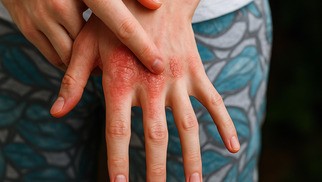
🧴 Most people with atopic dermatitis keep their skin under control with moisturisers, steroid creams and a careful routine. For a smaller group, that is never enough: the itch keeps them awake, flares come back within days of stopping a cream, and large areas of skin stay red and thickened for months. 💊 Baricitinib, sold as Olumiant, is one of the oral Janus kinase (JAK) inhibitors licensed in many countries for adults with moderate to severe atopic dermatitis who need a systemic treatment. This guide covers who is a realistic candidate, the 4 mg or 2 mg choice, blood tests, the first weeks, side effects and how it compares with injections and older tablets.
🎯 Who this guide is for
📋 This article is written for adults whose eczema has stayed active despite proper use of creams, and for family members who help them decide on the next step. It focuses on one question: is an oral JAK inhibitor such as baricitinib a sensible choice, and how is it used safely? It does not replace a dermatologist, who will weigh your own history, blood results and other medicines. 🌙 If your main problem is the night-time itch and broken sleep, start with our guide on night-time eczema itch and the scratch-itch cycle, which covers sleep, cooling, wet wraps and sedating antihistamines in detail.
🧬 What baricitinib is and how it calms eczema
🔬 Inflamed eczema skin is driven by chemical messengers called cytokines, such as IL-4, IL-13, IL-31 and interferon gamma. Many of them signal into the cell through enzymes called Janus kinases. Baricitinib blocks two of these enzymes, JAK1 and JAK2, so the inflammatory and itch signals are turned down inside the cell rather than one messenger at a time. That broad action explains both its speed on itch and its side effects: the same pathways also help fight infection and make blood cells.
🌍 Approval differs by country. Baricitinib is licensed for moderate to severe atopic dermatitis in the European Union, the United Kingdom, Japan and a number of other countries, while in the United States it is approved for rheumatoid arthritis and alopecia areata but not for eczema. The same tablet is described in our product page for Olumiant (Baricitinib), where it sits in the arthritis section because rheumatoid arthritis was its first licence.
🪜 Where baricitinib sits on the treatment ladder
📐 Eczema treatment is built in steps, and a JAK inhibitor belongs near the top, after the basic steps have been done properly. Many people who feel creams failed were never shown how much to apply.
✅ Who is a realistic candidate
💬 The strongest reason to choose a tablet is often practical: some people fear needles, travel a lot without a fridge, or want a treatment that can be stopped quickly if a problem appears.
🚫 Who should not take baricitinib
| 🚫 Situation | 📝 Why |
|---|---|
| Pregnancy | Contraindicated; animal studies showed harm to the developing baby |
| Active tuberculosis or serious active infection | JAK blockade weakens the defence against it |
| Severe kidney impairment (eGFR under 30) | Not recommended; the drug is cleared by the kidneys |
| Severe liver impairment | Not recommended; not studied |
| Very low blood counts | Neutrophils, lymphocytes or haemoglobin below set limits |
| Allergy to baricitinib | Rash, swelling or other reaction to a previous dose |
💡 Breastfeeding is also a reason to avoid it, and people who have had a blood clot in a leg or lung need a careful discussion, because clotting risk is one of the main safety concerns with every JAK inhibitor.
⚠️ The safety rule for older adults, smokers and heart risk
📜 A large safety study of another JAK inhibitor in older people with rheumatoid arthritis and heart risk factors found more heart attacks, strokes, blood clots, cancers and serious infections than with a comparison drug. In 2023 European regulators applied a class-wide rule to all JAK inhibitors used for inflammatory diseases, including baricitinib. The rule does not ban them in these groups, but it moves them behind other choices.
🧭 JAK inhibitors should only be used when no suitable alternative exists in people who:
🔹 Are aged 65 or older.
🔹 Smoke now or smoked for a long time in the past.
🔹 Have had a heart attack, stroke or other major cardiovascular problem, or have strong risk factors for one.
🔹 Have an increased risk of cancer, including a past cancer.
🔹 Have risk factors for blood clots; in them, the medicine is used with caution and a lower dose is often preferred.
🧪 Screening before the first tablet
🔎 Because baricitinib dampens part of the immune system, a short set of checks is done before the first dose to find hidden infections and baseline values. These results are the reference for every later test.
⚖️ 4 mg or 2 mg: how the dose is chosen
💊 The standard starting dose for adults with atopic dermatitis is 4 mg once daily. A lower dose of 2 mg is used from the start in some groups, and many people are stepped down to 2 mg once the skin has been under control for a while, which keeps most of the benefit with less exposure to the drug.
🫘 Kidney function and why it matters
💧 About three quarters of a baricitinib dose leaves the body unchanged in the urine. When the kidneys work less well, the drug builds up, so the dose has to follow kidney function, measured as eGFR on a routine blood test.
| 🩸 eGFR (mL/min/1.73 m²) | 💊 Dose in eczema | 📝 Comment |
|---|---|---|
| 60 or more | 4 mg once daily | Step down to 2 mg is possible once controlled |
| 30 to 59 | 2 mg once daily | Recheck kidney function regularly |
| Under 30 | Not recommended | Another treatment is chosen |
🕒 Taking it day to day
📆 Baricitinib has a short half-life of about 12 hours. Steady daily use matters more than the exact hour, so linking the tablet to a fixed habit such as breakfast or brushing teeth helps. Tell every doctor and dentist that you take it.
📈 What results to expect, and when
⏳ In the trials, itch was often the first thing to change. Many patients noticed less itch and better sleep within the first one to two weeks, while visible clearing of the skin built up over 8 to 16 weeks. Not everyone responds: a share of people see little change, and they are better moved to another treatment than kept waiting.
Itch starts to ease, sleep improves
Redness and oozing settle
Formal review of benefit
Maintenance, dose step-down
🚦 The 8-week review: keep, adjust or stop
📏 Product information advises considering stopping baricitinib if there is no evidence of benefit after 8 weeks. Doctors use the EASI score, an itch score from 0 to 10 and questions about sleep; photos from day one help.
Continue 4 mg, plan a step-down to 2 mg after sustained control
Check cream use and triggers, continue a few more weeks with a clear end point
Stop and switch to another systemic option
🧴 Combining the tablet with creams
🤝 In the main trials, baricitinib worked better when combined with topical steroids than when used alone, and that is how most dermatologists use it. The tablet lowers the background inflammation, while creams deal with the patches that remain. Calcineurin inhibitor ointments are used on the face, eyelids and folds where steroids thin the skin. Emollients stay the base of every day: applied thickly after washing, they repair the barrier that no tablet can rebuild.
🩸 Blood tests during treatment
| 🧪 Test | 📅 When | 🔎 What is looked for |
|---|---|---|
| Full blood count | At baseline, then periodically | Low neutrophils, low lymphocytes, anaemia, high platelets |
| Lipid profile | About 12 weeks after starting, then per local guidance | Rise in LDL and total cholesterol |
| Liver enzymes | Periodically | Rises that suggest liver injury |
| Kidney function | Periodically, more often in older adults | Fall in eGFR that requires a lower dose |
| Creatine kinase | If muscle pain appears | Muscle enzyme rise, usually without symptoms |
💡 If neutrophils, lymphocytes or haemoglobin fall below the treatment limits, the tablet is paused until the values recover. Most changes are small and reversible, but they are only caught if the tests are actually done.
📋 Common side effects
🔍 Most side effects in the eczema trials were mild. The two listed as very common are a rise in LDL cholesterol and upper respiratory infections such as colds and sore throats. Several others are listed as common.
👄 Cold sores and eczema herpeticum
🦠 People with eczema are already prone to herpes simplex infections, and baricitinib raises that risk further. Cold sores are common on treatment and usually stay small, but eczema herpeticum is an emergency: the herpes virus spreads over eczema skin as clusters of painful, punched-out blisters or crusted sores, often with fever and feeling unwell. It needs same-day antiviral treatment.
Tingling, a small group of blisters on the lip, healing in about a week
Spreading uniform sores on eczema areas, pain more than itch, fever
Oral antivirals; baricitinib is paused until healed
💊 The antivirals used are Valtrex (Valacyclovir) and Zovirax (Acyclovir); people with frequent cold sores sometimes keep a short course ready on medical advice. 📖 How these medicines work is explained in treating herpes with valacyclovir, and shingles, which is also more frequent on JAK inhibitors, in shingles: more than a skin rash.
🦠 Bacterial skin infections and acne
🔬 Eczema skin often carries Staphylococcus aureus, and broken skin lets it in. Yellow crusts, weeping, new pain or a hot, spreading red area suggest infection rather than a simple flare. Small infected patches are often treated with an antibiotic ointment such as Bactroban (Mupirocin) for a short course; wider infection, fever or red streaks need oral antibiotics and a doctor. 📖 The signs that separate a mild skin infection from cellulitis are covered in cellulitis and skin infections: what needs an antibiotic.
❤️ Cholesterol and the heart
📈 Baricitinib raises LDL and HDL cholesterol in many patients, typically within the first 12 weeks, after which the level tends to stay stable. For a young adult with no other risk factors this is rarely a problem, but it adds to the total heart risk in older people or those with diabetes, high blood pressure or a family history. If the rise is significant, doctors usually start a statin rather than stop an effective eczema treatment, and they look harder at smoking, weight and blood pressure.
🫁 Blood clots: signs that cannot wait
⚠️ Deep vein thrombosis and pulmonary embolism have been reported with JAK inhibitors. They are uncommon, but the warning signs need urgent attention, and the risk is higher with older age, obesity, a past clot, recent surgery, long immobility, cancer and oestrogen-containing medicines.
💉 Vaccines and infections while on treatment
🛡️ Inactivated vaccines such as flu, COVID-19, pneumococcal and the non-live shingles vaccine are safe on baricitinib, although the response may be a little weaker. Live vaccines, such as yellow fever, oral typhoid and MMR, should not be given during treatment or shortly before it, so travel plans need checking early. Ideally, vaccines are brought up to date before the first tablet.
🤒 During a serious infection with fever, pneumonia or an infection that needs antibiotics through a drip, the tablet is usually paused until you recover, then restarted. 📖 Practical advice on travel, vaccines and infection on any immune-lowering medicine is collected in living on immunosuppressants: monitoring, infection and vaccines.
🔗 Medicines that interact
| 💊 Medicine | ⚠️ Effect | 🛠️ What is done |
|---|---|---|
| Probenecid | Blocks the kidney transporter that clears baricitinib, so levels roughly double | Use 2 mg |
| Biologics and other JAK inhibitors | Added immune suppression | Not combined |
| Ciclosporin, azathioprine and similar | Added immune suppression and infection risk | Not combined in eczema |
| Long courses of oral steroids | Higher infection risk | Short courses only, with caution |
| Live vaccines | Risk of infection from the vaccine strain | Avoid during treatment |
| Combined pill, HRT with oestrogen | Extra clotting risk | Discuss contraception choice |
🤰 Pregnancy, contraception and breastfeeding
⛔ Baricitinib must not be taken in pregnancy. Women who could become pregnant use effective contraception during treatment and for at least one week after the last dose. If a pregnancy happens, the tablet is stopped and the doctor contacted at once. It is also not used while breastfeeding. Men on baricitinib have no specific restrictions on fathering a child in the product information, but planning should still be discussed.
📝 Planning a family with severe eczema: some treatments have more pregnancy experience than JAK inhibitors. Talk about plans several months ahead so the switch happens before conception, not after a positive test.
🔄 Baricitinib compared with other systemic options
📊 Several systemic treatments are now available, and the right one depends on age, other illnesses, pregnancy plans, needle tolerance and how fast relief is needed. None is best for everyone.
💡 Oral steroids such as Deltasone (Prednisolone) are sometimes used for a few days in a severe flare, but eczema guidelines advise against repeated or long courses, because the skin often rebounds when they stop and long-term side effects are significant. Upadacitinib and abrocitinib are other oral JAK inhibitors with the same warnings.
🌙 Itch relief while waiting for the effect
💤 The first nights can still be hard. Standard daytime antihistamines do little for eczema itch itself, but a sedating antihistamine at bedtime can help sleep during a bad flare. Atarax (Hydroxyzine) is the one most often used for this, for short periods and with care about next-day drowsiness and driving. Non-sedating options such as Zyrtec (Cetirizine) or Allegra (Fexofenadine) are more useful when hay fever, hives or allergic triggers run alongside the eczema, which is common in atopic people.
🗿 Myths and facts about JAK tablets for eczema
🚨 When to see a doctor
⛔ Get urgent help the same day if you take baricitinib and notice:
🔹 Clusters of painful, punched-out sores spreading over eczema skin, especially with fever: possible eczema herpeticum.
🔹 A swollen, painful calf, sudden breathlessness or chest pain: possible blood clot; call emergency services.
🔹 High fever, cough with breathlessness, or a hot spreading red area of skin: possible serious infection; pause the tablet and seek care.
🔹 A painful band of blisters on one side of the body: possible shingles, best treated within 72 hours.
🔹 A positive pregnancy test: stop the tablet and contact your doctor.
📖 Baricitinib is also used for rheumatoid arthritis; the monitoring there is similar, as described in moderate to severe rheumatoid arthritis.
❓ Frequently asked questions
Is baricitinib approved for atopic dermatitis?
Yes, in the European Union, the United Kingdom, Japan and several other countries, for moderate to severe disease. In the United States it is licensed for rheumatoid arthritis and alopecia areata, not eczema.
What is the usual dose of baricitinib for eczema?
4 mg once daily for most adults. 2 mg is used from age 75, with eGFR 30 to 60, with probenecid, and often after the skin has been controlled for some time.
How fast does baricitinib work for eczema itch?
Many people notice less itch within the first one to two weeks. Skin clearing builds over 8 to 16 weeks, and benefit is formally reviewed at 8 weeks.
Which blood tests are needed on baricitinib?
Before starting: TB and hepatitis screening, blood count, kidney and liver function and lipids. During treatment: blood count, liver and kidney tests periodically and lipids about 12 weeks after starting.
Can I keep using steroid creams with baricitinib?
Yes. In the trials it worked best together with topical steroids, and daily moisturiser should continue throughout treatment.
Does baricitinib cause cold sores?
Herpes simplex infections are a common side effect. Most are simple cold sores, but spreading sores on eczema skin with fever need same-day antiviral treatment.
Who should avoid JAK inhibitors for eczema?
Pregnant or breastfeeding women and people with active TB or serious infection. People aged 65 or older, smokers and those with heart, clot or cancer risk should use them only if no suitable alternative exists.
Can I have vaccines while taking baricitinib?
Inactivated vaccines such as flu, COVID-19 and the non-live shingles vaccine are fine. Live vaccines such as yellow fever and MMR should be avoided during treatment.
What happens if I stop baricitinib?
The drug leaves the body within days. Eczema usually returns gradually over the following weeks, so stopping is best planned with a doctor and a cream plan in place.
Is baricitinib better than an injection for eczema?
Neither is best for everyone. The tablet works fast on itch and avoids needles; injections avoid JAK safety warnings and need fewer blood tests. Age, heart risk and pregnancy plans decide.
📑 Sources and editorial
- 📘 European product information for baricitinib in atopic dermatitis, including dosing, kidney adjustment and monitoring
- 🔬 Randomised phase 3 trials of baricitinib in adults with moderate to severe atopic dermatitis, alone and with topical steroids
- ⚠️ European regulatory review of the safety of JAK inhibitors in chronic inflammatory disorders (2023)
- 🧴 European and national clinical guidelines on the systemic treatment of atopic eczema in adults
- 🦠 Dermatology reviews of eczema herpeticum and skin infection in atopic dermatitis
- 💉 Guidance on vaccination in people taking immunosuppressive medicines
- 📖 Related reading: night-time eczema itch, living on immunosuppressants, shingles, cellulitis and skin infections, treating herpes with valacyclovir
- 🛒 Related products: Olumiant (Baricitinib), Atarax (Hydroxyzine), Zyrtec (Cetirizine), Allegra (Fexofenadine), Bactroban (Mupirocin), Valtrex (Valacyclovir), Zovirax (Acyclovir), Methotrexate, Deltasone (Prednisolone)
- 🩺 RXshop Editorial Team — reviewed by Emily Chen, MD — Internal medicine
Medical Disclaimer: The information in this article is for educational and informational purposes only and is not a substitute for professional medical advice, diagnosis, or treatment. Always seek guidance from a qualified healthcare provider with any questions you may have regarding a medical condition, and before starting, stopping or changing any medication.