Fenofibrate for Diabetic Retinopathy: What the Trials Showed, Who Benefits and How It Fits With Laser and Eye Injections

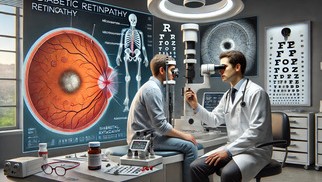

👁️ Diabetic retinopathy is damage to the tiny blood vessels at the back of the eye, and it is the most common cause of sight loss in working-age adults with diabetes. Most people know the main ways to protect the retina: steady blood sugar, good blood pressure and a yearly eye check. Fewer people know that an old cholesterol tablet, fenofibrate, has been shown in three large trials to slow the disease, even though it was never designed as an eye medicine. 🔍 This guide explains what the stages of retinopathy mean, what the FIELD, ACCORD Eye and LENS trials found, who is most likely to gain from fenofibrate, who gains little, how the dose and kidney checks work, which side effects and interactions matter, and why a tablet never replaces laser or eye injections when the eye needs them.
🧬 What diabetes does to the retina
🩸 The retina is a thin layer of nerve tissue that turns light into signals for the brain, and it is fed by some of the smallest blood vessels in the body. Years of high glucose stiffen and weaken the walls of these capillaries. The vessels start to leak, bulge and close off, and parts of the retina run short of oxygen. The starved tissue then sends out growth signals, mainly a protein called VEGF, which tells the eye to build new vessels. Those new vessels are fragile and grow in the wrong place, which is where the real danger to sight begins.
💡 Blood pressure, blood fats, smoking, kidney disease and the number of years with diabetes all speed this process up. That is why eye protection in diabetes is never one medicine; it is a set of small, steady controls that work together over decades.
📈 The four stages in plain words
🔎 Eye doctors grade retinopathy by what they see in the back of the eye. The early stages are called non-proliferative, because no new vessels have grown yet. The last stage, proliferative retinopathy, is the one that can cause sudden, severe loss of sight. Vision often stays perfect through the first three stages, which is why screening matters more than symptoms.
Tiny bulges in the vessels (microaneurysms)
Small bleeds, leaks and fatty spots
Large areas short of blood supply
New vessels, bleeding, scar tissue
📖 Macular edema: the change that blurs reading vision
💧 The macula is the small central part of the retina used for reading, faces and fine detail. When leaking vessels flood it with fluid, straight lines can look wavy, print looks smudged and colours look washed out. Diabetic macular edema is the most common reason people with diabetes lose reading vision, and it is now treated mainly with injections into the eye. Fenofibrate trials also tracked macular edema, which is part of why the drug attracted the interest of eye doctors.
🧈 Why blood fats matter to the eye
🔬 The yellow spots that eye doctors call hard exudates are deposits of fat and protein that have leaked out of damaged vessels. Older studies linked high triglycerides and low HDL cholesterol with more of these deposits and with more macular edema. This link is what first made researchers wonder whether a triglyceride-lowering drug might help the retina. As the trials later showed, the benefit of fenofibrate seems to come only partly from the change in blood fats, and much of it may come from direct effects on the vessels themselves. 📖 For the wider picture of high triglycerides with high LDL, see mixed dyslipidemia and when a statin is paired with fenofibrate.
💊 What fenofibrate is
🧪 Fenofibrate belongs to the fibrate family. It activates a switch inside cells called PPAR-alpha, mostly in the liver, which speeds up the burning and clearing of triglycerides. In practice it lowers triglycerides strongly, raises HDL a little and lowers LDL modestly. It has been used for decades for high triglycerides and mixed lipid disorders, and it is sold under many names, including Tricor (Fenofibrate).
🛡️ How fenofibrate may protect the retina
🧫 Laboratory and animal work suggests several actions that go beyond blood fats. None of them is proven to be the main one in people, but together they explain why the eye benefit in trials did not track closely with the drop in triglycerides.
🔬 FIELD: the first signal
📋 FIELD was a large trial of nearly 10,000 adults with type 2 diabetes who took micronised fenofibrate 200 mg or a placebo for about five years. Its main aim was heart protection, and on that score the result was disappointing. The surprise came from the eyes: people on fenofibrate needed laser treatment for retinopathy about a third less often, both for macular edema and for proliferative disease. A detailed eye sub-study with retinal photographs found that, in people who already had retinopathy at the start, fewer got worse on fenofibrate.
⚖️ ACCORD Eye: fenofibrate on top of a statin
🧪 In the ACCORD Lipid trial, people with type 2 diabetes who were all taking simvastatin were given either fenofibrate or a placebo. About 1,600 of them had eye photographs at the start and after four years. Retinopathy worsened in 6.5% of the fenofibrate group against 10.2% of the placebo group, a relative drop of about 40%. The same study found that tight glucose control also slowed retinopathy, while very tight blood pressure control added no extra eye benefit over standard control.
💡 This matters in daily practice: it shows that the eye benefit appears even when a statin is already in place, so fenofibrate is an add-on, not a swap for the statin that protects the heart.
🎯 LENS: a trial built around the eye
👁️ FIELD and ACCORD were heart trials with eye results attached. LENS, run in Scotland and reported in 2024, was the first large trial designed with the eye as its main target. It enrolled adults with diabetes found through routine eye screening to have early, non-referable retinopathy or mild maculopathy, and followed them for about four years. Progression to sight-threatening disease or eye treatment happened in 22.7% on fenofibrate and 29.2% on placebo, a relative reduction of about 27%. Macular edema was also less common on fenofibrate.
🧭 Reading the evidence honestly
🤔 Positive results from three trials are a strong signal, but they do not answer every question. The benefit is a slower decline, not a cure, and it does not reverse damage that is already there. Fenofibrate has also not been compared head to head with eye injections, and it is not meant to be.
🌏 Regulators have taken different views. Australia approved fenofibrate to slow the progression of diabetic retinopathy in type 2 diabetes years ago, while in many other countries it is licensed only for blood fats, and doctors use the eye evidence when deciding whether it suits a given patient.
✅ Who is most likely to benefit
➖ Who gains little
🚫 In FIELD, people with no retinopathy at the start did not show a clear eye benefit, so fenofibrate is not a routine eye vitamin for everyone with diabetes. People with advanced proliferative disease or macular edema that already threatens central vision need eye treatment first; a tablet that slows change over years cannot deal with an urgent problem in weeks. People with poor kidney function may not be able to take a dose that does anything useful, and people whose LDL is the main problem need a statin, not a fibrate. Gemfibrozil, a related fibrate, has no comparable eye evidence and should not be combined with a statin.
🏥 Fenofibrate does not replace eye treatment
📌 The simplest way to see the role of each option is by stage. Fenofibrate belongs in the early and middle stages, as one part of the background care, while laser and injections handle the stages that threaten sight.
| 👁️ Stage | ✅ Main care | ➕ Where fenofibrate fits |
|---|---|---|
| No retinopathy | Glucose, blood pressure, lipids, screening | Only if needed for blood fats |
| Mild to moderate | Same, with closer eye follow-up | Often discussed to slow progression |
| Severe non-proliferative | Close review, sometimes early laser | Possible add-on |
| Proliferative | Laser, injections, sometimes surgery | Add-on only, never instead |
| Macular edema in the centre | Anti-VEGF injections, sometimes steroid implant | Add-on only |
💉 Laser, injections and surgery at a glance
💡 These treatments save sight, but they work on the damage. The background care, including fenofibrate when it fits, works on the speed at which new damage appears, which can mean fewer injections and fewer laser sessions over the years.
🍬 Glucose control: steady beats sudden
📉 Lower long-term glucose is the strongest single protection for the retina, and every drop in HbA1c lowers the risk of retinopathy getting worse. Metformin, such as Glucophage (Metformin), remains a common first step, and SGLT2 inhibitors such as Dapavel (Dapagliflozin) add kidney and heart protection. One trap is worth knowing: a very rapid, large fall in glucose can make existing retinopathy temporarily worse, a pattern seen when insulin or strong injectable medicines are started in people with poor control.
⚠️ Before a big change in diabetes treatment:
🔹 If HbA1c is very high and you already have retinopathy, ask for an eye check before or soon after the change.
🔹 Tell your eye clinic when you start insulin or a new injectable glucose-lowering drug.
🔹 Early worsening is not a reason to stop good control; it is a reason to watch the eyes more closely for a year.
📖 If control is slipping, the options are explained in type 2 diabetes when metabolic control starts to collapse.
🩸 Blood pressure and the retina
💓 High blood pressure pushes more fluid through leaky retinal vessels and speeds up both retinopathy and macular edema. Keeping blood pressure in the target agreed with your doctor, often below 130/80 in diabetes, protects the eyes, kidneys and heart at the same time. ACE inhibitors and ARBs are the usual first choices in diabetes because they also protect the kidneys; examples include Zestril (Lisinopril), Cozaar (Losartan) and Micardis (Telmisartan). Some studies suggested a small extra eye benefit from blocking this hormone system, but the main point is reaching the target with whatever combination works.
📖 Retinopathy and kidney disease often travel together because they share the same small-vessel damage; see diabetic kidney disease, the silent complication you can still stop.
🧈 Statins and fenofibrate together
❤️ Most adults with diabetes over 40 are advised to take a statin to lower the risk of heart attack and stroke. A statin is the backbone; fenofibrate is an add-on chosen for the eyes or for high triglycerides. ACCORD Eye used simvastatin with fenofibrate, and the combination with fenofibrate carries a much lower risk of muscle problems than the old combination with gemfibrozil. Statin options include Lipitor (Atorvastatin) and Crestor (Rosuvastatin), and Zetia (Ezetimibe) is often added when LDL stays high.
Heart and stroke protection, lowers LDL
Slower retinopathy, lower triglycerides
Extra LDL lowering if the target is missed
📋 Dose and how to take it
💊 Fenofibrate comes in several forms that are not swapped milligram for milligram: micronised capsules or tablets of 160 to 200 mg, and newer nanocrystal tablets of 145 mg or 48 mg. The trials used the usual full daily dose, and the dose is lowered when kidney function is reduced. The tablet is taken once a day, and the older micronised forms are absorbed better with a meal.
⏳ The eye effect builds over years, so fenofibrate for retinopathy is a long-term tablet, judged at eye checks, not by how the eyes feel. Vision will not sharpen after starting it; the aim is that the next photographs look the same as the last ones.
🧪 Kidney and liver checks
📊 Fenofibrate often raises blood creatinine a little within the first weeks. This rise is usually a change in how creatinine is handled, and it goes back down if the drug is stopped, but it still needs to be tracked, because kidney function sets the safe dose. Liver enzymes can also rise.
⚠️ Side effects to know
💡 Most people take fenofibrate without trouble. Stomach upset is the most common complaint, and serious effects are rare, but some are worth knowing so they are reported early.
| 📋 Effect | 📊 How common | 📝 What to do |
|---|---|---|
| Stomach pain, nausea, wind | Common, often settles | Take with food |
| Raised liver enzymes | Uncommon | Found on blood tests; dose review |
| Muscle aches or weakness | Uncommon, more with a statin | Report at once, especially with dark urine |
| Gallstones | Uncommon | Pain under the right ribs needs a check |
| Pancreatitis | Rare | Severe upper belly pain going to the back |
| Blood clots in legs or lungs | Rare, slightly more in FIELD | Swollen calf or sudden breathlessness |
| Rash, sun sensitivity | Rare | Stop and seek advice |
🚫 Who should not take fenofibrate
| 🚫 Situation | 📝 Why |
|---|---|
| Severe kidney disease or dialysis | Drug builds up; kidney function may worsen |
| Active or serious liver disease | Fenofibrate is processed by the liver |
| Gallbladder disease | Raises the risk of gallstones |
| Past pancreatitis not caused by high triglycerides | Risk of a new attack |
| Pregnancy and breastfeeding | Not enough safety data |
| Past muscle damage on a fibrate or statin | Risk of a repeat reaction |
| Allergy or light-sensitivity reaction to fibrates | Reaction may return |
🔗 Interactions worth checking
📅 Eye screening: how often
📷 Retinal photographs catch changes long before vision suffers. Fenofibrate does not change the screening schedule; the eye check is still the only way to know whether treatment is working.
| 👤 Situation | 📅 Usual timing |
|---|---|
| Type 2 diabetes, newly diagnosed | Eye check at or soon after diagnosis |
| Type 1 diabetes | Within 5 years of diagnosis, then regularly |
| No retinopathy, good control | Every 1 to 2 years |
| Any retinopathy | At least yearly, more often as it advances |
| Pregnancy with diabetes | Early in pregnancy, then each trimester |
🌳 Is fenofibrate worth asking about?
🗿 Myths about fenofibrate and the eyes
🚨 When to see an eye doctor urgently
⛔ Get same-day eye care if you have diabetes and notice:
🔹 A sudden shower of new floaters, dark spots or cobwebs in your vision.
🔹 A shadow or curtain moving across part of the vision.
🔹 Sudden blurring, or straight lines that suddenly look bent.
🔹 Eye pain with redness and blurred vision, which can mean high eye pressure.
🔹 On fenofibrate: severe belly pain, dark urine with muscle pain, a swollen calf or sudden breathlessness also need prompt medical help.
📖 Other eye conditions that can mimic or sit alongside retinopathy are covered in macular degeneration: types, symptoms and treatment. Numb or burning feet often appear in the same years as eye changes; see diabetic neuropathy.
❓ Frequently asked questions
Does fenofibrate help diabetic retinopathy?
Yes, in trials it slowed the worsening of existing retinopathy and reduced the need for laser treatment. It does not reverse damage already present.
What did the LENS trial show?
In adults with early retinopathy, progression to sight-threatening disease or treatment occurred in 22.7% on fenofibrate and 29.2% on placebo over about four years.
Can fenofibrate replace eye injections or laser?
No. Injections and laser treat changes that threaten sight now. Fenofibrate is a background tablet that slows new damage over years.
Do I need high triglycerides to benefit?
No. The eye benefit in trials did not depend on the change in blood fats, although high triglycerides give a second reason to use it.
Can fenofibrate be taken with a statin?
Yes, this combination was used in ACCORD Eye. Muscle problems are uncommon, but muscle pain or dark urine should be reported at once.
Why does fenofibrate raise creatinine?
It changes how the body handles creatinine, so blood levels often rise a little and fall again after stopping. Kidney tests still guide the safe dose.
Who should not take fenofibrate?
People with severe kidney disease, active liver disease, gallbladder disease, pregnancy or breastfeeding, or a past muscle reaction to fibrates or statins.
How long before fenofibrate helps the eyes?
The effect builds over years and is seen at eye checks, not in how vision feels. The aim is that retinal photographs stay stable.
Can lowering blood sugar make retinopathy worse?
A very fast, large fall in glucose can briefly worsen existing retinopathy. Good control still protects the eyes, but closer eye checks are wise.
How often should people with diabetes have an eye check?
At least every 1 to 2 years with a healthy retina, yearly or more often with any retinopathy, and each trimester in pregnancy.
📑 Sources and editorial
- 📘 Prescribing information for fenofibrate, including dosing in kidney impairment, contraindications and interactions
- 🔬 Results and ophthalmology sub-study of the FIELD trial in type 2 diabetes
- ⚖️ ACCORD Eye study of fenofibrate added to simvastatin, and of intensive glucose and blood pressure control
- 🎯 LENS randomised trial of fenofibrate for early diabetic retinopathy and maculopathy
- 👁️ Ophthalmology guidance on grading, screening and treatment of diabetic retinopathy and macular edema
- 🩺 Diabetes care standards on glucose, blood pressure and lipid targets
- 📖 Related reading: mixed dyslipidemia, diabetic kidney disease, diabetic neuropathy, type 2 diabetes control, macular degeneration
- 🛒 Related products: Tricor (Fenofibrate), Lipitor (Atorvastatin), Crestor (Rosuvastatin), Zetia (Ezetimibe), Glucophage (Metformin), Dapavel (Dapagliflozin), Micardis (Telmisartan)
- 🩺 RXshop Editorial Team — reviewed by Daniel Kim, MD — Endocrinologist
Medical Disclaimer: The information in this article is for educational and informational purposes only and is not a substitute for professional medical advice, diagnosis, or treatment. Always seek guidance from a qualified healthcare provider with any questions you may have regarding a medical condition, and before starting, stopping or changing any medication.