Finasteride for Hair Loss: How Common Side Effects Really Are, What Happens When You Stop and How Healpecia Compares

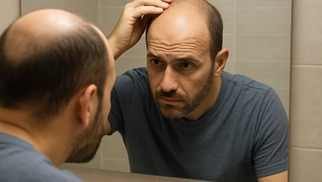
👨🦲 Male pattern baldness is the most common cause of hair loss in men, and finasteride is the tablet most often used to stop it. It is also the hair loss medicine people worry about most. Online forums are full of stories about lost libido, low mood and symptoms that never go away, while dermatologists describe it as one of the safest long-term treatments they prescribe. 🔍 Both sides have a point, and the truth sits in the numbers. This guide explains how finasteride works, how often side effects really happen in trials, why expectations change what men report, what the 2022 and 2025 safety updates on mood mean, what happens to your hair if you stop, and how the generic brands such as Healpecia, Propecia, Finpecia and Finax compare.
🧬 Why the hair thins in the first place
🔬 In men with a genetic tendency, follicles on the top and front of the scalp are sensitive to dihydrotestosterone (DHT), a stronger form of testosterone. DHT shortens the growth phase of each hair and shrinks the follicle a little with every cycle. The hair comes back thinner, shorter and lighter until the follicle produces only fine fuzz. The sides and back are resistant to DHT, which is why they stay full and why transplanted hair from there keeps growing. 📖 For the full picture of the Norwood stages and how the pattern develops, see androgenic alopecia in men: the pattern and the real timeline.
💊 How finasteride works
🛑 Finasteride blocks the type 2 form of the 5-alpha reductase enzyme, the one most active in the scalp and prostate. At 1 mg a day it lowers DHT in the scalp by about 60% and in the blood by about 70%, while testosterone stays normal or rises slightly. With less DHT, follicles that are shrinking but still alive can recover a longer growth phase and thicker hair. Follicles that have been dormant for many years usually cannot be revived, which is why the result depends so much on how early treatment starts.
📈 What results to expect, and when
⏳ Hair grows about 1 cm a month and each cycle lasts years, so no one can judge finasteride before 6 months, and the fair verdict comes at 12 months. In the long-term trials, around 9 in 10 men on finasteride kept their hair or regrew some over five years, while most men on placebo continued to lose hair. Regrowth is strongest at the crown; the frontal hairline responds less, and holding it in place is already a good result there.
⚖️ Side effects: what the trials actually found
📋 The original placebo-controlled studies in men aged 18 to 41 tracked every complaint for a year. Sexual side effects were reported by 3.8% of men on finasteride and 2.1% on placebo, so the extra risk caused by the drug was under 2 in 100 men. Most of these problems faded after stopping, and in many men they faded even while staying on the tablet.
| 📋 Side effect (first year) | 💊 Finasteride 1 mg | 🍬 Placebo |
|---|---|---|
| Lower sex drive | 1.8% | 1.3% |
| Erection problems | 1.3% | 0.7% |
| Ejaculation changes, less volume | 1.2% | 0.7% |
| Any sexual side effect | 3.8% | 2.1% |
💡 Less common effects include breast tenderness or enlargement, testicular discomfort, skin rash and, rarely, allergic swelling. Any lump in the breast or discharge from the nipple should be checked by a doctor.
🔢 The same numbers, out of 100 men
🧠 Why expectations change the side effects
🤔 Sexual function is very sensitive to worry. In a well-known trial, men starting finasteride were split into two groups: one was told that sexual side effects were possible, the other was not. Those who were warned reported sexual side effects about three times as often (around 44% against 15%). This is the nocebo effect, the dark twin of the placebo effect. It does not mean symptoms are imaginary; anxiety changes arousal and erections in a real, physical way. 📖 How performance anxiety affects erections is covered in psychogenic erectile dysfunction in young men.
💡 The practical lesson is not to hide information, but to know the real size of the risk. Men who start with the numbers above usually do better than men who start with the worst stories from a forum.
😔 Mood, depression and the 2025 safety review
⚠️ Low mood is the side effect that deserves the most attention. Reports of depression and suicidal thoughts in men on finasteride led the US regulator to add suicidal ideation to the label in 2022. In 2025, the European Medicines Agency confirmed suicidal ideation as a possible side effect of finasteride tablets and asked for a patient card that explains the warning. Such reactions are rare, but they are taken seriously because they can be dangerous and because men with a history of depression seem to be more vulnerable.
🧭 What this means in practice:
🔹 Tell the prescriber about any past depression, anxiety or suicidal thoughts before starting.
🔹 Ask a partner or close friend to tell you if your mood seems to change.
🔹 If you feel persistently low, lose interest in things or have dark thoughts, stop the tablet and speak to a doctor promptly. If you are in crisis, contact emergency services now.
📖 Signs of depression that are easy to miss in men are covered in major depressive disorder: a snapshot.
❓ Post-finasteride syndrome: what is known
🔎 Some men describe sexual, mental and physical symptoms that continue for months or years after stopping finasteride, a pattern called post-finasteride syndrome. Its existence as a separate condition is debated: cases are real and distressing, but there is no test for it, the numbers are unknown, and large studies have not proven that the drug is the cause in every case. Product labels now mention reports of sexual problems that persisted after stopping. The honest summary is that persistent symptoms appear to be rare, but the risk is not zero and should be part of the decision.
👶 Fertility, semen and planning a family
🧬 Finasteride can lower semen volume and, in some men, sperm count and movement. These changes reverse within a few months of stopping. Men with fertility problems, or couples trying for a baby without success, are often advised to pause finasteride while trying and to have a semen test if things do not improve. The amount of drug in semen is tiny, and it is not considered a risk to a pregnant partner. 📖 For low desire with or without hair treatment, see reduced libido: causes and treatment.
🤰 Women, pregnancy and handling tablets
⛔ DHT is needed for normal genital development in a male baby. For this reason women who are or may become pregnant should not take finasteride or handle crushed or broken tablets, since the powder can be absorbed through the skin. Whole coated tablets are safe to touch. Finasteride is not approved for hair loss in women; some doctors use it off-label after menopause. 📖 Treatment options for women are covered in female pattern hair loss: what to rule out first.
🩺 PSA and the prostate: tell your doctor
🧪 Finasteride lowers the PSA blood test by roughly half in men aged 40 and over. If a doctor does not know you take it, a normal-looking PSA could hide a real rise. Doctors usually double the PSA value in men on finasteride, and a PSA that climbs while on treatment is a reason for review. Large prostate studies with the 5 mg dose found fewer prostate cancers overall but a small increase in high-grade tumours detected, a finding many experts now link to easier detection in smaller prostates. 📖 The 5 mg dose is a treatment for an enlarged prostate; see benign prostatic hyperplasia.
Men over 40 may get a baseline PSA
Result is usually doubled to compare
Needs a doctor review
🚫 Who should not take finasteride
| 🚫 Situation | 📝 Why |
|---|---|
| Women who are or may become pregnant | Risk to a male baby; do not handle broken tablets |
| Children and teenagers under 18 | Not studied or approved |
| Allergy to finasteride | Rash, swelling, hives |
| Past depression or suicidal thoughts | Use only after discussion and with close follow-up |
| Couples with fertility problems | Can lower sperm count; often paused |
| Serious liver disease | Finasteride is broken down by the liver |
⏪ What happens if you stop
📉 Finasteride controls the cause; it does not cure it. When the tablets stop, DHT returns to its old level within a couple of weeks, and the hair gained is usually lost over 6 to 12 months. After that, hair loss continues as if treatment had never happened. There is no rebound worse than before, and no withdrawal symptoms in the usual sense. Men who stop because of side effects should know what to expect for their hair, and men who stop for other reasons should know that restarting later will save less hair than continuing.
DHT returns to baseline
Shedding increases
Gains largely lost
Natural pattern continues
🛠️ If side effects appear: the options
🏷️ Healpecia, Propecia, Finpecia, Finax: how the brands compare
💊 All of these contain the same active ingredient at the same 1 mg dose. Generic finasteride must deliver the same amount of drug into the blood as the original, so the effect on DHT and hair is the same. Differences lie in price, tablet coating, pack size and manufacturer.
💡 Prosacar and Proscar are 5 mg tablets made for an enlarged prostate. Cutting them into pieces for hair loss gives uneven doses and creates powder that pregnant women should not touch, so a 1 mg product is the cleaner choice.
💧 Finasteride and minoxidil: two different jobs
| 🔍 Feature | 💊 Finasteride | 💧 Minoxidil |
|---|---|---|
| How it works | Lowers DHT, removes the cause | Lengthens the growth phase, feeds the follicle |
| Hormonal effects | Yes | No |
| Best at | Stopping loss | Thickening existing hair |
| Main side effects | Sexual, mood (rare) | Scalp itch, early shedding; with tablets, extra body hair, swelling |
| Forms | Tablet, topical spray | Solution, foam, low-dose tablet |
➕ Used together, the two give better results than either alone, which is why many men combine them. Options include Minoxiboon and Morr solutions, or low-dose tablets such as Lonitab (Minoxidil) used under medical advice.
🧴 Topical finasteride: a lower-exposure option
💦 Finasteride sprays and solutions applied to the scalp are approved in some European countries and made by compounding pharmacies elsewhere. They lower scalp DHT while producing much smaller drops in blood DHT than tablets, which in theory should mean fewer whole-body side effects. Some of the drug is still absorbed, so the pregnancy and mood precautions remain. Trials show hair results close to the tablet, but long-term data are thinner, and quality varies between compounded products.
Lower blood levels of the drug
Daily application, less long-term data
Men who had mild effects on tablets
🪒 Finasteride and hair transplants
🔪 Transplanted follicles come from the DHT-resistant back of the scalp, so they keep growing without medicine. The native hair around them, however, keeps thinning, which can leave an island of transplanted hair in front of a growing bald patch. For this reason most surgeons recommend finasteride or minoxidil before and after surgery, especially in men under 35 whose pattern is still developing. Medicine first, surgery later is also cheaper: some men find they no longer need the operation once loss has stopped.
🔬 Dutasteride: the stronger relative
🧪 Dutasteride blocks both forms of 5-alpha reductase and lowers blood DHT by about 90%, against about 70% for finasteride. Trials show somewhat more hair growth than finasteride, and it is approved for hair loss in South Korea and Japan; elsewhere it is used off-label at 0.5 mg. It stays in the body for weeks, so side effects take longer to clear and men should not donate blood while taking it or for six months after. Options include Avodart and Avosteride (Dutasteride).
🌳 Which route fits you?
📷 How to track progress honestly
📋 Taking it day to day
💊 Finasteride has very few drug interactions. Men already taking medicines for the prostate, heart or mood should still mention the tablet to every doctor they see, mainly because of the PSA effect and mood monitoring.
🗿 Myths about finasteride
🚨 When to see a doctor
⛔ Stop finasteride and get medical advice if:
🔹 Your mood drops, you lose interest in life, or you have thoughts of self-harm.
🔹 You notice a breast lump, pain or nipple discharge.
🔹 You get swelling of the lips, face or throat, or a widespread rash.
🔹 Sexual problems are severe or last after stopping.
🔹 Hair falls out in patches or very quickly, which suggests a different cause.
📖 If the hairline is the main worry, see receding hairline: mature hairline or balding. If erections change for reasons unrelated to the tablet, see erectile dysfunction: a practical guide.
❓ Frequently asked questions
Is finasteride safe to take long term?
For most men, yes. Trials lasting five years and decades of use show a low rate of side effects, but mood, sexual function and PSA should be monitored.
How common are finasteride sexual side effects?
In trials, about 3.8% of men on finasteride reported a sexual side effect, against 2.1% on placebo. Most cases resolved after stopping.
Do finasteride side effects go away?
In the large majority of men, yes, usually within weeks of stopping and often while continuing. Rare reports of persistent symptoms exist.
What happens if I stop taking finasteride?
DHT returns to normal within weeks and the hair gained is usually lost over 6 to 12 months. There is no rebound beyond your natural pattern.
Does finasteride lower testosterone?
No. It reduces the conversion of testosterone into DHT, so testosterone stays normal or rises slightly.
Can finasteride cause depression?
Rarely. Regulators list low mood and suicidal thoughts as possible side effects. Stop and see a doctor if your mood changes.
How long does finasteride take to work?
Shedding usually slows by 3 to 6 months, visible thickening appears at 6 to 12 months, and peak results come around 2 years.
Is Healpecia the same as Propecia?
Both contain finasteride 1 mg. Generic versions must deliver the same amount of drug, so the effect on hair is the same.
Can women touch finasteride tablets?
Whole coated tablets are safe to touch. Pregnant women, or women who may become pregnant, should not handle crushed or broken tablets.
Does finasteride affect fertility?
It can lower semen volume and sometimes sperm count, which recovers after stopping. Couples with fertility problems often pause it.
📑 Sources and editorial
- 📘 Prescribing information for finasteride 1 mg, including placebo-controlled side effect data
- 🔬 Five-year clinical trials of finasteride in men with androgenetic alopecia
- 🧠 Randomised study of counselling and reported sexual side effects of finasteride
- ⚠️ Regulatory safety reviews on finasteride and suicidal ideation (2022 and 2025)
- 🩺 Prostate cancer prevention trials and guidance on PSA in men taking 5-alpha reductase inhibitors
- 💊 Comparative trials of dutasteride and finasteride for hair loss
- 📖 Related reading: androgenic alopecia in men, receding hairline, female pattern hair loss, benign prostatic hyperplasia
- 🛒 Related products: Healpecia (Finasteride), Propecia (Finasteride), Finpecia (Finasteride), Finax (Finasteride), Lonitab (Minoxidil), Avodart (Dutasteride)
- 🩺 RXshop Editorial Team — reviewed by Michael Reeves, MD — Urologist
Medical Disclaimer: The information in this article is for educational and informational purposes only and is not a substitute for professional medical advice, diagnosis, or treatment. Always seek guidance from a qualified healthcare provider with any questions you may have regarding a medical condition, and before starting, stopping or changing any medication.