Fungal Acne (Malassezia Folliculitis): How to Tell It From Acne, Why Antibiotics Fail and Which Antifungals Clear It

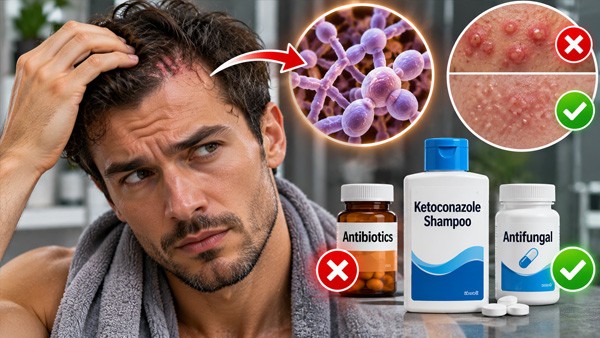

🔍 Small, itchy, same-sized bumps across the upper back, chest and shoulders that look like acne but refuse to clear with acne creams or antibiotics: this is the typical picture of Malassezia folliculitis, often called fungal acne. 🍄 It is not acne at all. It is an overgrowth of a yeast that lives on the skin of everyone, inside the hair follicles. ⏳ Because it looks so similar to ordinary spots, many people spend months on the wrong treatment, and antibiotics can even make it worse. This guide explains how to recognise fungal folliculitis, how it differs from acne and bacterial folliculitis, how doctors confirm it, which antifungal treatments work and for how long, and how to stop it coming back.
🍄 What fungal folliculitis actually is
🧫 Malassezia is a yeast that lives harmlessly on the skin of almost every adult. It feeds on skin oil, so it is most plentiful where oil glands are busiest: the scalp, face, chest and upper back. When conditions favour it, the yeast multiplies inside hair follicles, and the follicle walls become inflamed. The result is a rash of tiny red bumps and pustules, each centred on a follicle. 📖 The older name, Pityrosporum folliculitis, refers to the same yeast. The same organism also causes dandruff, seborrheic dermatitis and pityriasis versicolor, which is why these conditions often appear together.
👀 What it looks and feels like
- 🔴 Small red bumps and pustules, about 1 to 3 mm, strikingly uniform in size
- 🤏 Itching, often marked, and worse after exercise, heat or sweating
- 🚫 No blackheads or whiteheads (comedones), and rarely deep, painful cysts
- 📍 Clusters on the upper back, chest, shoulders and upper arms; sometimes the hairline, forehead or jawline
- 📅 Flares in summer, humid climates or after a holiday in the heat
- 💊 No improvement, or worsening, on acne treatment or antibiotics
📍 Where it appears
🔥 Who gets it and why
👨 Fungal folliculitis is most common in teenagers and young adults, when oil production peaks, and it is seen more often in men. Anything that adds heat, moisture or oil to the skin, or upsets its normal balance of microbes, makes overgrowth more likely.
⚖️ Fungal acne or ordinary acne?
🤔 The two are easy to confuse, and they can exist at the same time. The single most useful clue is the absence of comedones: true acne almost always has blackheads or whiteheads somewhere. Itching points strongly towards yeast, while acne is usually sore rather than itchy.
| 🔎 Feature | 🍄 Fungal folliculitis | 🔴 Acne vulgaris |
|---|---|---|
| Main symptom | Itch | Soreness, tenderness |
| Size of spots | Uniform, 1 to 3 mm | Mixed: tiny to large |
| Blackheads, whiteheads | Absent | Present |
| Cysts and nodules | Rare | Common in moderate to severe acne |
| Usual site | Upper back, chest, shoulders | Face first, then back and chest |
| Heat and sweat | Clear trigger | Minor effect |
| Response to antibiotics | None or worse | Usually improves |
| Response to antifungals | Clears in weeks | No effect |
📖 More on true acne and its treatment: acne treatment with retinoids and isotretinoin.
🦠 Other look-alikes
🔬 How doctors confirm it
🧴 Treatment step 1: antifungal washes
🚿 For mild to moderate cases, the first step is an antifungal shampoo used as a body wash on the affected skin. Ketoconazole 2% is the best-studied option; selenium sulfide and zinc pyrithione shampoos are alternatives. ⏱️ The key is contact time: the lather must stay on the skin for several minutes before rinsing.
🛒 Ketoconazole shampoo and cream are available as Fungicyte (Ketoconazole) and Nizoral (Ketoconazole). Mild stinging and dryness are the usual side effects; a light, oil-free moisturiser helps.
🧴 Treatment step 2: antifungal creams
🧴 An azole cream, such as ketoconazole 2% cream, can be applied once or twice daily to smaller areas, or added to the wash for stubborn patches. Creams are practical on the face and jawline, but hard to apply to the whole back, which is why washes come first for large areas. Ciclopirox and econazole are other options. 🚫 Terbinafine creams are less reliable against Malassezia than against ringworm fungi.
💊 Treatment step 3: antifungal tablets
📊 Malassezia lives deep in the follicle, where creams struggle to reach. For widespread, severe or recurrent folliculitis, short courses of oral antifungals work faster and more reliably than topical treatment alone, and doctors often combine the two.
💊 Itraconazole
📋 Commonly 200 mg once daily for 1 to 3 weeks
✅ Sporanox (Itraconazole); capsules taken with a full meal
⚠️ Many interactions; not used in heart failure
💊 Fluconazole
📋 Commonly 100 to 200 mg daily for 1 to 4 weeks, or a weekly dose
✅ Fluconaz (Fluconazole), Diflucan (Fluconazole)
⚠️ Interacts with warfarin and some heart rhythm drugs
🚫 Not used
❌ Oral ketoconazole: restricted because of liver injury
❌ Oral terbinafine and griseofulvin: poor activity against Malassezia
📊 How the treatments compare
📅 What to expect week by week
Itching eases first, often within days
Fewer new bumps; pustules dry up
Most bumps gone; pink marks fade
Maintenance wash once or twice a week
🔁 Why it comes back, and how to stop it
🔄 Antifungals reduce the yeast, but they cannot remove it from the skin for good, because it is a normal resident. Relapse is common, particularly in hot weather and in people with oily skin, and many people notice it returning within months of stopping treatment. 🛡️ A maintenance routine keeps the yeast at a level the skin tolerates.
🧴 Skin care: what to use and what to avoid
🧪 Malassezia feeds on certain fats, so heavy oils and rich creams can encourage it. Evidence on individual ingredients is limited, but a simple, light routine is sensible while the rash is active.
🧩 Fungal folliculitis and other yeast-related skin problems
🔗 People with fungal folliculitis often also have dandruff or seborrheic dermatitis, with flaky, red patches on the scalp, eyebrows and sides of the nose. Treating all affected areas at once lowers the chance of relapse, since the yeast moves between them. The same ketoconazole shampoo works on the scalp; see dandruff and seborrheic dermatitis: shampoos that work. 🦦 Fungal infections caused by other organisms, such as athletes foot or nail fungus, need different drugs; see athletes foot treatment and nail fungus treatment.
⚠️ Safety of antifungal tablets
| 💊 Issue | 📝 What to know |
|---|---|
| 💊 Drug interactions | Itraconazole and fluconazole raise levels of many drugs, including some statins, blood thinners, sedatives and heart rhythm drugs. Always share your full medicine list |
| ❤️ Heart | Itraconazole is avoided in heart failure; fluconazole can affect heart rhythm with some drugs |
| 🫀 Liver | Short courses are usually well tolerated; report dark urine, yellow eyes or severe nausea |
| 🤰 Pregnancy | Oral azoles are generally avoided; topical washes are preferred |
| 🍽️ Food and acid | Itraconazole capsules need a full meal; antacids and stomach acid blockers reduce absorption |
📋 A typical treatment plan
🧭 Plans differ from person to person, but most follow the same shape: clear the overgrowth, remove the triggers, then keep the yeast down. The example below shows how a doctor might set it out for a moderate rash on the back and chest.
🛡️ Special situations
🍬 Diabetes
✅ Better blood sugar control lowers relapse risk
💡 Check fluconazole interactions with some diabetes tablets
🛡️ Weak immunity
✅ After transplant, chemotherapy or with HIV, oral treatment is often needed
💡 Interactions with transplant drugs need specialist advice
🛏️ In hospital
✅ Common in patients on antibiotics and steroids lying on their backs
💡 Washes and regular turning help
🏃 Athletes
✅ Sweat under tight kit is a major trigger
💡 Shower and change straight after training
🗣️ Questions to ask your doctor
- ❓ Could this be fungal rather than ordinary acne, and can a scraping confirm it?
- ❓ Should I stop my current antibiotic or acne cream?
- ❓ Is a wash enough, or do I need tablets as well?
- ❓ Do any of my other medicines interact with itraconazole or fluconazole?
- ❓ How should I prevent it coming back next summer?
🗿 Myths about fungal acne
🚨 When to see a doctor
⛔ See a doctor promptly if:
🔹 The rash is spreading fast, painful, hot or swollen, or you have a fever.
🔹 You have diabetes, take immune-suppressing drugs or have had a transplant.
🔹 The bumps appeared after steroid treatment or a hospital stay.
🔹 There is no clear improvement after 4 weeks of proper antifungal treatment.
📅 A routine visit is also worthwhile if the rash keeps returning, if you are unsure whether it is acne or yeast, or before starting antifungal tablets, so that interactions with your other medicines can be checked.
❓ Frequently asked questions
What is fungal acne?
It is Malassezia folliculitis: an overgrowth of a normal skin yeast inside hair follicles, causing itchy, uniform bumps that look like acne.
How can I tell fungal acne from regular acne?
Fungal acne itches, the bumps are all the same size, there are no blackheads or whiteheads, and it does not improve with antibiotics.
Does ketoconazole shampoo work on the body?
Yes. Used as a body wash and left on for 5 minutes daily for 2 to 4 weeks, it is the usual first treatment for mild cases.
How long does fungal folliculitis take to clear?
Itching usually eases within a week and most bumps clear in 2 to 4 weeks. Marks on darker skin can take months to fade.
When are antifungal tablets needed?
For widespread, severe or recurrent cases. Itraconazole or fluconazole for 1 to 4 weeks, often combined with a wash, work faster than creams alone.
Can antibiotics cause fungal folliculitis?
Yes. Antibiotics, especially long courses for acne, reduce skin bacteria and let the yeast overgrow.
Does terbinafine work for fungal acne?
Oral terbinafine has poor activity against Malassezia. Azoles such as ketoconazole, itraconazole and fluconazole are used instead.
Is fungal folliculitis contagious?
No. It is an overgrowth of the yeast already living on your own skin, not an infection passed between people.
Why does it keep coming back?
The yeast is a normal skin resident and regrows in heat and sweat. A weekly antifungal wash helps prevent relapses.
Can fungal acne appear on the face?
Yes, along the hairline, forehead and jawline, though the back, chest and shoulders are far more common.
📑 Sources and editorial
- 📘 Dermatology reviews of Malassezia (Pityrosporum) folliculitis: clinical features and diagnosis
- 🔬 Studies of potassium hydroxide microscopy and biopsy in folliculitis
- 💊 Clinical trials and case series of oral itraconazole and fluconazole for Malassezia folliculitis
- 🧴 Studies of topical ketoconazole and selenium sulfide for Malassezia skin disease
- ⚠️ Regulatory safety communications restricting oral ketoconazole
- 🧪 Reviews of Malassezia biology and lipid dependence
- 📖 Related reading: dandruff and seborrheic dermatitis, acne treatment, athletes foot, nail fungus
- 🛒 Related products: Fungicyte (Ketoconazole), Nizoral (Ketoconazole), Sporanox (Itraconazole), Fluconaz (Fluconazole), Diflucan (Fluconazole)
- 🩺 RXshop Editorial Team — reviewed by Emily Chen, MD, MPH — Internal Medicine
Medical Disclaimer: The information in this article is for educational and informational purposes only and is not a substitute for professional medical advice, diagnosis, or treatment. Always seek guidance from a qualified healthcare provider with any questions you may have regarding a medical condition, and before starting, stopping or changing any medication.