Dermatomyositis: Rash, Muscle Weakness, Antibody Tests, Cancer Checks and Treatment With Prednisolone and Methotrexate


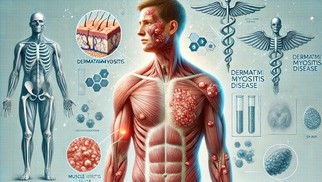
🧬 Dermatomyositis is a rare autoimmune disease in which the immune system inflames the small blood vessels of the skin and muscles. It usually announces itself in two ways at once: a violet or red rash on the eyelids, knuckles, chest or shoulders, and a slowly growing weakness that makes stairs, chairs and lifting the arms above the head harder each week. Because the rash is often mistaken for eczema, rosacea or sun damage, and the weakness for tiredness, the diagnosis is frequently made months late. 🔍 This guide explains how dermatomyositis is recognised, which blood and antibody tests matter, why every adult needs a careful cancer and lung check, and how treatment is built around prednisolone and steroid-sparing medicines such as methotrexate and azathioprine, with practical advice on side effects, exercise and the long road to remission.
🧬 What dermatomyositis is
🔬 Dermatomyositis belongs to a group of diseases called idiopathic inflammatory myopathies, together with polymyositis, inclusion body myositis, necrotising myopathy and the antisynthetase syndrome. What sets dermatomyositis apart is that the immune attack targets the tiny vessels feeding the muscle and skin, rather than the muscle fibres directly. Complement proteins and interferon signals damage these capillaries, the edges of each muscle bundle lose blood supply, and the fibres there shrink and weaken. The same process in the skin produces the typical rash. The exact cause is unknown, but a mix of inherited immune genes and an outside trigger is the leading explanation.
👥 Who gets it
📅 Dermatomyositis has two peaks. Adults are usually diagnosed between 40 and 60, and children between about 5 and 14, when it is called juvenile dermatomyositis. Women are affected roughly twice as often as men. It is rare: a family doctor may see only one or two cases in a whole career, which is one reason the early signs are easily missed. Sun exposure seems to matter, since some studies find it more common in sunnier regions, and many patients first notice the rash after a holiday or a summer spent outdoors.
Peak age 40 to 60, link with cancer, lung disease more common
Peak age 5 to 14, more calcium deposits, no cancer link
Rash without weakness, called amyopathic dermatomyositis
🌸 The skin signs doctors look for
👁️ The rash often appears weeks or months before any weakness. Its colour is usually violet, dusky red or pink, it can itch intensely, and it gets worse after sun exposure. Several patterns are so typical that an experienced dermatologist can suspect the disease from a single look at the hands and face.
📖 Some of these features overlap with lupus, which also flares in the sun. The differences between the rash types of lupus and their treatment are covered in cutaneous lupus rash types and the treatment ladder. A useful clue: lupus on the hands tends to spare the knuckles, while dermatomyositis sits right on top of them.
💪 The pattern of muscle weakness
🚶 The weakness of dermatomyositis is symmetrical and affects the large muscles closest to the trunk: hips, thighs, shoulders, upper arms and neck. It develops over weeks to months, and pain is usually mild or absent, which surprises many people who expect inflamed muscles to hurt. Hands and feet stay strong until late. People often describe the problem in terms of daily tasks rather than weakness.
🫁 Beyond skin and muscle
🧭 Dermatomyositis is a whole-body disease, and the organs outside the skin and muscle decide much of the outlook. The lungs are the most important of these, but the heart, joints, gut and blood vessels can all be involved. Doctors ask about each of them at diagnosis and at every review.
🧊 Fingers that turn white and then blue in the cold are common in myositis and in related conditions such as scleroderma; see Raynaud disease for how this is managed day to day.
🩸 Blood tests that point to the diagnosis
🧪 When muscle fibres are damaged, their enzymes leak into the blood. Creatine kinase (CK) is the most useful marker, and its level helps track the response to treatment, although it does not measure strength directly. In some people CK stays normal despite active disease, so a normal result never rules dermatomyositis out on its own.
| 🧪 Test | 📋 What it shows | ⚠️ Pitfall |
|---|---|---|
| Creatine kinase (CK) | Muscle damage; often raised several times above normal | Can be normal in skin-predominant or early disease |
| Aldolase | Another muscle enzyme | Sometimes raised when CK is normal |
| AST and ALT | Released from muscle as well as liver | Often misread as a liver problem |
| LDH | General tissue damage | Not specific to muscle |
| ESR and CRP | Inflammation in the body | May be normal even with active myositis |
| Myositis antibody panel | Subtype, cancer and lung risk | Results take days to weeks |
🧬 Myositis antibodies and what each one predicts
🔎 About two thirds of people with dermatomyositis carry a myositis-specific antibody. Each antibody is linked to a typical pattern of disease, so the result changes which tests come next and how strong treatment needs to be. Only one antibody is usually found in each person.
🔬 MRI, EMG and biopsy: confirming the diagnosis
🏥 When the skin signs are typical and an antibody is found, the diagnosis can sometimes be made without a muscle biopsy. In less clear cases, doctors combine imaging, nerve testing and tissue samples to confirm inflammation and rule out other muscle diseases.
🧴 Dermatomyositis without weakness
🌸 In clinically amyopathic dermatomyositis, the typical rash is present for at least six months, but strength stays normal and CK is normal or only slightly raised. It is easy to dismiss as a skin problem, yet it carries the same need for cancer screening and lung checks. People with the anti-MDA5 antibody often have this pattern, and in them lung disease can progress quickly, so a simple breathing test and chest CT are part of the work-up even when the muscles seem fine.
🧭 Skin-only does not mean mild:
🔹 Cancer screening is still recommended in adults.
🔹 Breathlessness or a dry cough should prompt a lung assessment without delay.
🔹 The rash itself can be very itchy and resistant, and often needs tablets, not only creams.
🔎 Conditions that can look similar
🩺 Several common problems cause weakness, raised CK or a facial rash. Ruling them out is part of a careful diagnosis, and a few of them, such as statin-related muscle disease, need a completely different approach.
| 🔎 Condition | 📋 Clues | 🧪 Usual check |
|---|---|---|
| Underactive thyroid | Weakness, cramps, raised CK, weight gain, cold intolerance | Thyroid blood test |
| Statin muscle disease | Aching or weakness on cholesterol tablets; a rare immune form persists after stopping | Medicine history, HMGCR antibody |
| Polymyalgia rheumatica | Shoulder and hip pain and stiffness after age 50, normal CK | ESR, CRP, quick response to low-dose steroid |
| Lupus | Facial rash, joint pain, kidney or blood changes | ANA, dsDNA, urine test |
| Inclusion body myositis | Age over 50, weak finger grip and knees, slow course, no rash | Muscle biopsy |
| Rosacea, eczema, psoriasis | Facial redness or scaly scalp without weakness | Skin examination, biopsy if unsure |
🎗️ The cancer link and how screening works
📊 In adults, dermatomyositis can be the first sign of a hidden cancer, a so-called paraneoplastic syndrome. Between about 15 and 30% of adult cases are linked to a cancer, most often found in the year before or the three years after diagnosis. Ovarian, lung, breast, stomach, bowel, pancreatic and nasopharyngeal cancers and lymphoma are among the most frequent. Treating the tumour often calms the myositis too. The risk is higher in people over 40, in those with anti-TIF1-gamma or anti-NXP2 antibodies, with skin ulcers, or with disease that resists treatment, and lower with anti-Mi-2 or lung-dominant antisynthetase disease.
🫁 Lung involvement: the complication to catch early
🌬️ Interstitial lung disease means inflammation and scarring of the thin walls between the air sacs. It affects a large minority of adults with myositis and is a leading cause of serious illness, especially with anti-MDA5 and antisynthetase antibodies. Early signs are a dry cough and breathlessness on stairs, which are easily blamed on the muscle weakness itself. Lung function tests including gas transfer and a high-resolution CT scan of the chest are standard at diagnosis.
⚠️ Why lung disease changes the treatment plan:
🔹 It usually calls for stronger combination treatment from the start, not prednisolone alone.
🔹 Mycophenolate, tacrolimus, rituximab or cyclophosphamide are often chosen when the lungs are involved.
🔹 Rapidly worsening breathlessness with anti-MDA5 is a medical emergency that needs hospital care.
💊 Prednisolone: the first step of treatment
🔥 Corticosteroids remain the first treatment for most people with active dermatomyositis, because they act within days to weeks. Prednisolone and prednisone are the usual tablets, typically started at about 1 mg per kg of body weight a day, often capped at around 60 to 80 mg, and kept at that level for about four to six weeks until strength begins to return and CK falls. In severe disease, such as rapid weakness, swallowing problems or lung or heart involvement, treatment may begin with three days of intravenous methylprednisolone in hospital. Prednisolone tablets are available as Deltasone (Prednisolone) and Predniheal (Prednisolone), in strengths that make a slow taper easier.
📋 How it is usually taken
🌅 Once daily in the morning, with breakfast
📆 Full dose for about 4 to 6 weeks, then a slow taper
🚫 Never stopped suddenly after more than a few weeks
📊 What usually improves
✅ CK level: often falls within weeks
✅ Muscle strength: slower, over months
➖ Skin rash: often lags behind the muscles
➖ Calcium deposits: respond poorly
❌ Cancer-driven disease: needs the tumour treated
⏱️ Strength returns more slowly than the blood tests improve, because damaged fibres have to regrow. Many people need three to six months to regain most of their strength, and some never fully recover the muscle lost before treatment, which is another reason early diagnosis matters.
📉 How the steroid taper works
🪜 Once the disease is clearly improving, the dose is lowered step by step over many months. A taper that is too fast is the most common reason for a flare, while a taper that is too slow piles up side effects. A steroid-sparing medicine started early allows a faster and safer reduction.
Full dose, add methotrexate or azathioprine
Reduce gradually toward about 20 mg
Smaller steps toward 5 to 10 mg
Lowest dose or off, steroid-sparing drug continues
📖 The adrenal side of tapering, including the warning signs of adrenal insufficiency, is explained in stopping prednisolone after long-term use.
🛡️ Protecting the body during long steroid treatment
🦴 High doses for months are effective but come with a predictable list of side effects: weight gain, raised blood sugar, high blood pressure, thinning bones, mood and sleep changes, cataracts and a higher risk of infection. Most of these can be reduced by planning ahead rather than reacting later.
📖 Bone protection is especially important for women after menopause, who already lose bone faster; see osteoporosis and menopause. A related plan for steroid use in joint disease is described in prednisolone for rheumatoid arthritis.
⚠️ When weakness returns on treatment: flare or steroid myopathy?
🤔 After several months of high-dose steroids, some people become weaker again. This can be a flare of myositis, or it can be steroid myopathy, a side effect where the steroid itself wastes the thigh and hip muscles. The two need opposite responses: more immune treatment for a flare, a lower steroid dose for myopathy. Doctors tell them apart with CK, MRI and the timeline.
💊 Methotrexate: the usual steroid-sparing partner
📆 Methotrexate is often started at the same time as prednisolone or within the first weeks. It is taken once a week, never daily, usually between 15 and 25 mg, with folic acid on another day to reduce mouth ulcers, nausea and liver effects. It helps both muscle and skin and allows the steroid dose to come down. It is available as Methotrexate (Methotrexate) tablets; the cancer category on the shop reflects its other use at much higher doses.
Pregnancy and when trying to conceive, significant liver or kidney disease, heavy alcohol use
Blood count, liver and kidney tests every few weeks at first, then every 2 to 3 months
Trimethoprim and co-trimoxazole, some anti-inflammatory painkillers at high doses
🫁 Rarely, methotrexate causes an inflammation of the lungs of its own. A new cough, fever or breathlessness on methotrexate needs prompt review, and when lung disease is already significant many specialists prefer another partner drug.
💊 Azathioprine: the alternative partner
🧬 Azathioprine is used when methotrexate is unsuitable, for example in liver disease, heavy alcohol use or lung concerns, or in women planning pregnancy. The usual target is about 2 to 3 mg per kg a day, reached gradually, after a blood test for the TPMT enzyme, because people with low TPMT activity can suffer severe drops in blood counts on a standard dose. It is available as Imuran (Azathioprine). Its main drawback is speed: the full benefit takes three to six months.
☀️ Long-term azathioprine slightly raises the risk of skin cancers, so sun protection, which is already essential for the dermatomyositis rash, does double duty. A related example of azathioprine replacing repeated steroid courses in another disease is described in steroid-dependent IBD and azathioprine.
🚀 When first-line treatment is not enough
🧭 About a third of patients do not respond well enough to prednisolone plus methotrexate or azathioprine, or cannot lower the steroid dose. Several further options exist, and the choice depends on which organ is driving the disease.
| 💊 Treatment | ✅ Typical use | ⚠️ Main concerns |
|---|---|---|
| Intravenous immunoglobulin (IVIG) | Resistant muscle or skin disease, swallowing problems; approved for adult dermatomyositis | Headache, clots, kidney strain, cost |
| Mycophenolate | Lung involvement, resistant skin disease | Gut upset, infections, must avoid pregnancy |
| Tacrolimus or ciclosporin | Lung disease, especially antisynthetase | Kidney function, blood pressure, many interactions |
| Rituximab | Resistant disease, antibody-positive patients | Infusion reactions, infections, low antibody levels |
| Cyclophosphamide | Severe or rapidly progressive lung disease | Infections, bladder irritation, fertility, specialist use only |
| JAK inhibitors | Resistant skin and anti-MDA5 disease, still under study | Infections, clots, off-label in most countries |
🏥 Cyclophosphamide, available as Cytoxan (Cyclophosphamide), is reserved for life-threatening lung or organ disease and is given under close hospital supervision, usually as intravenous pulses with fluids to protect the bladder.
🌸 Treating the rash and itch
🧴 The skin is often the most stubborn part of dermatomyositis and can stay active after the muscles have recovered. Sun protection is the foundation of every skin plan: broad-spectrum sunscreen of SPF 50 every day, including in winter and through car windows, plus hats and covering clothes. Ultraviolet light can trigger new patches within days.
✅ Common steps for the skin:
🔹 Daily high-factor sunscreen and covering clothes.
🔹 Steroid creams or tacrolimus ointment on active patches, especially the face and eyelids.
🔹 Hydroxychloroquine tablets for widespread rash, although drug rashes are more common in dermatomyositis than in lupus.
🔹 Methotrexate, mycophenolate or IVIG when creams and hydroxychloroquine are not enough.
🔹 Antihistamines and gentle emollients for itch, which can disturb sleep badly.
🏋️ Exercise and physiotherapy
🏃 Patients were once told to rest during active myositis. Studies now show that supervised exercise is safe and improves strength and function, without raising CK or provoking flares. In the early weeks, a physiotherapist focuses on gentle range-of-motion work and protecting joints from stiffness. Once the disease settles, resistance and endurance training help rebuild muscle lost to inflammation and to steroids.
🧒 Juvenile dermatomyositis
🏫 In children, dermatomyositis often starts with tiredness, irritability, falls and a rash that parents take for eczema. Unlike the adult form, it is not linked to cancer, but calcium deposits under the skin and in muscles are much more common, especially when treatment is delayed. Treatment follows the same principles, usually with steroids plus methotrexate from the start, and is managed by paediatric rheumatology teams. With early treatment, many children reach long-term remission and grow up with normal strength.
🤰 Pregnancy and family planning
📅 Pregnancy goes best when the disease has been quiet for at least six months. Methotrexate and mycophenolate harm the developing baby and must be stopped well before trying to conceive, usually at least one to three months for methotrexate and six weeks for mycophenolate, as advised by the specialist. Prednisolone at the lowest effective dose, azathioprine, hydroxychloroquine and IVIG are generally considered acceptable in pregnancy. Cyclophosphamide can reduce fertility, so egg or sperm preservation is discussed before it is used.
Prednisolone, azathioprine, hydroxychloroquine, IVIG
Methotrexate, mycophenolate, cyclophosphamide
Pre-pregnancy visit with the rheumatologist and obstetrician
📈 Outlook and life expectancy
🌱 The outlook has improved a great deal since steroids and steroid-sparing drugs became standard. In modern studies, more than 8 in 10 adults with dermatomyositis are alive five years after diagnosis, and many reach remission, with or without ongoing low-dose treatment. The main threats to life are an associated cancer, severe lung disease, heart involvement and infections during strong immune suppression. Older age, delayed treatment, swallowing problems and anti-MDA5 lung disease are linked with a harder course, while anti-Mi-2 disease usually responds well.
One episode, remission within about two years, treatment stopped
Remission, then flares, often when treatment is reduced
Ongoing activity needing long-term medicine
🗿 Myths about dermatomyositis
🚨 When to see a doctor
⛔ Seek medical help promptly if:
🔹 A violet eyelid rash or red bumps on the knuckles appear together with trouble climbing stairs or lifting the arms.
🔹 You have difficulty swallowing, choke on food or drinks, or your voice becomes nasal: go the same day.
🔹 You notice a new dry cough or breathlessness, especially if it worsens over days.
🔹 You have chest pain, palpitations or fainting while on treatment for myositis.
🔹 You develop fever, shivering or a cough on high-dose steroids or immune-suppressing drugs.
🔹 You feel faint, sick and very weak after a steroid dose was missed or cut quickly.
❓ Frequently asked questions
What is the first-line treatment for dermatomyositis?
Corticosteroids such as prednisolone or prednisone, usually around 1 mg per kg a day at first, combined early with a steroid-sparing drug such as methotrexate or azathioprine.
What blood tests indicate dermatomyositis?
Raised muscle enzymes such as CK and aldolase, raised AST and ALT from muscle, and myositis-specific antibodies such as anti-Mi-2, anti-TIF1-gamma, anti-NXP2 and anti-MDA5.
What does the dermatomyositis rash look like?
A violet rash on the eyelids, raised red bumps over the knuckles, redness on the upper chest, neck and shoulders, and ragged nail folds. It often worsens after sun exposure.
Is dermatomyositis linked to cancer?
In adults, about 15 to 30% of cases are linked to a cancer, most often found within three years of diagnosis. Screening is recommended for every adult patient.
What is the life expectancy with dermatomyositis?
In modern studies more than 8 in 10 adults are alive five years after diagnosis. Outlook depends mostly on cancer, lung and heart involvement and on early treatment.
How long do you take prednisolone for dermatomyositis?
Usually a full dose for four to six weeks, then a slow taper over many months, often nine to twelve or longer, while a steroid-sparing drug continues.
Is methotrexate or azathioprine better for dermatomyositis?
Both work as steroid-sparing drugs. Methotrexate acts faster and helps the skin; azathioprine suits people with liver or lung concerns or those planning pregnancy.
Can dermatomyositis go into remission?
Yes. Many people reach remission and some can stop all treatment, although flares can happen, especially when medicines are reduced too quickly.
Is exercise safe with dermatomyositis?
Yes. Supervised exercise is safe and improves strength. Gentle movement is used during active disease and strength training once it settles.
Can you have dermatomyositis without muscle weakness?
Yes. Amyopathic dermatomyositis has the typical rash with normal strength, but it still needs cancer screening and lung checks.
📑 Sources and editorial
- 📘 International classification criteria for adult and juvenile idiopathic inflammatory myopathies
- 🧬 Reviews of myositis-specific antibodies and their clinical associations
- 🎗️ International guideline on cancer screening in idiopathic inflammatory myopathy
- 🫁 Reviews of interstitial lung disease in myositis and its treatment
- 💊 Prescribing information for prednisolone, methotrexate, azathioprine and cyclophosphamide
- 💉 Randomised trial of intravenous immunoglobulin in adult dermatomyositis
- 🏋️ Studies of exercise training in patients with inflammatory myopathy
- 🦴 Guidance on prevention of glucocorticoid-induced osteoporosis
- 📖 Related reading: cutaneous lupus rash types, stopping prednisolone after long-term use, prednisolone for rheumatoid arthritis, Raynaud disease, osteoporosis and menopause
- 🛒 Related products: Deltasone (Prednisolone), Predniheal (Prednisolone), Methotrexate (Methotrexate), Imuran (Azathioprine), Cytoxan (Cyclophosphamide), Fosamax (Alendronate), Prilosec (Omeprazole), Nexium (Esomeprazole)
- 🩺 RXshop Editorial Team — reviewed by Emily Chen, MD — Internal Medicine
Medical Disclaimer: The information in this article is for educational and informational purposes only and is not a substitute for professional medical advice, diagnosis, or treatment. Always seek guidance from a qualified healthcare provider with any questions you may have regarding a medical condition, and before starting, stopping or changing any medication.