Fast Heart Rate at Rest: Sinus Tachycardia, POTS and SVT Explained, and When Propranolol or Other Beta Blockers Help
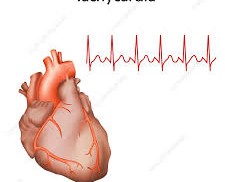
💓 You sit on the sofa, glance at your watch and see 112 beats per minute. You have not climbed stairs, you are not angry, and yet the heart is running as if you were late for a train. A fast heart rate at rest is one of the most common reasons people book a heart check, and in most cases the cause turns out to be outside the heart rather than inside it. 🔍 This guide sorts the three main patterns: sinus tachycardia, where a normal heart simply follows signals from the body; POTS, where the rate jumps every time you stand up; and SVT, an electrical short circuit that switches on and off like a light. It explains how to measure your pulse properly, which blood tests matter, how vagal maneuvers can stop an SVT episode at home, and when propranolol or another beta blocker is the right tool.
📏 What counts as a fast heart rate
🩺 For an adult sitting quietly, a heart rate between 60 and 100 beats per minute is called normal. Above 100 at rest, doctors use the word tachycardia, which simply means a fast heart. The label says nothing about the cause or about danger. A rate of 105 after two espressos and a rate of 190 that starts in a split second are both tachycardia, but they are very different stories.
⌚ How to measure your pulse properly
🕒 A single reading taken in the middle of a worry is not a resting heart rate. Sit for five minutes, feet on the floor, no talking, no phone, and only then count. Place two fingers on the inside of the wrist below the thumb, count for a full 30 seconds and double the number. Smartwatches show trends well but can misread fast or irregular rhythms.
🔀 One symptom, three different problems
🧭 Most people with a fast resting heart fall into one of three groups. The way the rate rises and falls is the main clue, and it is worth noticing before any visit to a doctor.
| 🔎 Feature | 🔥 Sinus tachycardia | 🧍 POTS | ⚡ SVT |
|---|---|---|---|
| Start | Gradual, over minutes | Within minutes of standing | Sudden, like a switch |
| Usual rate | 100 to 140 | 100 to 140 upright | 150 to 250 |
| Rhythm | Regular | Regular | Regular, very fast |
| Ends | Slowly, as the cause fades | On lying down | Suddenly, or after a vagal maneuver |
| Main fix | Treat the cause | Fluids, salt, exercise, sometimes medicine | Vagal maneuver, medicine, ablation |
🔥 Sinus tachycardia: the heart following orders
🧠 The sinus node is the natural pacemaker at the top of the heart. It speeds up whenever the body asks for more blood flow: during exercise, fever, fear, blood loss or low oxygen. In sinus tachycardia the electrical system is normal; it is simply responding to a signal. That is why slowing the heart with a tablet is rarely the first step. If the trigger is anemia, a beta blocker hides the problem while the body still lacks oxygen-carrying blood. Finding the reason comes first.
☕ Everyday triggers: caffeine, alcohol, nicotine and too little water
💧 Before anything rare is considered, look at the daily basics. Dehydration is one of the most common and most overlooked causes of a fast resting pulse: when blood volume drops, the heart beats faster to keep pressure up.
🦋 An overactive thyroid
🔥 Thyroid hormone sets the speed of the whole metabolism, the heart included. A resting pulse above 100 with weight loss, tremor, heat intolerance and loose stools strongly suggests an overactive thyroid. A simple TSH blood test answers the question. The same picture can come from taking too much thyroid hormone: people on Synthroid (Levothyroxine) who feel their heart race should have their dose checked rather than adding a second tablet. Propranolol is often used for a few weeks to calm the pulse and tremor while the thyroid itself is treated. 📖 More in overactive thyroid and Graves disease.
🩸 Anemia and low iron
🧪 When blood carries less haemoglobin, each beat delivers less oxygen, so the heart compensates by beating more often. Heavy periods, pregnancy, a vegetarian diet without planning, and slow bleeding from the gut are classic causes. Tiredness, breathlessness on stairs and pale skin are typical. A full blood count and ferritin level show the problem. Once iron is replaced and the cause is fixed, the heart rate usually settles over weeks without any heart medicine.
💊 Medicines and substances that speed the heart
📋 Recreational drugs such as cocaine and amphetamines are powerful triggers and can be dangerous to the heart. Bring a full list of tablets, inhalers, supplements and drinks to any appointment about a fast pulse; the answer is often on that list.
😰 Anxiety and panic
🌪️ Anxiety releases adrenaline, and adrenaline speeds the heart. The trap is that a racing heart then feels like proof of danger, which releases more adrenaline. A panic attack typically peaks within ten minutes and the rate drifts down gradually, while SVT starts and stops abruptly. Both can happen in the same person, so a recording during an episode is the fair way to tell them apart. 📖 For the full picture see panic disorder: when fear hits fast, and for the place of beta blockers among anxiety treatments see anxiety medication compared.
🧍 POTS: when standing up is the trigger
📉 In postural orthostatic tachycardia syndrome, standing makes blood pool in the legs and belly. The nervous system overreacts and pushes the heart rate up sharply to keep blood flowing to the brain. The diagnosis needs a sustained rise of at least 30 beats per minute within 10 minutes of standing (40 in teenagers), without a large fall in blood pressure, plus symptoms on most days for several months. POTS is most common in women between 15 and 50, and it often begins after a viral illness, including COVID-19, after pregnancy or surgery, or after a long period in bed.
⏱️ The 10-minute stand test you can do at home
📋 A doctor may use a tilt table, but a simple active stand test gives useful information and can be repeated at home with a blood pressure monitor. Do it in the morning, before caffeine, with someone nearby in case you feel faint, and bring the written results to your appointment.
🥤 Living with POTS: fluids, salt, stockings and the right exercise
💪 Non-drug measures are the base of POTS treatment, and many people improve a great deal with these steps alone. The aim is more blood volume, less pooling in the legs, and a heart and leg muscles retrained to cope with being upright.
💊 Medicines used in POTS
🧪 No medicine is officially licensed for POTS, so doctors use several off-label and choose by the main problem. A low dose of propranolol, around 10 to 20 mg, often helps the racing heart more than higher doses, which can make fatigue worse. Midodrine tightens blood vessels to reduce pooling, and fludrocortisone helps the body hold salt and water.
⚠️ Midodrine can raise blood pressure when lying down and cause tingling of the scalp and goosebumps. Fludrocortisone can lower potassium and cause headache and swelling, so blood tests are part of the plan. None of these replace fluids, salt and exercise.
⚡ SVT: the racing heart that switches on and off
🔌 Supraventricular tachycardia is an electrical short circuit above the ventricles. Most often it is a tiny extra pathway in or near the AV node, the junction between the upper and lower chambers. A single early beat can start a loop of electricity that drives the heart at 150 to 250 beats per minute in an instant, and the loop can end just as suddenly. Episodes may last seconds or hours. In a structurally normal heart SVT is rarely life-threatening, though it is frightening.
🌬️ Vagal maneuvers: stopping SVT at home
🧘 The vagus nerve slows conduction through the AV node. A sudden burst of vagal tone can break the electrical loop and end an episode. The modified Valsalva maneuver, tested in a large hospital trial, stopped SVT in about 4 in 10 patients, against fewer than 2 in 10 with the standard version. It should be learned from a doctor first and used only when an SVT diagnosis has already been confirmed.
🏥 What happens in the emergency department
💉 If vagal maneuvers fail, the usual treatment is adenosine given as a fast injection into a vein. It blocks the AV node for a few seconds, which almost always ends AV node SVT; the patient may feel a brief, unpleasant sense of doom or chest pressure that passes quickly. Intravenous verapamil or diltiazem are alternatives, and an electrical cardioversion is used if blood pressure falls. Ask for a copy of the ECG recorded during the episode.
🛡️ Preventing SVT: tablets or ablation
📅 People with rare, short, well-tolerated episodes may need nothing beyond vagal maneuvers. For frequent or troublesome attacks, there are two routes: daily tablets or a catheter ablation, which removes the extra pathway and cures the problem in well over 9 in 10 patients with the common types. Some people use a “pill in the pocket” plan, taking a single dose only when an episode will not stop, but only after a cardiologist has set it up.
💊 For daily prevention, beta blockers such as Toprol XL (Metoprolol Succinate) or the calcium channel blockers Calan (Verapamil) and Cardizem (Diltiazem) are common choices. Verapamil and diltiazem should not be combined with a beta blocker without close specialist supervision, because together they can slow the heart dangerously. People with Wolff-Parkinson-White pattern on the ECG need a cardiologist to choose treatment, since some of these drugs are unsafe for them.
🧪 Tests a doctor may order
| 🧪 Test | 🔎 What it shows | 👤 Most useful for |
|---|---|---|
| 12-lead ECG | Rhythm type, signs of extra pathways | Everyone |
| Full blood count, ferritin | Anemia, low iron stores | Fatigue, heavy periods |
| TSH and free T4 | Thyroid overactivity or overtreatment | Weight loss, tremor, levothyroxine users |
| Electrolytes, kidney tests | Dehydration, potassium and magnesium | Diuretics, vomiting, POTS work-up |
| 24-hour or 7-day monitor | Average rate, episodes in daily life | Inappropriate sinus tachycardia, SVT |
| Patch or event recorder | Captures rare episodes | SVT that comes once a month or less |
| Echocardiogram | Heart structure and pumping strength | Older people, murmurs, breathlessness |
| Stand or tilt test | Heart rate and pressure response upright | Suspected POTS |
🛡️ How beta blockers slow the heart
🔒 Beta blockers sit on the beta receptors of the heart and stop adrenaline from pressing the accelerator. They lower the resting rate, blunt the jump in rate with stress and exercise, and slow conduction through the AV node. That is why they help in very different situations: thyroid storm symptoms, anxiety-driven palpitations, POTS, inappropriate sinus tachycardia and prevention of SVT. They do not fix the reason behind sinus tachycardia, so a doctor should look for that reason first. 📖 Practical advice on day-to-day life with heart and pressure tablets is in living with blood pressure tablets: side effects and sick day rules.
⚖️ Propranolol, metoprolol and bisoprolol compared
💊 The three beta blockers most often used for a fast heart share the same basic effect but differ in how they reach the body. Propranolol is non-selective and enters the brain easily, which helps with tremor and anxiety symptoms, while metoprolol and bisoprolol act mostly on the heart and are gentler on the airways.
| 💊 Medicine | 📋 Usual adult range | 💡 Good to know |
|---|---|---|
| Inderal (Propranolol), P-Nolol (Propranolol) | 10 to 40 mg two to four times a day | Helps tremor and anxiety-driven racing heart; not for asthma |
| Ciplar LA (Propranolol) | 80 to 160 mg once a day | Long-acting capsule for steady daily control |
| Toprol XL (Metoprolol) | 25 to 200 mg once a day | Heart-selective, extended release |
| Zebeta (Bisoprolol) | 1.25 to 10 mg once a day | Highly heart-selective, simple once-daily dosing |
⛔ Who should not take a beta blocker
⚠️ A beta blocker is usually avoided or used only with specialist care in:
🔹 Asthma, especially with propranolol, which can trigger severe wheezing.
🔹 A slow pulse, heart block or sick sinus syndrome without a pacemaker.
🔹 Low blood pressure or heart failure that is not yet stable.
🔹 Diabetes treated with insulin or sulfonylureas, because the warning tremor and fast pulse of low blood sugar may be hidden.
🔹 Use together with verapamil or diltiazem, unless a cardiologist has planned it.
🔹 Severe circulation problems in the legs or Raynaud phenomenon.
💡 Common side effects are tiredness, cold hands and feet, vivid dreams and, at higher doses, reduced exercise capacity. Most of these ease after the first few weeks or with a lower dose; a switch to a more heart-selective drug is another option.
📆 Starting and stopping a beta blocker safely
Lowest dose, first taken at home
Log pulse and how you feel
Dose adjusted if needed
Review: keep, change or stop
📉 When a beta blocker is no longer needed, the dose is usually reduced step by step over one to two weeks, and longer in people with coronary heart disease. A resting pulse in the low 50s with no symptoms is acceptable on treatment; dizziness, fainting or a pulse below about 50 with symptoms should be reported.
🗿 Myths about a fast heart rate
🚨 When to see a doctor
⛔ Call emergency services if a fast heart comes with:
🔹 Chest pain, pressure or pain spreading to the arm, jaw or back.
🔹 Fainting, near-fainting or confusion.
🔹 Severe breathlessness, or a rate above 150 that does not settle within minutes.
🔹 Fever with cold mottled skin, or signs of bleeding such as black stools.
📅 Book a routine visit if your resting pulse stays above 100, rises sharply each time you stand, or races in sudden attacks, even if each attack passes on its own.
❓ Frequently asked questions
What heart rate at rest is too high?
A resting rate above 100 beats per minute in an adult is called tachycardia. It is worth checking with a doctor if it stays that high when you are calm and well.
Why is my heart rate high when I am resting?
Common causes are dehydration, caffeine, alcohol, anxiety, fever, anemia, an overactive thyroid and some medicines. Less often it is POTS or an SVT rhythm problem.
How do I know if it is SVT or sinus tachycardia?
SVT starts and stops suddenly and is usually 150 to 250 beats per minute. Sinus tachycardia builds and fades gradually. An ECG recorded during an episode confirms it.
What is POTS?
Postural orthostatic tachycardia syndrome is a rise in heart rate of at least 30 beats per minute within 10 minutes of standing, without a large fall in blood pressure, with symptoms for months.
How can I lower my heart rate quickly?
Sit or lie down, breathe slowly and drink water if you may be dehydrated. For confirmed SVT, a modified Valsalva maneuver can stop an episode. Get urgent help with chest pain or fainting.
Does propranolol help a fast heart rate?
Yes, it slows the heart by blocking adrenaline. It is used in POTS, thyroid overactivity, anxiety-related racing heart and SVT prevention, once the cause is known.
Which beta blocker is best for tachycardia?
Propranolol suits tremor and anxiety symptoms, while metoprolol and bisoprolol are more heart-selective. The choice depends on the cause, asthma, blood pressure and other medicines.
Can dehydration cause a fast heart rate?
Yes. Less blood volume makes the heart beat faster to keep blood pressure up. Steady fluids often bring the resting rate down within hours to days.
Is SVT dangerous?
In people with a normal heart structure it is rarely life-threatening, but it can cause dizziness and chest discomfort. Long or frequent episodes need a cardiologist review.
Can I stop my beta blocker if my heart rate is normal now?
Not suddenly. Stopping at once can cause a rebound fast heart. A doctor usually lowers the dose step by step over one to two weeks or longer.
📑 Sources and editorial
- 📘 Clinical guidelines on the management of supraventricular tachycardia
- 🧍 Expert consensus statements on postural orthostatic tachycardia syndrome and inappropriate sinus tachycardia
- 🌬️ Randomised hospital trial of the modified Valsalva maneuver for SVT
- 💊 Prescribing information for propranolol, metoprolol, bisoprolol, verapamil, diltiazem, midodrine and fludrocortisone
- 🧪 Guidance on investigation of palpitations and tachycardia in primary care
- 🦋 Endocrinology guidance on symptom control in hyperthyroidism
- 📖 Related reading: atrial fibrillation, overactive thyroid, panic disorder, anxiety medication compared, living with blood pressure tablets
- 🛒 Related products: Inderal (Propranolol), P-Nolol (Propranolol), Ciplar LA (Propranolol), Toprol XL (Metoprolol Succinate), Zebeta (Bisoprolol), Calan (Verapamil), Cardizem (Diltiazem), Gutron (Midodrine), Florinef (Fludrocortisone)
- 🩺 RXshop Editorial Team — reviewed by Robert Hayes, MD — Cardiologist
Medical Disclaimer: The information in this article is for educational and informational purposes only and is not a substitute for professional medical advice, diagnosis, or treatment. Always seek guidance from a qualified healthcare provider with any questions you may have regarding a medical condition, and before starting, stopping or changing any medication.