Year-Round Allergic Rhinitis From Dust Mites, Pets and Mold: Finding the Trigger and Using a Steroid Spray for Years


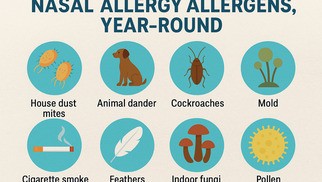
🤧 A nose that runs, blocks and itches in January as much as in May is rarely a never-ending cold. When symptoms carry on through every season, the usual cause is perennial allergic rhinitis: an allergy to something that is present indoors all year, most often house dust mites, pets, mold or cockroaches. 🏠 This guide explains how to find the real trigger, what actually reduces exposure, how a daily steroid nasal spray such as fluticasone is used safely for years, and when other medicines or immunotherapy are added.
📆 What makes rhinitis year-round
🧬 Allergic rhinitis is inflammation of the lining of the nose caused by an immune reaction to harmless particles in the air. Doctors call it perennial when symptoms are present on most days for much of the year, rather than in a pollen season only. Many people have both: mite allergy all year plus a pollen flare. 📖 For the pollen pattern, see seasonal allergies and treatment timing.
⚖️ Perennial or seasonal: how the pattern differs
🔍 The two forms share the same biology, but the daily rhythm of symptoms is usually different enough to point to the cause. Perennial allergy is quieter and more stubborn than hay fever: a blocked nose, mouth breathing at night and post-nasal drip.
🛏️ Dust mites: the main indoor trigger
🔬 House dust mites are tiny relatives of spiders, too small to see, that feed on flakes of human skin. The allergen is not the mite itself but proteins in its droppings, heavy particles stirred up when beds are made or carpets vacuumed. Mites absorb water from the air, so they thrive in humid rooms and struggle below about 50% humidity.
🌙 This explains the classic story of dust mite allergy: a nose that is worst in bed and in the first hour after getting up, sneezing while changing sheets, and relief on holiday. Many people also notice an autumn peak, when windows close and heating starts.
🐈 Pets: why the allergen stays after the animal leaves
🐾 Cat allergy is mostly caused by a protein made in the skin and saliva of the cat, spread onto the fur during grooming. Cat allergen is light and sticky: it floats in the air for hours and clings to walls, furniture and clothing, so people react even in offices where cat owners bring it on clothes. Dog allergens behave similarly, and no breed is truly allergen-free.
🍄 Mold, damp homes and other indoor triggers
💧 Mold grows wherever water collects: bathroom ceilings, wet window frames, cold outside walls, basements and old air conditioners. A musty smell, black spots on grout or a damp patch on the wall are reasons to think of mold, and damp helps dust mites too.
🪳 In older city buildings, cockroach and mouse allergens are underestimated causes of a year-round blocked nose and of asthma. Some people react at work instead: bakers to flour, laboratory staff to animals. A nose that improves on weekends should be mentioned to a doctor, because occupational rhinitis can lead to occupational asthma.
🔗 How the nose reacts: the allergic chain
⏱️ The early phase brings sneezing, itch and a runny nose within minutes and responds well to antihistamines. With daily exposure, the late phase takes over: inflammatory cells collect in the lining, which swells and stays swollen. That is why year-round rhinitis responds best to a medicine that calms inflammation every day.
🎭 Look-alikes: when a year-round nose is not allergy
🩺 Not every chronic runny nose is allergic, and treating the wrong cause is the most common reason a spray seems not to work. A doctor will think of these before settling on perennial allergic rhinitis, especially when allergy tests come back negative.
| 🔎 Condition | 📋 Typical clues | 🧪 Usual check |
|---|---|---|
| Nonallergic (vasomotor) rhinitis | Runny nose with cold air, spicy food, smells; tests negative | Negative skin or blood tests |
| Chronic rhinosinusitis, nasal polyps | Loss of smell, facial pressure, thick discharge for 12 weeks or more | Nasal endoscopy, CT scan |
| Deviated septum | Blockage mainly on one side, present since an injury or childhood | Examination of the nose |
| Rebound from decongestant sprays | Daily use of oxymetazoline or xylometazoline for weeks | Medicine history |
| Medicines | Some blood pressure tablets, erectile dysfunction pills, hormonal treatments | Medicine review |
| Repeated colds in a child at nursery | Clear gaps between episodes, fever, coloured mucus | Pattern over time |
📖 For the nonallergic form, see vasomotor rhinitis treatment, and for telling a short illness from allergy, allergy or cold, and what clears a blocked nose.
🧪 Allergy tests and a trigger diary
💉 Finding the trigger matters more in perennial rhinitis than in hay fever, because the main exposure is at home and can be reduced once you know what it is. A positive test only counts when it matches the symptom story.
| 🧪 Test | ✅ Strengths | ⚠️ Limits |
|---|---|---|
| Skin prick test | Results in 15 to 20 minutes, cheap, very sensitive | Antihistamines must be stopped several days before; not for severe eczema |
| Specific IgE blood test | Not affected by antihistamines, safe for anyone | Takes days, costs more, slightly less sensitive |
| Component testing | Separates true mite or cat allergy from cross-reactions | Used by allergy specialists before immunotherapy |
🛌 Bedroom first: what helps against dust mites
🏠 You spend a third of your life in bed, next to the largest mite reservoir in the home. Changes that concentrate on the bed and bedroom give the best return for the effort.
📊 What the evidence says about avoidance
🤔 It is honest to say that single measures, such as mattress covers on their own, have not shown a clear benefit for nasal symptoms in trials. Combined measures appear more useful. Avoidance reduces how much medicine you need; it does not replace it.
🐾 Living with a pet you are allergic to
❤️ Many people will not give up a much-loved animal, and that is a reasonable choice when symptoms can be controlled. Keeping the pet out of the bedroom is the single most useful rule, because it protects eight hours of breathing every night. A HEPA purifier, washing hands after stroking and hard floors all lower the load.
Pet-free bedroom, HEPA purifier, hard floors
Bathing the animal, special pet foods
Getting a new pet when allergy causes asthma
💊 Why the steroid spray is the base of treatment
🛡️ A corticosteroid nasal spray treats the late, swelling phase that drives a constantly blocked nose. Guidelines name intranasal steroids as the most effective single medicine for persistent allergic rhinitis, better than antihistamine tablets for blockage, and they also ease sneezing, itch and runny nose. In this article the main example is fluticasone propionate, available as Flomist (Fluticasone Propionate) nasal spray, which delivers 50 micrograms per spray.
📋 How it is usually used by adults
💊 2 sprays in each nostril once a day (200 micrograms)
⬇️ Down to 1 spray in each nostril once symptoms are controlled
🌅 Same time every day, often in the morning
📊 What it changes
✅ Blocked nose: clearly reduced
✅ Runny nose, sneezing: reduced
✅ Post-nasal drip, sleep: often better
➖ Itchy eyes: modest effect
❌ Instant relief: no, it builds up
⏳ Daily fluticasone: timing and patience
📅 Some people feel a difference within the first day, but the full effect of a steroid spray usually takes one to two weeks of daily use. A common mistake is stopping after three or four days.
Little change, keep going
Breathing through the nose easier
Near full effect, better sleep
Try the lowest dose that holds
📖 If a spray still fails despite good use, the reasons and next steps are covered in fluticasone nasal spray not working.
👃 Spray technique that protects the septum
🎯 Most local side effects, such as nosebleeds and crusting, come from spraying straight at the septum, the thin wall between the nostrils. Aiming slightly outward, toward the ear on the same side, puts the medicine on the swollen tissue where it is needed and keeps it off the septum.
🛡️ Is it safe to use a steroid spray for years?
🔍 This is the question people with year-round allergy ask most often. At usual doses, modern nasal steroids such as fluticasone propionate are absorbed into the blood only in very small amounts, because the liver breaks down most of the swallowed part. The risks are mainly local and manageable.
| ⚠️ Possible effect | 📝 What to do |
|---|---|
| Dryness, stinging, crusts | Check technique; a saline spray before the steroid helps |
| Small nosebleeds | Aim away from the septum; pause for a few days if frequent |
| Headache, sore throat, odd taste | Usually mild; gentle sniff keeps the dose out of the throat |
| Septal perforation (rare) | Whistling noise, crusting, repeated bleeds: see a doctor |
| Glaucoma or cataract history | Tell your eye doctor; routine eye checks on long-term use |
| Ritonavir or cobicistat (HIV medicines) | Can raise fluticasone blood levels a lot; another steroid is usually chosen |
💡 The rule for long-term use: use the lowest dose that keeps the nose clear and get the nose examined if bleeding keeps returning.
👶 Children, growth and pregnancy
📏 Some studies of older nasal steroids found a small slowing of growth in children. Doctors prescribe the lowest effective dose to children and measure height regularly, especially with an asthma inhaler too, since the doses add up.
🤰 Nasal steroids are generally considered acceptable in pregnancy when the benefit is clear, with budesonide having the most data. Agree any medicine with your doctor or midwife.
💊 Antihistamine tablets for daily use
💤 Modern non-drowsy antihistamines help sneezing, itch, a runny nose and itchy eyes, but they do little for a nose that is mainly blocked. They suit mild symptoms, or are added to a steroid spray when sneezing breaks through.
📖 A side-by-side view of tablets, sprays and eye drops is in allergy medicine compared.
⚡ Azelastine spray: fast relief and the combination
💨 Azelastine is an antihistamine delivered straight into the nose. It starts working within about 15 to 30 minutes and, unlike tablets, also eases blockage to some degree. The usual adult dose is 1 to 2 sprays in each nostril twice a day. A bitter taste is common. It is available as Astelin (Azelastine) and Arzep (Azelastine Hydrochloride).
🤝 When a steroid spray alone is not enough, using azelastine and fluticasone together gives better control than either one, and fixed combination sprays exist for this reason.
🌙 Montelukast: when it fits and its warning
💊 Montelukast blocks leukotrienes, another group of inflammatory chemicals. For the nose alone it is less effective than a steroid spray, so it is mainly considered for people who have both allergic rhinitis and asthma, or who cannot use nasal sprays. The adult dose is one 10 mg tablet in the evening, sold as Singulair (Montelukast).
🧠 Important safety point:
🔹 Montelukast carries a boxed warning about mood and behaviour changes: vivid dreams, sleep problems, agitation, low mood and, rarely, suicidal thoughts.
🔹 For allergic rhinitis alone, regulators advise keeping it for people who do not respond to, or cannot use, other treatments.
🔹 Stop it and contact a doctor if you or your family notice any change in mood or behaviour.
🚫 Decongestant sprays: the rebound trap
💥 Oxymetazoline and xylometazoline sprays shrink nasal blood vessels and open the nose within minutes. Used for more than a few days in a row, they cause rebound swelling that is worse than the original blockage, a condition called rhinitis medicamentosa.
⚠️ Rules for decongestant sprays:
🔹 No more than 3 to 5 days in a row, then a break.
🔹 If you already use one every day, a doctor can help you stop: often by starting a steroid spray first and stopping the decongestant one nostril at a time.
🔹 Decongestant tablets raise blood pressure and heart rate and are unsuitable for many people with heart disease or high blood pressure.
🫁 Nose and lungs: Flovent is not a nasal spray
🔄 The nose and the lungs are one airway lined with similar tissue, and most people with allergic asthma also have rhinitis, while many people with perennial rhinitis go on to have asthma symptoms. A night cough or wheeze with a year-round blocked nose should be checked.
💊 There is an easy mix-up here. Flovent (Fluticasone Propionate) contains the same molecule as a fluticasone nasal spray, but it is an inhaler for asthma: breathing it into the lungs does not treat the nose, and a nasal spray does not treat asthma. People with both conditions often use both, with a reliever such as Ventolin (Albuterol) for sudden wheeze.
📖 Inhaler types and technique are explained in asthma inhalers: preventer, reliever and technique, and a full asthma plan in asthma needs a plan.
💉 Allergen immunotherapy for dust mite allergy
🧬 Immunotherapy is the only treatment that changes the allergy itself rather than covering symptoms. Regular doses of the allergen, given as injections or as tablets under the tongue, slowly train the immune system to tolerate it. For confirmed mite allergy, a daily tablet is approved in many countries. It suits people whose symptoms persist despite sprays and tablets.
🧭 Choosing what to add
📆 A year-long plan in practice
🗓️ Perennial rhinitis is managed like a long-term condition: a steady base that is adjusted with the seasons rather than started and stopped at random. The plan below is an example to discuss with your doctor, not a fixed schedule.
🗿 Myths about year-round allergy
🚨 When to see a doctor
⛔ Book an appointment if:
🔹 Symptoms continue after four weeks of correct daily steroid spray use.
🔹 The blockage is only on one side, or you have bloody discharge, facial pain or swelling, or loss of smell.
🔹 You cough at night, wheeze or get breathless: these may be signs of asthma.
🔹 You have used a decongestant spray every day for more than a week and cannot stop.
🔹 Seek urgent help for swelling of the lips or tongue, trouble breathing, or a severe headache with fever and a stiff neck.
👁️ If itchy, red eyes are the main problem, see allergic conjunctivitis. A doctor can also confirm whether allergy is the cause at all, which saves months of using the wrong medicine.
❓ Frequently asked questions
What causes allergic rhinitis all year round?
Allergens that are present indoors in every season, most often house dust mites, cat or dog allergen, indoor mold and cockroaches.
How do I know if dust mites are my trigger?
Symptoms worst in bed and on waking, sneezing while making the bed and relief away from home suggest mites. A skin prick or blood test confirms it.
Can I use fluticasone nasal spray every day for years?
Yes, at the usual dose most adults can, because very little reaches the blood. Use the lowest dose that works and report nosebleeds or crusting.
How long does fluticasone take to work?
Some relief may come within a day, but the full effect usually takes one to two weeks of daily use.
Is Flovent the same as a fluticasone nasal spray?
It contains the same molecule, but Flovent is an asthma inhaler for the lungs. It does not treat the nose; a nasal spray is needed for that.
Which antihistamine is best for year-round allergy?
Non-drowsy options such as cetirizine, fexofenadine, desloratadine or bilastine. They help sneezing and itch more than a blocked nose.
Do mattress covers stop dust mite allergy?
On their own they make little difference to nasal symptoms. They help more as part of several measures together with medicine.
Can I keep my cat if I am allergic?
Often yes, if the cat stays out of the bedroom, a HEPA purifier is used and symptoms are controlled with medicine. Asthma changes the decision.
Why does my nose get worse with decongestant spray?
Using it for more than a few days causes rebound swelling. A doctor can help you stop, usually starting a steroid spray first.
Can perennial allergic rhinitis be cured?
Medicines control it but do not cure it. Allergen immunotherapy for about three years can reduce the allergy itself for years afterwards.
📑 Sources and editorial
- 📘 International clinical guidelines on allergic rhinitis and its impact on asthma
- 💊 Product information for intranasal fluticasone propionate, azelastine, cetirizine, fexofenadine, desloratadine, bilastine and montelukast
- 🔬 Systematic reviews of house dust mite avoidance measures and of allergen-impermeable bedding
- 📏 Studies of long-term intranasal corticosteroid safety in adults and of growth in children
- 💉 Reviews of sublingual and subcutaneous immunotherapy for house dust mite allergy
- ⚠️ Regulatory safety communications on neuropsychiatric events with montelukast
- 📖 Related reading: allergy medicine compared, fluticasone spray not working, asthma inhalers, seasonal allergies
- 🛒 Related products: Flomist (Fluticasone Propionate), Astelin (Azelastine), Zyrtec (Cetirizine), Allegra (Fexofenadine), Flovent (Fluticasone Propionate), Singulair (Montelukast)
- 🩺 RXshop Editorial Team — reviewed by Emily Chen, MD — Internal medicine
Medical Disclaimer: The information in this article is for educational and informational purposes only and is not a substitute for professional medical advice, diagnosis, or treatment. Always seek guidance from a qualified healthcare provider with any questions you may have regarding a medical condition, and before starting, stopping or changing any medication.