Cannabis Withdrawal: The Timeline, Why Sleep Is the Hardest Part, and What Actually Helps

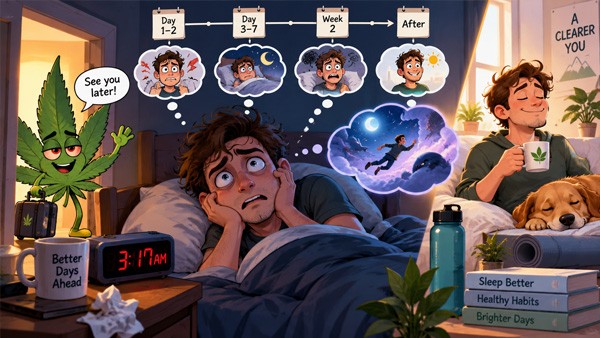

For years the common belief was that cannabis causes no withdrawal. Anyone who has stopped after daily use knows otherwise. Within a day or two come irritability, restlessness, poor appetite and, above all, nights of broken sleep and strange, vivid dreams.
Cannabis withdrawal is now a recognised diagnosis. It affects roughly half of people who use regularly and then stop, and it is stronger today than it was twenty years ago, because the strength of modern cannabis is far higher. It is not dangerous in the way alcohol withdrawal is, but it is the main reason people go back to using.
This guide covers the timeline, what helps each symptom, which medicines have evidence and which do not, and the warning signs that need medical attention.
🧬 Why withdrawal happens
The brain has its own cannabinoid system, which helps regulate mood, appetite, sleep and pain. With regular THC exposure, the receptors become less responsive and fewer in number. Remove the THC, and that system is briefly under-active. The receptors recover, mostly within two to four weeks, which is why the symptoms fade.
Withdrawal is more likely and stronger with daily use, years of use, and high-THC products such as concentrates, vapes and modern strong flower.
⏱️ The timeline
| When | What usually happens |
|---|---|
| Day 1 | Irritability, restlessness, craving. Sleep starts to suffer |
| Days 2 to 6 | Peak: anger, anxiety, poor appetite, headache, sweating, stomach discomfort, insomnia with vivid or disturbing dreams |
| Week 2 | Most symptoms fade noticeably. Mood and appetite improve |
| Weeks 3 to 4 | Sleep gradually normalises; dreams stay vivid for some |
| After a month | Cravings can still appear in certain situations, usually briefly |
The vivid dreams surprise people most. THC suppresses dreaming sleep, and when it is removed the body catches up with an unusual amount of it. It is uncomfortable but harmless, and it settles.
📋 The symptoms
- 😡 Irritability, anger, sometimes aggression
- 😰 Anxiety and restlessness
- 😴 Insomnia and disturbing dreams — the most persistent symptom
- 🍽️ Loss of appetite and weight loss
- 😞 Low mood
- 🧊 Physical symptoms: headache, sweating, chills, shakiness, abdominal pain
💡 Cannabis withdrawal is not medically dangerous. Unlike alcohol or benzodiazepine withdrawal, it does not cause seizures or delirium, and it rarely needs hospital care. What makes it hard is discomfort at a time when the obvious relief is one smoke away. The comparison with alcohol detox, which really can be dangerous, is covered in our guide to alcohol withdrawal.
🛏️ Getting through the first two weeks
- Decide: stop at once or taper
- Both work. Stopping abruptly gets the worst over faster. Reducing over one to two weeks makes symptoms milder but drags them out, and it suits people who have failed at going cold turkey.
- Protect sleep
- A fixed wake time, no naps, no caffeine after early afternoon, and a dark cool room. Expect a poor week and plan for it. Sleep is where most relapses start.
- Exercise daily
- Even a brisk walk reduces irritability and craving and improves sleep.
- Eat regularly
- Appetite drops, so eat by the clock rather than by hunger.
- Remove the supply and the cues
- Throw out the stash and the paraphernalia. Change routines linked to using, and tell one person what you are doing.
- Plan the risky moments
- Evenings, boredom, arguments and being around people who use are the common triggers. Have something to do instead.
💊 What medicines can and cannot do
There is no approved medicine for cannabis withdrawal or cannabis use disorder. Several have been studied, with modest results, and are used to ease specific symptoms rather than to treat the dependence.
| Option | Evidence |
|---|---|
| Melatonin | Reasonable for sleep onset during the first weeks. Not habit-forming and no next-day grogginess |
| Mirtazapine | Improves sleep and appetite in studies, but does not increase the chance of staying off cannabis |
| Gabapentin, N-acetylcysteine | Mixed and limited results; N-acetylcysteine looked better in adolescents than in adults |
| Prescription cannabinoid sprays | Reduce withdrawal in specialist settings; not routinely available |
| Benzodiazepines and Z-drugs | Best avoided: they trade one dependence for another |
For the sleep part, melatonin is available as Restfine (Melatonin), and mirtazapine as Remeron (Mirtazapine), which is a prescription decision. Neither treats the dependence itself.
🧠 What actually keeps people off it
The treatments with the strongest evidence are psychological. Cognitive behavioural therapy and motivational enhancement therapy, especially combined, improve the chances of stopping. Contingency management, where abstinence is rewarded, has the best results of all in trials. Brief support by phone or online counts too: many people do better with any structured programme than with willpower alone.
It also helps to know why you are stopping. In regular users, quitting typically brings back normal sleep after a few weeks, improves memory and concentration, lifts anxiety in many people, and saves a noticeable amount of money.
🤮 Cyclic vomiting: a different problem
🔴 Cannabinoid hyperemesis syndrome. Some long-term users develop repeated attacks of severe nausea and vomiting with abdominal pain, often relieved only by long hot showers. It is caused by cannabis itself, not by withdrawal, and it is frequently misdiagnosed for years.
Standard anti-sickness medicines, including ondansetron such as Zofran (Ondansetron), often work poorly here. Topical capsaicin cream on the abdomen helps some people. The only lasting cure is stopping cannabis completely, after which attacks usually settle over weeks. Severe vomiting causes dehydration and can damage the kidneys, so seek medical care if you cannot keep fluids down.
🚩 When withdrawal is not the whole story
Cannabis is often used to cope with anxiety, low mood, trauma or chronic pain. When it stops, those problems come back into view, and sometimes they are the real reason it is hard to quit. They respond to treatment in their own right, and treating them makes staying off cannabis far easier.
In some people, heavy cannabis use triggers psychosis: hearing voices, paranoia or losing touch with reality. That needs urgent medical assessment, not waiting.
🤰 Pregnancy and breastfeeding
THC crosses the placenta and passes into breast milk, and it is linked to lower birth weight and effects on the baby's brain development. There is no known safe amount in pregnancy, including for morning sickness. Anyone using cannabis and pregnant or planning a pregnancy should tell their midwife or doctor, who can offer support without judgement.
📞 When to seek help
- Thoughts of suicide or self-harm — the same day, emergency services if in danger
- Hearing voices, paranoia or confusion — urgent
- Repeated vomiting or inability to keep fluids down — urgent
- Severe anxiety or depression that does not lift after two to three weeks
- Repeated failed attempts to stop, or use that has taken over daily life
- Using other substances as well, especially alcohol or benzodiazepines
- Pregnancy
❓ Frequently asked questions
How long does cannabis withdrawal last?
Symptoms usually start within 24 to 48 hours, peak between days 2 and 6, and fade over one to two weeks. Sleep problems and vivid dreams can last three to four weeks, and occasional cravings longer.
Is cannabis withdrawal dangerous?
It is uncomfortable but not medically dangerous. Unlike alcohol or benzodiazepine withdrawal, it does not cause seizures or delirium. The main risk is relapse because of poor sleep and irritability.
Why can I not sleep after quitting weed?
THC suppresses dreaming sleep. When it is stopped, the body catches up with a rebound of it, causing broken sleep and vivid or disturbing dreams. This is the most persistent withdrawal symptom and usually settles within three to four weeks.
Is it better to stop suddenly or taper?
Both work. Stopping at once gets the worst over in about a week. Reducing over one to two weeks makes symptoms milder but longer, and suits people who have struggled with stopping abruptly.
Is there a medicine for cannabis withdrawal?
No medicine is approved for it. Melatonin can help sleep, and mirtazapine improves sleep and appetite without improving abstinence. Gabapentin and N-acetylcysteine have mixed results. Benzodiazepines are best avoided.
What helps most with quitting?
Structured psychological support: cognitive behavioural therapy, motivational enhancement therapy, and contingency management, which has the strongest trial results. Daily exercise, fixed sleep times and removing supplies and cues all help.
Why do I feel sick and keep vomiting?
Repeated attacks of severe vomiting with abdominal pain, relieved by hot showers, suggest cannabinoid hyperemesis syndrome, caused by cannabis itself. Standard anti-sickness medicines often fail, and the only lasting cure is stopping completely. Seek care if you cannot keep fluids down.
Does withdrawal mean I was addicted?
Withdrawal shows the body adapted to regular use. Dependence becomes a disorder when use continues despite harm, takes up much of the day, or repeatedly fails to stop. Either way, help is available and effective.
Is modern cannabis stronger?
Yes. Average THC content has risen substantially, and concentrates and vapes are stronger still. Higher THC exposure is linked to more severe withdrawal and a higher chance of dependence.
What improves after quitting?
Sleep usually returns to normal after a few weeks, memory and concentration improve, anxiety often lifts, and appetite settles. Many people also notice better mood and considerable savings.
📑 Sources and editorial
- Diagnostic criteria for cannabis withdrawal and cannabis use disorder
- Reviews of the cannabis withdrawal timeline and symptom severity
- Trials of mirtazapine, gabapentin, N-acetylcysteine and cannabinoid agonists in cannabis withdrawal
- Evidence reviews of cognitive behavioural therapy, motivational enhancement and contingency management
- Clinical reviews of cannabinoid hyperemesis syndrome
- Guidance on cannabis use in pregnancy and breastfeeding
- Related reading: alcohol withdrawal and detox
- Related products: Restfine (Melatonin), Remeron (Mirtazapine)
- RXshop Editorial Team — reviewed by Thomas Walsh, MD, Psychiatry
Medical Disclaimer: The information in this article is for educational and informational purposes only and is not a substitute for professional medical advice, diagnosis, or treatment. Always seek guidance from a qualified healthcare provider with any questions you may have regarding a medical condition, and before starting, stopping or changing any medication.