Recurrent DVT: Why a Blood Clot Comes Back, Who Needs Long-Term Warfarin and What Happens When Treatment Stops

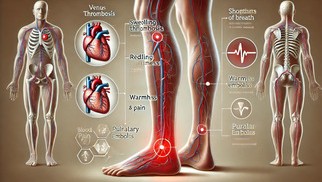

🩸 Most people treated for a deep vein thrombosis (DVT) ask the same two questions once the leg settles down: will the clot come back, and how long do I have to stay on warfarin? The honest answer is that it depends far less on the size of the first clot than on why it formed. A clot after a hip operation and a clot that appeared out of nowhere on an ordinary Tuesday are treated the same way for the first three months, and then the paths split. 🔍 This guide is about that split. It explains what a recurrent clot is, how often clots return after treatment stops, why warfarin protects you only while you take it, which tests help the decision (and which ones are overused), what it means when a clot forms while you are already on warfarin, how to tell a new clot from an old leg that never fully healed, and what to do about hormones, surgery, flights and pregnancy once you have had a clot.
🔁 What doctors mean by a recurrent clot
🧬 A recurrent venous thrombosis is a new clot in a vein after a previous one has been treated. It can appear in the same leg, the other leg or the lungs, and a clot in the lungs (pulmonary embolism) after an earlier leg clot counts as a recurrence of the same disease. Doctors group DVT and pulmonary embolism together as venous thromboembolism (VTE), because they are one process in two places. 📖 The basics of how venous and arterial clots differ, and which symptoms need hospital today, are covered in thrombosis and embolism: symptoms, treatment length and who needs warfarin. This article picks up where that one stops: the months and years after the first clot.
📋 Doctors also separate an early recurrence, while the first treatment is still running, from a late one after treatment has stopped. The two have different causes and need different thinking, so they get separate sections below.
🏷️ Provoked or unprovoked: the label that decides everything
⚖️ At the first visit the doctor tries to find out whether something clearly triggered the clot. A clot with a strong temporary trigger that has now gone away is called provoked; a clot with no trigger, or only a weak one, is called unprovoked. The label matters because a provoked clot has a lower chance of coming back once the trigger is gone, while an unprovoked clot suggests the tendency is inside the person and still there.
💡 The combined pill, HRT and pregnancy sit in between. They are real triggers, but whether they count as temporary depends on whether they are stopped. A woman who has a clot on the combined pill and then stops it is usually treated as provoked; one who continues it stays at risk. Cancer is a persistent trigger as long as the cancer is active, which is why it is handled as its own group.
📊 How often clots come back after treatment stops
🔢 Large pooled studies of patients followed after stopping anticoagulation give a fairly consistent picture. After a first unprovoked clot, roughly 1 in 10 people have another within a year of stopping, and around 1 in 4 within five years. After a clot caused by major surgery, the risk is much lower, in the region of 1 in 100 per year. Clots with a weaker or non-surgical trigger, such as a plaster cast or a long hospital stay for an illness, fall between the two.
📈 One more point people often miss: a recurrence tends to come back in the same form. Someone whose first event was a pulmonary embolism is more likely to have a second one in the lungs than in the leg, which makes recurrence after a PE more dangerous. 📖 Life after a lung clot, including breathlessness and follow-up, is covered in recovery after a pulmonary embolism.
💊 What warfarin does, and what it does not do
🧪 Warfarin blocks the recycling of vitamin K in the liver, so the body makes fewer working clotting factors. It stops the existing clot from growing and stops new clots from forming, but it does not dissolve the clot itself; the body breaks the clot down slowly on its own over weeks and months. While the INR stays in range, warfarin cuts the chance of a new venous clot by roughly 80 to 90 percent.
⚠️ The last chip is the one that surprises patients. Warfarin gives no lasting protection after the final tablet. Within a few days of stopping, the INR returns to normal, and from that point the risk of a new clot is roughly what it would have been without any treatment. Longer treatment delays recurrence rather than preventing it, which is why the real decision is not “three months or six months” but “stop after the treatment phase, or keep going with no fixed end date”. Brand and generic warfarin, such as Coumadin (Warfarin), work in exactly the same way, and the dose is always set by the INR, not by the tablet strength.
🗓️ The first three months: the phase everyone gets
🏥 Every proximal DVT and every pulmonary embolism is treated for at least three months, whatever the cause. Stopping earlier clearly raises the risk of the clot extending or returning, and the extra months beyond three add little for a provoked clot. With warfarin, the first days need a faster anticoagulant as well, because warfarin takes several days to reach its full effect.
📖 The everyday side of warfarin (food, alcohol, new medicines and the INR number itself) is explained in warfarin and your INR: diet, interactions and bleeding signs, so this page keeps that part short.
✅ Who usually stops after three months
🚪 Guidelines broadly agree that a first clot with a strong temporary trigger that has gone away is treated for three months and then stopped. Continuing longer exposes the person to bleeding risk with very little gain, because the chance of a new clot off treatment is already low. A clot confined to the calf veins with a clear trigger is often treated for the same three months, sometimes less, or only watched with repeat scans.
♾️ Who is usually offered long-term treatment
🧭 Long-term (doctors say “extended” or “indefinite”) treatment means no planned stop date, with a review at least once a year. It is usually offered after a first unprovoked proximal DVT or PE if the bleeding risk is low, and after a second unprovoked clot almost always. Other groups who often stay on treatment include people with antiphospholipid syndrome, active cancer, a clot that was life-threatening, and some inherited clotting disorders with a strong family history.
📝 “Indefinite” does not mean “forever no matter what”. The yearly review asks whether the balance has shifted: a new bleeding problem, a fall, kidney decline or a new medicine can tip the decision the other way, and a person who started treatment at 50 may face a different balance at 78.
🩸 Weighing the bleeding side of the scale
⚖️ Every year on warfarin carries a risk of serious bleeding, most often in the stomach or bowel and, rarely, in the brain. In people with good INR control the rate of major bleeding is in the range of 1 to 3 in 100 per year, and it is higher in the first months, in older people and in those with several risk factors. Long-term treatment makes sense when the expected clots prevented clearly outnumber the expected serious bleeds.
| ⚠️ Raises bleeding risk on warfarin | 📝 What can be done |
|---|---|
| Age over 75 | Closer INR checks, review the indication yearly |
| Previous serious bleed | Find and treat the source before deciding |
| Kidney or liver disease | Dose adjustment, more frequent tests |
| Regular alcohol above safe limits | Cut down; heavy drinking is a strong risk |
| Aspirin, clopidogrel or anti-inflammatory painkillers | Avoid unless a doctor has a clear reason |
| Uncontrolled high blood pressure | Treat it; it raises the risk of bleeding in the brain |
| Frequent falls or unstable INR | Address the cause; consider other options |
💡 A single risk factor does not rule long-term treatment out. Several together, especially a previous bleed plus age and kidney disease, often do. The decision is shared, and a person who strongly prefers to avoid daily tablets and INR tests after a provoked clot is making a reasonable choice.
🔬 Tools that help the stop-or-continue decision
🧪 For a first unprovoked clot the choice is genuinely close, so doctors use extra clues to sort people into higher and lower risk. None of these tools is perfect, but each can move the decision one way or the other.
📉 The D-dimer approach has a catch: the test is done off treatment, so there is a short window in which the person is unprotected while waiting for a result. For someone whose first clot was a large PE, many doctors prefer to decide without that gap.
♂️ Men, women and the difference in recurrence
📊 Across many studies, men have a higher chance of a recurrent unprovoked clot than women, roughly one and a half to two times higher. Part of the gap comes from the fact that many first clots in women are linked to hormones or pregnancy, which are temporary triggers, but the difference remains even among unprovoked clots. This is why risk scores designed to identify low-risk patients have worked best in women and why men with an unprovoked clot are more often advised to continue.
🧬 Clotting disorder tests: when they help and when they do not
🔎 Many people expect a full set of “clotting screen” blood tests after a DVT. For most adults the results do not change how long they are treated, because the decision rests mainly on whether the clot was provoked. Testing is more useful in younger people with an unprovoked clot, in clots at unusual sites, in those with a strong family history, and when antiphospholipid syndrome is suspected.
| 🧪 Test | 📋 What it looks for | ⏱️ Timing problem |
|---|---|---|
| Factor V Leiden, prothrombin gene | Common inherited tendencies, usually mild | DNA test, not affected by warfarin |
| Protein C and protein S | Rarer inherited deficiencies | Warfarin lowers both, so results on warfarin are unreliable |
| Antithrombin | Rare but stronger inherited deficiency | Lowered by heparin and by a fresh clot |
| Lupus anticoagulant | Antiphospholipid syndrome | Disturbed by anticoagulants; needs expert lab |
| Anticardiolipin, anti-beta2 glycoprotein I | Antiphospholipid syndrome | Must be positive twice, at least 12 weeks apart |
💡 A practical rule follows from the table: tests are best planned with a specialist rather than taken all at once in the first week, when a fresh clot and the treatment itself distort several of the results. A positive mild inherited trait, such as one copy of factor V Leiden, raises the risk only modestly and does not by itself mean lifelong warfarin.
🛡️ Antiphospholipid syndrome: where warfarin stays first choice
🧬 Antiphospholipid syndrome is an immune condition in which antibodies make the blood more likely to clot, in veins, arteries or the placenta. It is one of the clearest reasons for long-term anticoagulation and one of the few situations where warfarin is preferred over the newer tablets. In patients who test positive for all three antibody types, trials of direct oral anticoagulants showed more clots, mainly arterial ones such as strokes, than with warfarin, and guidelines now advise warfarin for this group.
🧭 What this means if you have had an unprovoked clot:
🔹 Ask whether antiphospholipid testing is planned, especially if you are under 50, have lupus, or have had pregnancy losses.
🔹 A positive result must be repeated after at least 12 weeks before the diagnosis is made.
🔹 If the syndrome is confirmed, do not switch from warfarin to another anticoagulant without a specialist opinion.
🎗️ Should you be checked for cancer?
🔍 An unprovoked clot is occasionally the first sign of a hidden cancer, which understandably worries people. Studies comparing a basic check with extensive whole-body scanning found that the extra scans did not find meaningfully more cancers or improve survival. So most guidelines recommend a careful history and examination, basic blood tests, a chest X-ray, and making sure the usual age-appropriate screening (bowel, breast, cervical) is up to date, with further tests only if something points to a problem.
💊 When cancer is present, the clot risk stays high while the cancer is active and during chemotherapy. Low molecular weight heparin injections or certain direct oral anticoagulants are usually preferred over warfarin in active cancer, because warfarin is harder to keep in range when appetite, weight and other medicines keep changing.
⚠️ A new clot while you are on warfarin
🚨 A clot that forms despite warfarin is uncommon and always needs a careful look. The first question is whether the warfarin was actually working at the time. In most cases the cause turns out to be a low INR, missed doses or a recent interaction, rather than a true failure of the drug.
🔧 If the INR was low, the fix is better control and finding out why. If the clot formed with a steady INR in range, doctors often switch to low molecular weight heparin injections, at least for a period, or set a higher INR target, and they look harder for cancer and antiphospholipid syndrome. A home INR log, with dates and doses, is very useful at this point.
🦵 New pain in the old leg: a new clot or post-thrombotic syndrome?
🤔 Months after a DVT, many people still have an aching, heavy or swollen leg, especially at the end of the day. This is often post-thrombotic syndrome, damage to the vein valves left by the first clot, rather than a new clot. It affects a large share of people after a proximal DVT, from mild to severe, and it worsens with standing and improves with lying down and raising the leg.
🖼️ The difficulty is that an ultrasound of a leg that has had a clot often shows scarring or leftover clot for months or years. This is why a baseline scan at the end of treatment is so useful: a later scan can be compared with it, and only a new or clearly larger clot counts as a recurrence. Graduated compression stockings help the symptoms of post-thrombotic syndrome in many people, although they do not prevent new clots. 📖 Leg pain that comes with walking and goes with rest may be arterial rather than venous; see leg pain when you walk: arteries, veins or nerves.
🧦 Calf clots and superficial vein clots
📍 Not every clot carries the same recurrence risk. A clot limited to the calf veins (distal DVT) recurs less often than one in the thigh or pelvis, and many doctors either treat it for six weeks to three months or repeat the scan after one to two weeks to see whether it is growing. A superficial vein thrombosis, a tender cord under the skin, is usually treated with painkillers and compression, but one that sits close to the junction with a deep vein, or is long, is often treated with an anticoagulant for several weeks.
Local treatment, watch
Short course or repeat scan
At least 3 months
At least 3 months, careful review
💊 Hormones after a clot: the pill, HRT and tamoxifen
🧪 Oestrogen increases the production of several clotting factors in the liver. After a venous clot, the combined pill containing ethinyl estradiol is normally avoided for good, including brands such as Yasmin (Drospirenone and Ethinyl Estradiol). Safer contraception after a clot includes the hormonal or copper coil, the implant and progestogen-only pills, which carry little or no added clot risk. Warfarin itself can harm a developing baby, so reliable contraception is essential while taking it.
👩 For menopausal symptoms, oral estrogen such as estradiol valerate tablets raises clot risk, while estrogen through the skin appears to carry much less. A woman with a past clot who needs HRT should have the choice made with a specialist. Tamoxifen for breast cancer roughly doubles to triples the risk of a venous clot, but its benefit against cancer coming back is usually much larger; the decision is made with the oncology team, and switching to an aromatase inhibitor is sometimes an option after menopause. 📖 More in breast cancer hormone therapy: tamoxifen and aromatase inhibitors.
💊 Aspirin, clopidogrel and other “softer” options
🧪 Some people who stop full anticoagulation ask whether a gentler tablet could give partial protection. Low-dose aspirin after stopping anticoagulation reduced recurrent venous clots by roughly a third in trials, which is far less than the protection from warfarin. It is sometimes chosen by people who decline long-term anticoagulation, but it still raises bleeding risk and is no substitute when long-term anticoagulation is clearly advised. Reduced-dose direct oral anticoagulants are another option some specialists use for extended treatment.
| 💊 Medicine | 🎯 Main job | 🩸 Role in venous clots |
|---|---|---|
| Coumadin (Warfarin) | Anticoagulant | Treats and prevents DVT and PE |
| Low-dose aspirin | Antiplatelet | Modest reduction after anticoagulation stops |
| Plavix (Clopidogrel) | Antiplatelet for heart attack and stroke | Not a treatment for venous clots |
| Persantine (Dipyridamole) | Antiplatelet, mainly stroke prevention | Not a treatment for venous clots |
| Pletal (Cilostazol) | Walking pain from narrowed leg arteries | Not a treatment for venous clots |
⚠️ Combining warfarin with an antiplatelet tablet raises the risk of bleeding considerably. If you have a heart or artery condition as well as a past DVT, the two treatments must be planned together, usually by the cardiologist, so that you are not taking more blood thinners than the situation needs.
🏃 Statins, weight and movement: what lowers risk a little
📉 No lifestyle change replaces anticoagulation when it is needed, but several factors nudge the risk. Obesity roughly doubles the chance of a venous clot, and losing weight lowers it. Staying active keeps blood moving in the calf veins, and stopping smoking helps the arteries and, to a smaller degree, the veins. In one large trial of people with raised inflammatory markers, rosuvastatin was linked to fewer venous clots, which is interesting but not a reason to take a statin for clots alone; people who already need a statin for cholesterol, such as Crestor (Rosuvastatin), may get a small extra benefit.
Each step towards a healthy weight lowers risk
Calf muscle pump works with every step
Avoid dehydration on hot days and long trips
📆 Living with long-term warfarin day to day
⏰ People who stay on warfarin for years do best with simple, steady habits. The aim is a boring INR: the same tablet time, a steady diet, and every new medicine checked first. Testing usually stretches to every four to eight weeks once things are stable, and many people learn to test at home with a finger-prick meter.
💡 Carry an anticoagulant card or note in your phone, and tell every doctor, dentist and pharmacist that you take warfarin. Antibiotics, antifungals, some painkillers and herbal products are the usual reasons a stable INR suddenly changes, so an extra INR check within a week of starting any of them is sensible.
✈️ Surgery, long flights and pregnancy after a clot
🏥 A past clot changes how future high-risk moments are handled. Before planned surgery, warfarin is usually stopped about five days ahead, and the team decides whether “bridging” injections are needed, which depends on how recent and how serious the clot was. After surgery, clot prevention is restarted as soon as bleeding allows.
| 📍 Situation | ✅ Usual approach after a past clot |
|---|---|
| Planned operation | Stop warfarin about 5 days before; bridging only for higher-risk cases; restart early |
| Flight over 4 hours, off treatment | Aisle seat, walk and flex calves, fluids, fitted stockings; preventive injection for some |
| Flight while on warfarin | Keep taking it at home time; check INR before long trips |
| Planning a pregnancy | Switch from warfarin before or very early in pregnancy |
| Pregnancy and 6 weeks after birth | Preventive heparin injections are usually advised |
🤰 Warfarin crosses the placenta and can cause birth defects, mainly between weeks 6 and 12. A woman on warfarin who could become pregnant should have a plan in place before it happens, including an early pregnancy test and a switch to heparin injections. Warfarin is compatible with breastfeeding.
🗿 Myths about recurrent clots and warfarin
🌳 A simple path for the three-month review
📝 Questions to take to the review
🚨 When to get help urgently
⛔ Call emergency services or go to hospital now if:
🔹 You have sudden breathlessness, chest pain that is worse on breathing in, a fast heartbeat, fainting or coughing blood.
🔹 A leg becomes suddenly more swollen, painful, warm or discoloured than usual.
🔹 While on warfarin, you have black or bloody stools, vomit that looks like coffee grounds, blood in the urine that does not stop, or a nosebleed lasting more than 10 minutes.
🔹 You hit your head while on warfarin, even if you feel fine, or develop a sudden severe headache, weakness or confusion.
🔹 Your INR reading is far above your range, or you took a double dose and feel unwell.
📖 If you also take warfarin for an irregular heartbeat, the stroke side of the balance is covered in atrial fibrillation: why stroke prevention comes first.
❓ Frequently asked questions
How likely is a DVT to come back?
After a first unprovoked clot, about 1 in 10 people have another within a year of stopping treatment, and about 1 in 4 within five years. After a clot caused by major surgery the risk is much lower.
How long should I take warfarin after a DVT?
At least three months for every proximal DVT. After a provoked clot treatment usually stops then; after an unprovoked clot long-term treatment is often offered if bleeding risk is low.
Does a longer course of warfarin protect me after I stop?
No. Warfarin protects only while you take it. Once it is stopped, the risk of a new clot returns to what it would have been without treatment.
What is the difference between a provoked and an unprovoked clot?
A provoked clot has a strong temporary trigger such as major surgery or a leg cast. An unprovoked clot has no clear trigger and is more likely to come back.
Should I be tested for a clotting disorder?
Not everyone needs it. Testing helps most in younger people with unprovoked clots, unusual sites or a strong family history. Warfarin and a fresh clot can distort some results, so timing matters.
What happens if I get a clot while on warfarin?
Doctors check whether the INR was in range, look for missed doses, interactions, cancer and antiphospholipid syndrome, and often switch to heparin injections or a higher INR target.
Is leg pain months after a DVT a new clot?
Often it is post-thrombotic syndrome, lasting damage to the vein valves. A sudden change in swelling or pain needs an ultrasound, ideally compared with a scan from the end of treatment.
Can I take the combined pill after a blood clot?
Usually not. Oestrogen-containing pills raise clot risk. The coil, the implant and progestogen-only pills are generally considered safer options after a clot.
Can aspirin replace warfarin after a DVT?
Not fully. After anticoagulation stops, aspirin lowers the recurrence risk by roughly a third, far less than warfarin. It is an option only when long-term anticoagulation is declined or unsuitable.
What should I do before a long flight after a clot?
Choose an aisle seat, walk and flex your calves, drink water and wear fitted compression stockings. Some people at high risk are given a preventive injection; if you take warfarin, keep taking it.
📑 Sources and editorial
- 📘 International clinical guidelines on the treatment and duration of anticoagulation for venous thromboembolism
- 📊 Pooled analyses of recurrence after stopping anticoagulation for provoked and unprovoked venous clots
- 🧪 Studies of D-dimer testing and clinical prediction rules for stopping anticoagulation, including HERDOO2
- 🧬 Guidance on thrombophilia testing and on anticoagulation in antiphospholipid syndrome
- 🎗️ Trials comparing limited and extensive screening for cancer after unprovoked venous clots
- 💊 Prescribing information for warfarin and trials of aspirin for extended prevention
- 👩 Guidance on contraception and hormone therapy after venous thromboembolism
- 📖 Related reading: thrombosis and embolism, warfarin and your INR,
Medical Disclaimer: The information in this article is for educational and informational purposes only and is not a substitute for professional medical advice, diagnosis, or treatment. Always seek guidance from a qualified healthcare provider with any questions you may have regarding a medical condition, and before starting, stopping or changing any medication.