Buy Topaheal (Generic Topiramate) Online — Affordable Multi-Mechanism Anticonvulsant for Seizures & Migraine Prophylaxis

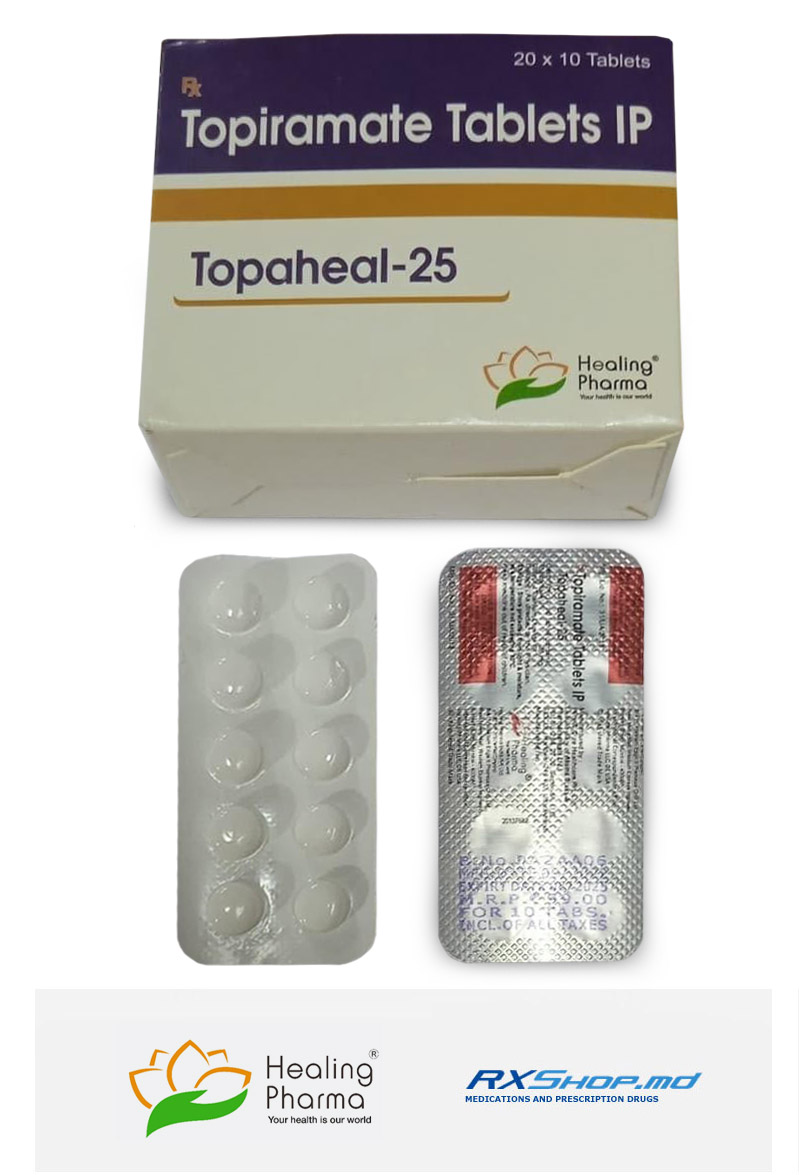
Topaheal is an affordable generic Topiramate — a broad-spectrum anticonvulsant and migraine prophylactic medication manufactured by Indian pharmaceutical companies to international quality standards. Providing the same multi-mechanism therapeutic activity as the original branded Topamax (Janssen/Johnson & Johnson) at significantly lower cost, Topaheal expands global access to one of the most clinically versatile medications in modern neurology.
The active ingredient is Topiramate, a sulfamate-substituted monosaccharide that works through multiple distinct mechanisms unlike most other anticonvulsants: it blocks voltage-gated sodium channels, enhances GABA-A receptor activity, antagonizes AMPA/kainate glutamate receptors, and inhibits multiple carbonic anhydrase isoforms. This multi-mechanism activity supports broad-spectrum anticonvulsant efficacy across multiple seizure types and uniquely effective migraine prophylaxis.
Topaheal is approved for adjunctive and monotherapy treatment of partial-onset seizures, primary generalized tonic-clonic seizures, adjunctive treatment of Lennox-Gastaut syndrome, and prophylaxis of migraine headaches in adults and adolescents. Off-label uses include bipolar disorder mood stabilization, alcohol use disorder, binge eating disorder, PTSD, idiopathic intracranial hypertension, cluster headache prophylaxis, vestibular migraine, and weight loss in obesity-related conditions.
The medication is available as 25, 50, 100, and 200 mg tablets supporting flexible dosing for both epilepsy and migraine indications. Standard adult dosing for epilepsy targets 200-400 mg daily in two divided doses, titrated slowly to minimize cognitive side effects; for migraine prophylaxis, target dose is 100 mg daily in two divided doses (sometimes lower 50 mg/day effective).
Critical considerations include common cognitive impairment ('Dopamax'), characteristic paresthesias, significant weight loss (1-5 kg typical, often desired in obese patients), 3-4x increased kidney stone risk, metabolic acidosis, oligohidrosis with hyperthermia risk (particularly pediatric), rare acute angle-closure glaucoma, significant teratogenicity (cleft palate), and FDA class warning for suicidal ideation. Hyperammonemia risk increases when combined with valproate.
Free prescription
Discrete packaging
Have questions?
Quality Assurance

- Long Term Migraine Prophylaxis: For long-term migraine prophylaxis requiring sustained daily therapy;
- Refractory Migraine Adjunct: For refractory migraine where first-line propranolol or amitriptyline have failed;
- Chronic Daily Headache: For chronic daily headache patients with migrainous features;
- Menstrual Migraine Prophylaxis: For menstrual-related migraine prophylaxis in women;
- Adolescent Recurrent Migraine: For recurrent adolescent migraine requiring prophylactic therapy;
- Vestibular Migraine: For vestibular migraine with vertigo and dizziness as predominant features;
- Migraine With Visual Aura: For migraine with visual aura including hemiplegic migraine;
- Refractory Cluster Headache Long Term: For long-term refractory cluster headache prophylaxis;
- Hemicrania Continua Adjunct: Off-label adjunct for hemicrania continua refractory to indomethacin;
- Tension Type Headache Chronic: Selective off-label use for chronic tension-type headache with migrainous features;
- Adult Refractory Partial Epilepsy: For adult refractory partial epilepsy not responding to other anticonvulsants;
- Pediatric Refractory Epilepsy: For refractory pediatric epilepsy with limited response to other anticonvulsants;
- Long Term Pediatric Lennox Gastaut: For long-term Lennox-Gastaut syndrome management in pediatric patients;
- Polypharmacy AED Combination: As component of polypharmacy AED regimens in refractory epilepsy;
- Pregnancy Planning Withdrawal Wean: For controlled pregnancy planning wean from other AEDs (carefully — Topiramate itself teratogenic);
- Treatment Resistant Bipolar Adjunct: Off-label adjunct for treatment-resistant bipolar disorder — particularly with overweight patients;
- Substance Use Disorder Maintenance: Off-label for alcohol and cocaine use disorder maintenance therapy;
- PTSD With Headaches: Off-label for PTSD with comorbid migraine or chronic daily headache;
- Binge Eating Disorder Maintenance: Off-label maintenance therapy for binge eating disorder with overweight component;
- Idiopathic Intracranial Hypertension: For idiopathic intracranial hypertension via carbonic anhydrase inhibition reducing CSF production;
- Refractory Tinnitus Adjunct: Selective off-label adjunct for refractory tinnitus in selected patients;
- Weight Loss Adjunct Obesity: Off-label adjunct for weight loss in obesity-related conditions and metabolic syndrome;
- Smoking Cessation Adjunct: Off-label adjunct for smoking cessation in patients with weight concerns;
- Long Term Maintenance Therapy: Suitable for long-term daily maintenance therapy in chronic epilepsy and migraine.
- Better Migraine Quality: Reduction in migraine duration and severity even when frequency unchanged;
- Less Cluster Headaches: Off-label reduction in refractory cluster headache frequency;
- Less Daily Headaches: Reduction in chronic daily headache frequency;
- Less Seizures: Reduction in partial, generalized, and Lennox-Gastaut seizure frequency;
- Better Seizure Control: Broad-spectrum seizure control across multiple seizure types;
- Less Drop Attacks: Reduction in atonic drop attacks of Lennox-Gastaut syndrome;
- Weight Loss: Sustained weight loss of 1-5 kg typical — particularly valued in obesity-related conditions;
- Less Binge Eating: Off-label reduction in binge eating episodes;
- Less Alcohol Craving: Off-label reduction in alcohol craving and consumption;
- Better Pseudotumor Cerebri: Off-label improvement in idiopathic intracranial hypertension via CSF reduction;
- Less Vertigo: Off-label improvement in vestibular migraine vertigo episodes;
- Better Quality of Life: Migraine reduction restores normal functioning and reduces disability;
- Better Sleep: Resolution of migraine-related sleep disruption;
- Better Daily Function: Return to school, work, and normal activities with effective control;
- Brand Topaheal: Affordable Indian generic Topiramate with international quality manufacturing standards;
- Generic Topiramate: Affordable generic Topiramate expanding global access to multi-mechanism anticonvulsant therapy;
- Topamax Equivalent: Same Topiramate molecule as original Janssen brand Topamax with bioequivalent therapeutic profile;
- Trokendi XR Equivalent: Same Topiramate molecule as Supernus extended-release brand Trokendi XR;
- Qudexy XR Equivalent: Same Topiramate molecule as Upsher-Smith extended-release brand Qudexy XR;
- Sulfamate Monosaccharide Anticonvulsant: Unique sulfamate-substituted monosaccharide class anticonvulsant;
- Broad Spectrum Anticonvulsant: Broad-spectrum efficacy across focal, generalized, and Lennox-Gastaut seizures;
- Multi Mechanism Anticonvulsant: Four distinct mechanisms (sodium channels, GABA, AMPA/kainate, carbonic anhydrase);
- Carbonic Anhydrase Inhibitor: Inhibits multiple carbonic anhydrase isoforms — supports weight loss and IIH effects;
- AMPA Kainate Glutamate Antagonist: Antagonizes excitatory AMPA/kainate glutamate receptors;
- Migraine Prophylaxis First Line: First-line oral migraine prophylaxis per international headache guidelines;
- Partial Seizure Standard: Standard monotherapy and adjunctive therapy for partial seizures;
- Lennox Gastaut Standard: Standard adjunctive therapy for Lennox-Gastaut syndrome;
- Weight Loss AED Profile: Unique among AEDs — promotes weight loss rather than weight gain;
- IIH Pseudotumor Cerebri Therapy: Effective off-label therapy for idiopathic intracranial hypertension;
- Substance Use Disorder Adjunct: Off-label adjunct for alcohol use disorder and cocaine dependence;
- Eating Disorder Adjunct: Off-label adjunct for binge eating disorder and bulimia nervosa;
- Affordable Multi Mechanism AED: Affordable access to broad-spectrum multi-mechanism anticonvulsant therapy;
- Indian Quality Manufacturing: Indian manufacturing meeting international quality and bioequivalence standards;
- Pediatric Anticonvulsant Approved: Approved for pediatric epilepsy in children over 2 years;
- WHO Essential Medicine: Listed on the WHO Model List of Essential Medicines for epilepsy and migraine care;
- Flexible Tablet Strengths: Multiple tablet strengths (25, 50, 100, 200 mg) support gradual titration and individualized dosing;
- Cognitive Impairment Common: Common "Dopamax" cognitive impairment — word-finding difficulty, slowed thinking, memory problems;
- Paresthesias Common: Characteristic paresthesias of fingers and toes from carbonic anhydrase inhibition;
- Kidney Stones Risk: 3-4x increased kidney stone risk — maintain adequate hydration;
- Metabolic Acidosis: Hyperchloremic metabolic acidosis common — monitor serum bicarbonate;
- Oligohidrosis Hyperthermia: Decreased sweating with hyperthermia risk — particularly concerning in pediatric patients;
- Acute Glaucoma Rare: Rare but serious acute angle-closure glaucoma — discontinue if vision symptoms develop;
- Teratogenicity Cleft Palate: Significant teratogenicity including cleft palate — avoid in pregnancy when possible;
- Suicidal Ideation Class Warning: FDA class warning for all anticonvulsants — monitor for suicidal thoughts;
- Stable Storage: Tablets stable at room temperature — convenient for long-term therapy.
Generic Topaheal (Topiramate 25 mg) Medication guide:
📖 What is Topaheal - the affordable generic topiramate
Topaheal is an affordable generic formulation of topiramate, manufactured by Healing Pharma (Indian pharmaceutical company) to international quality standards. It contains the same active ingredient as brand-name Topamax (Janssen Pharmaceuticals) but at substantially lower cost, providing accessible therapy across topiramate's multiple approved indications including seizures, migraine prophylaxis, and weight management.
📊 Topaheal at a glance
- Drug class
- Sulfamate-substituted monosaccharide anticonvulsant; multi-mechanism agent with four distinct pharmacological actions
- Active ingredient
- Topiramate — identical to brand-name Topamax
- Manufacturer
- Healing Pharma (India); manufactured to WHO GMP and Indian Pharmacopoeia standards
- Parent brand equivalent
- Topamax (Janssen Pharmaceuticals, Johnson & Johnson subsidiary); FDA-approved since 1996
- Available strengths
- Tablets 25 mg, 50 mg, 100 mg, 200 mg — same strengths as brand-name Topamax immediate-release
- Typical adult dose
- Epilepsy: 200-400 mg/day divided BID; Migraine: 100 mg/day divided BID; Same doses as brand-name Topamax
- Clinical outcomes
- Bioequivalent to brand-name Topamax; delivers same therapeutic efficacy at substantially lower cost
✅ The generic advantage
- Substantially lower cost than brand-name Topamax — often 70-90 percent price reduction
- Same active ingredient — topiramate is chemically identical regardless of manufacturer
- Same therapeutic effect — bioequivalent to brand-name for all FDA-approved indications
- Same adverse effect profile — identical pharmacology means identical benefits and risks
- WHO Essential Medicines Listed — topiramate globally recognised as essential therapy
- Widely used globally — generic topiramate accounts for the vast majority of prescriptions worldwide
- Cost-effective for chronic use — particularly valuable for long-term epilepsy and migraine prophylaxis therapy
- Accessible to broader patient populations — supports adherence in cost-constrained patients
🔑 Understanding generic bioequivalence
Generic pharmaceutical products must demonstrate bioequivalence to the reference brand-name product. For topiramate generics including Topaheal, this means: (1) same active ingredient at same strength; (2) demonstrated equivalent bioavailability (rate and extent of absorption within 80-125 percent of brand-name); (3) manufactured under Good Manufacturing Practice standards; (4) same indications, contraindications, and prescribing information as reference brand. In clinical practice, generic topiramate produces essentially identical outcomes to brand-name Topamax — the substantial cost difference reflects manufacturing economics rather than clinical differences.
💡 When Topaheal is appropriate
Topaheal (generic topiramate) is appropriate whenever brand-name Topamax would be indicated: focal onset seizures adjunctive or monotherapy; primary generalized tonic-clonic seizures adjunctive; Lennox-Gastaut syndrome adjunctive; migraine prophylaxis; off-label uses (alcohol use disorder, essential tremor, binge eating disorder). Cost-conscious patients benefit substantially from generic selection. Patients previously on brand-name Topamax can typically switch to generic Topaheal at the same dose without dose adjustment. The main clinical scenario favouring brand-name is patient preference willing to pay premium, or specific insurance formulary requirements.
🏭 Healing Pharma India and generic topiramate manufacturing
Healing Pharma is an Indian pharmaceutical manufacturer producing generic topiramate under Topaheal branding. India's generic pharmaceutical industry has become a critical supplier of affordable medications globally, particularly for essential drugs like topiramate that are on the WHO Model List of Essential Medicines. Understanding the manufacturer context helps patients and prescribers make informed decisions about generic selection.
🏭 The Indian generic pharmaceutical industry
- Global significance
- India produces approximately 20 percent of global generic drug volume; often called "pharmacy of the world"; supplies medications to over 200 countries
- Regulatory framework
- Central Drugs Standard Control Organization (CDSCO) oversees pharmaceutical regulation; adherence to Indian Pharmacopoeia standards; WHO GMP certification widely maintained
- Post-1995 evolution
- After India joined WTO/TRIPS agreement in 1995, Indian generic industry evolved from producing patent-infringing copies to producing legitimate post-expiration generics; quality standards have progressively strengthened
- WHO Essential Medicines role
- Indian generics supply substantial portion of WHO Essential Medicines to developing countries; UN agencies (UNICEF, UNAIDS, Global Fund) rely on Indian generic manufacturers
- Quality variability
- Quality varies among Indian manufacturers — leading exporters (with FDA-inspected facilities) maintain high standards; some smaller manufacturers less consistent; established brands like Sun Pharma, Cipla, Dr Reddy's have global regulatory approval
🔬 Generic topiramate manufacturing
- Chemical synthesis: Topiramate active pharmaceutical ingredient (API) manufactured by chemical synthesis routes optimised for scale and cost; typically starting from D-fructose or related monosaccharide starting materials
- Bulk drug production: India is major global source of topiramate API; exports to generic manufacturers worldwide
- Tablet formulation: Standard immediate-release tablet manufacturing with excipients including microcrystalline cellulose, lactose, cornstarch, magnesium stearate; formulation designed for bioequivalence to brand-name Topamax
- Quality control testing: HPLC assay for topiramate content; dissolution testing per USP or Indian Pharmacopoeia standards; stability testing; impurity profiling
- Bioequivalence studies: Required to demonstrate 80-125 percent bioavailability equivalence to brand-name reference product; typically conducted before market authorisation
| Regulatory framework | Application |
|---|---|
| CDSCO (Central Drugs Standard Control Organization) | Indian regulatory approval for domestic marketing |
| WHO GMP certification | International quality benchmark; required for many export markets |
| US FDA (for US market) | ANDA (Abbreviated New Drug Application) for generic approval; facility inspection required |
| EU EMA (for European market) | Marketing authorisation; centralised or national procedures |
| Indian Pharmacopoeia | Quality specifications for domestic production |
| USP (US Pharmacopoeia) reference | International reference standards for many products |
🌐 Global generic topiramate landscape
Generic topiramate is manufactured by multiple companies globally beyond Healing Pharma including Sun Pharmaceutical, Dr Reddy's Laboratories, Cipla, Aurobindo (all India), Teva Pharmaceutical Industries (Israel), Sandoz (Switzerland), Mylan (US), and many others. Each generic manufacturer must demonstrate bioequivalence to reference brand product before receiving marketing authorisation. Multiple generics compete on price, driving the substantial cost reductions compared to brand-name Topamax. The clinical outcomes across quality-manufactured generics are essentially equivalent to brand-name for the vast majority of patients.
⚖️ Chemistry - identical topiramate active ingredient
Topaheal contains the same active ingredient topiramate as brand-name Topamax. Since the active pharmaceutical ingredient is chemically identical, all pharmacological properties, therapeutic effects, and adverse effects are the same. Understanding topiramate chemistry helps appreciate its distinctive multi-mechanism activity.
⚖️ Topiramate chemical properties
- IUPAC name
- 2,3:4,5-Bis-O-(1-methylethylidene)-beta-D-fructopyranose sulfamate
- Molecular formula
- C12H21NO8S
- Molecular weight
- 339.36 g/mol
- Structure
- Fructopyranose sugar backbone with sulfamate group (SO2NH2); acetonide protecting groups; unusual monosaccharide-derived structure among AEDs
- Solubility
- Moderate water solubility (approximately 10 mg/mL); moderately lipophilic; good CNS penetration
- Physical form
- White crystalline powder; slightly bitter taste; stable at room temperature; standard tablet formulation compatible
- Chirality
- Single stereoisomer (beta-D-fructopyranose); no enantiomer considerations affecting bioequivalence
🧪 Chemical identity across brands
The topiramate molecule is chemically identical whether manufactured as brand-name Topamax by Janssen or as generic Topaheal by Healing Pharma. The synthesis routes may differ but the final chemical entity is the same, verified by analytical methods including HPLC, mass spectrometry, and NMR spectroscopy. All bioequivalent generics must contain the identical chemical form of the active ingredient at the declared strength. Differences between brand and generic products relate to inactive ingredients (excipients such as fillers, binders, colours, coatings) rather than the topiramate itself.
| Component | Brand-name Topamax | Generic Topaheal |
|---|---|---|
| Active ingredient | Topiramate | Topiramate (identical chemistry) |
| Strength options | 25, 50, 100, 200 mg | 25, 50, 100, 200 mg (matching strengths) |
| Formulation type | Immediate-release tablet | Immediate-release tablet |
| Inactive excipients | Proprietary Janssen formulation | Standard generic formulation (microcrystalline cellulose, lactose, etc) |
| Tablet appearance | Distinctive Topamax branded imprint | Generic identification imprint |
| Bioavailability | Reference (100 percent) | 80-125 percent range (bioequivalent) |
| Clinical outcomes | Established evidence base | Equivalent outcomes expected |
💡 The excipient consideration
While the active ingredient is identical, inactive excipients (fillers, binders, colouring agents) may differ between brand and generic products. For most patients, excipient differences are clinically insignificant. Rarely, patients may have specific excipient sensitivities (lactose intolerance affecting some lactose-containing generics; specific dye allergies). In such cases, alternative generic manufacturer or brand-name product may be needed. For the vast majority of patients, generic Topaheal delivers equivalent clinical outcomes to brand-name Topamax.
🧬 Multiple mechanisms of action same as Topamax
Topaheal (generic topiramate) has the same four distinct mechanisms of action as brand-name Topamax. This multi-mechanism activity explains topiramate's broad-spectrum efficacy across diverse seizure types, migraine prevention, weight management, and additional off-label uses.
🧬 The four primary mechanisms
- 1. Voltage-gated sodium channel blockade
- Use-dependent inhibition of sodium channel currents; reduces high-frequency neuronal firing; similar mechanism to carbamazepine, phenytoin, lamotrigine but distinct binding site
- 2. GABA-A receptor enhancement
- Positive modulation of GABA-A receptor-mediated chloride currents at non-benzodiazepine sites; enhances inhibitory neurotransmission
- 3. AMPA and kainate glutamate receptor antagonism
- Blocks excitatory neurotransmission via kainate/AMPA subtypes; reduces glutamatergic hyperactivity; distinctive among AEDs
- 4. Carbonic anhydrase inhibition
- Weak inhibition of CA-II and CA-IV isozymes; contributes to anticonvulsant activity and explains many adverse effects (kidney stones, metabolic acidosis, paresthesias, weight loss)
- Additional secondary mechanisms
- Modulation of L-type and R-type calcium channels; effects on second messenger systems
🔬 Mechanism-effect relationships
- Broad-spectrum efficacy from combined sodium channel + GABA + glutamate effects
- Migraine prophylaxis efficacy possibly related to glutamate antagonism and modulation of trigeminovascular pathways
- Weight loss mechanism poorly understood; likely combined effects on appetite regulation, taste perception, and central satiety pathways
- Cognitive effects (dopamax) likely relate to broad neurotransmitter effects across cortical circuits
- Paresthesias from CA-II inhibition affecting peripheral nerve function
- Kidney stones from CA-II inhibition in renal tubules producing alkaline urine and hypocitraturia
- Metabolic acidosis from CA inhibition reducing renal bicarbonate reabsorption
- Glaucoma risk from ciliary body effects
- Oligohidrosis from CA-mediated effects on sweat glands
| Mechanism | Clinical contribution |
|---|---|
| Sodium channel blockade | Major — focal seizure control |
| GABA enhancement | Major — broad-spectrum activity |
| Glutamate antagonism | Major — migraine, generalized seizures |
| Carbonic anhydrase inhibition | Modest — anticonvulsant; major for AEs |
| Calcium channel modulation | Modest secondary contribution |
💡 The generic pharmacology equivalence
Since Topaheal contains chemically identical topiramate as brand-name Topamax, all four mechanisms operate identically. The multi-mechanism activity that makes topiramate distinctive among AEDs — broad-spectrum seizure efficacy, migraine prevention, weight loss, plus its characteristic adverse effect pattern including cognitive dulling and carbonic anhydrase-mediated effects — applies identically whether the patient takes brand-name or generic. This mechanistic identity underlies the clinical bioequivalence and supports generic selection for cost-effective care.
🔬 Pharmacokinetics - bioequivalent to brand-name Topamax
Topaheal has bioequivalent pharmacokinetics to brand-name Topamax. Since it contains identical topiramate active ingredient at the same strength, the absorption, distribution, metabolism, and elimination are essentially equivalent, meaning dosing and clinical response are the same across brand and generic products.
📊 Topiramate pharmacokinetic parameters
- Oral bioavailability
- Approximately 80 percent; not substantially affected by food; consistent across formulations including generics
- Time to peak (Tmax)
- Approximately 2 hours for immediate-release including generic Topaheal
- Volume of distribution
- Approximately 0.55-0.8 L/kg
- Protein binding
- Approximately 15-40 percent (variable); relatively low
- Half-life
- Approximately 20-24 hours in adults with normal renal function; longer in CKD
- Metabolism
- Approximately 20 percent hepatic metabolism (CYP-independent); increases to ~50 percent when combined with enzyme-inducing AEDs
- Elimination
- Primarily renal (approximately 70 percent excreted unchanged in urine)
- Linear kinetics
- Dose-proportional; no saturation of elimination; no autoinduction
✅ Bioequivalence to brand-name Topamax
- Bioavailability within 80-125 percent of brand-name reference (FDA generic standard)
- Peak concentration (Cmax) equivalent within specified ranges
- Area under curve (AUC) equivalent within specified ranges
- Time to peak similar to brand-name
- Half-life equivalent
- Steady state levels equivalent
- Clinical outcomes equivalent for FDA-approved indications
- Dose adjustment not needed when switching between brand and generic
| Population | Half-life | Dosing implications |
|---|---|---|
| Healthy adult | 20-24 hours | BID standard for IR |
| Children | Shorter (10-15 hours) | Higher weight-based dose; BID |
| Elderly | Similar to adult | Adjust for renal function |
| Enzyme inducers concurrent | Reduced levels ~50% | Higher doses needed |
| CKD 3-4 (CrCl 30-60) | Prolonged | Reduce dose 50% |
| CKD 5 (dialysis) | Substantially prolonged | Post-HD supplement dose |
💡 Switching between brand and generic
Patients can typically switch between brand-name Topamax and generic Topaheal at the same total daily dose without adjustment. Serum topiramate levels (if monitored) should remain in similar therapeutic ranges. For epilepsy patients, monitoring seizure frequency during transition is prudent though breakthrough seizures from generic substitution are uncommon. For migraine patients, therapeutic response should remain equivalent. When switching, providers should emphasise that pill appearance may differ (different tablet shape, colour, imprint) but the medication itself is the same — this prevents patient confusion.
📋 FDA-approved indications inherited from parent brand
Topaheal (generic topiramate) shares all FDA-approved indications with brand-name Topamax. Since generic products must meet the same regulatory standards for indications as reference brand, the approved uses are identical. Prescribers can use generic topiramate for any indication where brand-name Topamax would be appropriate.
| Year (Topamax approval) | FDA indication (inherited by generic Topaheal) |
|---|---|
| 1996 | Adjunctive therapy for focal (partial) onset seizures in adults |
| 1997 | Pediatric focal onset seizure adjunctive (age 2-16) |
| 1999 | Primary generalized tonic-clonic seizures adjunctive (age 2+) |
| 1999 | Lennox-Gastaut syndrome adjunctive (age 2+) |
| 2004 | Migraine prophylaxis (adults) |
| 2011 | Focal onset seizure monotherapy (age 10+) |
📑 Current FDA-approved indications summary
- Focal (partial) onset seizures
- Monotherapy in adults and children age 10+; adjunctive in adults and children age 2+
- Primary generalized tonic-clonic seizures
- Adjunctive therapy in patients age 2 and older with idiopathic generalized epilepsy
- Lennox-Gastaut syndrome
- Adjunctive therapy in patients age 2 and older
- Migraine prophylaxis
- Adults; prevention of episodic and chronic migraine
✅ Evidence-based off-label uses
- Alcohol use disorder — Johnson JAMA 2007 evidence; ASAM support
- Essential tremor — alternative to propranolol/primidone; AAN Level B
- Bipolar disorder adjunctive — limited evidence but occasional use
- Binge eating disorder — some evidence for reducing binge frequency
- Cluster headache prophylaxis — alternative to verapamil
- Idiopathic intracranial hypertension — second-line to acetazolamide
- Chronic pain syndromes — occasional adjunctive use
- Weight management — brand-name Qsymia combination FDA-approved specifically; off-label monotherapy occasional
💡 Generic and off-label prescribing
Off-label prescribing of generic topiramate is legally acceptable and clinically appropriate when evidence-based. Generic Topaheal can be used for any evidence-supported off-label indication (alcohol use disorder, essential tremor, binge eating disorder) at substantially lower cost than brand-name Topamax. This makes generic selection particularly valuable for chronic off-label uses where insurance may not cover brand-name for these indications. The clinical benefit is identical whether patient takes brand or generic for on-label or off-label uses.
🧠 Focal onset epilepsy adjunctive therapy
Focal (partial) onset seizures were the original 1996 FDA indication for topiramate. Generic Topaheal is appropriate for this indication with the same efficacy as brand-name Topamax. Following the pivotal Faught Neurology 1996 trial, topiramate has been established as an effective adjunctive and monotherapy option for focal epilepsy.
🧠 Focal onset seizures - topiramate efficacy
- Original FDA indication
- Adjunctive therapy in adults with focal onset seizures — approved December 1996 based on Faught pivotal trial; applies to all bioequivalent generics
- Faught Neurology 1996
- Placebo-controlled dose-ranging trial of 47 patients randomised to 200, 400, or 600 mg/day topiramate vs placebo; significant reduction in seizure frequency; 400 mg produced 46 percent responder rate
- Monotherapy approval
- Extended in 2011 for monotherapy in patients age 10+ with focal onset seizures
- Efficacy metrics
- Approximately 40-45 percent responder rate at 400 mg/day; comparable to other newer AEDs; effective monotherapy in appropriately selected patients
- Modern positioning
- Second-line for new-onset focal epilepsy; levetiracetam and lamotrigine typically preferred first-line due to better cognitive tolerability
| AED for new-onset focal epilepsy | Modern position |
|---|---|
| Levetiracetam | First-line |
| Lamotrigine | First-line |
| Oxcarbazepine | First-line |
| Carbamazepine | Second-line |
| Zonisamide, lacosamide | Second-line |
| Topiramate (Topaheal/Topamax) | Second-line; considered when weight loss desired or dual migraine benefit |
| Phenytoin | Legacy use |
💡 When Topaheal is reasonable for focal epilepsy
Scenarios where generic topiramate remains reasonable for focal epilepsy: (1) coexisting migraine (dual benefit); (2) overweight or obese patient where weight loss is desired; (3) prior positive topiramate response; (4) refractory epilepsy after failing multiple newer AEDs; (5) established stable long-term patients doing well on topiramate; (6) cost-constrained settings where generic Topaheal offers substantial savings. For cost-conscious patients, Topaheal provides identical efficacy to brand-name Topamax at fraction of the cost, making topiramate more accessible for chronic epilepsy management.
🌀 Primary generalized tonic-clonic seizures adjunctive
Primary generalized tonic-clonic (PGTC) seizures adjunctive therapy is an FDA-approved topiramate indication since 1999, based on the Biton Neurology pivotal trial. Generic Topaheal is appropriate for this indication with equivalent efficacy to brand-name Topamax. Topiramate is effective across idiopathic generalized epilepsy syndromes including JME, juvenile absence epilepsy, and epilepsy with GTCS alone.
🌀 PGTC seizures - topiramate position
- FDA indication
- Adjunctive therapy for primary generalized tonic-clonic seizures in patients age 2 and older — approved 1999
- Biton Neurology 1999 pivotal trial
- Placebo-controlled trial in 80 patients with generalized epilepsy adding topiramate 6 mg/kg/day vs placebo; substantial reduction in PGTC seizure frequency
- Broad-spectrum efficacy
- Effective in idiopathic generalized epilepsy syndromes including JME, JAE, epilepsy with GTCS alone; multi-mechanism activity suits generalized seizure spectrum
- SANAD II 2007
- Marson Lancet trial compared topiramate vs valproate vs lamotrigine for generalized epilepsy; valproate best time to treatment failure; topiramate had highest discontinuation for adverse effects
- Modern positioning
- Second or third-line for idiopathic generalized epilepsy; valproate (highest efficacy) or levetiracetam (safety in pregnancy) typically preferred first-line
| Idiopathic generalized epilepsy AED options | Position |
|---|---|
| Valproate (Depakote) | First-line efficacy; avoid in women of childbearing age |
| Levetiracetam (Keppra) | First-line especially in women |
| Lamotrigine (Lamictal) | First-line except JME myoclonic |
| Topiramate (Topaheal/Topamax) | Second-line; broad-spectrum coverage |
| Zonisamide | Second-line |
💡 The generalized epilepsy niche
Topiramate's broad-spectrum activity makes it valuable in idiopathic generalized epilepsy syndromes where sodium channel blockers (carbamazepine, phenytoin, oxcarbazepine) are contraindicated due to absence/myoclonic seizure worsening. For refractory JME after valproate/levetiracetam failure, generic topiramate offers cost-effective option. For women of childbearing potential who cannot tolerate levetiracetam, topiramate is an alternative to valproate though its own teratogenicity (cleft lip/palate) must be considered. Cost-conscious epilepsy patients particularly benefit from generic Topaheal availability.
🧩 Lennox-Gastaut syndrome adjunctive treatment
Lennox-Gastaut syndrome (LGS) is a severe childhood-onset epileptic encephalopathy. Generic topiramate is FDA approved as adjunctive therapy for LGS based on the Sachdeo Neurology 1999 pivotal trial — one of few AEDs with formal LGS indication. Topaheal provides cost-effective access to this important therapy for a severely affected population.
🧩 Lennox-Gastaut syndrome
- Definition
- Severe childhood-onset epileptic encephalopathy with multiple seizure types (tonic, atonic, atypical absence, myoclonic, GTCS), characteristic slow spike-wave EEG pattern, and cognitive impairment
- Onset
- Typically age 3-8 years; may evolve from West syndrome in infancy
- Prevalence
- Approximately 1-2 percent of childhood epilepsy; rare but severely impactful
- Etiology
- Various: congenital brain abnormalities, perinatal injury, genetic causes, encephalitis; often refractory to treatment
- Impact
- Substantial: intellectual disability common; multiple daily seizures typical; injury from drop attacks; caregiver burden severe
- Treatment challenges
- Multiple seizure types require broad-spectrum coverage; typically refractory; polytherapy standard; specialised epileptology center management
📈 Sachdeo Neurology 1999 pivotal trial
- Double-blind, placebo-controlled trial in 98 patients age 2-42 with Lennox-Gastaut syndrome
- Topiramate added to existing AED regimen at approximately 6 mg/kg/day
- Primary outcome achieved: significant reduction in drop attacks (tonic/atonic seizures)
- Approximately 33 percent responder rate for drop attacks vs 8 percent placebo
- Also improvements in overall seizure frequency
- Established topiramate as evidence-based LGS adjunctive therapy; led to 1999 FDA approval
- Generic topiramate inherits this indication and evidence base
| LGS treatment option | Position |
|---|---|
| Valproate | First-line broad-spectrum |
| Lamotrigine | First-line adjunctive |
| Topiramate (Topaheal/Topamax) | First-line adjunctive (FDA approved for LGS) |
| Rufinamide (Banzel) | Adjunctive; LGS-approved |
| Cannabidiol (Epidiolex) | Adjunctive; FDA-approved 2018 |
| Clobazam | Adjunctive |
| Ketogenic diet | Non-pharmacological option |
| Vagus nerve stimulation | Surgical option for refractory cases |
💡 Generic topiramate for LGS access
LGS management often requires lifelong polytherapy with multiple AEDs. Generic topiramate provides cost-effective access to this important LGS therapy for a population that requires chronic medication throughout life. For families facing substantial healthcare costs from LGS care (medications, therapy, caregiver support), generic Topaheal represents meaningful savings without efficacy compromise. Specialty epilepsy center management remains standard for LGS patients regardless of which topiramate formulation is used.
🔴 Migraine prophylaxis - a defining indication
Migraine prophylaxis is a defining topiramate indication that transformed generic topiramate into one of the most prescribed medications globally. The 2004 FDA approval based on landmark Silberstein and Brandes pivotal trials established topiramate as first-line preventive migraine therapy with AAN/AHS Level A evidence. Generic Topaheal makes this therapy accessible at low cost.
🔴 Migraine - the condition
- Prevalence
- Approximately 12 percent of adults globally; more common in women (18 vs 6 percent); top cause of disability worldwide
- Episodic migraine
- Less than 15 headache days per month; approximately 8 percent of adults
- Chronic migraine
- 15+ headache days per month for over 3 months; approximately 2 percent of adults; substantial disability
- Preventive therapy indication
- 4+ severe headache days per month; disability despite acute therapy; overuse of acute medications; migraine-related depression
- Prevention goal
- 50 percent reduction in monthly headache frequency; standard benchmark for successful prevention
📈 Pivotal migraine trials
- Silberstein Arch Neurol 2004 — multicenter, double-blind, placebo-controlled trial of 483 patients randomised to 50, 100, or 200 mg/day topiramate vs placebo. Approximately 46 percent responder rate at 100 mg/day vs 22 percent placebo
- Brandes JAMA 2004 — simultaneous large multicenter trial of 468 patients; confirmed efficacy with 40-45 percent responder rate at 100 mg/day
- Together led to FDA approval for migraine prophylaxis in 2004
- AAN/AHS 2012 evidence-based guideline positions as Level A first-line preventive therapy
- Generic topiramate inherits this evidence base and FDA indication
| Migraine prevention efficacy metric | Topiramate 100 mg/day typical result |
|---|---|
| 50 percent responder rate | Approximately 46 percent (vs 22 percent placebo) |
| Monthly migraine day reduction | Approximately 2 days from baseline |
| Time to noticeable effect | 4-8 weeks |
| Time to peak effect | 8-12 weeks |
| Effective dose range | 50-200 mg/day; 100 mg typical target |
| Number Needed to Treat (NNT) | Approximately 4-5 for 50 percent responder rate |
| Chronic migraine efficacy | Effective; reduces days to episodic pattern in many |
✅ Advantages of generic topiramate for migraine
- Level A evidence per AAN/AHS 2012 guidelines
- Effective at moderate doses (100 mg/day typical target)
- Very inexpensive as generic Topaheal — typically 15-40 USD per month vs 300+ USD for brand-name
- Weight loss (beneficial for overweight migraine patients)
- Effective for both episodic and chronic migraine
- Alternative to beta blockers (propranolol) when contraindicated
- Effective in refractory cases
- Long clinical experience since 2004 approval
⚠️ The cognitive trade-off
The primary limitation for migraine prophylaxis is topiramate's cognitive effects ("dopamax"). Many patients report brain fog, word-finding difficulty, reduced processing speed particularly at higher doses. Slower titration (starting 25 mg at bedtime, increasing by 25 mg per week) minimises but does not eliminate cognitive effects. For patients where cognitive preservation is priority, propranolol or newer CGRP monoclonal antibodies (erenumab, fremanezumab, galcanezumab) may be preferred — though at substantially higher cost than generic Topaheal.
🌐 Off-label uses across neuropsychiatric conditions
Beyond FDA-approved indications, generic Topaheal supports numerous evidence-based off-label uses across neuropsychiatric conditions at substantially lower cost than brand-name Topamax. Some off-label uses are well-supported by evidence (alcohol use disorder, essential tremor, binge eating disorder); others have varying levels of support.
🌐 Well-supported off-label uses
- Alcohol use disorder — Johnson JAMA 2007 evidence; reduces drinking, cravings; ASAM guideline support; typical dose 200-300 mg/day
- Essential tremor — alternative to propranolol/primidone; moderate evidence; AAN Level B
- Binge eating disorder — reduces binge frequency; combined with SSRIs; typical dose 100-400 mg/day
- Bipolar disorder — adjunctive to lithium/valproate; not established monotherapy
- Cocaine use disorder — emerging evidence; reduces cocaine use in some patients
- Cluster headache prophylaxis — alternative to verapamil
- Trigeminal autonomic cephalalgias — occasional adjunctive use
🔬 Additional off-label uses
- Post-traumatic stress disorder — small studies; not first-line
- Neuropathic pain — adjunctive; gabapentinoids preferred
- Fibromyalgia — alternative to pregabalin/duloxetine
- Idiopathic intracranial hypertension (pseudotumor cerebri) — second-line after acetazolamide
- Weight management (monotherapy off-label) — brand-name Qsymia combination FDA-approved; monotherapy topiramate off-label but commonly used at 50-200 mg/day for weight loss
- Meniere disease — occasional use
- Tourette syndrome — tic reduction; not first-line
- Nocturnal eating syndrome — reduces episodes
| Off-label indication | Evidence strength | Clinical use |
|---|---|---|
| Alcohol use disorder | Level A (Johnson JAMA 2007) | Second-line after naltrexone/acamprosate |
| Essential tremor | Level B (AAN) | Alternative to propranolol/primidone |
| Binge eating disorder | Moderate | Second-line; combined with SSRIs |
| Weight loss monotherapy | Off-label; based on Qsymia data | Common with generic; cost advantage over Qsymia |
| Idiopathic intracranial hypertension | Moderate | Second-line to acetazolamide |
| Cluster headache | Limited | Alternative to verapamil |
💡 Generic topiramate for weight loss without Qsymia
While Qsymia (phentermine plus extended-release topiramate) is FDA-approved for weight management, many practitioners use generic topiramate monotherapy off-label for weight loss at similar doses. Advantages: substantially lower cost than branded Qsymia (Topaheal 25-50 USD/month vs Qsymia 200+ USD/month); no phentermine adverse effects (elevated heart rate, insomnia, blood pressure); no REMS restrictions. Disadvantages: less weight loss (5-8 percent vs 10 percent with Qsymia); off-label prescribing considerations. For cost-conscious patients seeking topiramate's weight loss effect, generic monotherapy is a reasonable option with appropriate informed consent.
⚖️ Generic bioequivalence and quality standards
Generic bioequivalence and quality standards underpin the therapeutic equivalence of Topaheal to brand-name Topamax. Understanding the regulatory framework ensures confidence in generic substitution. FDA and international regulators require specific evidence that generic products deliver equivalent clinical outcomes before market authorisation.
⚖️ Bioequivalence requirements
- Definition
- Bioequivalence: absence of significant difference in rate and extent of absorption between two pharmaceutical equivalents when administered under similar conditions
- Regulatory standard (FDA)
- 90 percent confidence interval for ratio of geometric means (test to reference) must fall within 80-125 percent for both Cmax (peak concentration) and AUC (area under curve)
- Study design
- Typically crossover pharmacokinetic study in healthy volunteers; subjects receive both test (generic) and reference (brand) products with washout period; blood samples analysed for topiramate concentration
- Sample size
- Typically 24-48 volunteers required; adequate statistical power to demonstrate bioequivalence within confidence interval
- Fed and fasted studies
- May be required in both conditions to demonstrate equivalent absorption regardless of food status
- Clinical equivalence expectation
- Bioequivalent products expected to produce equivalent clinical outcomes; the 80-125 percent range is narrower than typical clinical variability
🧪 Quality control standards
- Good Manufacturing Practice (GMP): WHO-defined standards for pharmaceutical manufacturing quality
- Facility inspection: Regulatory inspection of manufacturing facilities including India-based operations
- Active ingredient testing: HPLC assay for topiramate content and purity
- Dissolution testing: USP or Indian Pharmacopoeia standards; simulates in vivo absorption
- Content uniformity: Testing tablets for consistent drug content within batch
- Impurity profiling: Analytical characterisation of related substances and degradation products
- Stability testing: Long-term testing at various temperatures and humidities to establish shelf life
- Batch release testing: Quality control on each manufactured batch before market release
| Quality dimension | Brand-name Topamax | Quality-manufactured generic (Topaheal) |
|---|---|---|
| Active ingredient identity | Topiramate USP | Topiramate USP (identical) |
| Bioavailability | Reference (100 percent) | Within 80-125 percent (typically 90-110 percent) |
| Manufacturing standards | Janssen cGMP | WHO GMP / cGMP (per manufacturer) |
| Regulatory approval | Original FDA NDA | FDA ANDA or international equivalent |
| Batch testing | Standard cGMP QC | Standard cGMP QC |
| Clinical outcomes | Established evidence base | Equivalent expected |
| Cost | Premium branded pricing | Substantially lower (70-90 percent savings) |
💡 Generic reliability
The regulatory framework for generic bioequivalence has been extensively studied and validated over decades. Clinical outcomes with quality-manufactured generics essentially match brand-name products for the vast majority of medications including topiramate. Instances of clinically significant generic-brand differences are rare and usually related to specific narrow therapeutic index drugs (some AEDs, warfarin, thyroxine) or specific manufacturer quality issues rather than the generic concept itself. For topiramate specifically, bioequivalence has been well-established with the substantial cost savings representing genuine value for patients and healthcare systems.
💊 Adult dosing regimen and titration
Topaheal adult dosing follows the same schedule as brand-name Topamax since it contains identical topiramate active ingredient. Doses vary substantially by indication: migraine prophylaxis (100 mg/day) uses lower doses than focal epilepsy (200-400 mg/day) or LGS (400 mg/day). Slow titration is essential across all indications.
| Indication | Starting dose | Target dose | Maximum |
|---|---|---|---|
| Migraine prophylaxis | 25 mg at bedtime | 100 mg/day divided BID | 200 mg/day |
| Focal onset seizures adjunctive | 25-50 mg at bedtime | 200-400 mg/day divided BID | 1600 mg/day |
| Focal onset monotherapy | 25 mg at bedtime | 400 mg/day divided BID | 1600 mg/day |
| PGTC seizures adjunctive | 25-50 mg at bedtime | 400 mg/day divided BID | 1600 mg/day |
| Lennox-Gastaut syndrome | 25-50 mg at bedtime | 400 mg/day divided BID | 1600 mg/day |
| Alcohol use disorder (off-label) | 25 mg at bedtime | 200-300 mg/day divided | 300 mg/day typical |
| Weight loss (off-label monotherapy) | 25 mg at bedtime | 50-200 mg/day | 200 mg/day typical |
📈 Standard migraine prophylaxis titration
- Week 1
- 25 mg at bedtime (Topaheal 25 mg tablet)
- Week 2
- 25 mg twice daily (50 mg/day total)
- Week 3
- 25 mg morning + 50 mg bedtime (75 mg/day)
- Week 4
- 50 mg twice daily (100 mg/day) — standard migraine target dose
- Assessment
- Evaluate migraine frequency reduction at 8-12 weeks; may consider higher dose (up to 200 mg/day) if inadequate response
💊 Standard epilepsy titration
- Week 1
- 25-50 mg at bedtime
- Week 2
- 50 mg twice daily (100 mg/day)
- Week 3
- 100 mg twice daily (200 mg/day)
- Week 4-6
- Titrate to 200 mg twice daily (400 mg/day) — typical epilepsy target dose
- Higher doses if needed
- Further increases to 800-1600 mg/day for refractory epilepsy; often adverse effects become dose-limiting
✅ Practical dosing tips
- Take with or without food — food does not significantly affect absorption
- Bedtime-weighted dosing initially — shifts sedation and cognitive effects to sleep
- Adequate hydration — 2-3 L/day reduces kidney stone risk
- Consistent timing aids adherence
- Never abrupt discontinuation — taper over weeks for chronic epilepsy therapy
- Slower titration in elderly, cognitively vulnerable, migraine patients where cognitive tolerability matters
- Warn about early adverse effects — cognitive, paresthesias — often improve with continued therapy
- Monitor weight — expect 3-5 kg weight loss over first months in many patients
- Bicarbonate monitoring — baseline and periodic
- Generic Topaheal dosing identical to brand-name — no adjustment needed when switching
💡 Dose-response considerations
Migraine prophylaxis typically responds at 100 mg/day; higher doses (200 mg) offer modest additional benefit at cost of substantially increased cognitive effects. For epilepsy, target of 400 mg/day balances efficacy with tolerability; higher doses often produce more cognitive effects without proportional seizure benefit. For essential tremor and AUD, 200-300 mg/day is typical. Understanding these indication-specific target ranges is important — treating migraine at epilepsy doses causes unnecessary cognitive burden. Generic Topaheal dosing follows identical target ranges as brand-name Topamax.
🧒 Pediatric dosing and cognitive considerations
Pediatric Topaheal dosing follows weight-based schedules identical to brand-name topiramate. Approved from age 2 for adjunctive focal onset seizures, PGTC, and Lennox-Gastaut syndrome. Careful attention to cognitive development, oligohidrosis-hyperthermia risk, and metabolic acidosis is essential.
| Age group | Starting dose | Target dose | Maximum |
|---|---|---|---|
| Age 2-9 years (adjunctive epilepsy) | 1-3 mg/kg/day at bedtime | 5-9 mg/kg/day divided BID | Up to 30 mg/kg/day |
| Age 10-16 years (adjunctive/monotherapy) | 25 mg at bedtime | 5-9 mg/kg/day divided BID | 400 mg/day typical target |
| Age 12+ (migraine prophylaxis) | 25 mg at bedtime | 100 mg/day divided BID | 200 mg/day |
| Age 16+ years | Adult dosing | Adult target | Adult maximum |
🧒 Pediatric titration principles
- Titration cadence
- Increase by 1-3 mg/kg/day every 1-2 weeks; slow titration reduces cognitive and behavioural effects
- Weight-based dosing
- Children clear topiramate faster than adults (shorter half-life); higher mg/kg doses needed
- Formulation choice
- Topaheal tablets 25 mg suitable for smaller pediatric doses; tablets can be split for finer titration; older children who can swallow use 50, 100, 200 mg tablets
- Cognitive monitoring
- Regular assessment of school performance, attention, memory during titration and chronically
- Hydration and heat awareness
- Educate family about oligohidrosis-hyperthermia risk; maintain hydration; avoid heat exposure
🔴 Pediatric oligohidrosis-hyperthermia warning
Children are at particular risk of topiramate-induced oligohidrosis (reduced sweating) and hyperthermia due to carbonic anhydrase inhibition affecting sweat glands. Cases of heat stroke and hospitalisation have been reported. Risk higher in hot weather, during exercise, in athletes. Educate families about: adequate hydration; avoiding hot conditions; recognising early heat illness signs; prompt cooling and medical attention. This is one of the most important pediatric-specific safety considerations, applying equally to generic and brand-name topiramate.
💡 Modern pediatric positioning
Topiramate is FDA-approved for pediatric epilepsy (age 2+) and migraine (age 12+) but has substantial cognitive burden and unique adverse effects. Modern pediatric epilepsy prescribing typically prefers levetiracetam (cleaner interactions, no cognitive burden) or lamotrigine (broad spectrum, milder AE profile) as first-line. Topiramate remains valuable for LGS specifically (FDA-approved), refractory focal epilepsy, and combined epilepsy + migraine scenarios. Generic Topaheal provides cost-effective access for these pediatric indications where topiramate is appropriate.
🐌 Slow titration essential for tolerability
Slow titration is essential for topiramate tolerability. This principle applies equally to generic Topaheal as to brand-name Topamax since bioequivalence means identical pharmacological effects. Rapid dose escalation dramatically increases cognitive effects, paresthesias, and other adverse effects.
🔴 Why slow titration is critical
- Cognitive effects are dose-dependent
- Rapid titration produces dramatic cognitive effects that are often intolerable; slow titration allows adaptation
- Paresthesias emerge early
- Tingling in fingers, toes, face often appears within first weeks; usually improves but can be uncomfortable
- GI effects during titration
- Nausea, decreased appetite, taste changes; usually early and self-limited
- Cognitive adaptation takes time
- CNS accommodation to multi-mechanism effects requires weeks; rapid escalation prevents this adaptation
- Discontinuation from rapid titration
- One of the primary reasons for topiramate discontinuation is intolerance from too-rapid titration — a preventable clinical problem
🐌 Standard slow titration protocol
- Start 25 mg at bedtime for most indications (Topaheal 25 mg tablet suitable for starting dose)
- Take at bedtime initially — shifts sedation and cognitive effects to sleep time
- Take with food initially to reduce GI upset
- Wait 1 week before first increase to allow tolerability assessment
- Increment by 25 mg per week for migraine; 50 mg per week for epilepsy
- Slower in high-risk patients — elderly, cognitively vulnerable, prior AED intolerance
- Family/patient involvement in monitoring during titration
- Educate about early cognitive effects: often improve with continued therapy
- Reassess at each dose level for cumulative effects and continued need for escalation
- Hydration reminder: 2-3 L/day for kidney stone prevention
| Titration approach | Rate | Use case |
|---|---|---|
| Very slow (extra careful) | 25 mg per 2 weeks | Elderly, prior AED intolerance, high-risk patients |
| Slow (standard migraine) | 25 mg per week | Migraine prophylaxis; younger adults |
| Moderate (epilepsy) | 50 mg per week | Standard epilepsy titration |
| Faster (urgent epilepsy) | 100 mg per 2-3 days | Refractory epilepsy needing rapid escalation; inpatient setting |
✅ Managing adverse effects during titration
- Cognitive effects: reassure often improve over weeks; if persistent significant, hold at current dose or reduce
- Paresthesias: usually improve with continued therapy; potassium supplementation sometimes helps
- Nausea: take with food; usually self-limits over 1-2 weeks
- Decreased appetite: often desired (weight loss); ensure adequate hydration and nutrition
- Taste changes: carbonated drinks often taste altered; usually persists but adapts
- Sedation: bedtime dosing; usually improves over 2-4 weeks
- Discontinuation reasoning: only after adequate trial (typically 8-12 weeks at target dose) not during titration
💡 The clinical lesson
More topiramate treatment failures are due to too-rapid titration than to true intolerance or lack of efficacy. Patients who cannot tolerate 100 mg started rapidly often tolerate the same dose after 4-8 weeks of careful titration from 25 mg. Investing time in slow titration yields patients who can benefit from topiramate long-term. Whether prescribing generic Topaheal or brand-name Topamax, the titration principles are identical because the pharmacology is identical.
🫀 Renal dose adjustment across CKD stages
Renal dose adjustment is important for Topaheal just as for brand-name topiramate because approximately 70 percent is excreted unchanged in urine. In CKD, accumulation can cause enhanced cognitive effects, ataxia, and metabolic acidosis. Adjustment is straightforward and based on creatinine clearance.
| CrCl (mL/min) | CKD stage | Dose adjustment |
|---|---|---|
| Above 70 | Normal / CKD 1-2 | No adjustment |
| 30-70 | CKD 3 | Reduce dose by 50 percent |
| Below 30 | CKD 4-5 | Reduce dose by 50 percent; slower titration; caution with accumulation |
| Hemodialysis | CKD 5D | Post-HD supplemental dose (typically 25-50 percent of daily dose) after dialysis |
🫀 Renal excretion characteristics
- Unchanged parent drug
- Approximately 70 percent excreted unchanged in urine via glomerular filtration and active tubular secretion
- Half-life in normal renal function
- Approximately 20-24 hours in adults
- Half-life in ESRD
- Prolonged to approximately 60-100 hours without dialysis; substantial accumulation without dose adjustment
- Dialysis clearance
- Substantial removal by hemodialysis (approximately 30 percent of body burden in 4-hour session)
🔴 Accumulation effects in CKD
Undetected CKD causing topiramate accumulation is a common preventable scenario: elderly patient develops enhanced cognitive effects, ataxia, worsening metabolic acidosis, kidney stones, or increased paresthesias. Check eGFR promptly; reduce dose according to CKD stage. In severe cases, holding topiramate and reassessing over days may be needed. Kidney stones from topiramate can precipitate acute kidney injury and further worsen accumulation. Regular renal function monitoring in chronic topiramate users is essential regardless of brand or generic formulation.
✅ Practical renal dosing considerations
- Assess baseline eGFR before starting topiramate
- Monitor kidney function during long-term therapy in high-risk patients (elderly, diabetes, hypertension)
- Adjust dose promptly when kidney function declines
- Symptoms of accumulation: enhanced cognitive effects, ataxia, worsening acidosis, more prominent paresthesias
- Hemodialysis timing: give post-dialysis supplement after session
- Kidney stones consideration: chronic hydration; monitor for microhematuria
- Elderly with borderline renal function: use lowest effective doses; slower titration
🔗 Drug interactions - moderate clinical profile
Topaheal has the same moderately complex drug interaction profile as brand-name topiramate. It is a mild CYP3A4 inducer at higher doses, inhibits CYP2C19, and is affected by concurrent enzyme-inducing AEDs. Understanding these interactions is important for polypharmacy patients.
🔗 Interaction mechanisms
- Mild CYP3A4 induction (dose-dependent)
- At doses over 200 mg/day, induces CYP3A4 enough to affect oral contraceptives; below 200 mg/day, minimal effect on OCPs
- CYP2C19 inhibition
- Can increase phenytoin levels; affects clopidogrel activation; PPI levels
- Effect from enzyme-inducing AEDs
- Carbamazepine, phenytoin, phenobarbital reduce topiramate levels by 40-50 percent through increased clearance
- No effect on protein binding
- Low protein binding; no displacement interactions
- Carbonic anhydrase interaction concerns
- Combining with other CA inhibitors (acetazolamide, zonisamide) increases risk of metabolic acidosis and kidney stones
| Concurrent medication | Interaction effect | Management |
|---|---|---|
| Oral contraceptives (doses over 200 mg) | Reduced efficacy; contraceptive failure possible | Higher estrogen OCP or alternative contraception |
| Oral contraceptives (doses below 200 mg) | Minimal effect | Standard OCP acceptable |
| Phenytoin | Phenytoin levels increased ~25 percent | Monitor phenytoin levels |
| Carbamazepine | Topiramate levels reduced 40-50 percent | Higher topiramate doses often needed |
| Valproate | Slight reduction; hyperammonemia possible | Monitor for encephalopathy; check ammonia |
| Lamotrigine | No significant interaction | Safe combination |
| Levetiracetam | No significant interaction | Safe combination |
| Digoxin | Modest reduction in digoxin levels | Monitor digoxin levels |
| Lithium | Small increase in lithium levels | Monitor lithium levels |
| Metformin | Small increase in metformin exposure | Usually not clinically significant |
| Acetazolamide, zonisamide | Additive CA inhibition; increased metabolic acidosis, kidney stones | Avoid combination when possible |
| Alcohol | Additive CNS depression | Counsel moderate consumption or abstinence |
| CNS depressants (opioids, benzos) | Additive sedation and cognitive effects | Use with caution; monitor |
💡 The interaction lesson
Topiramate's interaction profile is intermediate — much cleaner than carbamazepine or phenytoin, but not as clean as levetiracetam or gabapentinoids. The main clinical concerns are: contraceptive failure at doses over 200 mg/day; hyperammonemic encephalopathy when combined with valproate; additive metabolic acidosis with other CA inhibitors; and reduced topiramate levels when combined with enzyme-inducing AEDs. Generic Topaheal has identical interaction profile as brand-name Topamax because the pharmacology is identical.
🤰 Pregnancy Category D and cleft lip risk
Topiramate is FDA Pregnancy Category D with established teratogenic risk. The March 2011 FDA safety communication confirmed cleft lip and palate risk with first-trimester exposure, with approximately 1.4 percent absolute risk (10-fold above background). This applies equally to generic Topaheal and brand-name Topamax since they contain identical active ingredient.
🔴 Teratogenic risk profile
- Overall malformation rate
- Approximately 4-7 percent major congenital malformations (registry data); above background 2-3 percent
- Cleft lip and palate
- Approximately 1.4 percent absolute risk with first-trimester exposure; 10-fold above background 0.15 percent; particularly with monotherapy first-trimester exposure (Hernandez-Diaz et al Neurology 2012 registry)
- Dose relationship
- Higher doses associated with higher malformation risk; use lowest effective dose
- Other malformations
- Hypospadias in male infants; small-for-gestational-age; unspecified minor anomalies
- Neurodevelopmental effects
- Limited data; potentially some cognitive effects but less established than valproate
- Polytherapy risks
- Combining with other AEDs (particularly valproate) further increases malformation risk substantially
📋 Pregnancy management principles
- Preconception planning: switch to safer AED (levetiracetam, lamotrigine) if possible before conception
- Reason to continue: only if topiramate provides seizure control that has failed with alternatives, or if migraine severe and refractory to alternatives
- Folate supplementation: 4-5 mg daily from before conception through first trimester
- Monotherapy preferred: avoid polypharmacy to reduce cumulative teratogenic risk
- Lowest effective dose: minimise fetal exposure while maintaining maternal seizure/migraine control
- Level monitoring: pregnancy PK may modestly reduce levels; consider serum monitoring
- Fetal ultrasound: anatomy scan 18-22 weeks; specific evaluation for cleft lip/palate and hypospadias
- Delivery planning: standard obstetric care
- Postpartum: standard approach; consider PK reversion
| AED pregnancy safety | Malformation rate |
|---|---|
| Levetiracetam | 2.8% (favourable) |
| Lamotrigine | 2.9% (favourable) |
| Gabapentin | 3-4% (limited data) |
| Oxcarbazepine | 3-5% |
| Carbamazepine | 5.5%; neural tube defects |
| Phenytoin | 6.4%; fetal hydantoin syndrome |
| Topiramate (Topaheal/Topamax) | 4-7%; cleft lip/palate 10-fold |
| Valproate | 10.3%; severe neurodevelopmental risk |
🔴 Migraine in pregnancy - AVOID topiramate
For migraine prophylaxis specifically, pregnancy warrants stopping topiramate entirely. Migraine often improves during pregnancy (estrogen levels), and preventive medication is often discontinuable. Alternative pregnancy-compatible preventive options include propranolol (Category C but generally considered safe), amitriptyline (Category C), or non-pharmacological approaches (biofeedback, relaxation). Continuing generic Topaheal for migraine during pregnancy is essentially never justified given the cleft lip/palate risk and available alternatives.
💡 Modern practice pattern
Topiramate is generally avoided for women of childbearing potential in modern practice. For epilepsy indications, switching to levetiracetam or lamotrigine before conception is standard. For migraine prophylaxis, discontinuation is preferred over pregnancy exposure. When topiramate must be continued through pregnancy (rare cases of refractory epilepsy), close monitoring, folate supplementation, and specific fetal surveillance for cleft lip/palate and hypospadias are essential. Cost-conscious selection of generic Topaheal does not change these teratogenic risk considerations.
🍼 Breastfeeding considerations and infant monitoring
Topiramate use during breastfeeding requires individual assessment. It transfers into breast milk in clinically meaningful amounts, and infant serum levels can reach 10-25 percent of maternal levels. Adverse effects in breastfed infants are uncommon but monitoring is important. Generic Topaheal has the same breastfeeding considerations as brand-name Topamax.
🍼 Breast milk transfer
- Milk-to-plasma ratio
- Approximately 0.86 for topiramate; substantial transfer due to low protein binding
- Relative infant dose (RID)
- Approximately 3-24 percent of maternal weight-adjusted dose (variable); higher end approaches concerning threshold
- Infant serum levels
- Approximately 10-25 percent of maternal serum levels
- Clinical effects in breastfed infants
- Uncommon; occasional mild sedation, feeding difficulty, watery diarrhea reported; usually mild if present
- Newborn infant considerations
- Slower topiramate clearance in first weeks; more accumulation risk than in older infants
✅ Practical breastfeeding management
- Breastfeeding is generally acceptable with topiramate monitoring
- Individual counselling discussing benefits and modest risks
- Monitor infant for sedation, poor feeding, watery stools, growth
- Newborns (first month): slower clearance; watch particularly closely
- Preterm infants: more vulnerable; extra vigilance
- Higher-dose mothers (over 200 mg/day): consider infant serum monitoring if concerns
- Combined AED therapy: assess additive infant exposure risk
- Watch for metabolic acidosis in infant (rare but reported)
- Alternative in high-risk situations: pumping and formula can be considered if infant symptomatic
⚠️ When to be more cautious
- Preterm or ill neonate with immature metabolism
- High maternal doses (over 300 mg/day)
- Combined AED therapy including sedating agents
- Infant showing sedation, poor feeding, watery diarrhea
- Suspected metabolic acidosis in infant
- Concurrent maternal opioid or benzodiazepine use
💡 The overall assessment
Topiramate breastfeeding compatibility is generally reasonable but requires monitoring. RID variability (3-24 percent) suggests careful assessment particularly at higher maternal doses. For most epilepsy or migraine indications at moderate doses, breastfeeding is acceptable with infant monitoring. Coordinated care between obstetrics, neurology, and pediatrics is standard for continued therapy through breastfeeding. Whether taking generic Topaheal or brand-name Topamax, the breastfeeding considerations are identical.
⚙️ Common adverse effects and tolerability
Topaheal has the same distinctive adverse effect profile as brand-name Topamax since it contains identical topiramate active ingredient. Common effects include CNS-related (cognitive dulling, sedation, dizziness), sensory (paresthesias), constitutional (weight loss, appetite suppression), and metabolic effects.
| Adverse effect | Frequency | Onset | Course |
|---|---|---|---|
| Paresthesias (tingling) | Very common (30-50%) | First doses to weeks | Often persists; dose-related |
| Cognitive slowing (dopamax) | Very common (20-40%) | Weeks | Can persist chronically |
| Somnolence | Common (15-25%) | First doses | Often improves |
| Weight loss | Very common chronic | Months | Progressive; 5-15 percent body weight |
| Decreased appetite | Common (10-20%) | First weeks | Persistent; contributes to weight loss |
| Taste alteration (dysgeusia) | Common (10-15%) | Weeks | Often persists; carbonated drinks affected |
| Dizziness | Common (10-15%) | Days-weeks | Often improves |
| Fatigue | Common (10-15%) | Variable | Variable |
| Nausea | Common (5-10%) | First doses | Usually improves |
| Kidney stones | 1-2 percent | Months | Reversible after discontinuation |
| Metabolic acidosis | Common (mild); severe rare | Weeks | Persistent |
📊 Time course and evolution
- Initial phase (first 1-2 weeks): Sedation, dizziness, nausea, initial cognitive effects
- Adaptation phase (weeks 2-8): Some CNS effects improve with tolerance; paresthesias emerge; taste changes develop
- Chronic use (months-years): Weight loss becomes evident (3-15 kg); cognitive effects persist; kidney stones and glaucoma risk cumulative
- Elderly patients: More prominent cognitive effects; higher fall risk
- Dose relationship: Strong dose-response for most effects; higher doses substantially worsen tolerability
- Reversibility: Most adverse effects resolve within weeks of dose reduction or discontinuation
✅ Practical mitigation strategies
- Slow titration in all patients particularly for migraine indication
- Bedtime-weighted dosing initially
- Adequate hydration (2-3 L/day) for stone prevention
- Take with food for GI tolerability
- Address concurrent CNS depressants where possible
- Fall prevention in elderly
- Baseline and periodic bicarbonate monitoring
- Regular renal function assessment
- Cognitive assessment particularly in children and professionals
- Consider dose reduction if effects intolerable
🧠 Cognitive dulling and dopamax phenomenon
Cognitive dulling — colloquially known as "dopamax" — is topiramate's most distinctive and clinically important adverse effect. It affects 20-40 percent of users and can substantially impact work performance, academic function, and quality of life. This effect is identical whether taking generic Topaheal or brand-name Topamax.
🧠 The dopamax phenomenon
- Prevalence
- 20-40 percent of users report cognitive effects; substantially higher (up to 60 percent) at doses above 400 mg/day
- Onset
- Typically within weeks of starting; peak around 4-8 weeks; some improvement over months but often persistent
- Cognitive domains affected
- Processing speed (slower thinking); word-finding difficulty (verbal fluency); attention and concentration; short-term memory; executive function; problem-solving
- Patient descriptions
- Common descriptions: "brain fog", "words on the tip of my tongue", "slow thinking", "can't multitask", "feels like ADHD", "wading through mud"
- Impact on function
- Work performance concerns particularly in cognitively demanding jobs; academic function; social interactions; self-perception
🔬 Mechanism understanding
The cognitive effects likely reflect topiramate's multi-mechanism activity affecting multiple neurotransmitter systems simultaneously: enhanced GABAergic inhibition combined with reduced glutamatergic excitation produces broad CNS depressant-like effects. Cortical processing depends on precise balance of excitation and inhibition; topiramate shifts this balance in ways that can preserve seizure protection but impair normal cognitive processing. Higher doses have more pronounced effects. Slower titration allows some CNS adaptation but does not eliminate the underlying mechanism.
| Severity level | Presentation | Management |
|---|---|---|
| Mild | Occasional word-finding difficulty; manageable | Continue; reassurance about adaptation |
| Moderate | Affecting work productivity; noticeable brain fog | Consider dose reduction; continue if benefit outweighs |
| Severe | Job performance concerns; social withdrawal; substantial impairment | Substantial dose reduction; consider switching alternative |
| Very severe | Job loss; academic failure; substantial disability | Discontinue; switch to alternative AED |
✅ Management strategies
- Preventive counselling at initiation — educate patient about expected cognitive effects and typical adaptation
- Slower titration in cognitively demanding professionals; extended dose escalation over 8-12 weeks
- Lower target doses where possible; migraine typically 100 mg/day rather than 200 mg
- Dose reduction if intolerable; often reduces cognitive effects while maintaining much of therapeutic benefit
- Family/workplace involvement in monitoring cognitive changes
- Formal cognitive assessment if changes concerning
- Address contributing factors: sleep, mood, other medications
- Alternative AED consideration if severe cognitive effects: levetiracetam, lamotrigine have minimal cognitive burden
- Time-limited trials: assess cognitive tolerance at 4-8 weeks; if severe, do not persist
💡 The reversibility silver lining
Topiramate's cognitive effects are generally fully reversible upon discontinuation. Patients who experience substantial cognitive dulling can typically expect return to baseline cognition within weeks of stopping the drug. This reversibility supports informed decision-making: many patients prefer to trial topiramate accepting potential cognitive effects, knowing that if unacceptable, discontinuation restores prior cognition. Whether trialing generic Topaheal or brand-name Topamax, the reversibility principle applies identically.
🚨 Side Effects Overview - Topaheal safety profile
This section serves as the Side Effects Overview anchor summarising the full adverse effect profile of Topaheal (generic topiramate). Since Topaheal contains identical topiramate active ingredient as brand-name Topamax, the adverse effect profile is identical. Individual sections that follow explore specific effect categories in detail: weight loss and appetite suppression, paresthesias, kidney stones, acute angle-closure glaucoma, oligohidrosis and hyperthermia, metabolic acidosis, and suicidal ideation.
🚨 Serious adverse effects requiring immediate action
- Acute angle-closure glaucoma
- Rare but sight-threatening. Sudden eye pain, redness, blurred vision, decreased vision. Emergency ophthalmology; discontinue immediately.
- Oligohidrosis and hyperthermia
- Particularly in children; can cause heat stroke. Emergency cooling and medical evaluation.
- Severe metabolic acidosis
- Bicarbonate below 18; can cause growth impairment in children, osteomalacia in adults, cognitive dysfunction.
- Kidney stones with obstruction
- Can cause acute kidney injury; require urology evaluation and stone removal.
- Hyperammonemic encephalopathy
- Rare but reported particularly when combined with valproate; check ammonia if unexplained encephalopathy.
- Suicidal ideation
- AED class warning applies to topiramate.
- Severe cutaneous reactions (rare)
- SJS/TEN/DRESS reported very rarely.
- Withdrawal seizures
- From abrupt discontinuation of chronic epilepsy therapy. Prevented by gradual taper.
📋 Common adverse effects by category
- Neurological (most common)
- Paresthesias 30-50%; cognitive slowing 20-40%; somnolence 15-25%; dizziness 10-15%; fatigue 10-15%; ataxia; word-finding difficulty
- Sensory (distinctive)
- Paresthesias (very common); taste alterations dysgeusia 10-15%; blurred vision; occasional diplopia
- Constitutional
- Weight loss (very common with chronic use); decreased appetite 10-20%; anorexia; general weakness
- Gastrointestinal
- Nausea 5-10%; abdominal discomfort; taste changes affecting food enjoyment
- Renal/urinary
- Kidney stones 1-2%; oxalate stones typical; increased urination
- Metabolic
- Metabolic acidosis (variable severity); mild bicarbonate reduction common
- Thermoregulation
- Oligohidrosis (reduced sweating); hyperthermia risk particularly in children
- Behavioural/psychiatric
- Depression 5-10%; anxiety; irritability; suicidal ideation class warning
- Dermatologic (rare)
- Mild rash 1-2%; SJS/TEN/DRESS very rare
- Ophthalmologic
- Blurred vision common; acute angle-closure glaucoma rare but serious
| Adverse effect concern | Real-world discontinuation rate |
|---|---|
| Cognitive effects (dopamax) | Approximately 15-25 percent of starters |
| Paresthesias (chronic) | Approximately 5-10 percent |
| Weight loss (unwanted) | Approximately 2-5 percent (usually welcome) |
| Kidney stones | Approximately 1-2 percent |
| Sedation and dizziness | Approximately 5-10 percent |
| Overall discontinuation | Approximately 30-40 percent |
| Serious cutaneous reactions | Below 0.1 percent |
| Acute angle-closure glaucoma | Below 0.1 percent |
💡 Perspective on tolerability
Topiramate has a distinctive but manageable adverse effect profile. Approximately 30-40 percent of starters discontinue therapy due to adverse effects — higher than newer AEDs like levetiracetam but similar to older AEDs like carbamazepine. However, patients who tolerate topiramate often benefit substantially across multiple indications (epilepsy, migraine, weight management). Generic Topaheal has identical tolerability profile as brand-name Topamax. In cost-constrained settings and for specific indications, generic topiramate remains valuable despite tolerability challenges.
✅ What is NOT common with topiramate
Notable absent concerns compared to some other AEDs: No cardiac effects (unlike phenytoin); no significant hepatotoxicity (unlike valproate); no gingival hyperplasia (unlike phenytoin); no hyponatremia (unlike carbamazepine, oxcarbazepine); no significant weight gain (opposite — weight loss); no polycystic ovary syndrome risk (unlike valproate); no folate deficiency as major issue; no strong CYP induction (unlike carbamazepine, phenytoin); no autoinduction complexity; relatively low SCAR risk compared to carbamazepine and phenytoin.
⚖️ Weight loss and appetite suppression effects
Weight loss is one of topiramate's most distinctive effects, whether the medication is brand-name Topamax or generic Topaheal. Approximately 15-20 percent of patients lose 5+ percent of body weight; some lose 10-15 percent. This effect can be desired (weight management indication, obese patients) or unwanted (already underweight, adolescents, elderly with sarcopenia risk).
⚖️ Weight loss characteristics
- Prevalence
- Approximately 15-20 percent of chronic users have clinically meaningful weight loss (5+ percent body weight); higher rates at doses over 200 mg/day
- Time course
- Onset within first 3-6 months; progressive over 6-12 months; often plateaus at 8-12 percent weight loss
- Mechanism (multi-factorial)
- Decreased appetite (glutamate antagonism); altered taste perception (carbonic anhydrase); altered food reward; possibly increased energy expenditure; effects on hypothalamic satiety pathways
- Dose relationship
- Weight loss more pronounced at higher doses
- Sustained effect
- Sustained over years of therapy in many patients; some regain after discontinuation but not typically complete
- Predictive factors
- Higher baseline BMI, higher doses, chronic use associated with more weight loss; individual response varies substantially
✅ When weight loss is beneficial
- Weight management use (off-label monotherapy) — generic topiramate provides substantially lower-cost alternative to Qsymia
- Obese epilepsy patients — dual benefit
- Overweight migraine patients — dual benefit; migraine often improves with weight loss
- Metabolic syndrome patients — improves cardiovascular risk factors
- Idiopathic intracranial hypertension — weight loss improves the condition
- Diabetes-related weight gain from other medications
- Preference over weight-gaining AEDs: valproate, pregabalin, gabapentin all cause weight gain
🔴 When weight loss is problematic
- Underweight patients (BMI below 18.5) — further weight loss dangerous
- Adolescents in growth phase — may impair normal growth
- Elderly with sarcopenia risk — muscle loss increases fall risk
- Cancer patients — cachexia concerns
- Eating disorder history — may reinforce disordered eating patterns
- Frail elderly with poor appetite
- Cystic fibrosis or malabsorption
- Anyone requiring stable or increased weight
💡 Management strategies
Weight monitoring is standard: baseline weight; monthly during first 6 months; then quarterly. If weight loss is undesired: consider dose reduction; nutritional counselling; caloric supplementation; watch for growth impairment in children. If weight loss is desired: patient can continue as monitored benefit. Nutritional adequacy assessment is important particularly in older adults and adolescents on chronic topiramate. Generic Topaheal produces identical weight loss profile as brand-name Topamax.
⚡ Paresthesias - tingling and numbness effects
Paresthesias (tingling sensations) affect 30-50 percent of topiramate users — one of the most common and distinctive adverse effects. These are typically bilateral, symmetrical, and involve fingers, toes, face, and sometimes the tongue. Same effect occurs with generic Topaheal and brand-name Topamax.
⚡ Paresthesia characteristics
- Prevalence
- 30-50 percent of users; higher (up to 70 percent) at doses above 200 mg/day; one of the most consistently reported adverse effects
- Onset
- Within first weeks of therapy; often noticeable at 25-50 mg/day; peak intensity around 2-4 weeks
- Distribution
- Fingers and toes most common; face; tongue; sometimes generalised. Typically bilateral and symmetrical
- Character
- Tingling, pins and needles, mild numbness, sometimes burning or cold sensation. Rarely painful
- Mechanism
- Carbonic anhydrase inhibition affecting peripheral nerve function; blood pH changes affecting axonal excitability
- Time course
- May improve modestly with continued therapy but often persists; dose-related
- Impact
- Usually mild-moderate; discontinuation for paresthesias approximately 5-10 percent of users
✅ Management strategies
- Reassurance — paresthesias are common, expected, usually mild, do not represent nerve damage
- Preventive counselling at initiation about expected paresthesias
- Slower titration may reduce paresthesia intensity
- Potassium supplementation — anecdotally helps; low potassium can worsen paresthesias
- Adequate hydration — general benefit
- Dose reduction if intolerable; often improves substantially
- Consider alternative if paresthesias significantly impact function or patient satisfaction
- Distinguish from other causes: nerve compression, B12 deficiency, diabetes, thyroid disease
🔴 Warning: severe or asymmetric paresthesias
Standard topiramate paresthesias are bilateral, symmetric, mild-moderate. If a patient develops severe pain, asymmetric distribution, motor weakness, or progressive neurological symptoms, do not attribute to topiramate. Rule out: nerve compression, radiculopathy, mononeuritis multiplex, Guillain-Barre syndrome, infection, other neurological disease. Neurological evaluation may be indicated. True topiramate paresthesias should be sensory only, symmetric, and stable rather than progressive.
💡 The reversibility
Paresthesias resolve within days to weeks of topiramate discontinuation. If severe or bothersome, this reversibility supports the option of trial — unlike some drug effects that may persist, topiramate paresthesias typically fully resolve on stopping. This informs the decision-making: patients can trial generic Topaheal accepting paresthesia risk, knowing that if unacceptable, discontinuation restores prior sensation.
🗻 Kidney stones prevention and hydration measures
Kidney stones from carbonic anhydrase inhibition affect approximately 1-2 percent of topiramate users. Stones are typically calcium phosphate composition due to alkaline urine and reduced citrate excretion. Prevention through adequate hydration is important; monitoring for symptoms enables early intervention. Generic Topaheal carries same stone risk as brand-name Topamax.
🗻 Kidney stone mechanism
- Mechanism
- Carbonic anhydrase inhibition in renal tubules reduces bicarbonate reabsorption; alkalinises urine; reduces urinary citrate (natural stone inhibitor); creates conditions favouring calcium phosphate stone formation
- Prevalence
- 1-2 percent of chronic users; higher in patients with prior nephrolithiasis history; 10-fold above background stone risk
- Stone composition
- Typically calcium phosphate (rather than more common calcium oxalate); distinctive from typical dietary stones
- Time course
- Usually develops over months to years of chronic therapy; can occur earlier in high-risk patients
- Presentation
- Classical renal colic (severe flank pain radiating to groin); hematuria; sometimes obstructive symptoms; imaging (CT or ultrasound) confirms
- Risk factors
- Prior stone history (highest risk); dehydration; hot climate; low urine volume; high protein diet; family history; concurrent CA inhibitor
✅ Stone prevention strategies
- Adequate hydration: 2-3 liters per day; more in hot climates or exercise; single most important preventive measure
- Baseline urinary studies: consider 24-hour urine collection in high-risk patients
- Dietary counselling: moderate salt and protein
- Potassium citrate supplementation: consider in prior stone patients; increases urinary citrate
- Avoid concurrent CA inhibitors: acetazolamide, zonisamide combinations substantially increase risk
- Renal function monitoring: annual eGFR
- Prompt evaluation for symptoms: severe flank pain warrants imaging
- Urology consultation if stone documented
🔴 When to discontinue for stones
- Recurrent stone episodes on topiramate
- Large obstructive stone requiring intervention
- Complications: obstruction with kidney injury, infection, sepsis
- Prior stone history where risk-benefit unfavourable
- Cystine or other complex stone types requiring metabolic evaluation
💡 The prior stone history consideration
In patients with prior kidney stones, topiramate substantially increases recurrence risk regardless of whether taking generic Topaheal or brand-name Topamax. This should be discussed as a specific consideration. For patients with any stone history: enhanced hydration counselling, potassium citrate consideration, urology consultation before starting, closer monitoring. In some cases, alternative AED is preferable. For migraine prophylaxis in stone-history patients, propranolol or newer CGRP agents may be preferred over topiramate.
👁️ Acute angle-closure glaucoma warning signs
Acute angle-closure glaucoma is a rare but sight-threatening adverse effect of topiramate that affects generic Topaheal and brand-name Topamax equally. Usually occurs within first month of therapy. Emergency ophthalmologic care is essential to prevent permanent vision loss.
👁️ Acute angle-closure glaucoma
- Mechanism
- Ciliary body edema causing forward displacement of iris and lens; anterior chamber shallowing; angle closure; blocked aqueous outflow; acute intraocular pressure rise; retinal and optic nerve damage if untreated
- Prevalence
- Rare (below 0.1 percent) but documented and sight-threatening
- Timing
- Typically within first month of therapy; median around 2 weeks; rare cases later
- Bilateral involvement
- Bilateral simultaneous angle closure is characteristic of topiramate-induced cases; distinguishes from unilateral idiopathic acute angle closure
- Presentation
- Sudden eye pain (severe, unilateral or bilateral); redness; blurred vision; decreased vision; nausea/vomiting; halos around lights; frontal headache
- Risk factors
- Female sex; younger age (in contrast to non-drug angle closure which is elderly); Asian ancestry; myopia; existing shallow anterior chamber
📋 Recognition and response
- Educate patients at initiation: any acute eye pain, redness, or vision changes require immediate assessment
- Distinguish from migraine: migraine typically has aura preceding; angle-closure typically bilateral and involves eye redness
- Emergency ophthalmology: any suspected angle closure requires urgent ophthalmology; do not delay for outpatient appointment
- Discontinue topiramate immediately if angle closure suspected
- Acute management: intraocular pressure reduction with topical beta-blockers, alpha-agonists, systemic acetazolamide, miotics, sometimes surgery
- Contraindication for future: after topiramate-induced angle closure, never rechallenge
- Alternative AED needed if epilepsy or migraine requires ongoing therapy
🔴 Emergency signs
- Sudden severe eye pain (unilateral or bilateral)
- Eye redness
- Blurred or decreased vision
- Halos around lights
- Frontal or eye headache
- Nausea or vomiting
- Any of the above requires immediate ophthalmology evaluation
💡 The high-risk population
Topiramate-induced angle-closure glaucoma has a distinctive risk pattern different from idiopathic angle closure: younger patients (rather than elderly); female preponderance; higher risk in Asian populations; often bilateral. All patients starting Topaheal — particularly younger women — should be educated about warning symptoms and prompt reporting. Prior narrow anterior chamber (myopia) or family history of angle-closure glaucoma may warrant ophthalmology consultation before starting.
🌡️ Oligohidrosis and heat intolerance risk
Oligohidrosis (reduced sweating) and associated hyperthermia risk is a distinctive topiramate adverse effect, particularly important in children. Cases of heat stroke and death have been reported. Awareness, prevention, and prompt intervention are essential. Same risk with generic Topaheal and brand-name Topamax.
🌡️ Oligohidrosis-hyperthermia risk
- Mechanism
- Carbonic anhydrase inhibition affects sweat gland function; reduced sweating capacity; impaired thermoregulation particularly in hot conditions or during exercise
- Prevalence
- Uncommon (approximately 1-3 percent) but higher (5-10 percent) in children; can be severe when it occurs
- Highest risk populations
- Children (higher body surface area to mass ratio; less physiological reserve); athletes; hot climates; outdoor workers; endurance activities
- Timing
- Can occur at any time during therapy; often first manifests in first hot season after starting
- Consequences
- Heat exhaustion; heat stroke; hospitalisation; rare deaths reported particularly in children
🌡️ Warning signs of heat illness
- Heat exhaustion (early)
- Fatigue, weakness, dizziness, headache, nausea, muscle cramps, heavy sweating (may be reduced); body temperature 37-40 C
- Heat stroke (advanced — emergency)
- High body temperature (over 40 C); hot, dry skin (reduced sweating characteristic); confusion; disorientation; seizures; loss of consciousness; potential organ failure
- Pediatric-specific signs
- Decreased activity; irritability; refusal to drink; flushed skin; fever without other illness signs
✅ Prevention strategies
- Educate patients and families at initiation about oligohidrosis-hyperthermia risk
- Adequate hydration: 2-3 L/day; more during exercise or hot weather
- Avoid heat exposure: limit outdoor activity in hot weather; air conditioning in heat waves
- Modify exercise: avoid strenuous exercise in hot conditions; consider indoor alternatives
- Recognise reduced sweating: less sweating than expected during exercise is warning sign
- Prompt cooling: cool showers, cold packs, air conditioning if warning signs
- Emergency response: call emergency services if suspected heat stroke
- Sports and camps: brief coaches and camp staff about topiramate use; special monitoring
🔴 When to consider discontinuation
Any episode of heat illness on topiramate warrants reassessment. For children and athletes with recurrent oligohidrosis or heat intolerance, alternative AED is preferable. For adults in temperate climates with occasional heat exposure, continuation with appropriate precautions is usually reasonable. Discussion of environmental factors (climate, occupation, activities) should be part of initial prescribing conversation. Family education about warning signs is essential regardless of whether patient takes generic or brand.
⚗️ Metabolic acidosis bicarbonate monitoring approach
Metabolic acidosis from carbonic anhydrase inhibition is a common but often unrecognised topiramate adverse effect. Mild bicarbonate reduction affects many chronic users; severe acidosis is uncommon but can cause growth impairment in children, osteomalacia in adults, and other systemic effects. Baseline and periodic bicarbonate monitoring is important with generic and brand-name topiramate alike.
⚗️ Metabolic acidosis mechanism and features
- Mechanism
- Carbonic anhydrase inhibition in renal tubules reduces bicarbonate reabsorption; net loss of bicarbonate; hyperchloremic non-anion gap metabolic acidosis
- Prevalence
- Mild bicarbonate reduction (below 22 mmol/L): approximately 30-50 percent of chronic users. Moderate (below 20): 10-15 percent. Severe (below 18): 3-5 percent.
- Time course
- Can develop within weeks; often stable over time; may worsen with dose increases or added CA inhibitors
- Symptoms of severe acidosis
- Fatigue, weakness, hyperventilation, mental clouding, cardiac effects. Mild acidosis often asymptomatic.
- Chronic consequences
- Impaired growth in children; osteomalacia and reduced bone density; kidney stone predisposition; hypocitraturia; muscle weakness
- Risk factors
- Higher doses; concurrent CA inhibitors (acetazolamide, zonisamide); ketogenic diet; renal impairment; diarrhea
| Bicarbonate level | Interpretation | Action |
|---|---|---|
| 22-28 mmol/L | Normal | Continue; monitor periodically |
| 20-22 mmol/L | Mild acidosis | Continue with closer monitoring; often stable |
| 18-20 mmol/L | Moderate acidosis | Consider oral bicarbonate supplementation; dose reduction consideration |
| Below 18 mmol/L | Severe acidosis | Oral bicarbonate supplementation; dose reduction; consider alternative AED |
| Below 15 mmol/L | Severe with potential complications | Emergency evaluation; hospital admission if symptomatic |
✅ Monitoring and management
- Baseline bicarbonate before starting topiramate
- Recheck at 3-6 months after starting and at dose changes
- Annual monitoring in stable long-term patients
- More frequent monitoring in high-risk patients (children, elderly, CKD, concurrent CA inhibitors, ketogenic diet)
- Oral bicarbonate supplementation for moderate-severe acidosis (typically sodium bicarbonate 1-2 grams TID or potassium citrate)
- Dose reduction if severe acidosis or complications
- Pediatric monitoring: growth parameters; consider bicarbonate every 3-6 months in growing children
- Adult monitoring: bone density DXA scan every 2-3 years in chronic users
💡 The chronic consequences
Chronic mild-moderate acidosis has cumulative effects: reduced bone mineral density in adults with fracture risk over years; growth impairment in children (particularly important as topiramate approved from age 2); increased kidney stone risk; hypocitraturia. These chronic consequences make routine bicarbonate monitoring important even in asymptomatic patients. Whether patient takes generic Topaheal or brand-name Topamax, the metabolic acidosis considerations are identical.
💔 Suicidal ideation AED class warning
Topiramate, like all antiepileptic drugs, carries an FDA class warning about increased risk of suicidal ideation and behaviour. Based on FDA 2008 meta-analysis of 199 AED trials, a small but statistically significant increase in suicidal ideation was found across the AED class. Awareness, monitoring, and prompt intervention are essential regardless of whether patient takes generic or brand-name topiramate.
💔 The FDA 2008 AED class warning
- Basis
- FDA meta-analysis of 199 placebo-controlled AED trials including topiramate. Found small but statistically significant increase in suicidal ideation across the AED class.
- Magnitude
- Absolute risk: 4.3 per 1000 AED-treated vs 2.4 per 1000 placebo. NNH approximately 500. Real but modest.
- Applies to all AEDs
- Class effect, not topiramate-specific. Topiramate may have some additional depression risk from its cognitive effects.
- Migraine indication complexity
- Migraine itself has increased depression rates; distinguishing drug-related from primary depression is challenging
- Higher-risk populations
- Prior depression; prior suicidal ideation; young adults; substance use disorder history
🔑 Monitoring approach
- Baseline mental health assessment before starting
- Ask about mood, anxiety, suicidal thoughts at each visit
- Screen for depression (PHQ-2 or PHQ-9) during initial weeks
- Educate patient and family about warning signs
- Document mental health status in medical record
- Prompt psychiatric referral if concerns arise
- Emergency contact for crisis situations
- Consider discontinuation if new severe depression or suicidal ideation develops
- Distinguish cognitive dulling from depression: dopamax can mimic depression symptoms
🔴 Warning signs to teach patients and families
- New or worsening depression
- Thoughts of suicide or self-harm
- New anxiety, agitation, restlessness
- Panic attacks
- Aggression or hostility
- Impulsive behaviour
- Extreme mood changes
- Withdrawal from family and friends
- Talking about death or dying
💡 The dopamax vs depression distinction
Topiramate's cognitive effects (dopamax) can mimic depression: slowed thinking, reduced enjoyment of activities, decreased motivation, fatigue. Distinguishing drug-related cognitive effects from depression is important for management. Cognitive dulling responds to dose reduction; depression may require additional treatment (SSRIs) or drug discontinuation. When in doubt, formal depression screening and psychiatric consultation are appropriate.
⚔️ Topaheal generic vs Topamax brand-name comparison
Topaheal generic versus Topamax brand-name comparison is essential for informed patient selection. Both contain identical topiramate active ingredient but differ substantially in cost, appearance, and market positioning. Understanding these differences supports appropriate prescribing decisions.
| Feature | Topaheal (generic) | Topamax (brand-name) |
|---|---|---|
| Active ingredient | Topiramate | Topiramate (identical) |
| Manufacturer | Healing Pharma (India) | Janssen Pharmaceuticals (J&J subsidiary) |
| Available strengths | 25, 50, 100, 200 mg tablets | 25, 50, 100, 200 mg tablets; sprinkle capsules 15, 25 mg |
| Formulation options | Immediate-release tablets | Immediate-release tablets, sprinkle capsules; XR formulations (Trokendi, Qudexy) separately branded |
| Tablet appearance | Generic identification imprint; may differ across manufacturers | Distinctive Topamax branded imprint |
| Bioavailability | Bioequivalent to brand-name (80-125% range) | Reference standard |
| Manufacturing standards | WHO GMP / cGMP | Janssen cGMP |
| FDA indications | Same as brand-name (inherited) | Original FDA approvals since 1996 |
| Efficacy expectation | Equivalent to brand-name | Established evidence base |
| Adverse effect profile | Identical to brand-name | Well-characterised profile |
| Cost (monthly typical) | 10-40 USD | 200-500 USD |
| Cost savings | Substantial (70-90 percent reduction) | N/A (premium branded pricing) |
| Global availability | Widely available globally | Available in most markets |
| Switching between products | Direct 1:1 substitution possible | Direct 1:1 substitution possible |
⚖️ When to choose which
- Choose generic Topaheal when
- Cost is a priority (most patients); insurance requires generic; long-term chronic therapy where cost accumulates; cost-constrained settings; no specific formulary requirement for brand-name; patient preference for generic
- Consider brand-name Topamax when
- Insurance formulary requires brand-name; documented previous intolerance to specific generic manufacturer (rare); patient preference willing to pay premium; sprinkle formulation needed (only brand-name); specific tablet identifying imprint desired; clinical trial or research setting where formulation consistency required
✅ Switching between brand and generic
- Direct substitution at same total daily dose without adjustment
- No re-titration needed when switching between bioequivalent products
- Educate patient about tablet appearance change to prevent confusion
- Monitor for any subjective difference reports (usually no clinical significance)
- Watch for placebo effect in either direction (brand-to-generic or generic-to-brand)
- For epilepsy patients: monitor seizure frequency during transition (breakthrough seizures very rare)
- For migraine patients: therapeutic response should remain equivalent
- Document brand vs generic preference in medical record
💡 The pragmatic conclusion
For the vast majority of patients requiring topiramate therapy, generic Topaheal provides equivalent clinical outcomes to brand-name Topamax at substantially lower cost. The 70-90 percent cost savings can be meaningful over chronic therapy (years of migraine prophylaxis, lifelong epilepsy treatment). Generic selection supports adherence by reducing financial barriers particularly for uninsured or high-copay patients. Both products are appropriate; the clinical decision often defaults to generic unless specific factors favour brand-name.
⚔️ Topiramate vs valproate for migraine prophylaxis
Topiramate versus valproate (Depakote) for migraine prophylaxis is an important comparison since both are FDA-approved for this indication with Level A evidence per AAN/AHS guidelines. The choice depends on patient factors including age, sex, weight, and comorbid conditions. Generic Topaheal provides cost-effective access to topiramate migraine prophylaxis.
| Parameter | Topiramate (Topaheal/Topamax) | Valproate (Depakote) |
|---|---|---|
| FDA migraine approval | 2004 for prevention | 1996 for prevention |
| Mechanism | Multi-mechanism (Na, GABA, glutamate, CA) | Multi-mechanism (Na, GABA, Ca) |
| Migraine efficacy (NNT) | 4-5 for 50% response | 4-5 for 50% response |
| Effective dose | 100 mg/day | 500-1000 mg/day |
| Dosing frequency | BID (or once-daily XR) | BID (or once-daily ER) |
| Weight effect | Weight loss (5-15%) | Weight gain (5-30%) |
| Cognitive effects | Substantial (dopamax) | Moderate; tremor common |
| Hair thinning | Uncommon | Common |
| Hepatotoxicity | Rare | Substantial risk; monitor LFTs |
| Thrombocytopenia | Rare | Common |
| Polycystic ovary syndrome | Not associated | Substantial risk in women |
| Pregnancy risk | Category D (cleft lip 10x) | Category D (10.3%; severe neurodevelopmental) |
| Kidney stones | 1-2% | Not associated |
| Cost (generic) | Very low (Topaheal 10-40 USD/month) | Very low generic |
⚖️ When to choose which for migraine
- Choose topiramate (Topaheal) when
- Weight loss desired (overweight patient); cognitive tolerance acceptable; women of childbearing age (better than valproate); no kidney stone history; no glaucoma risk; higher migraine acute frequency
- Choose valproate (Depakote) when
- Cognitive preservation priority; concurrent bipolar disorder; concurrent epilepsy; men or postmenopausal women; kidney stone history; glaucoma risk
💡 Cost-effective migraine prophylaxis
Both generic topiramate (Topaheal 10-40 USD/month) and generic valproate provide highly cost-effective migraine prophylaxis compared to newer options like CGRP monoclonal antibodies (500-700 USD/month). For cost-conscious migraine patients, generic AED prophylaxis remains excellent value. The choice between topiramate and valproate depends on individual patient factors rather than cost since both are inexpensive.
⚔️ Topiramate vs newer CGRP antibodies comparison
Topiramate versus newer CGRP monoclonal antibodies is a defining choice in modern migraine prophylaxis. CGRP-targeting agents (erenumab, fremanezumab, galcanezumab, eptinezumab) approved 2018-2020 offer high efficacy with minimal adverse effects but at substantially higher cost. Generic Topaheal remains an important alternative for cost-conscious patients.
| Parameter | Topiramate (Topaheal) | CGRP monoclonal antibodies |
|---|---|---|
| Approval era | Migraine approval 2004 | 2018-2020 |
| Mechanism | Multi-mechanism AED | CGRP receptor or ligand blockade |
| Administration | Daily oral tablets | Monthly or quarterly subcutaneous or IV injection |
| Efficacy (monthly migraine day reduction) | Approximately 2 days | Approximately 2-3 days |
| 50 percent responder rate | Approximately 46% | Approximately 40-50% |
| Onset of effect | 4-8 weeks | Days to 4 weeks (some very rapid) |
| Cognitive effects | Substantial (dopamax) | Minimal |
| Weight effect | Weight loss | Weight neutral |
| Common adverse effects | Paresthesias, cognitive dulling, weight loss, stones | Injection site reactions, constipation (some) |
| Pregnancy risk | Category D (cleft lip) | Limited data; generally avoided |
| Cost (monthly) | 10-40 USD (generic Topaheal) | 500-700 USD |
| Insurance access | Widely covered | Often requires prior authorisation; failed conventional therapy |
| Withdrawal considerations | Taper needed for epilepsy indications | Simpler discontinuation |
⚖️ When to choose which
- Choose generic topiramate (Topaheal) when
- Cost is priority; insurance requires failed conventional therapy first (topiramate qualifies); weight loss desired; concurrent epilepsy; migraine + weight management combined benefit; oral preference over injection; less monitoring desired
- Choose CGRP monoclonal antibody when
- Failed multiple conventional preventives; refractory migraine; cognitive preservation priority (avoid dopamax); need for rapid response; insurance approval obtained; ability to afford; monthly/quarterly injection acceptable; weight-sensitive patients avoiding topiramate weight loss
💡 The evolving migraine landscape
The 2018-2020 introduction of CGRP monoclonal antibodies has transformed migraine prophylaxis for patients with insurance access and financial ability. However, generic topiramate (Topaheal) remains the most cost-effective option for many patients and healthcare systems globally. The 15-50 fold cost difference between generic topiramate and CGRP antibodies substantially favours topiramate for cost-conscious patients while CGRP agents offer advantages in specific scenarios (refractory disease, cognitive preservation, rapid response needs). Both are appropriate first-line preventive options depending on patient factors.
👴 Elderly considerations and dose modification
Elderly patients on Topaheal face substantial challenges including cognitive vulnerability, kidney stone risk, metabolic acidosis, dose adjustment for reduced renal function, and interaction concerns with common comorbidity medications. In modern practice, topiramate is used cautiously in older adults.
🔴 Elderly-specific concerns
- Cognitive vulnerability: pre-existing mild cognitive impairment amplified by dopamax
- Kidney stones: elevated baseline risk further increased by topiramate
- Metabolic acidosis: reduced renal reserve; more prominent effects
- Renal function decline: dose adjustment needed for reduced CrCl
- Weight loss: potential sarcopenia and fall risk
- Bone health: chronic acidosis worsens osteoporosis
- Fall risk: sedation, dizziness, cognitive effects contribute
- Adherence challenges: cognitive changes may impact regimen compliance
- Angle-closure glaucoma: less common than young women but still possible
👴 Elderly prescribing approach
- Reassess indication — is topiramate needed vs alternative
- Baseline assessment: cognitive status, renal function, bicarbonate, weight, fall risk
- Very low starting dose: 12.5-25 mg at bedtime
- Extra-slow titration: every 2-3 weeks rather than 1 week
- Lower target doses: often 50-100 mg/day adequate
- Concurrent medication review: identify CNS depressants, other CA inhibitors
- Bicarbonate monitoring: every 3-6 months due to elevated acidosis risk
- Renal function monitoring: adjust dose as function declines
- Bone health measures: DXA scan; vitamin D and calcium
- Fall prevention: home safety, physical therapy, vision correction
- Family involvement: monitoring, adherence, safety
- Consider alternatives: levetiracetam avoids many elderly-specific concerns; gabapentin for pain
- Generic Topaheal advantage: substantial cost savings for elderly on fixed income
💡 The elderly cognitive concern
Cognitive effects of topiramate are particularly problematic in elderly with pre-existing mild cognitive impairment or subclinical dementia. What might be tolerable brain fog in a young patient can become substantial impairment in an older adult, potentially triggering apparent dementia progression that reverses with drug discontinuation. Baseline cognitive assessment (MoCA or MMSE) and monitoring are important. Family observations often more sensitive than formal testing. If cognitive changes concerning, dose reduction or switch to alternative should be considered promptly.
📦 Storage stability and shelf life
Topaheal tablets have standard storage requirements similar to most solid oral formulations. Room-temperature storage in original packaging maintains stability for the labelled shelf life.
| Formulation | Storage conditions | Shelf life |
|---|---|---|
| Topaheal tablets 25, 50, 100, 200 mg | Below 25 degrees C; dry; original packaging | Until printed expiry (typically 24-36 months) |
📦 Storage rules
- Original blister or bottle for extended storage
- Cool dry location (not bathroom cabinet due to humidity)
- Keep out of reach of children
- Do not use damaged or discoloured tablets
- Discard past printed expiration date
- Travel-friendly at typical ambient temperatures
- Tablets can be split with pill splitter for finer dose adjustment during titration
- Store away from direct sunlight and high humidity
✅ Practical tips
Topiramate is stable in normal storage conditions. Topaheal tablets can be split with a pill splitter for finer dose adjustment during titration — particularly useful for the 25 mg tablet during initial titration. Emergency medication supply (extra week's worth) is prudent given the importance of not missing doses in epilepsy. For international travel, tablets are practical without special handling requirements. Same storage principles apply to generic Topaheal as brand-name Topamax.
⏰ Missed dose management practical guidance
Missed dose management for Topaheal requires attention to prevent breakthrough seizures, migraine, or return of weight gain. Single missed doses rarely cause acute problems due to the moderate half-life, but multiple missed doses can precipitate seizures in epilepsy patients.
⏰ Missed dose rules
- BID regimen (every 12 hours)
- If less than 6 hours late: take as soon as remembered. If more than 6 hours late: skip and take next dose at usual time. Do not double up.
- Once-daily (some regimens)
- If less than 12 hours late: take as soon as remembered. If more than 12 hours late: skip and take next dose at usual time.
- Multiple doses missed
- If missed for 24+ hours, breakthrough seizure risk increases. Resume regular schedule immediately. Contact prescriber if any seizure occurs or symptoms develop. Extended interruption may reverse cognitive adaptation requiring re-titration.
🔴 Do not double dose
Doubling doses to compensate for missed ones can cause substantial paresthesias, cognitive effects, dizziness, and other adverse effects. Continue with regular schedule after any missed dose. If concerned about breakthrough seizures or worsening migraine, contact prescriber — do not self-administer extra doses.
💡 Adherence tips
- Anchor doses to routine activities (breakfast and bedtime for BID)
- Set phone alarms for each dose time
- Use weekly pill organiser
- Take with or without food (choose what fits routine)
- Bedtime dose can be largest to leverage sedation for sleep
- Keep spare doses at work, in bag, at home
- Travel supply: extra week's worth beyond expected trip length
- Never share medication with others
- Do not stop suddenly for chronic use — taper if discontinuing
- Contact prescriber for adherence issues rather than skipping doses
- Generic Topaheal offers cost advantage supporting long-term adherence
💡 Interrupted therapy considerations
If Topaheal is interrupted for more than 5-7 days, some CNS adaptation may reverse. When restarted after extended interruption, patients may re-experience initial cognitive effects and paresthesias. In these cases, consider a brief re-titration period rather than immediately resuming maintenance dose. This is particularly relevant for migraine patients who may consider dose holidays — understanding that resumption may require gradual re-escalation.
⛔ Contraindications and precautions final summary
Final consolidation of all situations where Topaheal (generic topiramate) must not be used, or must be used only with specific safeguards. Since Topaheal contains identical topiramate active ingredient as brand-name Topamax, all contraindications apply equally.
⛔ Absolute contraindications
- Prior severe hypersensitivity to topiramate
- Anaphylaxis, angioedema, SJS, TEN, DRESS — do not rechallenge (applies to generic or brand).
- Prior topiramate-induced acute angle-closure glaucoma
- Absolute contraindication to rechallenge; alternative AED needed.
- Prior topiramate-related severe metabolic acidosis
- Recurrence likely; alternative preferred.
🟡 Relative contraindications and cautions
- Pregnancy
- Category D; cleft lip/palate 10-fold risk; folate supplementation essential; avoid when possible.
- Breastfeeding
- Generally acceptable with monitoring; RID 3-24 percent.
- Renal impairment
- Dose adjustment required; slower titration.
- Prior kidney stones
- Elevated recurrence risk; enhanced hydration; consider alternative.
- History of glaucoma or narrow anterior chamber
- Ophthalmology consultation; specific patient education.
- Concurrent CA inhibitors (acetazolamide, zonisamide)
- Additive metabolic acidosis and kidney stone risk; avoid combination.
- Ketogenic diet
- Additive metabolic acidosis; closer monitoring.
- Underweight or eating disorder
- Weight loss may be undesirable; alternative preferred.
- Elderly with cognitive concerns
- Cognitive effects may worsen mild impairment; alternative preferred.
- Cognitively demanding professional work
- Discuss dopamax; slower titration; alternative may be preferable.
- Hepatic impairment (severe)
- Reduced metabolism; caution.
- Prior significant psychiatric history
- Depression, suicidal ideation — heightened monitoring.
- Children in growth phase
- Metabolic acidosis may impair growth; monitor bicarbonate and growth parameters.
- Hot climates or athletes
- Oligohidrosis-hyperthermia risk; enhanced patient education.
| Warning sign during therapy | Action |
|---|---|
| Sudden eye pain, redness, vision changes | Emergency ophthalmology; angle-closure glaucoma assessment |
| Severe flank pain, hematuria | Kidney stone evaluation; imaging |
| Fatigue, weakness, hyperventilation | Check bicarbonate; assess for metabolic acidosis |
| Reduced sweating in heat | Oligohidrosis-hyperthermia risk; hydration and cooling |
| New confusion, disorientation | Assess for hyperammonemia (if on valproate) or accumulation |
| New suicidal thoughts or severe depression | Urgent psychiatric evaluation; consider discontinuation |
| Severe cognitive impairment affecting function | Consider dose reduction or alternative |
| Significant undesired weight loss | Nutritional assessment; dose reduction consideration |
| Widespread rash with fever | Emergency care; discontinue; assess for SJS/TEN/DRESS |
| Growth impairment in child | Check bicarbonate; consider alternative AED |
📋 Populations requiring extra care
- Pregnancy or planning pregnancy
- Prior kidney stones
- Glaucoma or narrow anterior chamber
- Elderly with cognitive concerns
- Children in growth phase
- Athletes and hot climate residents
- Cognitively demanding professional work
- Underweight or eating disorder history
- Prior significant psychiatric history
- Renal impairment
- Concurrent ketogenic diet
- Concurrent CA inhibitors (acetazolamide, zonisamide)
- Prior AED-related severe cutaneous reaction
- Concurrent valproate (hyperammonemia risk)
Used within these boundaries, Topaheal (generic topiramate manufactured by Healing Pharma) provides affordable access to one of the most versatile medications in modern neurology. Its position as a multi-mechanism sulfamate-substituted monosaccharide anticonvulsant with FDA-inherited indications spanning focal onset seizures since 1996, primary generalized tonic-clonic seizures and Lennox-Gastaut syndrome since 1999 based on the Biton and Sachdeo pivotal Neurology trials, and migraine prophylaxis since 2004 following the landmark Silberstein Archives of Neurology and Brandes JAMA trials reflects nearly three decades of clinical experience with topiramate developed by Ortho-McNeil (now Janssen). Its combination of four distinct mechanisms of action including voltage-gated sodium channel blockade, GABA-A receptor enhancement, AMPA and kainate glutamate receptor antagonism, and carbonic anhydrase inhibition producing broad-spectrum activity across diverse seizure types plus efficacy in migraine prevention and weight management, relatively simple linear pharmacokinetics with predominant renal excretion and no autoinduction, availability as bioequivalent generic at substantially lower cost than brand-name Topamax (typically 70-90 percent cost savings), and manufacturing under WHO GMP standards by Healing Pharma India have made generic topiramate widely accessible globally. The March 2011 FDA safety communication confirming cleft lip and palate risk with first-trimester exposure at approximately 1.4 percent absolute risk supported by the Hernandez-Diaz 2012 registry data applies equally to generic and brand-name topiramate. The distinctive adverse effect profile including cognitive dulling (dopamax) affecting 20-40 percent of users and often dose-limiting, paresthesias in 30-50 percent from carbonic anhydrase inhibition, weight loss of 5-15 percent typically welcome but sometimes problematic, kidney stones in 1-2 percent from alkaline urine and hypocitraturia, acute angle-closure glaucoma rare but sight-threatening particularly in young women, oligohidrosis with hyperthermia particularly in children, metabolic acidosis from carbonic anhydrase inhibition affecting bone health and growth, moderate CYP3A4 induction at doses above 200 mg/day affecting contraceptive efficacy, hyperammonemic encephalopathy with concurrent valproate, and the AED class suicidal ideation warning together shape appropriate prescribing that has increasingly emphasised newer AEDs like levetiracetam and lamotrigine for new-onset epilepsy while retaining topiramate's central role in migraine prophylaxis, Lennox-Gastaut syndrome, weight management, alcohol use disorder off-label, and specific niches in refractory epilepsy. Generic Topaheal delivers the same clinical outcomes as brand-name Topamax at substantially lower cost, supporting adherence in cost-constrained patients and healthcare systems globally. For appropriate patients matched to appropriate indications with careful attention to slow titration accommodating cognitive tolerability, dose adjustment for renal function, adequate hydration for kidney stone prevention, bicarbonate monitoring for metabolic acidosis, awareness of oligohidrosis-hyperthermia risk particularly in children, ophthalmology awareness for acute angle-closure glaucoma symptoms, planned gradual taper if discontinued, and continued reassessment of therapeutic benefit, generic topiramate delivers reliable therapy with a track record of benefit spanning nearly three decades and hundreds of millions of prescribed courses globally. Since brand-name Topamax 1996 FDA approval, topiramate has retained its position as one of the essential medications in a way few multi-indication drugs can match, and generic Topaheal makes this valuable therapy accessible across cost-conscious healthcare settings worldwide.
Topaheal — Frequently Asked Questions
-
What is Topiramate (Topaheal) used for?
Topiramate is used to treat seizures in adults and children with epilepsy and to prevent migraine headaches in adults. -
How does Topiramate work?
It reduces brain activity that causes seizures and migraines by stabilizing electrical nerve activity and enhancing GABA neurotransmitter effects. -
Can Topiramate be used to treat acute migraine attacks?
No, Topiramate is not effective for treating acute migraine attacks; it is only used to prevent them. -
How should I take Topiramate?
Topiramate should be taken as prescribed by your doctor, typically twice a day with or without food. -
What are the possible side effects of Topiramate?
Common side effects include weight loss, dizziness, fatigue, nausea, and difficulty with memory or concentration. -
Can Topiramate affect my mental health?
Some people experience depression, mood problems, or suicidal thoughts while taking Topiramate. Report these symptoms to your doctor immediately. -
Is weight loss a common side effect?
Yes, weight loss is a common side effect due to reduced appetite and changes in taste sensation.
See all Topaheal questions (32)
📚 Drug Description Sources:
The Topaheal (generic topiramate) content on this page is compiled from peer-reviewed clinical literature, regulatory documents, professional epilepsy and migraine society guidelines, and pharmacology reference databases. Topiramate has been in continuous clinical use since the 1996 Topamax FDA approval and has extensive evidence base across focal and generalized epilepsy, migraine prophylaxis, Lennox-Gastaut syndrome, and weight management. Generic bioequivalence standards ensure Topaheal delivers the same clinical benefits as brand-name topiramate at substantially lower cost.
📚 Peer-reviewed clinical literature
- Faught E et al. Topiramate placebo-controlled dose-ranging trial in refractory partial epilepsy using 200-, 400-, and 600-mg daily dosages. Neurology 1996;46:1684-90 — pivotal focal epilepsy trial for parent brand Topamax
- Biton V et al. A randomized, placebo-controlled study of topiramate in primary generalized tonic-clonic seizures. Neurology 1999;52:1330-7 — PGTC pivotal trial
- Sachdeo RC et al. A double-blind, randomized trial of topiramate in Lennox-Gastaut syndrome. Neurology 1999;52:1882-7 — LGS pivotal trial
- Silberstein SD et al. Topiramate in migraine prevention: results of a large controlled trial. Arch Neurol 2004;61:490-5 — landmark migraine prophylaxis trial
- Brandes JL et al. Topiramate for migraine prevention: a randomized controlled trial. JAMA 2004;291:965-73 — JAMA migraine trial
- Marson AG et al. The SANAD study of effectiveness of valproate, lamotrigine, or topiramate for generalized and unclassified epilepsy. Lancet 2007;369:1016-26 — SANAD II trial
- Johnson BA et al. Topiramate for treating alcohol dependence: a randomized controlled trial. JAMA 2007;298:1641-51 — alcohol use disorder off-label
- Hernandez-Diaz S et al. Comparative safety of antiepileptic drugs during pregnancy (North American AED Pregnancy Registry). Neurology 2012;78:1692-9 — cleft lip/palate risk confirmation
🏛️ Regulatory sources
- US FDA Prescribing Information: Topamax (topiramate) tablets 25, 50, 100, 200 mg and sprinkle capsules — Janssen Pharmaceuticals (parent brand)
- US FDA Orange Book: AB-rated generic topiramate approvals; multiple manufacturers
- US FDA Prescribing Information: Trokendi XR extended-release — Supernus
- US FDA Prescribing Information: Qudexy XR extended-release sprinkle — Upsher-Smith
- US FDA Prescribing Information: Qsymia (phentermine/topiramate) — Vivus
- FDA March 2011 safety communication: cleft lip/palate risk in first-trimester topiramate exposure
- Indian Central Drugs Standard Control Organization (CDSCO): generic topiramate approvals
- WHO Good Manufacturing Practice (GMP) standards for pharmaceutical manufacturing
📖 Professional society guidelines
- American Academy of Neurology (AAN) and American Headache Society (AHS): 2012 evidence-based guideline for migraine prevention — topiramate Level A
- American Academy of Neurology (AAN) and American Epilepsy Society (AES) practice parameters on AED selection
- International League Against Epilepsy (ILAE) evidence-based analyses of AED efficacy
- NICE guideline NG217: Epilepsies in children, young people and adults (2022)
- NICE guideline CG150: Headaches in over 12s
- American Society of Addiction Medicine (ASAM) guidelines on alcohol use disorder pharmacotherapy
- American College of Obstetricians and Gynecologists (ACOG) on AEDs in pregnancy
- Endocrine Society clinical practice guideline: pharmacological management of obesity
📊 Pharmacology and safety databases
- Shank RP et al. An overview of the preclinical aspects of topiramate: pharmacology, pharmacokinetics, and mechanism of action. Epilepsia 2000;41 Suppl 1:S3-9 — foundational mechanism review
- Perucca E. A pharmacological and clinical review on topiramate, a new antiepileptic drug. Pharmacol Res 1997;35:241-56
- DrugBank: topiramate entry (DB00273)
- Micromedex Solutions: topiramate monograph
- LactMed (NIH): topiramate in breastfeeding
- Reprotox: topiramate reproductive toxicology
- Poisindex: topiramate overdose management
- Indian Pharmacopoeia: topiramate specifications and quality standards
🩺 Medical Expert Review:
The clinical content covering Topaheal (generic topiramate) on this page has been guided by publications and clinical positions from established headache and epilepsy specialists whose work has shaped modern topiramate therapy across multiple indications. The card summaries below reflect the professional focus and institutional affiliations informing our editorial standards.
Prof Andrew Charles, MD
Director, UCLA Goldberg Migraine Program; Professor of Neurology, David Geffen School of Medicine at UCLA
Professor Charles leads one of the most influential migraine research programs in North America with extensive contributions to migraine pathophysiology, preventive therapy, and CGRP pathway biology. His clinical experience with topiramate migraine prophylaxis positioning informs contemporary AAN/AHS guideline standards. His editorial roles with headache journals and international lecturing have shaped modern migraine treatment approaches across academic and community practice settings.
Prof David W Dodick, MD FRCPC FAHS
Emeritus Professor of Neurology, Mayo Clinic Arizona; past President, American Headache Society
Professor Dodick is a globally recognised headache medicine expert with pivotal contributions to migraine therapeutics research including topiramate prophylaxis studies, CGRP receptor antagonist trials, and international headache classification. His past presidency of the American Headache Society and continued editorial leadership with headache journals have shaped modern migraine treatment standards including topiramate positioning in preventive therapy algorithms globally.
Prof Werner J Becker, MD FRCPC
Emeritus Professor of Neurology, University of Calgary; former Director, Calgary Headache Assessment and Management Program
Professor Becker is a leading Canadian headache neurologist with extensive contributions to migraine therapy research including preventive treatment guidelines and topiramate clinical experience. His involvement with the Canadian Headache Society and his role in developing Canadian headache treatment guidelines has informed North American practice standards for migraine prophylaxis therapy including topiramate positioning across the migraine treatment spectrum.
Prof Jerome Engel Jr, MD PhD
Distinguished Professor Emeritus of Neurology, Neurobiology, and Psychiatry, UCLA; past President, International League Against Epilepsy
Professor Engel is among the most influential epileptologists globally with foundational contributions to epilepsy classification, surgical treatment, and AED research. His past presidency of the ILAE and his textbooks on epilepsy have shaped international clinical practice and research standards. His extensive experience with modern AED including topiramate research and clinical applications continues to inform epilepsy treatment guidelines internationally.
Prof Anne T Berg, PhD
Research Professor of Neurology, Northwestern University; Investigator, Ann and Robert H Lurie Children's Hospital of Chicago
Professor Berg is a leading US pediatric epilepsy epidemiologist with substantial contributions to childhood-onset epilepsy classification, natural history, and treatment outcomes. Her research on AED selection in pediatric epilepsy including topiramate use in Lennox-Gastaut syndrome and other refractory syndromes has informed international practice guidelines. Her editorial roles with Epilepsia and Neurology continue to shape pediatric epilepsy standards globally.
More Anticonvulsants Medications