ADHD: Symptoms, Diagnosis and Treatment Options


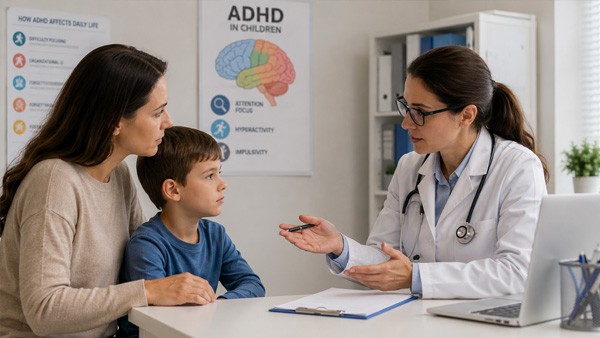
Attention deficit hyperactivity disorder is poorly named. It is not primarily a deficit of attention — people with ADHD can concentrate intensely on things that interest them, sometimes to the exclusion of everything else. What is impaired is the ability to direct attention deliberately, to the thing that needs doing rather than the thing that is engaging.
That distinction matters because the misnomer produces the commonest objection to the diagnosis: he can play a video game for four hours, so how can he have an attention problem. The answer is that the game supplies the engagement his own regulatory system cannot.
🧠 A more accurate description: ADHD is a difficulty with executive function — the set of processes that start tasks, sustain effort on things that are not intrinsically rewarding, hold information in mind, resist impulses, manage time and regulate emotion. Framed that way, the pattern makes sense: the person who cannot begin a simple form for three weeks and then writes ten thousand words overnight is not lazy or inconsistent. They have a regulation problem, not a capacity problem.
🗂️ The three presentations
ADHD is described in three forms depending on which features dominate, and the forms are not equally recognised.
| Presentation | Features | Recognition |
|---|---|---|
| Predominantly inattentive | Distractibility, disorganisation, forgetfulness, losing things, difficulty starting and finishing, appearing not to listen | Frequently missed entirely — this child causes nobody any trouble |
| Predominantly hyperactive-impulsive | Restlessness, difficulty staying seated, talking excessively, interrupting, acting without thinking | Recognised early, because it disrupts the classroom |
| Combined | Both sets present | The commonest diagnosed form |
The inattentive presentation is the one that slips through. A child who is quiet, daydreaming, disorganised and consistently underperforming relative to apparent ability generates concern about effort rather than referral for assessment. They are described as bright but lazy, or as not applying themselves — phrases that follow a large number of people into adulthood.
👧 Why girls and women are missed
ADHD was characterised for decades on the basis of hyperactive boys, and the diagnostic picture inherited that starting point. The consequences are still visible in referral patterns.
Girls are more likely to present with the inattentive form, which is quiet and non-disruptive. They are also more likely to develop compensatory strategies — excessive effort, perfectionism, elaborate organisation systems — that mask the underlying difficulty while exhausting them. And symptoms are frequently reinterpreted through other frames: anxiety, being highly strung, being scattered, being emotional.
The result is a large group diagnosed only in adulthood, often after their own child is assessed and they recognise the description of themselves. By then they have typically accumulated years of underachievement relative to ability, low self-esteem, and treatment for anxiety and depression that arose partly from struggling with an unrecognised condition.
Hormonal fluctuation adds a dimension rarely discussed: many women report symptoms worsening premenstrually and around perimenopause, when falling oestrogen affects dopamine signalling.
🧑 ADHD in adults
The idea that ADHD is outgrown is largely wrong. Hyperactivity does typically diminish, which is why the condition appears to disappear — but the inattentive and executive difficulties persist into adulthood in the majority of cases.
What changes is how it looks.
| In childhood | In adulthood |
|---|---|
| Running and climbing excessively | Internal restlessness, difficulty relaxing, fidgeting |
| Blurting out answers | Interrupting, impulsive decisions, spending, job changes |
| Losing school equipment | Missed appointments, unpaid bills, lost keys and documents |
| Not finishing homework | Chronic procrastination, unfinished projects, missed deadlines |
| Disruptive in class | Difficulty sustaining attention in meetings and conversation |
| Emotional outbursts | Emotional dysregulation, low frustration tolerance, rejection sensitivity |
The everyday consequences accumulate: employment instability, financial difficulty, relationship strain, driving incidents, and higher rates of anxiety, depression and substance use. Much of that is a consequence of untreated ADHD rather than a separate problem, which is one reason diagnosis in adulthood is frequently described as a relief rather than a burden.
🧬 What causes it
ADHD is among the most strongly heritable conditions in psychiatry, with twin studies putting genetic contribution at roughly three quarters. It is not a single gene but many, each contributing a small amount, affecting the development of brain networks involved in attention regulation, inhibition and reward processing.
Non-genetic contributors include extreme prematurity, very low birth weight, maternal smoking and alcohol in pregnancy, and early exposure to lead. These add risk rather than causing the condition.
⚠️ Things that do not cause ADHD, despite persistent claims: sugar — tested repeatedly in controlled trials with no effect on behaviour; parenting — parenting affects how well a child copes and how much conflict arises, but does not create the condition, and blaming parents has caused enormous and undeserved guilt; screens and video games — heavy use is more plausibly a consequence of ADHD than a cause, since these activities supply the immediate feedback the ADHD brain is short of; vaccines; and food additives, which affect a small subgroup marginally rather than the population generally.
🩺 How it is diagnosed
There is no blood test, brain scan or computer task that diagnoses ADHD. Anyone offering one as a definitive test is selling something. Diagnosis is clinical, and it is more rigorous than the popular impression suggests.
It requires:
- A defined number of symptoms from the inattentive or hyperactive-impulsive lists, present for at least six months
- Onset in childhood, with several symptoms present before age twelve — this is why adult assessment asks extensively about school years and often seeks a parent account
- Presence in more than one setting — home, school, work — rather than only in one difficult environment
- Genuine functional impairment, not merely the presence of traits
- Exclusion of better explanations — anxiety, depression, trauma, sleep disorder, hearing impairment, learning disability, thyroid disease, substance use
Assessment typically involves a detailed developmental and current history, standardised rating scales completed by more than one person, collateral information from school reports or a family member, and screening for the conditions that commonly coexist. Cognitive testing is used where a learning disorder is suspected, not to diagnose ADHD itself.
That last requirement — impairment rather than traits — is worth emphasising. Most people are sometimes distracted, disorganised and impulsive. ADHD is diagnosed where the pattern is persistent, developmentally excessive and demonstrably interferes with functioning.
🔗 What comes with it
ADHD rarely arrives alone, and the accompanying conditions frequently drive the presentation more than the ADHD does.
| Condition | Note |
|---|---|
| Anxiety disorders | Very common; sometimes the reason someone seeks help |
| Depression | Often secondary to years of underachievement and difficulty |
| Learning disorders | Dyslexia and dyscalculia co-occur frequently |
| Sleep disorders | Delayed sleep phase is strikingly common; sleep problems also mimic ADHD |
| Autism | Overlap is substantial and both can be diagnosed together |
| Tic disorders | Relevant to medication choice |
| Substance use | Rates are raised, and untreated ADHD increases rather than decreases the risk |
| Emotional dysregulation | Not in the formal criteria but reported by most adults with ADHD as among the hardest features |
Sleep deserves separate mention because the relationship runs both ways. Untreated obstructive sleep apnoea, insufficient sleep and delayed sleep phase all produce inattention, impulsivity and irritability indistinguishable from ADHD in a school-age child. Sleep assessment belongs in any ADHD evaluation.
💊 Stimulant medication
Stimulants are the most effective medications available for ADHD, with large, well-replicated effects on core symptoms. Methylphenidate and amphetamine-based drugs both work; roughly two-thirds of people respond well to the first tried, and a proportion of the remainder respond to the other class.
They work within hours rather than weeks, are dosed on a titration basis, and come in short-acting and extended-release forms. Common effects are reduced appetite, difficulty sleeping if taken late, headache, irritability as the dose wears off, and modest increases in heart rate and blood pressure. Growth is monitored in children.
They are tightly controlled substances in most countries, with specialist involvement for initiation, quantity limits and often a new prescription required for each supply. Supply shortages in several countries in recent years have made even established prescriptions difficult to fill.
✅ The concern about stimulants and later addiction has been studied and points the other way. Untreated ADHD is associated with higher rates of substance use disorder, and appropriately treated ADHD is associated with lower rates than untreated. Treatment does not create addiction; the impulsivity and self-medication of an untreated condition contribute to it. Diversion of prescribed stimulants is a genuine and separate problem requiring sensible supply management.
🧪 Non-stimulant medication
Non-stimulants are less powerful than stimulants on average but are the right choice for a number of specific situations, and they are frequently underused.
Atomoxetine is a selective noradrenaline reuptake inhibitor and was the first non-stimulant approved for ADHD. It differs from stimulants in ways that matter practically:
| Stimulants | Atomoxetine | |
|---|---|---|
| Onset of benefit | Within hours | Four to six weeks for full effect |
| Coverage | Follows the dose; wears off | Continuous across twenty-four hours |
| End-of-dose rebound | Common | Absent |
| Control status | Tightly controlled | Not a controlled substance |
| Abuse potential | Present | None |
| Effect on tics | Can worsen them | Does not, and may help |
| Effect on anxiety | Can worsen it | Often improves coexisting anxiety |
| Average effect size | Larger | Moderate |
Those rows explain when it is preferred: where there is a history of substance misuse or a risk of diversion in the household, where tics are present, where anxiety coexists prominently, where stimulants caused unacceptable side effects, where twenty-four hour coverage matters — early morning routines and evenings being the times stimulants typically do not cover — and where controlled prescribing is impractical.
Guanfacine and clonidine act on different receptors, help with hyperactivity, impulsivity and emotional dysregulation, and are often used alongside a stimulant. Viloxazine is a more recent non-stimulant option. Bupropion is used off-label, particularly where depression coexists.
📋 Atomoxetine in practice
Several practical points determine whether it works, and most treatment abandonment happens because of them.
It takes time. Some effect appears in one to two weeks; full benefit takes four to six. People who expect a stimulant-like response within hours conclude after three days that it does not work. It is the single commonest reason it gets stopped prematurely.
Start low and increase. Dosing is weight-based in children and titrated upward over weeks, which reduces the nausea that is otherwise common at the beginning.
Take it with food, which reduces stomach upset. It can be taken once daily or split into morning and evening if it causes drowsiness or nausea.
Expect early side effects to settle. Nausea, reduced appetite, tiredness and dry mouth are common in the first weeks and usually improve.
In adults, sexual side effects and urinary hesitancy occur in a minority and are worth knowing about in advance rather than discovering.
Monitoring covers blood pressure and heart rate, both of which can rise modestly, and growth in children.
🔴 Two warnings that belong on the label and should not be buried. Atomoxetine carries a warning about increased suicidal thinking in children and adolescents, which means close monitoring especially in the early weeks and after dose changes — any new or worsening thoughts of self-harm need reporting immediately. And rare severe liver injury has been reported: jaundice, dark urine, itching, right-sided abdominal pain or unexplained flu-like symptoms warrant stopping the drug and seeking assessment. Both are uncommon; both are the reason treatment is supervised rather than casual.
🏫 Treatment that is not medication
Medication addresses the core symptoms. It does not teach skills, restructure an environment or repair years of accumulated difficulty, and the best outcomes come from combining approaches.
Parent training programmes have solid evidence, particularly for younger children, and work on structure, consistency, and managing behaviour without escalating conflict. They are recommended first-line for preschool children ahead of medication.
School accommodations — seating, extra time, broken-down instructions, movement breaks, written rather than verbal instructions — frequently make more difference to daily functioning than anything else available.
Cognitive behavioural therapy adapted for adult ADHD has good evidence, working on planning, procrastination, organisation and the negative self-beliefs that accumulate over years.
Coaching and external structure — calendars, alarms, reminders, body doubling, breaking tasks into visible pieces — substitute for internal executive function rather than trying to build it, which is usually the more realistic goal.
Exercise and sleep both measurably improve attention and emotional regulation. Sleep in particular is worth treating as a clinical priority given how strongly it interacts with symptoms.
❌ What does not work
Elimination diets generally show little effect. Artificial colours affect a small subgroup of children modestly. Broad restriction diets impose a considerable burden on families for minimal average benefit.
Sugar restriction does not improve behaviour, having been tested in controlled trials repeatedly.
Neurofeedback has been extensively studied and the evidence remains weak once blinded assessment is used.
Omega-3 supplements show a very small effect at most, far below medication.
Working memory training programmes improve performance on the trained tasks and do not transfer to real-world functioning.
💤 Why modafinil is not an ADHD treatment
This deserves stating directly, because the earlier version of this article presented it as an alternative to stimulants with fewer side effects.
Modafinil and armodafinil are wakefulness-promoting agents licensed for narcolepsy, shift work sleep disorder and residual sleepiness in treated sleep apnoea. They have been trialled in ADHD. The results were inconsistent, a serious rash occurred in paediatric trials, and they were not approved for the indication in the countries where it was sought.
The conceptual problem is more fundamental than the trial results. ADHD is not a disorder of insufficient wakefulness. The difficulty lies in initiating tasks, sustaining effort on things that are not intrinsically rewarding, holding information in mind, inhibiting impulses and regulating emotion. Being more awake does not address any of those. What people frequently report on modafinil is staying awake and feeling able to work, which is a different experience from the executive improvement stimulants produce in ADHD.
Anyone unable to access a stimulant — because of shortages, prescribing restrictions, side effects or a history of substance misuse — is better served by a licensed non-stimulant with actual evidence in the condition than by a wakefulness drug studied for this purpose that did not perform.
⚠️ One genuine exception: ADHD and sleep disorders coexist frequently, and untreated sleepiness from any cause worsens attention in everyone. Where someone has both, treating the sleep disorder properly can improve concentration substantially — because the sleepiness was the problem, not because a wakefulness drug treats ADHD. Distinguishing the two requires sleep assessment rather than trial and error.
🧭 A realistic picture
ADHD is a lifelong condition for most people, and it is a manageable one. Treatment does not remove the underlying difference in how attention and impulse are regulated; it reduces the impairment enough that ability translates into outcome.
The features also carry advantages in the right setting: intense focus on genuinely engaging work, tolerance for risk, comfort with rapid change, energy, and a tendency to make connections that more linear thinking misses. Careers and environments differ enormously in how well they suit an ADHD brain, and finding the right fit often does more than any intervention.
What matters most is that impairment is recognised and addressed rather than reinterpreted as character. A very large number of adults reach diagnosis having spent decades believing they were lazy, unreliable or not clever enough, and the correction of that belief is frequently the most significant part of treatment.
Licensed non-stimulant treatment is stocked in the ADHD category, including Strattera (atomoxetine) and its generic equivalent Atomoxet. Treatment requires a diagnosis and supervision, particularly during the first weeks and after dose changes.
❓ Frequently asked questions
If he can focus on games for hours, how can he have ADHD?
Because ADHD is not an inability to concentrate — it is difficulty directing attention deliberately toward things that are not intrinsically engaging. A game supplies constant immediate feedback and reward, doing the regulatory work the ADHD brain struggles to do for itself. The same person cannot start a form that takes ten minutes. That contrast is characteristic of the condition rather than evidence against it.
Do people grow out of ADHD?
Mostly not. Hyperactivity typically diminishes, which is why the condition appears to disappear, but inattentive and executive difficulties persist into adulthood in the majority. What changes is the presentation: running about becomes internal restlessness, losing school equipment becomes missed appointments and unpaid bills, and unfinished homework becomes chronic procrastination and missed deadlines.
Why is ADHD missed in girls and women?
Because the diagnostic picture was built around hyperactive boys. Girls more often have the inattentive presentation, which is quiet and non-disruptive, and they more often develop compensatory strategies that mask the difficulty while exhausting them. Symptoms get reinterpreted as anxiety or being scattered. Many are diagnosed only in adulthood, frequently after their own child is assessed.
Is there a test for ADHD?
No blood test, brain scan or computer task diagnoses it, and anyone offering one as definitive is selling something. Diagnosis is clinical and requires a defined symptom count, onset before age twelve, presence in more than one setting, genuine functional impairment, and exclusion of better explanations including anxiety, trauma, sleep disorders and hearing problems. Rating scales and collateral history support the assessment rather than replacing it.
Does sugar or bad parenting cause ADHD?
Neither. Sugar has been tested repeatedly in controlled trials with no effect on behaviour. Parenting affects how well a child copes and how much conflict arises but does not create the condition, and blaming parents has caused a great deal of undeserved guilt. ADHD is among the most heritable conditions in psychiatry, with genetic contribution estimated at around three quarters.
Do stimulants cause addiction later?
The evidence points the other way. Untreated ADHD is associated with higher rates of substance use disorder, and appropriately treated ADHD with lower rates than untreated. Impulsivity and self-medication in an untreated condition contribute to substance problems; treatment reduces them. Diversion of prescribed stimulants is a real and separate issue requiring sensible supply management within a household.
When is a non-stimulant preferred?
Where there is a history of substance misuse or risk of diversion in the household, where tics are present since stimulants can worsen them, where anxiety coexists prominently, where stimulants caused unacceptable side effects, where twenty-four hour coverage matters because early mornings and evenings are when stimulants typically do not reach, and where controlled prescribing is impractical or supply is unreliable.
How long does atomoxetine take to work?
Some effect appears within one to two weeks, and full benefit takes four to six. This is the single commonest reason it gets abandoned: people expecting a stimulant-like response within hours conclude after a few days that it has failed. Starting low and increasing over weeks reduces the early nausea, and taking it with food helps. Early tiredness and appetite loss usually settle.
What should be monitored on atomoxetine?
Blood pressure and heart rate, both of which can rise modestly, and growth in children. Two specific warnings apply: increased suicidal thinking in children and adolescents, requiring close monitoring in the early weeks and after dose changes, with any new thoughts of self-harm reported immediately; and rare severe liver injury, where jaundice, dark urine, itching or right-sided abdominal pain warrant stopping and seeking assessment.
Can modafinil be used for ADHD instead of a stimulant?
It is not approved for it and the evidence does not support it. Trials were inconsistent, a serious rash occurred in paediatric studies, and approval was not granted. More fundamentally, ADHD is not a disorder of insufficient wakefulness — the difficulty is in starting tasks, sustaining effort, holding information in mind and regulating impulses, and being more awake does not address any of that. Licensed non-stimulants have actual evidence in the condition.
Could it be a sleep problem rather than ADHD?
Possibly, and it needs excluding. Untreated obstructive sleep apnoea, chronic insufficient sleep and delayed sleep phase all produce inattention, impulsivity and irritability that look indistinguishable from ADHD, particularly in school-age children. The relationship also runs the other way, since ADHD itself frequently comes with delayed sleep phase. Sleep assessment belongs in any ADHD evaluation.
Is medication the only treatment?
No, and the best outcomes combine approaches. Parent training programmes have solid evidence and are recommended before medication in preschool children. School accommodations often make more daily difference than anything else. Cognitive behavioural therapy adapted for adult ADHD works on procrastination, organisation and accumulated negative self-belief. External structure, exercise and sleep all contribute measurably.
📑 Sources and editorial
- NICE guideline on attention deficit hyperactivity disorder diagnosis and management
- American Academy of Pediatrics clinical practice guideline for ADHD in children and adolescents
- DSM-5 diagnostic criteria for attention deficit hyperactivity disorder
- Twin and family studies on the heritability of ADHD
- Multimodal Treatment Study of Children with ADHD and subsequent follow-up analyses
- Evidence reviews on stimulant treatment and later substance use disorder
- Trial evidence on modafinil in attention deficit hyperactivity disorder
- FDA prescribing information for atomoxetine, including hepatic and suicidality warnings
- Related products: ADHD category
- RXshop Editorial Team — reviewed by Thomas Walsh, MD, Psychiatry and Adult ADHD
Medical Disclaimer: The information in this article is for educational and informational purposes only and is not a substitute for professional medical advice, diagnosis, or treatment. Always seek guidance from a qualified healthcare provider with any questions you may have regarding a medical condition, and before starting, stopping or changing any medication.