Strattera and Albuterol: Cardiac Stimulation Risk in Asthma Patients

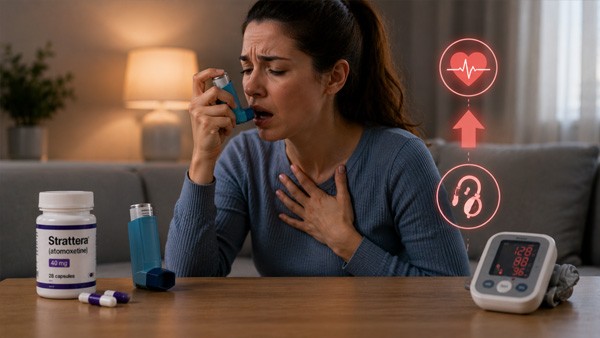

Strattera (atomoxetine) and albuterol (short-acting beta-agonist asthma inhaler — brand names Proventil, Ventolin, ProAir) interaction is primarily cardiovascular — both medications increase heart rate, blood pressure, and sympathetic nervous system activity through different but additive mechanisms. Strattera works as a norepinephrine reuptake inhibitor producing modest sustained cardiovascular activation (5-10 bpm heart rate increase, 1-3 mmHg BP increase at therapeutic doses). Albuterol acts as a beta-2 adrenergic agonist primarily intended for bronchodilation but also producing significant beta-1 cardiovascular effects (10-30 bpm heart rate increase acutely after inhalation, tremor, anxiety). The combination produces additive cardiovascular stimulation that's particularly relevant in pediatric ADHD patients with asthma, adults with both conditions, patients with underlying cardiovascular issues, and during acute asthma exacerbations requiring frequent rescue inhaler use. This isn't an absolute contraindication, but it requires careful consideration, appropriate monitoring, and sometimes treatment plan adjustments.
This guide provides comprehensive information about Strattera-albuterol combinations for patients managing both ADHD and asthma — a common comorbidity, particularly in pediatric populations where both conditions frequently coexist. We address why this combination concerns doctors with the pharmacological basis, stacked heart rate and BP effects with specific numerical ranges, the critical distinction between rescue inhaler use (acute, occasional) versus daily controller use (sustained exposure), pediatric considerations particularly important given childhood asthma prevalence and ADHD overlap, long-acting beta-agonists (LABAs — Serevent, Foradil) which extend the cardiovascular concern, inhaled corticosteroids as the safer asthma controller class with Strattera, monitoring approaches when combination is necessary, asthma medication class compatibility breakdown, stepwise asthma severity approach with Strattera considerations, emergency asthma action plan modifications for Strattera patients, and the bottom-line framework for managing both conditions effectively.
📊 Baseline heart rate (resting adult): ~70 bpm
➕ Strattera at therapeutic dose: +5 to +10 bpm → ~75-80 bpm
➕ Albuterol acute inhalation: +10 to +30 bpm → can reach ~85-110 bpm
📈 Sustained combined: ~85-110 bpm sustained for 2-4 hours
⚠️ With repeated rescue inhaler doses (acute exacerbation): can reach 120-140+ bpm
🩺 What this means practically:
• Single albuterol dose on Strattera: noticeable but generally tolerable tachycardia
• Repeated rescue inhaler doses during asthma attack: significant tachycardia warranting attention
• Patients with cardiovascular conditions: higher risk profile
• Pediatric patients: smaller cardiac reserve; closer monitoring
• Daily controller medications (preferred over frequent rescue): reduce stacking exposure
🎯 Treatment goal: Optimize asthma control to minimize rescue inhaler use — controller medications (inhaled corticosteroids) provide sustained asthma management without the acute cardiovascular spikes of repeated SABA use. This benefits both asthma outcomes AND reduces Strattera-stacking concerns.
🩺 Why This Combo Concerns Doctors
The pharmacological basis for clinical concern:
- Both medications activate sympathetic nervous system — additive cardiovascular effects.
- Strattera mechanism: Norepinephrine reuptake inhibition — sustained elevation in NE-mediated activation.
- Albuterol mechanism: Beta-2 adrenergic agonist with some beta-1 cross-reactivity at higher doses.
- Cardiac effects from both: Increased heart rate (chronotropy), increased contractility (inotropy), occasional arrhythmia risk.
- Sustained vs acute pattern: Strattera produces chronic mild elevation; albuterol produces acute significant spikes.
- Combined pattern: Elevated baseline + acute spikes during inhaler use.
Specific concerns prescribers weigh:
- ADHD/asthma comorbidity common: 15-25% of ADHD patients have asthma; 10-15% of asthma patients have ADHD.
- Pediatric patients particularly affected: Both conditions peak in childhood/adolescence.
- Long-term cardiovascular monitoring needed for chronic combination users.
- Acute symptom management complexity: Asthma attack requiring multiple rescue doses + Strattera baseline activation.
- Family awareness needed: Parents/caregivers should understand combined effects.
What concerns are NOT major:
- Absolute contraindication: Not the case — both medications can coexist with appropriate management.
- Acute life-threatening interaction: Not typical — unlike MAOIs which produce dangerous hypertensive crisis.
- Pharmacokinetic interaction: Minimal — different metabolic pathways.
- Catastrophic events common: Rare — most patients tolerate combination with monitoring.
Risk-benefit context:
- Both conditions need treatment: Untreated asthma and untreated ADHD both have significant negative health/functional outcomes.
- Combination usually manageable: Most patients do well with appropriate planning.
- Risk stratification matters: Cardiovascular health, age, asthma severity, ADHD severity all factor.
- Optimization possible: Treatment plan modifications can minimize concerns.
📊 Stacked Heart Rate and BP Effects
Quantitative cardiovascular effects:
Strattera at therapeutic doses:
- Heart rate increase: 5-10 bpm above baseline (typical adult: 70 → 75-80 bpm).
- BP increase: 1-3 mmHg systolic and diastolic.
- Duration: Continuous throughout therapeutic period (24 hours).
- Mechanism: Sustained noradrenergic activation.
Albuterol acute inhalation (standard dose 90 mcg × 2 puffs):
- Heart rate increase: 10-30 bpm above baseline acutely.
- BP changes: Variable; usually mild increase or unchanged.
- Tremor: Common, particularly in extremities.
- Anxiety/restlessness: Common subjective experience.
- Duration: 2-4 hours typically.
- Onset: 5-15 minutes after inhalation.
Combined effects:
- Single albuterol on Strattera: Combined HR 85-110 bpm range.
- Multiple albuterol doses (acute exacerbation): 120-140+ bpm possible.
- Subjective experience: Patient feels jittery, anxious, racing heart.
- BP changes typically modest: Not usually severe BP issues.
- Duration: Strattera baseline elevation continuous; albuterol effects 2-4 hours acutely.
Tolerance development:
- Strattera cardiovascular effects: Some tolerance over 4-6 weeks of treatment.
- Albuterol cardiovascular effects: Some tolerance with regular use but not complete.
- Acute exacerbations still produce full effects even in chronic users.
- Patient tolerance to subjective effects develops; cardiovascular elevation may persist.
Risk stratification by patient profile:
- Healthy child with mild asthma + ADHD: Lower risk profile; combination generally manageable.
- Adult with cardiovascular conditions + asthma + ADHD: Higher risk; consider alternatives.
- Patient with arrhythmia history: Significantly higher risk; cardiology consultation.
- Patient with poorly controlled BP: Optimize BP first; reconsider combination.
- Older adults (less common but possible): Reduced cardiovascular reserve; closer monitoring.
🆘 Rescue Inhaler vs Daily Use Risk
The critical pattern-of-use distinction:
Rescue (SABA) inhaler use — acute, occasional:
- Indication: Acute bronchospasm relief.
- Frequency: Ideally less than 2 days per week if asthma well-controlled.
- Cardiovascular pattern: Acute spikes only with use; no sustained elevation between doses.
- Risk with Strattera: Manageable for occasional use; concerning if frequent.
- Frequent use signals poor asthma control — should trigger controller optimization.
Daily SABA use — concerning pattern:
- Indication: Should not be daily — indicates poorly controlled asthma.
- Cardiovascular pattern: Repeated acute spikes throughout day.
- Risk with Strattera: Significantly elevated combined cardiovascular burden.
- Action needed: Asthma reassessment, controller medication initiation/optimization, allergist referral.
Controller (preventive) medication daily use:
- Inhaled corticosteroids (ICS): Daily preventive use; minimal cardiovascular effects; safe with Strattera.
- Long-acting beta-agonists (LABA): Daily controller use; cardiovascular concerns sustained.
- Combination ICS/LABA inhalers: Common; LABA component is concern.
- Leukotriene modifiers (Singulair): Oral daily use; FDA black box for mood (concerning with Strattera).
- Biologics (Xolair, Dupixent): Injectable; minimal cardiovascular effect.
Acute exacerbation management:
- Repeated rescue inhaler doses: May need multiple albuterol doses every 20-60 minutes initially.
- Cardiovascular impact significant: Combined with Strattera produces sustained tachycardia.
- Emergency department threshold lower for combination patients.
- Systemic corticosteroids: Often needed for moderate-severe exacerbations.
- Monitor for cardiovascular symptoms: Chest pain, severe palpitations, dizziness warrant emergency care.
Asthma control assessment:
- Symptoms ≤2 days/week: Well-controlled.
- Rescue inhaler ≤2 times/week: Well-controlled.
- No nighttime awakenings: Well-controlled.
- No activity limitation: Well-controlled.
- Lung function normal/near normal: Well-controlled.
- If any criteria not met: Optimize controller therapy.
👧 Pediatric Asthma + ADHD: Common Challenge
Pediatric considerations for combined conditions:
- Comorbidity prevalence: ADHD and asthma overlap significantly in childhood — 15-25% of ADHD children have asthma.
- Both conditions peak childhood/adolescence: Many pediatric patients need both treatments simultaneously.
- Combined cardiovascular monitoring more important in growing patients.
- Strattera in children: FDA-approved age 6+; commonly prescribed for pediatric ADHD.
- Albuterol in children: Standard rescue inhaler from infancy onward.
Specific pediatric concerns:
- Smaller cardiac reserve: Children have less cardiovascular margin than adults.
- Hyperactivity from albuterol: Beta-agonist effects can mimic or worsen ADHD symptoms — tremor, restlessness, irritability.
- Difficulty distinguishing causes: Is increased activity from asthma worsening, albuterol side effect, ADHD symptom, or Strattera issue?
- Behavioral effects compounded: Both medications can affect mood and behavior.
- School performance: Asthma + ADHD + medications all impact school functioning.
Common parent observations:
- "My child is more hyper after using inhaler" — beta-agonist effect.
- "Their hands shake after albuterol" — common tremor effect.
- "They feel anxious after using inhaler" — sympathetic activation effect.
- "Heart racing after asthma attack" — combined Strattera + multiple albuterol doses.
- "Hard to tell what's causing what" — overlap of symptoms.
Pediatric management approach:
- Excellent asthma control essential: Minimize rescue inhaler need through controller optimization.
- Inhaled corticosteroids as cornerstone: Safe with Strattera; effective asthma control.
- Spacer/holding chamber: Improves albuterol delivery, may reduce systemic absorption.
- Allergist referral for chronic asthma management.
- Cardiovascular monitoring: Baseline + periodic during treatment.
- Coordinated care between pediatrician, pulmonologist/allergist, and ADHD prescriber.
- Family education about combined effects and warning signs.
School considerations:
- School nurse aware of both medications.
- Action plan for asthma attack at school.
- Inhaler access during school.
- Communication with teachers about possible medication effects.
- Physical education considerations for asthma.
⏱️ Long-Acting Beta-Agonists (LABAs)
LABA considerations with Strattera:
- Long-acting beta-agonists provide 12-24 hour bronchodilation versus albuterol's 4-6 hours.
- Examples: Salmeterol (Serevent), formoterol (Foradil), vilanterol (in combinations).
- Sustained cardiovascular effect versus albuterol's acute spikes.
- FDA Black Box warning for LABA monotherapy in asthma — must be combined with inhaled corticosteroid.
- Common combination inhalers: Advair (fluticasone/salmeterol), Symbicort (budesonide/formoterol), Breo (fluticasone/vilanterol), Dulera (mometasone/formoterol).
Strattera + LABA considerations:
- Sustained dual cardiovascular activation versus rescue albuterol's acute pattern.
- Continuous combined heart rate elevation throughout day.
- May be appropriate for moderate-severe asthma in stable patients.
- Cardiovascular monitoring more important with chronic LABA + Strattera use.
- Tolerance development partial; some sustained effects.
Specific LABA-containing combination products:
- Advair (fluticasone + salmeterol): Twice-daily inhaler; common adult asthma controller.
- Symbicort (budesonide + formoterol): Twice-daily; FDA-approved as both controller and reliever in some patients.
- Breo Ellipta (fluticasone + vilanterol): Once-daily; convenient adherence.
- Dulera (mometasone + formoterol): Twice-daily.
- Trelegy (fluticasone + umeclidinium + vilanterol): Triple combination; LABA + LAMA + ICS.
Alternatives to LABA for combination therapy:
- Higher-dose inhaled corticosteroid alone: May provide similar asthma control without LABA's cardiovascular concerns.
- ICS + leukotriene modifier (Singulair): Different mechanism; mood concerns with montelukast.
- ICS + LAMA (long-acting muscarinic antagonist): Different mechanism; less cardiovascular activation.
- Biologics for severe persistent asthma: Different mechanism entirely; no cardiovascular activation.
- Combination ICS-LAMA-LABA in severe asthma needing all components.
🌬️ Inhaled Corticosteroids: Safer Choice
Inhaled corticosteroids (ICS) as Strattera-compatible asthma controllers:
- Mechanism: Local anti-inflammatory action in airways; minimal systemic effects.
- Cardiovascular impact: Minimal — no sympathetic activation.
- Strattera compatibility: Excellent.
- Asthma effectiveness: Cornerstone of asthma control; recommended by all guidelines.
- Long-term safety: Generally good with appropriate use.
Common inhaled corticosteroid options:
- Fluticasone (Flovent, Arnuity): Most common ICS; multiple formulations.
- Budesonide (Pulmicort): Effective for pediatric and adult asthma.
- Beclomethasone (QVAR): Older but effective ICS.
- Mometasone (Asmanex): Once or twice-daily options.
- Ciclesonide (Alvesco): Prodrug activated in lungs; minimal oral cavity effects.
- Combination ICS/LABA: When LABA needed; ICS portion safe.
Why ICS preferred for Strattera patients:
- No cardiovascular activation: Doesn't compound Strattera's effects.
- Effective asthma control: Reduces need for rescue albuterol.
- Daily use sustainable: Long-term safety profile good.
- Reduces exacerbations: Less acute cardiovascular stress from repeated SABA use.
- Improves overall quality of life.
Common ICS considerations:
- Use with spacer/holding chamber: Better lung delivery, less throat deposit.
- Rinse mouth after use: Prevents oral candidiasis (thrush).
- Allow 2-4 weeks for full effect: Not immediate symptom relief.
- Don't stop suddenly: Risk of asthma exacerbation.
- Growth monitoring in children: Some impact on growth velocity; usually catch up.
- Higher doses may have systemic effects: Bone density, adrenal suppression at very high doses.
ICS dosing tiers:
- Low-dose ICS: First-line for persistent asthma; minimal systemic concerns.
- Medium-dose ICS: Step up if low-dose insufficient.
- High-dose ICS: For severe persistent asthma; more monitoring needed.
- Combination with LABA: Generally preferred over highest-dose ICS monotherapy.
📊 Monitoring When Combo Is Necessary
Cardiovascular monitoring approach:
Baseline assessment before starting Strattera in asthma patients:
- Cardiovascular history: Family history, personal cardiac history, arrhythmia history.
- BP and heart rate measurement.
- Consider EKG in patients with cardiovascular risk factors or symptoms.
- Asthma control assessment: Current control level, rescue inhaler frequency.
- Other medications review.
Ongoing monitoring during combined treatment:
- BP and heart rate at every visit — both ADHD and asthma follow-ups.
- Symptom inquiry: Palpitations, chest pain, dizziness, shortness of breath.
- Asthma control assessment: Symptoms, rescue inhaler use, nighttime awakenings, lung function.
- Strattera dose review: Effectiveness vs side effects.
- Coordination between specialists: Pulmonologist, ADHD prescriber, primary care.
Patient/family monitoring at home:
- Asthma symptom diary: Frequency, severity, triggers.
- Rescue inhaler use tracking: Should be ≤2 times/week if controlled.
- Heart rate awareness: Particularly after rescue inhaler use.
- Concerning symptoms: Chest pain, severe palpitations, fainting — emergency care.
- Peak flow monitoring: For older children and adults with moderate-severe asthma.
When to escalate concern:
- Frequent rescue inhaler use: Indicates poor asthma control; not Strattera issue but worth addressing.
- New cardiovascular symptoms: Chest pain, severe palpitations, fainting.
- Significantly elevated heart rate at rest.
- BP significantly elevated.
- Asthma exacerbations requiring ED visits or hospitalization.
- New arrhythmias.
Adjustment options when concerns arise:
- Optimize asthma control: Increase ICS dose, add controller, allergist referral.
- Reduce SABA reliance: Symbicort SMART therapy (ICS/formoterol as both controller and reliever), reduces SABA use.
- Strattera dose adjustment: May reduce to minimum effective dose.
- Alternative ADHD treatment: Consider non-cardiovascular options (guanfacine, clonidine).
- Cardiology consultation: For complex cardiovascular concerns.
📋 Asthma Medication Class Compatibility
Strattera compatibility with each asthma medication class:
| Medication class | Examples | Strattera interaction | Recommendation |
|---|---|---|---|
| Short-acting beta-agonists (SABA — rescue) | Albuterol (Proventil, Ventolin, ProAir), levalbuterol (Xopenex) | Acute cardiovascular stacking | OK for occasional rescue use; optimize controller to minimize |
| Long-acting beta-agonists (LABA) | Salmeterol (Serevent), formoterol (Foradil), vilanterol | Sustained cardiovascular stacking | Cardiovascular monitoring; consider alternatives in higher-risk patients |
| Inhaled corticosteroids (ICS) | Fluticasone (Flovent), budesonide (Pulmicort), mometasone (Asmanex), beclomethasone (QVAR) | Minimal interaction | Preferred controller class; safe with Strattera |
| ICS/LABA combinations | Advair, Symbicort, Breo, Dulera | LABA component creates sustained cardiovascular concern | Cardiovascular monitoring; appropriate for moderate-severe asthma |
| Long-acting muscarinic antagonists (LAMA) | Tiotropium (Spiriva), umeclidinium (Incruse) | Minimal cardiovascular stacking; anticholinergic effects | Compatible; useful for COPD-asthma overlap |
| Leukotriene modifiers | Montelukast (Singulair), zafirlukast (Accolate) | No cardiovascular interaction; FDA black box for mood/behavior | Compatible cardiovascularly but mood concerns relevant for Strattera black box |
| Biologics for severe asthma | Omalizumab (Xolair), mepolizumab (Nucala), dupilumab (Dupixent), benralizumab (Fasenra), tezepelumab (Tezspire) | Minimal interaction | Excellent compatibility; for severe persistent asthma |
| Oral corticosteroids | Prednisone, methylprednisolone | Minimal direct interaction but BP/glucose effects | For acute exacerbations; short course usually OK |
| Theophylline | Theo-Dur, Uniphyl | Cardiovascular stimulant + Strattera = significant stacking | Avoid combination if possible; if needed, careful monitoring |
| Cromolyn / Nedocromil | Cromolyn (Intal), nedocromil (Tilade) | Minimal interaction | Compatible; less commonly used now |
📈 Asthma Severity Stepwise Approach
Stepwise asthma management with Strattera considerations:
Step 1 — Intermittent asthma:
- Symptoms: ≤2 days/week, ≤2 nights/month.
- Treatment: Rescue SABA (albuterol) as needed only.
- Strattera consideration: Minimal — rare albuterol use produces limited stacking.
- Monitoring: Standard ADHD monitoring; asthma symptom diary.
Step 2 — Mild persistent asthma:
- Symptoms: >2 days/week (not daily), 3-4 nights/month.
- Treatment: Low-dose ICS daily + rescue SABA.
- Strattera consideration: ICS-safe; reduced rescue SABA need from controller.
- Monitoring: Heart rate, BP, asthma control.
Step 3 — Moderate persistent asthma:
- Symptoms: Daily symptoms, >1 night/week.
- Treatment: Low-dose ICS + LABA, OR medium-dose ICS, + rescue SABA.
- Strattera consideration: LABA introduces sustained cardiovascular concern; medium-dose ICS alone alternative.
- Monitoring: More frequent BP/HR checks; asthma control assessment.
Step 4 — Severe persistent asthma:
- Symptoms: Daily symptoms, frequent nighttime, frequent exacerbations.
- Treatment: Medium-high dose ICS + LABA, possibly LAMA, possibly oral corticosteroids, biologics consideration.
- Strattera consideration: Multiple medications with cardiovascular implications; specialist coordination essential.
- Monitoring: Comprehensive; possible cardiology involvement.
Step 5 — Severe refractory asthma:
- Symptoms: Uncontrolled despite Step 4.
- Treatment: Add biologic, possible oral corticosteroids, allergist/pulmonologist management.
- Strattera consideration: Reassess overall medication burden; consider whether ADHD treatment can be optimized non-cardiovascularly.
- Monitoring: Specialist team coordination.
Step-down principle:
- If well-controlled at current step for 3 months — consider stepping down.
- Step down gradually: One step at a time, monitor for control loss.
- Goal: lowest effective treatment — minimizes cardiovascular burden with Strattera.
🚨 Emergency Asthma Action Plan on Strattera
Modified asthma action plan for Strattera patients:
Green zone (well-controlled, 80-100% peak flow):
- Continue daily controller medication.
- Rescue inhaler only as needed (rare with good control).
- Continue Strattera as prescribed.
- Monitor for any changes.
Yellow zone (caution, 50-80% peak flow, increased symptoms):
- Increase rescue inhaler use: Albuterol every 4-6 hours as needed.
- Be aware of combined heart rate effects from increased albuterol + Strattera.
- Monitor heart rate if multiple doses needed.
- Consider adding/increasing oral corticosteroid per action plan.
- Contact prescriber if not improving within 24-48 hours.
- Don't stop Strattera unless instructed.
Red zone (emergency, <50% peak flow, severe symptoms):
- Use rescue inhaler immediately: 2-4 puffs every 20 minutes for up to 1 hour.
- Call 911 or go to emergency department if not improving.
- Inform medical staff about Strattera for cardiovascular consideration.
- Bring all medication information.
- Combined cardiovascular load significant — monitor closely.
- Emergency treatment: Continuous albuterol nebulizer, systemic corticosteroids, possibly other medications; staff awareness of Strattera important.
Warning signs requiring immediate emergency care:
- Severe shortness of breath not improving with rescue inhaler.
- Inability to speak in full sentences.
- Blue lips or fingernails (cyanosis).
- Chest pain beyond typical asthma chest tightness.
- Severe palpitations or arrhythmia sensation.
- Confusion or altered mental status.
- Loss of consciousness.
Inform ED staff:
- Currently taking Strattera for ADHD.
- Current Strattera dose.
- Number of albuterol doses used.
- Other medications.
- Asthma action plan from prescriber if available.
Post-emergency follow-up:
- Reassess asthma control: Why did exacerbation occur?
- Optimize controller therapy to prevent future exacerbations.
- Review medication adherence.
- Allergist/pulmonologist referral if not already involved.
- Coordinate with ADHD prescriber about combined treatment plan.
- Cardiovascular follow-up after significant cardiovascular stress.
✨ Bottom Line
Strattera and albuterol interaction is primarily cardiovascular — both medications activate sympathetic nervous system, producing additive heart rate and BP effects. The Heart Rate Stacking Diagram shows the quantitative reality: typical adult baseline 70 bpm, Strattera adds 5-10 bpm baseline elevation, albuterol acute inhalation adds 10-30 bpm transient spike, combined effect can reach 85-110 bpm for hours, repeated doses during acute exacerbation can reach 120-140+ bpm. This isn't absolute contraindication but warrants careful consideration, monitoring, and treatment optimization.
The critical pattern-of-use distinction matters more than the medications themselves. Rescue inhaler use should be ≤2 times/week if asthma is well-controlled — at that frequency, combined cardiovascular impact is acceptable for most patients. Frequent rescue inhaler use (daily SABA) indicates poor asthma control and creates significant Strattera-stacking burden — the answer is escalating asthma controller therapy, not changing Strattera.
Inhaled corticosteroids (ICS) are the Strattera-compatible cornerstone of asthma control. Fluticasone (Flovent), budesonide (Pulmicort), mometasone (Asmanex), beclomethasone (QVAR), ciclesonide (Alvesco) all provide effective asthma control with minimal cardiovascular impact. Daily ICS use reduces need for rescue albuterol, which reduces Strattera-albuterol stacking concerns.
Long-acting beta-agonists (LABAs) introduce sustained cardiovascular concern when combined with Strattera. Common combinations Advair (fluticasone/salmeterol), Symbicort (budesonide/formoterol), Breo (fluticasone/vilanterol), Dulera (mometasone/formoterol) all contain LABA component. For Strattera patients, alternatives include higher-dose ICS alone, ICS + LAMA, ICS + montelukast (mood concerns), or biologics for severe asthma.
Pediatric considerations are particularly important — ADHD and asthma overlap significantly in childhood; both Strattera and albuterol commonly used; smaller cardiac reserve in children; beta-agonist effects can mimic or worsen ADHD symptoms (tremor, restlessness, anxiety); difficulty distinguishing causes (asthma worsening vs medication effects vs ADHD); coordinated care between pediatrician, pulmonologist, and ADHD prescriber essential.
Monitoring approach includes baseline assessment (cardiovascular history, BP/HR, possible EKG), ongoing monitoring (BP/HR every visit, symptom inquiry, asthma control, Strattera effectiveness), home monitoring (asthma diary, rescue use tracking, heart rate awareness), and clear escalation criteria.
The Asthma Medication Class Compatibility Table provides comprehensive class-by-class assessment: SABAs acute concern, LABAs sustained concern, ICS preferred, LAMA compatible, leukotriene modifiers cardiovascularly safe but mood concerns with montelukast, biologics excellent compatibility, theophylline avoid if possible.
Stepwise asthma management with Strattera considerations: Step 1 intermittent (minimal concern), Step 2 mild persistent (ICS introduction), Step 3 moderate (LABA or higher ICS — consider alternatives), Step 4 severe (multiple medications — specialist coordination), Step 5 severe refractory (reassess overall burden, consider non-cardiovascular ADHD alternatives).
Emergency asthma action plan modifications: yellow zone awareness of combined HR effects, red zone immediate ED for severe symptoms, ED staff must be informed about Strattera, post-emergency reassessment of asthma control and treatment optimization.
The single most important intervention is optimizing asthma control to minimize rescue inhaler use — well-controlled asthma means minimal SABA need, which minimizes the stacking concern. ICS-based controllers, allergist involvement for chronic asthma, environmental control, and patient adherence all contribute to optimal asthma management and minimized Strattera-albuterol cardiovascular impact.
For broader Strattera safety and lifestyle context, see Strattera and Alcohol, Strattera and Caffeine, Strattera and SSRI/SNRI, Strattera and MAOIs (absolute contraindication), Strattera and Birth Control, Strattera and Marijuana, Strattera and Antihistamines, Cardiovascular Effects (highly relevant for albuterol context), Liver Health, FDA Black Box SI, Sleep Effects, Long-Term Side Effects, Weight Loss, Sexual Side Effects, and Withdrawal.
For Strattera comparison cluster: vs Adderall, vs Vyvanse, vs Concerta, vs Ritalin, vs Modafinil, vs Wellbutrin, vs Intuniv, vs Qelbree.
For modafinil as off-label ADHD alternative (note: modafinil has similar cardiovascular profile concerns), Modalert 200 mg from Sun Pharma provides Schedule IV option.
❓ Frequently Asked Questions
Can I use my albuterol inhaler while taking Strattera?
Yes, with awareness of combined cardiovascular effects. Both medications increase heart rate — Strattera adds 5-10 bpm baseline; albuterol adds 10-30 bpm acutely. Combined can reach 85-110 bpm for hours; repeated doses during acute exacerbation can reach 120-140+ bpm. Single rescue dose generally manageable. Frequent rescue use (daily) indicates poor asthma control — escalate controller therapy rather than discontinuing rescue.
What's the safest asthma medication with Strattera?
Inhaled corticosteroids (ICS) — minimal cardiovascular interaction, effective for asthma control. Options: fluticasone (Flovent), budesonide (Pulmicort), mometasone (Asmanex), beclomethasone (QVAR), ciclesonide (Alvesco). Daily ICS use reduces need for rescue albuterol, minimizing Strattera-albuterol stacking. ICS is cornerstone of asthma control per guidelines and Strattera-compatible.
What about LABA inhalers like Advair or Symbicort?
LABA component (salmeterol in Advair, formoterol in Symbicort) creates sustained cardiovascular stacking with Strattera versus albuterol's acute spikes. May be appropriate for moderate-severe asthma needing sustained bronchodilation. Cardiovascular monitoring important. Alternatives: higher-dose ICS alone, ICS + LAMA, ICS + montelukast (mood concerns), biologics for severe asthma. Decision based on asthma severity vs cardiovascular risk profile.
My child has asthma and ADHD — should I worry about combined medications?
Worth careful management but combined treatment usually successful. Comorbidity common (15-25% of ADHD children have asthma). Optimize asthma control with daily ICS to minimize rescue albuterol need. Beta-agonist effects can mimic or worsen ADHD symptoms (tremor, restlessness, anxiety) — important to distinguish causes. Coordinated care between pediatrician, pulmonologist/allergist, ADHD prescriber. Monitor cardiovascular signs (heart rate, BP). School awareness important.
What about Singulair (montelukast) with Strattera?
Cardiovascularly compatible — montelukast doesn't affect heart rate or BP. However, montelukast has FDA Black Box warning for neuropsychiatric effects (mood changes, depression, suicidal ideation) — Strattera also has Black Box warning for suicidal ideation. Combined neuropsychiatric monitoring particularly important. Some clinicians prefer alternatives in patients with significant mood concerns. Discuss with prescriber.
What should I tell the ER if I'm having an asthma attack on Strattera?
Inform ED staff immediately: "I'm having an asthma attack and I take Strattera (atomoxetine) for ADHD." Include current Strattera dose, how many albuterol doses you've used, other medications. This matters because combined cardiovascular load is significant — ED may use continuous albuterol nebulizer, systemic corticosteroids, possibly other medications. Staff awareness of Strattera helps appropriate monitoring and treatment.
How often is too often for rescue inhaler use on Strattera?
More than 2 times/week (other than for exercise) indicates poor asthma control regardless of Strattera. With Strattera, frequent rescue use also creates cardiovascular stacking concerns. If using rescue inhaler more than twice weekly: asthma reassessment needed, controller medication optimization (likely ICS or step-up), allergist referral consideration. Goal: well-controlled asthma with rare rescue inhaler need.
Should my Strattera dose be lower because I use albuterol?
Generally no — Strattera dose based on ADHD treatment needs, not albuterol use. However, if cardiovascular monitoring shows concerning trends (elevated BP, sustained tachycardia, symptoms), Strattera dose reduction is one consideration. More commonly, asthma controller optimization to reduce albuterol need is the better approach. Coordinated care between prescribers for individualized assessment.
Are there alternatives to albuterol for asthma rescue?
Limited alternatives for acute bronchospasm. Levalbuterol (Xopenex) is R-isomer of albuterol — theoretically slightly less cardiovascular effect but practical difference modest. Symbicort SMART therapy uses Symbicort (budesonide/formoterol) as both controller and reliever — reduces overall SABA use. Some patients can use less SABA with optimized controllers. True alternatives for acute rescue limited — SABAs remain standard.
What cardiovascular symptoms should I report to my doctor?
Report: chest pain (especially with exertion or rescue inhaler use), severe palpitations or sensation of irregular heartbeat, sustained rapid heart rate at rest (>100 bpm), shortness of breath beyond typical asthma, fainting or near-fainting, severe dizziness, swelling in legs/ankles. These warrant prompt prescriber contact. Severe symptoms (chest pain with shortness of breath, fainting, severe palpitations) warrant emergency care.
📚 References & Further Reading
- FDA prescribing information for Strattera (atomoxetine).
- FDA prescribing information for albuterol products.
- Global Initiative for Asthma (GINA) — current asthma management guidelines.
- National Heart, Lung, and Blood Institute (NHLBI) — asthma guidelines and stepwise approach.
- American Academy of Allergy, Asthma & Immunology — asthma treatment.
- American Academy of Pediatrics — pediatric asthma management.
- American Thoracic Society — pulmonology clinical practice guidelines.
- Strattera lifestyle/interaction cluster: Alcohol, Caffeine, SSRI/SNRI, MAOIs, Birth Control, Marijuana, Antihistamines
- Strattera safety cluster: Long-Term, Cardiovascular, Liver Health, FDA Black Box SI, Sleep, Weight Loss, Sexual Side Effects, Withdrawal
- Strattera comparison cluster: vs Adderall, vs Vyvanse, vs Concerta, vs Ritalin, vs Modafinil, vs Wellbutrin, vs Intuniv, vs Qelbree
- Modalert 200 mg, Modvigil 200 mg, Waklert 150 mg — primary product pages.
- RXshop Editorial Team — content reviewed by licensed pharmacist; for adult patient education, not a substitute for individual medical consultation.
Medical Disclaimer: The information in this article is for educational and informational purposes only and is not a substitute for professional medical advice, diagnosis, or treatment. Always seek guidance from a qualified healthcare provider with any questions you may have regarding a medical condition, and before starting, stopping or changing any medication.