Strattera and Marijuana: Cannabinoid Interactions and Mental Health Risks

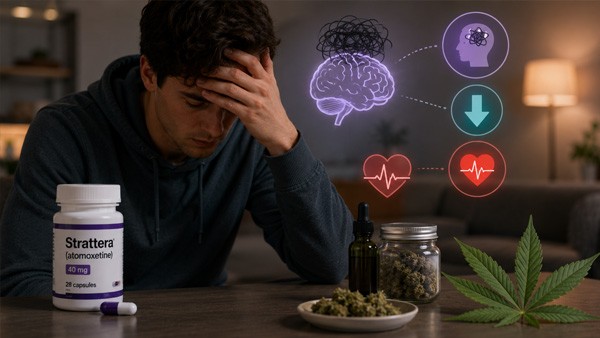
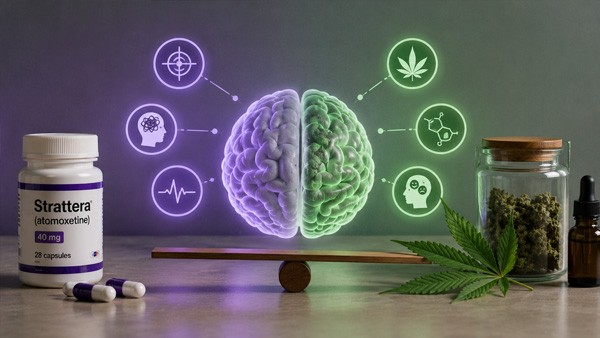
Strattera (atomoxetine) and cannabis (marijuana) interaction is complex — involving cardiovascular effects, mood and anxiety considerations, ADHD symptom control concerns, drug testing implications, and significant differences between THC and CBD components of cannabis. Unlike alcohol where the interaction profile is relatively understood (additive sedation, liver enzyme considerations), cannabis-Strattera interaction varies dramatically based on cannabinoid composition (THC-dominant vs CBD-dominant vs balanced), consumption method (smoking, vaping, edibles, tinctures), use pattern (occasional vs daily vs medical), individual sensitivity, and concurrent medications. The interaction isn't an absolute contraindication like MAOIs, but it warrants careful consideration — particularly for ADHD treatment effectiveness, cardiovascular safety, and mental health stability. Both medical professionals and patients should understand the nuanced reality of this common combination.
This guide provides comprehensive information about Strattera-cannabis interactions for adult patients with full awareness that cannabis legality varies by jurisdiction and that some patients may use cannabis medically, recreationally, or not at all. We address how Strattera and cannabis interact pharmacologically, the critical THC vs CBD distinction (very different interaction profiles), mood and anxiety effects when combined, ADHD symptom control implications (cannabis often counterproductive for focus), the heart rate stacking risk that's particularly relevant, teen and young adult developmental considerations (cannabis brain effects + ADHD treatment), drug test implications for employment or legal contexts, four cannabis use pattern classifications with Strattera-specific guidance, consumption method analysis (smoking vs edibles vs vaping vs tinctures), medical marijuana program considerations, and the bottom-line framework for patients on Strattera. The goal is informed decision-making, not moral judgment.
| Aspect | THC (Tetrahydrocannabinol) | CBD (Cannabidiol) |
|---|---|---|
| Psychoactive | Yes — intoxicating | No — not intoxicating |
| Heart rate effect | Significant tachycardia | Minimal cardiovascular effect |
| BP effect | Variable (can increase or decrease) | Minimal effect |
| Anxiety effect | Can worsen anxiety in some users | May reduce anxiety |
| Cognition/focus | Impairs short-term memory, focus | Less cognitive impairment |
| CYP2D6 interaction | Mild inhibitor | Significant inhibitor (raises Strattera levels) |
| CYP3A4 interaction | Mild inhibitor | Moderate inhibitor |
| Strattera + this cannabinoid | Heart rate stacking, cognition concerns | May raise Strattera levels via CYP2D6 |
| Risk priority | Cardiovascular + cognitive | Pharmacokinetic interaction |
THC and CBD have markedly different interaction profiles with Strattera. THC's primary concerns are cardiovascular (heart rate stacking) and cognitive (counter to ADHD treatment). CBD's primary concern is pharmacokinetic — significant CYP2D6 inhibition can raise atomoxetine levels, potentially increasing side effects. Patients using cannabis with Strattera should understand which cannabinoids their products contain (most are mixed; medical CBD products may be CBD-only).
🌱 How Strattera and Cannabis Interact
The pharmacological basis for Strattera-cannabis interaction:
- Pharmacokinetic interaction: Cannabis components (particularly CBD) inhibit CYP2D6 enzyme, the primary Strattera metabolizing enzyme.
- Pharmacodynamic interaction: Both substances affect cardiovascular and neurological systems with potential additive or opposing effects.
- CBD particularly significant: Strong CYP2D6 inhibitor; can raise atomoxetine levels significantly.
- THC effects more pharmacodynamic: Heart rate stacking, cognitive interference.
- Individual variation substantial: CYP2D6 genetics, cannabis tolerance, dose all matter.
Major interaction concerns:
- Cardiovascular effects: Both increase heart rate; combination produces stacking effect.
- Cognitive/focus interference: THC impairs focus while Strattera enhances it — counterproductive.
- Mood and anxiety: Combined effects unpredictable; both substances affect mental health.
- Strattera level changes: CBD particularly can raise atomoxetine levels through CYP2D6 inhibition.
- Side effect amplification: Raised Strattera levels may amplify cardiovascular, GI, sleep, and other side effects.
What this means practically:
- Not an absolute contraindication — like MAOIs would be.
- Warrants careful consideration — particularly for regular or medical cannabis users.
- Discuss with prescriber honestly — transparency about cannabis use enables proper monitoring.
- Monitor for specific concerns: Heart rate, side effects, ADHD symptom control, mood.
- Adjust if needed: Dose adjustments, monitoring frequency, alternative considerations.
⚖️ THC vs CBD: Different Interaction Profiles
THC (tetrahydrocannabinol) interaction with Strattera:
- Cardiovascular concerns primary: THC causes significant tachycardia; combined with Strattera's heart rate effect produces stacking.
- Cognitive interference: THC impairs short-term memory, attention, executive function — opposes ADHD treatment goal.
- Mood effects: Can worsen anxiety, paranoia in susceptible users; psychiatric stability concern.
- Mild CYP2D6 inhibition: Some Strattera level increase but less pronounced than CBD.
- Intoxication: Psychoactive effect distinct safety/functional consideration.
CBD (cannabidiol) interaction with Strattera:
- Pharmacokinetic concern primary: Significant CYP2D6 inhibitor; can raise atomoxetine levels.
- Strattera dose may need reduction if regular high-dose CBD used (especially medical CBD products).
- Less cardiovascular effect than THC.
- May reduce anxiety in some users.
- Not intoxicating.
- CYP3A4 inhibition also relevant for other medications patient may take.
Balanced THC:CBD cannabis (mixed products):
- Combined effects of both cannabinoids.
- Heart rate stacking from THC component.
- CYP2D6 inhibition from CBD component.
- Cognitive impairment from THC.
- Most common in recreational use.
Practical product types:
- Recreational cannabis flower: Typically THC-dominant; significant THC content.
- Edibles: Variable composition; check label.
- Concentrates/dabs: Very high THC; significant cardiovascular impact.
- Medical CBD products (Epidiolex): CBD-only or CBD-dominant; high pharmacokinetic interaction.
- OTC CBD products: Variable CBD content; quality concerns; check labels carefully.
- Hemp-derived products: Less than 0.3% THC; primarily CBD effects.
😶 Mood and Anxiety Effects When Combined
Mental health considerations:
- Cannabis can affect mood: Variable effects from euphoria to anxiety to depression.
- THC particularly can worsen anxiety in susceptible individuals, particularly at high doses.
- Strattera can affect mood: FDA Black Box warning for suicidal ideation, particularly in adolescents/young adults.
- Combined unpredictable: Effects vary widely by individual.
- Underlying psychiatric conditions create additional risk for combination effects.
Specific mental health concerns:
- Anxiety amplification: THC can worsen anxiety; combined with Strattera's neurological effects may be particularly destabilizing.
- Mood lability: Mood swings, irritability potential.
- Depressive episodes: Chronic cannabis use associated with depression risk; Strattera affects mood pathways.
- Suicidal ideation considerations: Strattera's Black Box warning particularly concerning if cannabis exacerbates mood instability.
- Psychosis risk: Cannabis use, particularly THC-heavy, associated with psychotic episodes in susceptible individuals; particularly concerning in adolescents.
- Personality and behavior changes: Mood instability may manifest as behavioral changes.
Higher-risk populations:
- Patients with anxiety disorders: Cannabis may worsen anxiety; Strattera generally well-tolerated for anxiety but combination warrants caution.
- Patients with mood disorders: Bipolar, depression history; combination may destabilize.
- Patients with psychosis history: Cannabis significantly contraindicated; Strattera doesn't significantly increase psychosis but combined caution warranted.
- Adolescents/young adults: Both substances higher risk in developing brain.
- Family history of psychiatric disorders: Genetic vulnerability to combined effects.
Monitoring recommendations:
- Watch for mood changes — patient and family awareness.
- Anxiety symptoms particularly within hours-days of cannabis use.
- Depressive symptoms with regular cannabis use.
- Behavioral changes noticed by close contacts.
- Suicidal ideation warning signs per FDA Black Box guidance.
- Report concerning changes to prescriber promptly.
🎯 ADHD Symptom Control: Worse or Same
Cannabis effect on ADHD symptom control:
- THC impairs focus and attention: Direct counter to ADHD treatment goal.
- Working memory impairment: Cannabis use reduces working memory function.
- Executive function impairment: Planning, organization affected.
- ADHD treatment effectiveness reduced: Strattera may be undermined by cannabis.
- Time perception altered: Cannabis affects time sense; relevant for ADHD time management.
Common patient experience:
- "My medication doesn't seem to work as well" — common report with regular cannabis use.
- "I forget things more" — additive memory impairment.
- "I'm less productive" — combined cognitive impairment.
- "My ADHD symptoms feel worse" — cannabis may worsen ADHD presentation.
Why this matters:
- Treatment goal undermined: Cannabis use can negate Strattera benefits.
- Dose escalation temptation: May lead to higher Strattera doses to compensate for cannabis effects.
- Cost ineffective: Paying for medication that's effectively counteracted.
- Quality of life impact: ADHD symptoms reduce daily functioning.
- Academic/work performance: Combined impairment significant.
Some patient claims to consider:
- "Cannabis helps my ADHD": Anecdotal report; limited scientific evidence supports cannabis as ADHD treatment.
- "It calms my mind": May reflect anxiety reduction rather than ADHD treatment; different mechanism.
- "I can focus better with it": Individual variation; not generally supported in research.
- "My friend's ADHD is helped by it": Individual response varies; not validated treatment.
- Scientific evidence base: Limited; some preliminary studies but not established as ADHD treatment.
❤️ Heart Rate Stacking Risk
Cardiovascular interaction risk:
- Strattera increases heart rate — typically 5-10 bpm at therapeutic doses.
- THC increases heart rate — typically 20-50 bpm acutely after use.
- Combined effect: Significant additive tachycardia; may reach 100-130+ bpm or higher.
- Duration: Sustained for several hours after cannabis use.
- Repeat exposures: Multiple cannabis uses throughout day prolong elevated heart rate.
Higher-risk patients:
- Patients with cardiovascular conditions: Coronary artery disease, arrhythmias, congestive heart failure.
- Patients with hypertension: Already elevated; further increase concerning.
- Older adults: Less cardiovascular reserve.
- Heavy cannabis users: Repeated cardiovascular stress.
- High-THC cannabis users: Concentrates, edibles with high THC content.
Cardiovascular events of concern:
- Myocardial infarction: Rare but documented; particularly with high-THC cannabis use in vulnerable individuals.
- Arrhythmias: Atrial fibrillation, supraventricular tachycardia documented.
- Stroke: Cannabis use associated with cerebrovascular events.
- Cannabinoid hyperemesis syndrome: Chronic heavy cannabis use; severe vomiting.
Monitoring recommendations:
- Cardiovascular assessment before initiating Strattera, particularly if cannabis use likely.
- BP and heart rate monitoring at follow-up visits.
- Patient self-monitoring of pulse if using cannabis with Strattera.
- Report concerning symptoms — chest pain, palpitations, shortness of breath, dizziness.
- Consider EKG if symptoms develop or in older patients.
- Cannabis cessation if cardiovascular issues develop.
🧒 Teen and Young Adult Considerations
Developmental considerations:
- Adolescent brain still developing — particularly prefrontal cortex through mid-20s.
- Cannabis use during adolescence: Associated with persistent cognitive effects, psychosis risk, addiction risk.
- ADHD treatment in adolescents: Strattera commonly prescribed; combination with cannabis particularly concerning.
- Cannabis use prevalence in adolescents/young adults: Common in cohorts with ADHD due to higher substance use risk.
- Compounded developmental impact.
Specific adolescent/young adult concerns:
- Cognitive impact: Both substances affect developing brain; cannabis particularly concerning.
- Academic performance: ADHD + cannabis use often significantly impacts school performance.
- Mental health: Increased risk for anxiety, depression, suicidal ideation (relevant for Strattera Black Box).
- Psychosis risk: Adolescent THC use, particularly heavy or early-onset, increases lifetime psychosis risk.
- Addiction development: Earlier cannabis initiation, higher addiction risk.
- ADHD as risk factor for cannabis use: ADHD population has higher substance use rates generally.
Family and prescriber considerations:
- Open communication encouraged: Adolescent honest about cannabis use enables proper treatment planning.
- Confidentiality issues: Adolescent privacy vs parental involvement balance.
- Treatment plan adjustments: May need different approach if cannabis use occurring.
- Substance use counseling: Combined ADHD + substance use treatment may be warranted.
- School and college transitions: Particular risk periods for substance use initiation.
Parents of adolescents on Strattera:
- Watch for mood and behavior changes beyond expected Strattera effects.
- Open conversation about cannabis in age-appropriate manner.
- Recognize substance use signs if applicable.
- Involve prescriber in coordinated care discussion.
- Consider professional substance use counseling if needed.
🧪 Drug Test Implications
Drug testing considerations:
- Standard drug tests typically include cannabis metabolites (THC-COOH).
- Strattera not on standard drug panels — typically doesn't trigger false positives.
- Some Strattera metabolites theoretically could affect some tests; rarely reported issue.
- Cannabis detection window: Variable based on use pattern.
- Important for employment, legal, athletic contexts.
Cannabis detection windows:
- Occasional use (single dose): Urine 3-7 days, blood 1-3 days, hair up to 90 days.
- Regular use (3-4× weekly): Urine 5-14 days.
- Daily/heavy use: Urine 14-30+ days, sometimes 60+ days for very heavy users.
- CBD products: Most CBD won't trigger THC test, but some products contain trace THC that can.
- Hair tests: Detection up to 90 days regardless of use pattern.
Testing situations where this matters:
- Employment drug testing: Pre-employment, random, post-incident.
- Healthcare licensing: Nursing, medical school, physician contexts.
- Legal contexts: Probation, custody, court-mandated testing.
- Athletic testing: Olympics, NCAA, professional sports.
- Military service.
- Some medical contexts: Pain management contracts, organ transplant protocols.
Considerations for patients:
- Know your testing requirements before using cannabis on Strattera.
- Medical marijuana status may not protect employment or legal testing in all contexts.
- Federal drug policy may apply (cannabis remains Schedule I federally).
- CBD products may contain trace THC — verify "THC-free" CBD if testing concern.
- Don't lie about cannabis use to drug testing or medical providers.
📊 Cannabis Use Pattern Classification
Four cannabis use pattern categories with Strattera-specific guidance:
Pattern 1 — "Occasional Use" (≤1× monthly). Single use events or rare special occasions. Strattera interaction: minimal acute impact; one-time heart rate increase from THC, transient cognitive effects. No chronic interaction concerns. ADHD treatment generally not significantly affected. Cardiovascular consideration on day of use. Monitor for any concerning symptoms; report to prescriber if significant.
Pattern 2 — "Regular Recreational Use" (weekly to multiple times weekly). Several times per week social or recreational use. Strattera interaction: ADHD symptom control likely affected; cognitive interference becomes regular issue. Cardiovascular stacking concern more sustained. Pharmacokinetic effects from chronic CBD if present. Discuss with prescriber openly; may need different treatment approach or honest assessment of treatment goals.
Pattern 3 — "Daily Use" (1+ times daily). Heavy regular use, often through day. Strattera interaction: significant. ADHD treatment effectiveness substantially compromised. Cardiovascular concerns sustained. Pharmacokinetic interactions more pronounced. Mental health risk elevated. Strong consideration: which is more important — ADHD treatment or cannabis use? Often substance use counseling warranted alongside ADHD treatment.
Pattern 4 — "Medical Marijuana Use" (prescribed/recommended for medical condition). May be CBD-focused or THC-containing. Pharmacokinetic interaction particularly important (CBD significant CYP2D6 inhibition). Discuss with both ADHD prescriber and medical marijuana physician for coordinated care. Strattera dose may need adjustment. Alternative ADHD treatments may be considered. Document everything clearly.
| Use pattern | Frequency | Strattera impact | Recommendation |
|---|---|---|---|
| Occasional | ≤1× monthly | Minimal (acute only) | Discuss with prescriber; minimal concern |
| Regular recreational | Weekly to several × weekly | ADHD control likely affected; cardiovascular stacking | Honest discussion; consider implications |
| Daily heavy | 1+ times daily | Significant interference; sustained risks | Substance use counseling consideration; treatment plan revision |
| Medical marijuana | Variable (prescribed) | Pharmacokinetic (CBD) + pharmacodynamic considerations | Coordinated care between prescribers; dose adjustments likely |
🚬 Consumption Method Analysis
Different cannabis consumption methods affect interaction:
Smoking (joints, pipes, bongs):
- Rapid onset — minutes after inhalation.
- Acute cardiovascular impact — significant heart rate spike.
- Duration 1-3 hours typically.
- Respiratory effects — separate cardiovascular consideration.
- Combined with Strattera tachycardia — most acute risk.
Vaping (cartridges, dry herb vaporizers):
- Similar onset to smoking — rapid.
- Similar cardiovascular impact.
- Potency variable — concentrates can be very high.
- Cleaner respiratory profile than smoking but EVALI risk historically.
Edibles (gummies, chocolates, baked goods):
- Delayed onset — 30-90 minutes typically.
- Prolonged duration — 4-8 hours or longer.
- 11-hydroxy-THC metabolite from liver metabolism more psychoactive than inhaled THC.
- Overdose risk — patients sometimes take more before initial dose kicks in.
- Sustained cardiovascular effect over hours.
- Variable absorption with food.
Tinctures and sublinguals:
- Intermediate onset — 15-45 minutes.
- Variable duration depending on absorption pathway.
- Often CBD-focused products.
- Easier dose control than smoking or edibles.
Concentrates and dabs:
- Very high THC content — 60-90% THC.
- Most cardiovascular impact per dose.
- Highest psychosis and anxiety risk.
- Most concerning with Strattera.
Topical applications:
- Minimal systemic absorption typically.
- Local effects only usually.
- Less Strattera interaction concern.
- Some transdermal patches differ — check specific product.
🏥 Medical Marijuana Considerations
Medical marijuana program considerations:
- Legitimate medical conditions may benefit from cannabis (chronic pain, chemotherapy nausea, epilepsy, etc.).
- Medical marijuana physician oversight generally separate from primary care/ADHD prescriber.
- Coordinated care essential when patient on Strattera and medical marijuana.
- CBD products particularly relevant for pharmacokinetic interaction with Strattera.
- Dispensary staff guidance limited on drug-drug interactions.
Common medical marijuana indications:
- Chronic pain conditions.
- Chemotherapy-induced nausea/vomiting.
- Epilepsy (CBD particularly — Epidiolex FDA-approved).
- Multiple sclerosis spasticity.
- HIV/AIDS wasting syndrome.
- Cancer-related symptoms.
- Various conditions by state — variable program scope.
Coordinating Strattera + medical marijuana:
- Disclose all medications to both prescribers.
- Strattera dose adjustments may be needed (CBD raises levels).
- Choose products carefully — CBD-only vs balanced vs THC-dominant matter differently.
- Monitor for interaction effects — cardiovascular, cognitive, mood.
- Document everything for both providers.
- Consider alternatives — if cannabis interaction problematic, alternative pain management or alternative ADHD treatment.
CBD product considerations:
- Epidiolex (FDA-approved CBD): Pure CBD for epilepsy; significant CYP2D6 inhibition documented.
- OTC CBD products: Variable quality, content, purity; verify lab testing.
- "THC-free" CBD: Better for drug testing concerns; same CYP2D6 effects.
- CBD dose: Higher doses (medical-level) more interaction; low-dose OTC less.
- Discuss with Strattera prescriber if regular CBD use.
✨ Bottom Line
Strattera and cannabis interaction is complex and warrants careful consideration based on multiple factors. The THC vs CBD Split Card reveals that these two main cannabinoids have markedly different interaction profiles with Strattera. THC's primary concerns are cardiovascular (heart rate stacking) and cognitive (counter to ADHD treatment goal). CBD's primary concern is pharmacokinetic — significant CYP2D6 inhibition can raise atomoxetine levels, potentially amplifying side effects.
Cardiovascular safety is the most acute concern. Strattera typically increases heart rate 5-10 bpm; THC adds 20-50 bpm acutely. Combined effect can reach 100-130+ bpm sustained for hours. Heavy cannabis users, patients with cardiovascular conditions, and those using high-THC products (concentrates, edibles with high THC) face elevated risk. Cardiovascular events including MI, arrhythmias, and stroke documented in literature.
ADHD symptom control is typically compromised by regular cannabis use. THC impairs focus, attention, working memory, and executive function — directly counter to Strattera's treatment goal. Patients often report "my medication doesn't seem to work as well" with regular cannabis use. Before considering Strattera dose increases, consider cannabis reduction or cessation trial.
Mental health considerations include anxiety amplification (particularly with THC), mood lability, depressive episode risk with chronic cannabis use, psychosis risk in susceptible individuals, and the Strattera FDA Black Box warning for suicidal ideation that may be particularly concerning if cannabis exacerbates mood instability.
Teen and young adult considerations are particularly important — adolescent brain still developing through mid-20s; cannabis use during adolescence associated with persistent cognitive effects, increased psychosis risk, addiction risk; combined with Strattera's developmental considerations and Black Box warning. Open family communication and coordinated care essential.
Drug test implications matter for employment, healthcare licensing, legal, athletic, and military contexts. Cannabis detection windows vary: occasional use 3-7 days urine, daily heavy use 14-30+ days, hair tests up to 90 days. Medical marijuana status doesn't always protect employment or legal testing — federal cannabis policy remains Schedule I.
Four cannabis use pattern categories provide framework: Occasional (minimal concern), Regular Recreational (notable interference), Daily Heavy (significant problems requiring decisions), Medical Marijuana (coordinated care essential).
Consumption method matters: smoking and vaping produce acute cardiovascular impact; edibles produce sustained 4-8+ hour effects with overdose risk; concentrates produce highest THC exposure; topicals minimal systemic absorption.
Medical marijuana use requires coordinated care between Strattera prescriber and medical marijuana physician. Strattera dose adjustments may be needed particularly with CBD products. Document everything clearly.
For broader Strattera safety and lifestyle context, see Strattera and Alcohol, Strattera and Caffeine, Strattera and SSRI/SNRI, Strattera and MAOIs (absolute contraindication), Strattera and Birth Control, Cardiovascular Effects, Liver Health, FDA Black Box SI, Sleep Effects, Long-Term Side Effects, Weight Loss, Sexual Side Effects, and Withdrawal.
For Strattera comparison cluster: vs Adderall, vs Vyvanse, vs Concerta, vs Ritalin, vs Modafinil, vs Wellbutrin, vs Intuniv, vs Qelbree.
For modafinil as off-label ADHD alternative (note: modafinil has similar cardiovascular considerations with cannabis), Modalert 200 mg from Sun Pharma provides Schedule IV option.
❓ Frequently Asked Questions
Can I smoke weed while taking Strattera?
Not absolutely contraindicated, but warrants careful consideration. THC and Strattera both increase heart rate — combined effect can be significant. THC impairs focus while Strattera enhances it — counterproductive for ADHD. Mood/anxiety effects unpredictable. Higher risk: cardiovascular patients, adolescents, heavy users, high-THC products. Discuss honestly with prescriber for individualized guidance. Occasional use lower concern than regular/daily use.
What's the difference between THC and CBD with Strattera?
THC primary concerns: cardiovascular (significant heart rate increase, stacking with Strattera) and cognitive (impairs focus, counter to ADHD treatment). CBD primary concern: pharmacokinetic — significant CYP2D6 inhibitor that can raise Strattera levels, potentially amplifying side effects. Most cannabis products contain both THC and CBD; medical CBD products may be CBD-only. Discuss which cannabinoids your products contain with prescriber.
Will cannabis affect how well my Strattera works for ADHD?
Yes — regular cannabis use, particularly THC-containing, typically impairs ADHD symptom control. THC affects focus, working memory, executive function — directly counter to Strattera's goal. Patients often report "my medication doesn't seem to work as well." Before considering Strattera dose increases, consider cannabis reduction/cessation trial. Honest discussion with prescriber enables proper treatment optimization.
Does CBD raise Strattera levels?
Yes, potentially significantly. CBD is a significant CYP2D6 inhibitor (Strattera's primary metabolizing enzyme). Higher CBD doses (medical-level, including Epidiolex) more significant than low-dose OTC products. Effect: raised atomoxetine levels, potentially amplifying side effects including cardiovascular, GI, sleep, sexual effects. Strattera dose adjustment may be needed for regular CBD use. Discuss with prescriber.
What's the heart rate risk with Strattera and cannabis?
Strattera typically increases heart rate 5-10 bpm; THC adds 20-50 bpm acutely. Combined effect can reach 100-130+ bpm sustained for hours. Higher risk: cardiovascular patients, heavy users, high-THC products (concentrates, high-THC edibles). Cardiovascular events including MI, arrhythmias, stroke documented in literature. Monitor pulse if using cannabis on Strattera; report concerning symptoms (chest pain, palpitations, shortness of breath).
Is medical marijuana okay with Strattera?
Possible with coordinated care between Strattera prescriber and medical marijuana physician. Disclose all medications to both providers. Strattera dose adjustments may be needed particularly with CBD products. Choose products carefully — CBD-only vs balanced vs THC-dominant matter differently. Monitor for interaction effects. Document everything. Consider alternatives if cannabis interaction problematic — alternative pain management or alternative ADHD treatment.
What about teens on Strattera using cannabis?
Particularly concerning. Adolescent brain still developing through mid-20s. Cannabis use during adolescence associated with persistent cognitive effects, psychosis risk, addiction risk. Combined with Strattera's Black Box warning for suicidal ideation. ADHD population has higher substance use rates generally — adolescent ADHD + cannabis use significant risk profile. Open family communication, prescriber awareness, possible substance use counseling all warranted.
Will cannabis show up on a drug test if I'm on Strattera?
Cannabis itself shows on standard drug tests regardless of Strattera. Strattera not on standard drug panels; doesn't typically cause false positives. Cannabis detection windows: occasional use 3-7 days urine, regular use 5-14 days, daily heavy use 14-30+ days, hair tests up to 90 days. Medical marijuana status doesn't always protect employment, legal, or athletic testing. Federal cannabis policy remains Schedule I.
Does cannabis affect Strattera's mental health risks?
Potentially yes. Strattera has FDA Black Box warning for suicidal ideation. Cannabis can affect mood — anxiety amplification (particularly THC), depressive symptoms with chronic use, psychosis risk in susceptible individuals. Combined effects unpredictable but may be destabilizing. Higher risk: patients with anxiety/mood disorders, psychosis history, adolescents/young adults. Monitor for mood changes, behavioral changes; report concerning symptoms to prescriber.
Should I tell my doctor I use cannabis if I'm on Strattera?
Yes, absolutely. Honesty about cannabis use isn't moral judgment; it's clinical information that affects your treatment. Prescriber can adjust dose, monitoring, and treatment approach based on accurate information. Cardiovascular monitoring, ADHD symptom assessment, mood monitoring all benefit from honest disclosure. Without accurate information, your prescriber can't optimize your treatment. Most prescribers focus on safe management rather than judgment.
📚 References & Further Reading
- FDA prescribing information for Strattera (atomoxetine).
- National Institute on Drug Abuse (NIDA) — cannabis effects and interactions.
- American Heart Association — cardiovascular effects of cannabis.
- American Academy of Pediatrics — cannabis effects on adolescent brain.
- American Psychiatric Association — cannabis and mental health.
- Clinical pharmacology databases — CYP2D6 interactions with cannabinoids.
- Substance Abuse and Mental Health Services Administration (SAMHSA) — substance use treatment resources.
- Strattera lifestyle/interaction cluster: Alcohol, Caffeine, SSRI/SNRI, MAOIs, Birth Control
- Strattera safety cluster: Long-Term, Cardiovascular, Liver Health, FDA Black Box SI, Sleep, Weight Loss, Sexual Side Effects, Withdrawal
- Strattera comparison cluster: vs Adderall, vs Vyvanse, vs Concerta, vs Ritalin, vs Modafinil, vs Wellbutrin, vs Intuniv, vs Qelbree
- Modalert 200 mg, Modvigil 200 mg, Waklert 150 mg — primary product pages.
- RXshop Editorial Team — content reviewed by licensed pharmacist; for adult patient education, not a substitute for individual medical consultation.
Medical Disclaimer: The information in this article is for educational and informational purposes only and is not a substitute for professional medical advice, diagnosis, or treatment. Always seek guidance from a qualified healthcare provider with any questions you may have regarding a medical condition, and before starting, stopping or changing any medication.