Strattera and Weight Loss: Expected, Manageable, and When to Worry


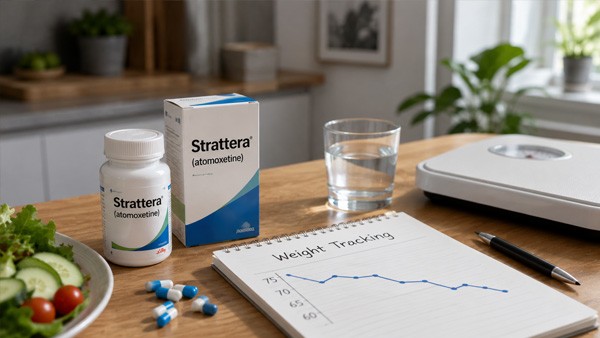
Weight loss is one of the most common — and most concerning to patients — side effects of Strattera (atomoxetine). Approximately 15-25% of adult Strattera users experience meaningful appetite suppression, typically resulting in 2-7 pounds of weight loss during the first 3-6 months of treatment. The effect is generally smaller than stimulant-class ADHD medications (which can produce 5-15 pounds of weight loss) but still clinically significant for patients with low baseline weight, eating concerns, or specific body composition goals. For pediatric patients, the related concern is growth velocity reduction — Strattera produces approximately 1-2 cm cumulative final height reduction across multi-year pediatric treatment compared to expected trajectory. The weight loss is mechanistically explained by norepinephrine modulation affecting appetite signaling, typically follows predictable patterns across months of treatment, and responds well to structured management strategies for most patients.
This guide covers Strattera weight loss in practical detail. We address the frequency and magnitude of weight loss across patient populations, the norepinephrine-mediated mechanism that suppresses appetite, the typical 2-7 pound adult weight loss range with individual variation, pediatric growth tracking that addresses the parallel concern in children, the temporal pattern of weight loss across months and years, evidence-based management strategies including meal timing optimization and calorie-dense food choices, the threshold signals indicating physician consultation is needed, four weight loss pattern classifications matching typical clinical trajectories, the high-calorie food strategies that work for appetite-suppressed patients, the framework for distinguishing acceptable weight loss from concerning weight loss, and the bottom-line approach to weight loss management on Strattera.
| Time on Strattera | Typical adult weight change | Pattern description |
|---|---|---|
| Month 1 | -1 to -2 lbs | Initial appetite suppression most pronounced |
| Month 2 | -2 to -4 lbs (cumulative) | Continued decline; weight tracking matters |
| Month 3 | -3 to -6 lbs (cumulative) | Approaching nadir for most patients |
| Month 4-6 | -3 to -7 lbs (cumulative); plateau emerging | Weight loss slows; appetite partial adaptation |
| Month 6-12 | Stable at new lower weight or modest gradual gain | Adaptation phase; weight often stabilizes |
| Year 2+ | Generally stable; slow gradual gain possible | Long-term equilibrium; normal eating patterns resume |
| After discontinuation | Weight returns to baseline within 1-3 months | Reversal of appetite suppression; eating normalizes |
The trajectory frames expectations: most weight loss occurs in first 3-6 months; weight typically stabilizes at new lower weight after 6 months; long-term equilibrium emerges in year 2+. Discontinuation reverses weight loss within 1-3 months. The 2-7 lb total range covers about 70-80% of adult patients; individual variation produces some with less or more weight loss.
📊 How Common Is Weight Loss on Strattera
Weight loss prevalence across Strattera populations:
- Adults: ~15-25% experience clinically meaningful weight loss (>2 lbs); ~5-10% experience significant weight loss (>5 lbs); ~1-2% experience concerning weight loss (>10 lbs).
- Pediatric patients: Similar appetite suppression rates; growth velocity reduction more clinically relevant than absolute weight loss for children.
- Adolescents: Intermediate pattern; appetite suppression affecting growth and weight.
- Comparison to stimulants: Strattera's appetite suppression is meaningfully smaller than methylphenidate (~30-40%) and amphetamines (~40-50%).
- Variability: Individual response varies substantially; some patients experience minimal weight effects while others experience pronounced loss.
Factors increasing weight loss likelihood:
- Higher doses tend to produce more appetite suppression.
- Lower baseline weight patients often experience proportionally more impact.
- Female sex shows slightly higher appetite suppression rates in some studies.
- First-line use vs concurrent appetite-suppressing medications.
- Younger age with smaller body mass affected proportionally more.
- Anxiety comorbidity may amplify appetite suppression.
Factors reducing weight loss impact:
- Higher baseline weight patients often experience proportionally less impact.
- Structured eating habits at baseline help maintain caloric intake.
- Dose minimization within therapeutic range.
- Tolerance development over 6-12 months produces partial appetite recovery for many patients.
🧠 Mechanism: Why Appetite Drops
The norepinephrine-mediated appetite suppression pathway:
- Norepinephrine modulates hypothalamic appetite centers. Strattera's NRI mechanism increases NE signaling at hypothalamic receptors, which directly suppresses hunger sensation.
- Anorexigenic effect: Elevated NE produces feeling of fullness or reduced hunger that mimics post-meal satiety.
- Reduced reward from eating: Indirect effects on dopamine signaling may reduce eating's hedonic reward.
- Mild GI effects: Some patients experience nausea or mild GI discomfort that further reduces appetite.
- Reduced food-seeking behavior: Patients describe not thinking about food, not feeling motivated to eat at usual meal times.
- Maintained metabolism: Strattera doesn't accelerate metabolism (unlike some thermogenic effects of stimulants); weight loss is from reduced intake rather than increased burn.
Subjective experience patterns:
- "Forgetting to eat": Patients often describe not feeling hungry at usual mealtimes.
- Reduced food enjoyment: Decreased pleasure from eating familiar foods.
- Early satiety: Feeling full after smaller portions than usual.
- No food cravings: Reduced or absent cravings that previously drove eating.
- "I just don't want to eat": Common subjective description even when food is presented.
📏 Typical Range: 2-7 lbs in Adults
The expected adult weight loss range:
- Median weight loss: 3-5 lbs total over first 6 months in adult patients experiencing weight loss.
- Common range: 2-7 lbs covers approximately 70-80% of adult patients.
- Variation factors: Baseline weight, dose, sex, comorbidities, eating habits all affect magnitude.
- Percentage approach: Approximately 2-5% of body weight reduction for most patients.
- Pattern: Most loss occurs in first 3-4 months; gradual stabilization or modest recovery thereafter.
- Final equilibrium: Most patients establish new stable weight 3-7 lbs below baseline by month 6-12.
Clinical significance:
- For most patients: 2-7 lb weight loss is clinically minor and represents acceptable trade-off for ADHD treatment.
- For underweight patients: Even small absolute weight loss may push BMI into concerning territory.
- For overweight patients: Weight loss may be welcome and contributes to overall health.
- For patients with eating disorders: Strattera weight loss may trigger disordered eating concerns even if absolute loss is small.
- For athletes: Weight changes may affect performance categories or training nutrition.
👶 Children and Adolescents: Growth Tracking
For pediatric patients, the weight question is part of broader growth concern:
- Mean growth velocity reduction: ~1-2 cm/year reduction in height velocity during active Strattera treatment.
- Cumulative final height effect: Approximately 1-2 cm final adult height reduction after multi-year pediatric treatment.
- Weight effects in children: Reduced weight gain rather than absolute weight loss; cumulative weight delay of 1-2 kg compared to expected trajectory.
- Pattern: Most growth velocity reduction in first 1-2 years; partial recovery often occurs with continued treatment.
- Catch-up growth: Some catch-up growth after discontinuation; final adult height usually within normal range.
Monitoring approach for pediatric patients:
- Baseline measurements at treatment initiation: height, weight, BMI percentile.
- Every 3-6 months: Height, weight, BMI percentile tracking.
- Growth velocity calculation annually.
- Tanner staging for adolescents.
- Compare to growth curves — children should remain within their percentile range; significant deviations warrant attention.
When to address pediatric growth concerns:
- Growth velocity below expected percentile for sustained periods.
- Weight loss in growing child rather than slowed weight gain.
- BMI dropping into underweight range (<5th percentile).
- Crossing growth percentile lines downward sustainably.
- Pubertal delay potentially related to medication.
Management options if growth concerns develop:
- Drug holidays during summer or extended breaks.
- Dose reduction within therapeutic range.
- Nutritional intervention with structured eating and calorie-dense foods.
- Switching to alternative medication with different appetite profile.
- Endocrinology consultation for significant growth concerns.
⏱️ How Long Does It Last
The temporal pattern of Strattera weight loss:
- Phase 1 (Months 1-3): Active weight loss phase. Most weight loss occurs during these initial months. Appetite suppression most pronounced.
- Phase 2 (Months 3-6): Plateau emerging. Weight loss slows. Some patients begin partial recovery as tolerance develops.
- Phase 3 (Months 6-12): Stabilization. Most patients establish new stable weight 3-7 lbs below baseline. Eating patterns normalize partially.
- Phase 4 (Year 2+): Long-term equilibrium. Weight generally stable; some patients gradually return toward baseline over years.
- Discontinuation: Weight returns to baseline within 1-3 months as appetite normalizes.
Individual pattern variations:
- "Steady gradual" pattern: Continuous slow weight loss over 6+ months — most common pattern.
- "Quick drop, then stable" pattern: Rapid weight loss in first month, then stable — common.
- "Continuous decline" pattern: Sustained weight loss beyond 6 months — less common; concerning if continues without plateau.
- "Minimal change" pattern: Little weight change despite reported appetite suppression — some patients compensate well.
🍳 Managing Strategies (Food Timing, Calorie Density)
Evidence-based management strategies for Strattera-related weight loss:
Strategy 1 — Scheduled eating:
- Set phone alarms for breakfast, lunch, and dinner times.
- Eat something substantial at each scheduled time regardless of hunger.
- 3-4 scheduled meals plus possible snack times.
- Pre-portion meals to remove decision-making during low-appetite moments.
- Use calendar reminders integrated with daily schedule.
Strategy 2 — Calorie density:
- Add healthy fats — nuts, avocado, olive oil, nut butters add significant calories with small volume.
- Protein shakes as smoothies with milk, fruit, peanut butter, protein powder — 500-700 calories easily.
- Cheese and dried fruits as snacks — calorie-dense and easy to eat.
- Granola, full-fat yogurt with toppings — substantial calories per cup.
- Dense breakfasts like oatmeal with peanut butter, banana, milk, honey, walnuts.
Strategy 3 — Timing optimization:
- Eat substantial breakfast before taking morning Strattera — pre-medication appetite typically baseline normal.
- Light lunch during peak medication window — accept reduced lunch and compensate elsewhere.
- Substantial dinner as evening medication wears down — appetite often returns by evening.
- Evening snacks if needed for additional calorie intake.
Strategy 4 — Hydration management:
- Drink water between meals rather than during meals (reduces early satiety).
- Avoid filling fluids before meals — soup, large drinks reduce subsequent food intake.
- Caloric beverages — milk, smoothies provide calories with fluid.
Strategy 5 — Food variety and palatability:
- Choose foods you genuinely enjoy — palatability matters when motivation to eat is reduced.
- Vary meals to prevent food boredom.
- Try new recipes to maintain interest in food.
- Social meals often easier than eating alone when appetite is suppressed.
🩺 When to Talk to Your Doctor
Threshold signals that warrant physician discussion:
Discuss at routine appointment:
- Weight loss exceeds 7-10 lbs total.
- Weight loss continues beyond 6 months without plateau.
- BMI dropping into low-normal range.
- Eating patterns significantly disrupted by appetite suppression.
- Performance or daily function affected by inadequate nutrition.
Discuss promptly (within days/weeks):
- Weight loss exceeds 10% of body weight.
- BMI dropping below 18.5 (underweight territory).
- Signs of nutritional deficiency (fatigue, dizziness, weakness).
- Pediatric patient with growth velocity concerns.
- Disordered eating thoughts or behaviors developing.
Seek immediate care:
- Severe weight loss with weakness, dizziness, fainting.
- Signs of dehydration despite adequate intake.
- Active eating disorder symptoms in patient with predisposing history.
- Other medical concerns potentially contributing to weight loss.
🗂️ Weight Loss Pattern Classification
Four typical weight loss patterns on Strattera:
Pattern 1 — "Steady Gradual." Continuous slow weight loss over 4-6 months, then stabilization at new lower weight. Most common pattern (~50% of patients experiencing weight loss). Total loss typically 3-6 lbs over 6 months. Management: scheduled eating and calorie density usually sufficient.
Pattern 2 — "Quick Drop, Then Stable." Rapid 3-5 lb weight loss in first month, then stable thereafter (~25% of patients). Total stays in 3-5 lb range. Management: aggressive eating intervention first month often prevents continued decline.
Pattern 3 — "Continuous Decline." Sustained weight loss continuing beyond 6 months without plateau (~10-15% of patients). Concerning if continues; requires intervention. Management: increased nutritional intervention; possible dose reduction or medication change.
Pattern 4 — "Minimal Change." Little weight change despite some appetite suppression (~10-15% of patients). Patient compensates well through structured eating habits or has high baseline calorie intake. Management: continue standard care.
| Pattern | Trajectory | Frequency | Management |
|---|---|---|---|
| Steady gradual | Slow loss over 4-6 months then plateau | ~50% | Standard eating intervention |
| Quick drop then stable | Rapid first month, then stable | ~25% | Aggressive month-1 eating intervention |
| Continuous decline | Sustained loss beyond 6 months | ~10-15% | Increased intervention; medication review |
| Minimal change | Little weight effect | ~10-15% | Standard care |
🥑 High-Calorie Food Strategies
Practical food list for appetite-suppressed patients:
| Food | Calories per serving | Eating tip |
|---|---|---|
| Peanut butter (2 tbsp) | 190 cal | On toast, banana, or in smoothies |
| Avocado (1 medium) | 240 cal | On toast or salads |
| Nuts (1 oz) | 160-200 cal | Easy snack with high calorie density |
| Olive oil (1 tbsp) | 120 cal | Drizzle on salads, vegetables |
| Cheese (1 oz) | 110 cal | String cheese, slices, with crackers |
| Granola (1/2 cup) | 250 cal | With yogurt or milk |
| Whole milk (1 cup) | 150 cal | Beverage or in smoothies |
| Trail mix (1/4 cup) | 200 cal | Portable snack |
| Hummus (2 tbsp) | 70 cal | With pita, vegetables |
| Smoothie with milk, banana, peanut butter, protein | 500-700 cal | Easy substantial meal substitute |
| Greek yogurt full fat with honey and granola | 400 cal | Calorie-dense breakfast |
| Eggs (2 large) | 150 cal | Protein-dense; add cheese, butter for more |
Meal ideas for appetite-suppressed days:
- High-calorie breakfast: Oatmeal made with milk, topped with peanut butter, banana, walnuts, honey (700+ calories).
- Substantial smoothie meal: Whole milk, banana, peanut butter, protein powder, oats, yogurt (600-800 calories).
- Cheese and crackers plate: Variety of cheeses, nuts, dried fruits, crackers (500-600 calories).
- Avocado toast: Two slices whole grain bread, avocado, eggs, cheese, olive oil (500-700 calories).
- Pasta with olive oil and cheese: Whole grain pasta, olive oil, parmesan, vegetables (500+ calories).
🚨 When Weight Loss Becomes a Concern
Distinguishing acceptable from concerning weight loss:
Acceptable weight loss (no specific intervention needed):
- 2-7 lbs total over 6 months in adult with normal baseline BMI.
- Weight stabilizes by month 6.
- BMI remains in healthy range.
- No functional impairment from inadequate nutrition.
- No disordered eating concerns.
- Pediatric growth velocity remains within expected percentile range.
Concerning weight loss (intervention needed):
- >10% of body weight loss.
- Continued decline beyond 6 months.
- BMI dropping below 18.5 (underweight).
- Signs of malnutrition (fatigue, weakness, hair loss, brittle nails).
- Pediatric growth percentile dropping sustainably.
- Eating patterns severely disrupted.
- Disordered eating thoughts emerging.
- Patient distress significant.
Critical weight loss (urgent medical evaluation):
- Severe weight loss with hemodynamic instability.
- Active eating disorder symptoms.
- Refusal to eat with worsening health.
- Pediatric severe growth failure.
✨ Bottom Line
Strattera weight loss is common, generally manageable, and follows predictable patterns. Approximately 15-25% of adult patients experience clinically meaningful weight loss; typical magnitude is 2-7 lbs total over first 3-6 months; weight typically stabilizes by month 6; long-term equilibrium emerges in year 2+ at new lower weight; discontinuation reverses weight loss within 1-3 months.
The norepinephrine-mediated appetite suppression mechanism produces "I just don't feel hungry" subjective experience that's manageable through scheduled eating and calorie density strategies. Patients who structure eating around the clock rather than around hunger cues typically prevent significant weight loss.
For pediatric patients, growth velocity reduction is the parallel concern — approximately 1-2 cm final adult height reduction across multi-year treatment compared to expected trajectory. Standard pediatric monitoring (height/weight every 3-6 months) catches concerning growth patterns; intervention options include drug holidays, dose reduction, nutritional intervention, or medication switching.
The four weight loss pattern classifications (Steady gradual, Quick drop then stable, Continuous decline, Minimal change) cover typical clinical trajectories. Continuous decline pattern (~10-15% of patients) warrants increased intervention; other patterns generally manage with standard care.
The threshold framework distinguishes acceptable weight loss (2-7 lbs with healthy BMI maintained) from concerning weight loss (>10% body weight, BMI <18.5, sustained decline) from critical weight loss (hemodynamic instability, active eating disorder, severe pediatric growth failure). Physician consultation timing varies accordingly.
For patients with significant weight concerns who can't adequately manage Strattera-related weight loss, alternative ADHD medications with different appetite profiles include Intuniv (less appetite suppression), Wellbutrin (variable weight effect), or — for treatment-resistant cases — modafinil as off-label option (see Modafinil for ADHD).
For broader Strattera context, see Strattera Long-Term Side Effects covering parallel safety considerations beyond weight. For modafinil parallel weight management, see Modafinil Appetite Loss.
For broader ADHD treatment context, see Strattera comparison cluster: vs Adderall, vs Vyvanse, vs Concerta, vs Ritalin, vs Modafinil, vs Wellbutrin, vs Intuniv, vs Qelbree.
For modafinil as off-label alternative for patients with significant Strattera weight intolerance, Modalert 200 mg from Sun Pharma provides Schedule IV option with different appetite profile.
❓ Frequently Asked Questions
How much weight will I lose on Strattera?
Typically 2-7 lbs total over the first 3-6 months of treatment in adult patients who experience weight loss. About 15-25% of adult users experience clinically meaningful weight loss; 5-10% experience significant weight loss >5 lbs; 1-2% experience concerning weight loss >10 lbs. Individual variation is substantial — some patients experience minimal weight effects while others experience more pronounced loss. Median loss is 3-5 lbs over 6 months.
Does the weight loss stop after a few months?
Yes, for most patients. Most weight loss occurs in the first 3-6 months. After that period, weight typically stabilizes at the new lower weight. About 10-15% of patients experience continued weight loss beyond 6 months — that pattern warrants increased intervention or medication review. Most patients establish stable equilibrium 3-7 lbs below baseline by month 6-12.
Will I gain the weight back?
Yes, after discontinuation. When Strattera is stopped, appetite returns to baseline within 1-3 months and weight typically returns to pre-treatment baseline over 3-6 months. During continued treatment, weight generally stays at new lower equilibrium rather than progressively continuing to drop or progressively gaining back.
Why does Strattera suppress appetite?
Norepinephrine modulation. Strattera's NRI mechanism increases NE signaling at hypothalamic appetite centers, which directly suppresses hunger sensation. Patients describe "forgetting to eat," reduced food enjoyment, and not feeling hungry at usual mealtimes. The mechanism is mild GI effects in some patients (nausea), reduced food-seeking behavior, and altered reward signaling around eating. Metabolism isn't accelerated — weight loss comes from reduced intake.
What if I'm worried about my child's growth?
Standard pediatric monitoring catches concerns. Track height/weight every 3-6 months; compare to expected percentile range. Strattera produces approximately 1-2 cm final adult height reduction after multi-year treatment — small effect but real. Significant deviations from expected growth percentile warrant attention. Intervention options include drug holidays, dose reduction, structured eating, or medication switching. Discuss with pediatrician.
How do I prevent weight loss on Strattera?
Structured eating and calorie density. Set scheduled meal times and eat regardless of hunger — appetite suppression means you may "forget" to eat. Choose calorie-dense foods (nuts, peanut butter, avocado, olive oil, cheese) to maximize calories per bite. Eat substantial breakfast before taking morning Strattera while appetite is closer to baseline. Smoothies and shakes can deliver 500-700 calories easily. Many patients successfully prevent significant weight loss with structured eating intervention.
Should I take Strattera with food?
Yes, generally helpful. Taking Strattera with substantial breakfast often improves overall daily caloric intake by ensuring at least one meal is consumed at the normal pre-medication appetite level. Food may also reduce nausea side effect. Don't skip breakfast on Strattera — taking medication on empty stomach amplifies appetite suppression effect for the day.
What if I already have low weight?
Discuss with prescriber before starting or continuing Strattera. For patients with already-low baseline weight (BMI <19) or underweight territory, Strattera's additional 2-7 lb weight loss may push BMI into concerning range. Aggressive nutritional intervention from day 1 of treatment is essential; structured high-calorie eating; monitoring weight weekly; lower threshold for discontinuation. Sometimes alternative ADHD medications with less appetite suppression are preferred.
What if I have a history of eating disorder?
Discuss with prescriber and mental health professional. Strattera's appetite suppression may trigger disordered eating concerns even when absolute weight loss is small. The reduced hunger may feel "good" to someone with eating disorder history, reinforcing restrictive patterns. Active eating disorder is contraindication for some ADHD medications including stimulants. Strattera may be relatively safer than stimulants but requires mental health monitoring. Eating disorder treatment team coordination essential.
When should I worry about Strattera weight loss?
Specific thresholds warrant physician discussion. Discuss at routine appointment if: weight loss exceeds 7-10 lbs, continues beyond 6 months without plateau, BMI dropping into low-normal, eating significantly disrupted, performance affected. Discuss promptly if: loss exceeds 10% body weight, BMI dropping below 18.5, signs of nutritional deficiency, pediatric growth concerns, disordered eating emerging. Seek immediate care for severe weight loss with weakness, dehydration, active eating disorder symptoms.
📚 References & Further Reading
- FDA prescribing information for Strattera (atomoxetine) — appetite and weight side effects.
- Wernicke et al. — atomoxetine pediatric growth effects.
- Kelsey et al., Pediatrics — pediatric long-term outcomes including weight.
- Spencer et al. — adult long-term Strattera safety including weight.
- American Academy of Pediatrics — ADHD pediatric growth monitoring guidelines.
- American Academy of Pediatrics — pediatric obesity and underweight guidelines.
- Institute of Medicine — caloric intake recommendations across age/sex.
- National Eating Disorder Association — eating disorder warning signs.
- Strattera Long-Term Side Effects — comprehensive long-term safety article.
- Strattera comparison cluster (8 complete articles): vs Adderall, vs Vyvanse, vs Concerta, vs Ritalin, vs Modafinil, vs Wellbutrin, vs Intuniv, vs Qelbree
- Modafinil Appetite Loss — parallel modafinil weight management article.
- Modafinil cluster: Modafinil for ADHD, Dehydration, Cardiovascular
- Modalert 200 mg, Modvigil 200 mg, Waklert 150 mg — primary product pages.
- RXshop Editorial Team — content reviewed by licensed pharmacist; for adult patient education, not a substitute for individual medical consultation.
Medical Disclaimer: The information in this article is for educational and informational purposes only and is not a substitute for professional medical advice, diagnosis, or treatment. Always seek guidance from a qualified healthcare provider with any questions you may have regarding a medical condition, and before starting, stopping or changing any medication.