Strattera and Caffeine: Tolerance, Anxiety Risk, and Smart Combining


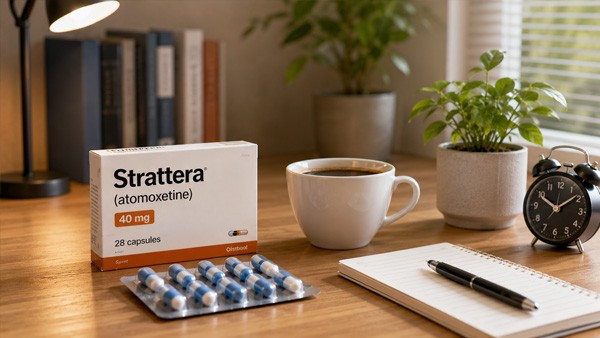
Strattera (atomoxetine) and caffeine have a milder interaction than many patients expect — but the combination isn't entirely without consequences. Most adult Strattera patients can consume moderate caffeine (1-2 cups of coffee daily) without significant problems. The interactions emerge with higher caffeine intake: stacked cardiovascular effects elevating heart rate and blood pressure beyond either substance alone, increased anxiety risk in vulnerable patients, possible amplification of Strattera-related insomnia in patients with that response pattern, and minor effects on caffeine metabolism. The honest framing isn't "no coffee on Strattera" but "modest caffeine generally fine; high caffeine intake compounds Strattera effects in ways patients should understand."
This guide provides practical caffeine guidance for Strattera patients. We address how the substances interact across multiple dimensions, the stacked cardiovascular effects that combine Strattera's mild HR/BP elevation with caffeine's similar effects, the anxiety risk amplification particularly important for anxious patients, optimal timing strategies that minimize negative interactions, dose limits that frame "moderate" vs "concerning" caffeine consumption, patient groups who should avoid the combination entirely, the specific concerns with tea, energy drinks, and pre-workout supplements, four caffeine user type classifications matching guidance to baseline consumption patterns, the comprehensive caffeine source comparison covering coffee/tea/sodas/energy drinks/pre-workout supplements/medications, the structured caffeine reduction protocol for patients needing to cut back, and the bottom-line framework for caffeine on Strattera. Most patients can continue moderate caffeine consumption with awareness of the interaction; the smaller subset of heavy caffeine users may need to reduce intake.
| Daily caffeine intake | Equivalent | Risk level with Strattera | Considerations |
|---|---|---|---|
| 0 mg | No caffeine | None | No interaction; standard Strattera |
| 50-100 mg | 1 cup tea or small coffee | Minimal | Generally well-tolerated |
| 100-200 mg | 1-2 cups coffee | Low-moderate | Acceptable for most adults |
| 200-300 mg | 2-3 cups coffee | Moderate | Watch for HR/BP effects, anxiety |
| 300-400 mg | 3-4 cups coffee or energy drink | Moderate-high | Consider reduction; HR/BP monitoring |
| 400-500 mg | 4-5 cups coffee | High | Recommend reduction; cardiovascular concerns |
| 500+ mg | 5+ cups or pre-workout | Significant | Strongly recommend reduction |
| 800+ mg | Multiple energy drinks or pre-workout | Excessive | Address before continuing Strattera |
| Pediatric | Any amount | Higher concern | Limit/avoid caffeine in children on Strattera |
| Anxiety-prone patient | Even moderate | Higher concern | Lower caffeine threshold |
| HTN patient | Cumulative concern | Moderate concern | Limit and monitor BP closely |
| Sleep-sensitive patient | Timing matters | Variable | Caffeine cutoff by noon |
The escalation frames practical guidance: moderate caffeine (100-200 mg/day) generally fine; higher consumption progressively compounds Strattera effects. Pediatric patients, anxious patients, hypertensive patients, and sleep-sensitive patients warrant tighter limits. Energy drinks and pre-workout supplements raise specific concerns due to high caffeine plus other stimulants.
⚙️ How They Interact
The interaction mechanisms:
- Both produce sympathetic activation. Strattera through NE reuptake inhibition; caffeine through adenosine receptor antagonism. Combined effects on alertness, heart rate, blood pressure.
- Cardiovascular additive effects. Strattera mildly elevates HR (+5-10 bpm) and BP (+2-4 mmHg); caffeine independently raises both. Combined elevation larger than either alone.
- Anxiety amplification. Both can produce anxiety in vulnerable patients; combination compounds risk.
- Cognitive enhancement potentially additive. Both improve alertness and attention; combined may produce stronger acute cognitive effect (with side effect cost).
- Sleep disruption combined. Both can affect sleep particularly with late-day consumption.
- No major direct drug-drug interaction. Strattera doesn't significantly affect caffeine metabolism or vice versa.
- Tolerance development differs. Caffeine produces tolerance with regular use; Strattera tolerance minimal.
What patients commonly experience:
- Coffee with morning Strattera dose: Most common combination; generally well-tolerated at moderate amounts.
- Acute caffeine effect feels different on Strattera. Some patients report cleaner energy; others report more jitteriness.
- Higher caffeine sensitivity: Some patients find they tolerate less caffeine on Strattera than before.
- Cardiovascular awareness: Some patients notice palpitations with caffeine on Strattera not previously experienced.
- Anxiety patients particularly affected. Combination amplifies anxiety in vulnerable individuals.
❤️ Stacked Stimulant Effects on Heart Rate
The cardiovascular compounding concern:
- Strattera alone: +5-10 bpm HR, +2-4 mmHg BP at therapeutic doses.
- Caffeine alone (100 mg): +5-10 bpm HR, +3-7 mmHg BP acutely.
- Combined moderate (Strattera + 1 cup coffee): Approximately +10-15 bpm HR, +5-10 mmHg BP — additive effect.
- Combined heavy (Strattera + 3 cups coffee or energy drink): Can produce +15-25 bpm HR increase, +10-15 mmHg BP increase.
- Persistent vs transient: Strattera effects persistent throughout day; caffeine effects acute and shorter-lasting.
Patient groups particularly affected:
- Patients with hypertension — additional BP elevation more concerning.
- Patients with arrhythmia — increased palpitation risk.
- Patients with cardiovascular disease — cumulative cardiovascular load.
- Older adults with baseline cardiovascular risk.
- Patients on additional cardiovascular medications.
Practical implications:
- Monitor HR/BP if heavy caffeine user on Strattera.
- Reduce caffeine if HR/BP problematic.
- Avoid energy drinks and pre-workout with very high caffeine plus other stimulants.
- Acute caffeine + Strattera combination may produce noticeable HR/BP spike for sensitive patients.
😰 Anxiety Risk When Combined
Anxiety amplification with combined use:
- Strattera baseline anxiety effect: ~5-10% of patients experience anxiety as side effect.
- Caffeine anxiety effect: Dose-dependent; significant in high amounts or in caffeine-sensitive patients.
- Combined anxiety risk: Patients with either baseline experience may have amplified anxiety with combination.
- Pattern: Acute anxiety from caffeine layered on persistent Strattera effects.
- Vulnerable patients: Pre-existing anxiety disorder, panic disorder, generalized anxiety, social anxiety.
Anxiety management:
- Reduce caffeine first-line approach for anxious patients on Strattera.
- Eliminate caffeine entirely for severe anxiety amplification.
- Switch to decaffeinated alternatives if coffee taste valued.
- Avoid high-caffeine sources (energy drinks, pre-workout).
- Monitor anxiety symptoms across drinking patterns.
- Discuss anxiety with prescriber if persistent or severe.
🕐 Recommended Timing
Optimal caffeine timing on Strattera:
Morning (with breakfast):
- Best time for caffeine consumption.
- Coordinates with Strattera dosing typically taken morning.
- Full day for effects to wear off before sleep.
- 1-2 cups appropriate for most adult patients.
Mid-morning to noon:
- Acceptable for additional caffeine if needed.
- Within Strattera peak effects typically.
- Approaching cutoff window for sleep-sensitive patients.
Early afternoon (12-3 PM):
- Last reasonable caffeine window for most patients.
- Cutoff by 2 PM for typical sleep schedules.
- Avoid for sleep-sensitive patients.
Late afternoon and evening:
- Avoid caffeine generally.
- Will compound Strattera sleep effects.
- Decaffeinated options if drinking ritual desired.
Sleep-sensitive patient timing:
- Caffeine cutoff 10-11 AM for very sensitive sleepers.
- Track caffeine and sleep relationship to identify your sensitivity.
- Coordinate with Strattera dosing if morning vs evening Strattera dosing decided.
📏 Caffeine Dose Limits on Strattera
Practical dose limits framework:
Standard adult recommendations:
- 200-300 mg/day: Typical "moderate" caffeine — generally acceptable on Strattera for adult patients without risk factors.
- 300-400 mg/day: Upper end of "moderate" — watch for HR/BP/anxiety effects.
- 400-500 mg/day: Above moderate — consider reduction.
- Over 500 mg/day: High consumption — recommend reduction.
- Over 800 mg/day: Excessive — address before continuing Strattera.
Specific patient adjustments:
- Pediatric patients: Limit caffeine substantially or avoid; baseline pediatric caffeine intake should be low regardless.
- Anxiety-prone patients: Lower threshold (under 200 mg/day).
- Hypertensive patients: Lower threshold; monitor BP.
- Cardiovascular disease: Lower threshold; cardiology coordination.
- Sleep-sensitive patients: Lower threshold and earlier cutoff.
- Pregnancy: Less than 200 mg/day during pregnancy regardless.
- Older adults: Generally lower caffeine tolerance.
Quick reference for common sources:
- Brewed coffee 8 oz: ~95 mg caffeine.
- Espresso 1 oz: ~63 mg.
- Black tea 8 oz: ~47 mg.
- Green tea 8 oz: ~28 mg.
- Cola 12 oz: ~35 mg.
- Energy drink 8 oz: ~80-120 mg.
- Energy drink 16 oz: ~160-240 mg.
- Pre-workout supplement: ~200-400 mg per serving.
- Caffeine pill: typically 100-200 mg.
- Some headache medications: 65 mg per dose.
🚫 Who Should Avoid the Combo Entirely
Patient groups warranting caffeine avoidance on Strattera:
- Severe anxiety disorders: Even moderate caffeine may amplify anxiety unacceptably.
- Panic disorder: Caffeine well-known panic attack trigger; combined with Strattera too risky.
- Uncontrolled hypertension: Combined cardiovascular load problematic.
- Significant arrhythmia history: Combined effects may trigger arrhythmia.
- Pregnancy (Strattera use during pregnancy): Both substances should be limited.
- Severe insomnia not responsive to management: Compounded sleep effects.
- Cardiovascular disease with active concerns: Specialist coordination needed.
- Pediatric patients: Caffeine should be limited regardless; combination amplifies concerns.
- Pheochromocytoma: Strattera already contraindicated; caffeine adds risk.
- Hyperthyroidism uncontrolled: Compounded sympathetic activation.
Alternatives for these patients:
- Decaffeinated coffee or tea if ritual valued.
- Herbal teas without caffeine.
- Other beverages (water, milk, juices).
- Address ADHD treatment with adequate Strattera dose rather than caffeine supplementation.
🥤 Tea, Energy Drinks, Pre-Workout
Specific caffeine source considerations:
Tea:
- Generally well-tolerated due to lower caffeine and L-theanine content.
- L-theanine in tea may modulate caffeine's effects, producing calmer alertness.
- Black tea 30-50 mg/cup; green tea 20-35 mg/cup; oolong intermediate.
- Better choice for anxious patients than coffee due to lower caffeine and L-theanine.
- Watch consumption volume: Multiple cups can equal coffee caffeine total.
Energy drinks:
- Higher caffeine content: 80-300 mg per can, varies widely.
- Additional stimulants common: Taurine, guarana, ginseng, B vitamins, sugar.
- Sugar content concern: Many energy drinks high in sugar.
- Cardiovascular concerns elevated compared to coffee.
- Generally not recommended on Strattera; if used, limit substantially.
- Sugar-free versions address sugar but not stimulant compounding.
Pre-workout supplements:
- Very high caffeine: 200-400 mg per serving common.
- Multiple stimulants: Beta-alanine, citrulline, creatine, often more.
- Cardiovascular stress amplification particularly during exercise.
- Strongly recommend avoiding with Strattera.
- Better alternatives: Plain coffee or tea pre-workout if needed.
- For athletic performance: Discuss with prescriber and sports medicine specialist.
Caffeine pills:
- Precise dose control — easier to monitor intake.
- No additional substances.
- Acceptable in moderation if standard dose limits respected.
- Avoid combining with other caffeine sources.
Caffeine in medications:
- Excedrin and migraine medications: 65 mg per dose; multiple doses add up.
- Some prescription medications: Check label for caffeine content.
- Cold medications: Some contain caffeine; check ingredients.
- Track all caffeine sources including medications.
🎯 Caffeine User Type Classification
Four caffeine user types guide approach:
Type 1 — "Non-caffeine user." Patient who doesn't consume caffeine. Approach: no specific guidance; Strattera unaffected by caffeine considerations.
Type 2 — "Light caffeine user." Patient with 1 cup coffee or 1-2 cups tea daily (under 150 mg). Approach: continued moderate consumption generally acceptable; minimal interaction concerns; monitor for any new effects.
Type 3 — "Moderate caffeine user." Patient with 2-3 cups coffee or equivalent daily (200-400 mg). Approach: acceptable for most adult patients without risk factors; monitor cardiovascular and anxiety effects; honest assessment of need.
Type 4 — "Heavy caffeine user." Patient with 4+ cups coffee or energy drinks daily (400+ mg). Approach: consider reduction; cardiovascular monitoring; discuss patterns with prescriber; may compromise Strattera optimization.
| User type | Daily caffeine | Strattera approach |
|---|---|---|
| Type 1 (Non-caffeine) | 0 mg | No specific guidance needed |
| Type 2 (Light) | Under 150 mg | Continued moderate consumption acceptable |
| Type 3 (Moderate) | 200-400 mg | Acceptable; monitor effects |
| Type 4 (Heavy) | 400+ mg | Consider reduction; monitor cardiovascular |
📋 Caffeine Source Comparison
Comprehensive caffeine content by source:
| Source | Standard size | Caffeine content |
|---|---|---|
| Brewed coffee (typical) | 8 oz | 95 mg |
| Brewed coffee (strong) | 8 oz | 130-170 mg |
| Brewed coffee (large mug) | 16 oz | 180-200 mg |
| Drip coffee at coffee shop | 12 oz | 180-220 mg |
| Espresso shot | 1 oz | 63 mg |
| Latte/cappuccino (1 shot) | 12 oz | 63 mg |
| Latte/cappuccino (2 shots) | 16 oz | 126 mg |
| Cold brew (typical) | 16 oz | 200-300 mg |
| Black tea | 8 oz | 47 mg |
| Green tea | 8 oz | 28 mg |
| Oolong tea | 8 oz | 37 mg |
| White tea | 8 oz | 15 mg |
| Herbal tea | 8 oz | 0 mg (caffeine-free) |
| Matcha tea | 8 oz | 70 mg |
| Cola | 12 oz | 35 mg |
| Diet cola | 12 oz | 40 mg |
| Mountain Dew | 12 oz | 54 mg |
| Red Bull | 8.4 oz | 80 mg |
| Monster Energy | 16 oz | 160 mg |
| Bang Energy | 16 oz | 300 mg |
| 5-Hour Energy | 1.93 oz | 200 mg |
| Pre-workout supplement | 1 serving | 200-400 mg |
| Caffeine pill (standard) | 1 pill | 100-200 mg |
| Dark chocolate | 1 oz | 20-30 mg |
| Milk chocolate | 1 oz | 5-10 mg |
| Excedrin (each tablet) | 1 tablet | 65 mg |
| Decaf coffee | 8 oz | 2-15 mg (not zero) |
🔻 Caffeine Reduction Protocol
Structured protocol for reducing caffeine intake on Strattera:
When to reduce caffeine:
- Heart rate or BP elevation concerning.
- Anxiety symptoms emerging or worsening.
- Sleep disruption.
- Excessive intake (over 400 mg/day).
- Pregnancy planning.
- New cardiovascular concerns.
- Patient preference for lower intake.
Reduction strategy:
- Assess current intake from all sources (coffee, tea, energy drinks, medications, chocolate).
- Set target intake (typically 100-200 mg/day).
- Reduce gradually — 25-50 mg per week to avoid withdrawal headaches.
- Replace caffeinated with decaffeinated versions of usual beverages.
- Eliminate highest-caffeine sources first (energy drinks, pre-workout).
- Shift timing earlier in day during reduction.
- Monitor for withdrawal symptoms (headache, fatigue) during reduction.
- Stabilize at target for 2-4 weeks.
- Reassess effects on Strattera response.
Managing caffeine withdrawal during reduction:
- Headache: Most common withdrawal symptom; peaks 24-48 hours after reduction.
- Fatigue: Energy decline during caffeine reduction.
- Difficulty concentrating: Particularly for heavy caffeine users.
- Mood changes: Irritability, depression possible.
- Resolution: Most symptoms resolve within 1-2 weeks.
- Acetaminophen acceptable for headache (limit dose given Strattera liver consideration).
- Hydration particularly important during reduction.
✨ Bottom Line
Strattera and caffeine interact more mildly than many patients expect. Most adult patients can consume moderate caffeine (1-2 cups coffee daily) without significant problems. Interactions emerge with higher caffeine intake: stacked cardiovascular effects, anxiety amplification, sleep disruption compounding.
The cup-by-cup risk escalation framework: 100-200 mg/day generally acceptable; 200-300 mg moderate with monitoring; 300-400 mg watch effects; 400+ mg recommend reduction; 500+ mg strongly recommend reduction; pediatric/anxious/hypertensive/sleep-sensitive patients warrant lower thresholds.
Cardiovascular effects compound: Strattera +5-10 bpm HR, +2-4 mmHg BP plus caffeine adds proportionally. Combined moderate use produces +10-15 bpm HR and +5-10 mmHg BP. Heavy combined use can produce concerning elevation. Monitor cardiovascular effects in heavy caffeine users.
Anxiety amplification matters for vulnerable patients. Both substances independently produce anxiety in susceptible individuals; combined effects compound risk. Reduction or elimination of caffeine is first-line for anxiety amplification.
Timing optimization: morning caffeine with breakfast is ideal; cutoff by 2-3 PM for typical sleep schedules; earlier cutoff (10-11 AM) for sleep-sensitive patients. Late-day caffeine compounds Strattera sleep effects.
The four caffeine user type classifications (Non-caffeine / Light / Moderate / Heavy) match approach to baseline patterns. Heavy caffeine users (400+ mg/day) should consider reduction.
Source-specific considerations: tea generally well-tolerated due to lower caffeine and L-theanine; energy drinks elevated cardiovascular concerns due to high caffeine plus other stimulants; pre-workout supplements strongly recommended to avoid due to very high caffeine plus stimulant combinations.
Pediatric patients should have limited caffeine regardless; combination with Strattera amplifies concerns. Patients with severe anxiety, panic disorder, uncontrolled hypertension, significant arrhythmia, pregnancy, severe insomnia, or specific contraindications should avoid caffeine on Strattera.
The caffeine source comparison table addresses common misperception about caffeine content. Coffee shop drinks, cold brew, and energy drinks often contain much more caffeine than patients realize.
The caffeine reduction protocol provides structured framework: assess current intake, set target, reduce gradually (25-50 mg per week to avoid withdrawal), replace with decaffeinated alternatives, eliminate high-caffeine sources first, shift timing earlier, monitor for withdrawal, stabilize at target.
For broader Strattera safety and management context, see Strattera Long-Term Side Effects, Strattera Cardiovascular Effects (relevant for caffeine interaction), Strattera and Sleep (relevant for caffeine timing), Strattera and Alcohol (parallel substance interaction), Strattera and Liver Health, Strattera Suicidal Ideation Black Box, Strattera Weight Loss, Strattera Sexual Side Effects, and Strattera Withdrawal.
For modafinil parallel caffeine interaction article (similar topic but modafinil-specific), see Modafinil vs Caffeine.
For Strattera comparison cluster: vs Adderall, vs Vyvanse, vs Concerta, vs Ritalin, vs Modafinil, vs Wellbutrin, vs Intuniv, vs Qelbree.
For modafinil as off-label alternative with different caffeine interaction profile, Modalert 200 mg from Sun Pharma provides Schedule IV option.
❓ Frequently Asked Questions
Can I drink coffee on Strattera?
Generally yes for most adult patients. Moderate caffeine consumption (1-2 cups coffee, 100-200 mg/day) is well-tolerated by most adult Strattera patients. Higher consumption (3+ cups) compounds Strattera's cardiovascular effects and may amplify anxiety. Pediatric patients, anxious patients, hypertensive patients, and sleep-sensitive patients warrant tighter limits. Discuss your typical caffeine consumption with prescriber for personalized guidance.
How much caffeine is safe with Strattera?
For most adult patients: 200-300 mg/day generally acceptable; 300-400 mg moderate with monitoring; 400+ mg consider reduction. Sources: brewed coffee 95 mg per 8 oz; espresso 63 mg per shot; black tea 47 mg per 8 oz; energy drinks 80-300 mg per can. Pediatric patients, anxiety-prone patients, and cardiovascular-risk patients warrant lower limits. Track total caffeine from all sources including coffee, tea, soda, energy drinks, medications.
Does caffeine increase Strattera's heart rate effects?
Yes, additively. Strattera alone produces +5-10 bpm HR increase; caffeine independently raises HR. Combined moderate consumption typically produces +10-15 bpm. Heavy combined use can produce +15-25 bpm increases. Patients with hypertension, arrhythmia, or cardiovascular disease should monitor BP/HR with combination and limit caffeine intake.
When should I stop drinking caffeine each day on Strattera?
Cutoff by 2-3 PM for typical sleep schedules. Caffeine half-life ~5 hours, so amount in system at bedtime depends on amount and timing of consumption. Late-day caffeine compounds Strattera-related sleep effects. Sleep-sensitive patients should cut off earlier (10-11 AM). Track your sleep-caffeine relationship to identify your sensitivity threshold.
Can I have energy drinks on Strattera?
Generally not recommended. Energy drinks contain high caffeine (80-300 mg per can) plus additional stimulants (taurine, guarana). Combined with Strattera produces cardiovascular and anxiety effects exceeding either alone. Sugar content adds concerns. If you must consume energy drinks, limit substantially and monitor effects. Plain coffee or tea provides caffeine without additional stimulants.
Should kids on Strattera have caffeine?
Limit substantially or avoid. Pediatric patients should have low caffeine consumption regardless of Strattera. Combination with Strattera amplifies cardiovascular and anxiety concerns. Specifically avoid: energy drinks, multiple sodas daily, coffee. Limited tea acceptable for some adolescents. Discuss caffeine in your child's diet with pediatrician on Strattera.
Will caffeine make Strattera work better?
Moderate caffeine may have additive cognitive enhancement effects acutely, but doesn't substantially improve Strattera's ADHD treatment effect. Patients shouldn't rely on caffeine to compensate for inadequate Strattera dose — appropriate dose adjustment through prescriber is better approach. Caffeine compensation can mask treatment optimization issues.
What about pre-workout supplements?
Strongly recommend avoiding on Strattera. Pre-workout supplements contain very high caffeine (200-400 mg per serving) plus multiple stimulants (beta-alanine, citrulline, others). Combined with Strattera and exercise's own cardiovascular stress produces significant cardiovascular load. Better alternatives: plain coffee or tea pre-workout if caffeine boost desired. Discuss with prescriber and sports medicine specialist for athletic patients.
How do I reduce caffeine on Strattera?
Gradual reduction (25-50 mg per week) avoids withdrawal headaches. Steps: assess current intake from all sources, set target (typically 100-200 mg/day), eliminate highest-caffeine sources first (energy drinks, pre-workout), shift timing earlier, replace caffeinated with decaffeinated versions, monitor for withdrawal symptoms (headache, fatigue), stabilize at target for 2-4 weeks. Hydration important during reduction.
Can decaf coffee help with Strattera-related anxiety?
Yes — decaffeinated coffee provides ritual without caffeine compounding effects. Note that decaf isn't zero caffeine — typically 2-15 mg per 8 oz cup. For very sensitive patients, herbal teas (genuinely caffeine-free) may be better choice. For most patients reducing caffeine, decaf provides reasonable transition.
📚 References & Further Reading
- FDA prescribing information for Strattera (atomoxetine).
- National Coffee Association — caffeine consumption data.
- American Heart Association — caffeine and cardiovascular health.
- American Academy of Pediatrics — caffeine in children.
- Mayo Clinic — caffeine recommendations.
- FDA — caffeine guidance for adults.
- European Food Safety Authority — caffeine safety assessment.
- Strattera safety cluster: Long-Term, Cardiovascular, Sleep, Alcohol, Liver, FDA Black Box SI, Weight Loss, Sexual Side Effects, Withdrawal
- Modafinil vs Caffeine — parallel article for modafinil.
- Strattera comparison cluster: vs Adderall, vs Vyvanse, vs Concerta, vs Ritalin, vs Modafinil, vs Wellbutrin, vs Intuniv, vs Qelbree
- Modalert 200 mg, Modvigil 200 mg, Waklert 150 mg — primary product pages.
- RXshop Editorial Team — content reviewed by licensed pharmacist; for adult patient education, not a substitute for individual medical consultation.
Medical Disclaimer: The information in this article is for educational and informational purposes only and is not a substitute for professional medical advice, diagnosis, or treatment. Always seek guidance from a qualified healthcare provider with any questions you may have regarding a medical condition, and before starting, stopping or changing any medication.