Modafinil Appetite Loss and Weight Changes


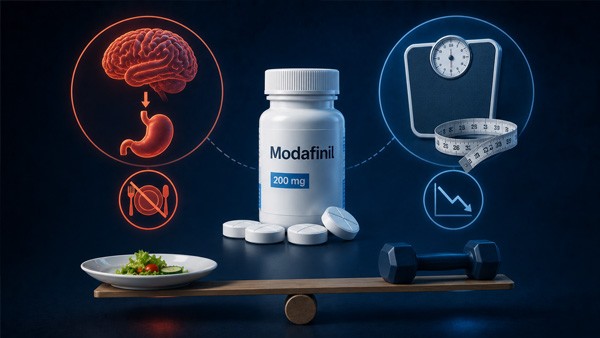
Appetite suppression affects approximately 5-15% of modafinil users in FDA trial data, but real-world reports from off-label cognitive users suggest the true rate is meaningfully higher — closer to 30-40% experiencing at least mild appetite reduction during their modafinil window. The presentation is consistent: users describe simply "not feeling hungry" rather than feeling actively sick or nauseated. Lunch passes without thought; the usual mid-afternoon snack craving never appears; dinner is approached with mild disinterest rather than appetite. The effect tracks predictably with the modafinil window — strongest during peak plasma hours (2-8 hours post-dose) and tapering with the drug through evening, when normal appetite often returns.
For most users, the appetite effect is manageable and not clinically significant — many even welcome it for casual weight management. For a smaller subset, the appetite suppression becomes problematic: unintentional weight loss, inadequate caloric intake on multiple consecutive days, nutritional deficiencies developing over months, or interference with body composition goals (athletes, bodybuilders, recovering eating disorder patients). This guide takes the practical management approach used in companion side-effect articles, applied to the nutritional dimension. We cover the underlying mechanism of why modafinil suppresses appetite, the daily caloric floor calculation that prevents underfeeding, meal timing strategies that work around the suppression window, the four weight trajectory patterns commonly seen in long-term users, the structured "forced-eating" meal frame protocol for users whose natural hunger has completely disappeared, the high-calorie-density quick food list for when you can only manage small portions, and the warning signs that distinguish acceptable mild appetite reduction from problematic malnutrition.
Sedentary: Body weight (kg) × 28 kcal
Lightly active: Body weight (kg) × 32 kcal
Moderately active: Body weight (kg) × 36 kcal
Very active: Body weight (kg) × 40 kcal
STEP 2 — Set your CALORIC FLOOR (90% of TDEE):
Floor = TDEE × 0.9 — never go below this for more than 2 consecutive days
STEP 3 — Adjust for specific goals:
Maintaining weight: Eat at TDEE (no deficit)
Gentle weight loss: Eat at 85-90% TDEE (-10-15%)
Aggressive deficit: Not recommended on modafinil without medical supervision
Weight gain / athletes: Eat at 110-120% TDEE
Worked example: 70 kg moderately active adult:
• TDEE: 70 × 36 = 2,520 kcal
• Floor: 2,520 × 0.9 = 2,268 kcal (never below this for ≥2 days)
• Maintenance target: 2,520 kcal daily
The floor matters more than the target on modafinil days. Hitting the maintenance target is ideal but not always possible during strong appetite suppression. The floor is the non-negotiable minimum — below it for more than 2 consecutive days you start to lose lean mass, slow metabolism, and risk nutritional deficits.
🧠 Appetite Suppression Mechanism
Modafinil's appetite suppression is multifactorial — similar in mechanism to the appetite effect of classical stimulants but milder in absolute magnitude. Understanding the contributing pathways helps explain both why the effect is real and why interventions like meal scheduling work.
- Hypothalamic appetite circuit modulation. Modafinil's effects on histamine and orexin signaling reach into the arcuate nucleus and lateral hypothalamus, which contain the brain's primary appetite-regulating neurons. The activation pattern shifts the balance away from "hungry" signaling toward "satiated" signaling — even when actual nutritional status would normally produce hunger.
- Sympathetic nervous system activation. Modafinil mildly increases sympathetic tone, and elevated sympathetic activity generally suppresses appetite as part of the broader "alert/focused" physiological state where eating is deprioritized. This is the same mechanism that produces appetite suppression with caffeine, methylphenidate, and amphetamines — though modafinil's effect is meaningfully smaller than stimulant-class drugs.
- Dopaminergic engagement. Increased dopaminergic tone affects reward circuits including food reward. Some users describe food as "less interesting" on modafinil — same hunger, lower reward expectation, leading to reduced intake even when nutritional need exists.
- Cognitive task absorption. Modafinil produces sustained focus that often manifests as reduced attention to background bodily signals including hunger. Users absorbed in work for hours may genuinely not notice that lunch has passed.
- Mild gastrointestinal effects. Some users experience mild nausea (5-10% in trials), reduced gastric motility, or vague abdominal discomfort that further reduces interest in eating beyond the central appetite suppression.
- Caffeine compounding. Heavy caffeine intake on modafinil days amplifies all the above mechanisms, particularly the sympathetic activation and the cognitive focus elements. Users who drink 3+ cups of coffee on modafinil days experience substantially more appetite suppression than those who reduce caffeine intake.
The mechanism explains the time course: appetite suppression is strongest during peak modafinil plasma window (hours 2-8 post-dose), tapers as drug levels decline, and natural appetite usually returns in late afternoon or evening as the drug clears. This is why most successful modafinil users with appetite issues shift their eating schedule rather than try to force eating during the suppression window.
📊 Caloric Tracking on Modafinil Days
Caloric tracking is the single most effective intervention for users experiencing problematic appetite suppression. The reason: appetite suppression makes you a unreliable internal monitor of intake adequacy. You think you ate "enough" because you ate everything that looked appetizing in the moment, but the actual caloric content was meaningfully below your needs. Tracking removes the perceptual error.
You do not need to track forever — most users only need 2-4 weeks of structured tracking to identify their pattern, then can resume estimation-based eating with better intuition. The initial tracking phase reveals the gap between "I ate enough" perception and the actual caloric reality:
- Day 1-7 (baseline measurement): Eat as usual; track everything. Use any decent app (MyFitnessPal, Cronometer, MacroFactor, Lose It!, or simple spreadsheet). Track grams or portions accurately. Note time of each eating event.
- Day 8 review: Compare your actual weekly intake to your TDEE × 7. Most modafinil users with appetite issues find they have been eating 200-600 kcal/day below target — meaning they have been in 1,400-4,200 kcal weekly deficit without intending to.
- Day 8-14 (intervention): Implement meal timing changes (next section) and high-density food substitutions. Continue tracking. Aim to close the deficit gap to within 100 kcal of TDEE.
- Day 15-21 (verification): Continue tracking with adjusted approach. Confirm you can now hit caloric floor consistently.
- Day 22+ (maintenance): Reduce tracking to weekly or monthly check-ins rather than daily. Most users develop better intuition after 3 weeks of structured tracking and can return to estimation-based eating.
| Body weight (kg) | Sedentary TDEE | Lightly active TDEE | Moderately active TDEE | Caloric floor (sedentary × 0.9) |
|---|---|---|---|---|
| 50 | 1,400 kcal | 1,600 kcal | 1,800 kcal | 1,260 kcal |
| 60 | 1,680 kcal | 1,920 kcal | 2,160 kcal | 1,512 kcal |
| 70 | 1,960 kcal | 2,240 kcal | 2,520 kcal | 1,764 kcal |
| 80 | 2,240 kcal | 2,560 kcal | 2,880 kcal | 2,016 kcal |
| 90 | 2,520 kcal | 2,880 kcal | 3,240 kcal | 2,268 kcal |
| 100 | 2,800 kcal | 3,200 kcal | 3,600 kcal | 2,520 kcal |
⏰ Meal Timing Strategies
Working with rather than against modafinil's appetite suppression is more effective than forcing eating during peak suppression hours. The three timing strategies below cover the main practical approaches:
Strategy 1 — Front-load (recommended for most users). Eat a substantial breakfast before taking modafinil or within the first hour after. Take advantage of the pre-peak window when appetite is closer to baseline. A typical front-load pattern: 600-800 kcal breakfast at 06:30-07:30, modafinil dose at 08:00, then lighter lunch (300-400 kcal) during suppression window, normal dinner (600-800 kcal) as drug tapers in evening. Total daily intake hits target through the bookend meals rather than fighting the suppression window.
Practical front-load breakfast options (each 600-800 kcal):
- 3 eggs + 2 slices buttered toast + avocado + glass of milk (~700 kcal)
- Large oatmeal with peanut butter, banana, milk, and honey (~650 kcal)
- Greek yogurt parfait with granola, nuts, berries, and honey (~600 kcal)
- Smoothie with milk/yogurt, banana, peanut butter, oats, protein powder (~700-900 kcal)
- Breakfast burrito with eggs, beans, cheese, avocado, salsa (~750 kcal)
Strategy 2 — Back-load (for users who genuinely cannot eat during peak hours). Skip or minimize breakfast and lunch; eat substantial dinner and possibly evening snack as appetite returns. This pattern looks like 16-18 hour fasting with one large evening meal. Effective for hitting calorie targets through one big meal, but requires evening meal of 1,500-2,000 kcal which is challenging for many users. Watch for digestive discomfort with very large evening meals.
Strategy 3 — Scheduled small meals (forced-eating protocol). Set alarms for 4-5 small meals across the day regardless of hunger. Each meal 300-500 kcal. This protocol described in detail in the dedicated section below. Best for users who cannot tolerate either large bookend meals or large evening meal — distributes the caloric load into manageable portions throughout the day.
📈 Long-Term Weight Trends
The longitudinal weight effect of modafinil varies meaningfully across user types. Understanding the typical trajectory patterns helps you identify whether your specific pattern is concerning or within normal range:
- Steady mild loss (most common): 2-5 kg loss over the first 3-6 months, then stabilization at the new lower weight. Affects approximately 30-40% of users. Usually represents the "low-hanging fruit" of mildly above-ideal weight being lost without conscious effort. Not concerning if the new stable weight is in healthy range and nutritional intake is adequate.
- Initial drop then full rebound: 1-3 kg loss in first month, then return to baseline by month 3-6 as appetite tolerance develops and structured eating habits form. Affects approximately 30-40% of users. Reflects the body's adaptive response to the drug's appetite effect.
- Progressive loss without stabilization: Continued weight loss beyond month 6 without intervention. Affects approximately 5-10% of long-term users. This pattern is concerning and warrants intervention — caloric tracking, meal scheduling, possibly dose reduction.
- No meaningful change: Approximately 20-25% of users experience no notable weight change despite some appetite reduction. Compensatory mechanisms (evening eating, structured habits, mild appetite tolerance) maintain adequate intake.
| Trajectory pattern | Frequency | Pattern | Action needed |
|---|---|---|---|
| Steady mild loss | ~30-40% | 2-5 kg over 3-6 months, then stable | None if new weight is healthy |
| Initial drop + rebound | ~30-40% | 1-3 kg loss month 1-2, back to baseline by 6 months | None — body adapts |
| Progressive loss | ~5-10% | Continued weight loss beyond 6 months | Active intervention required |
| No notable change | ~20-25% | Stable weight throughout use | None |
⚠️ When to Worry
Most modafinil-related appetite suppression is acceptable mild reduction. A specific set of patterns indicates the suppression has crossed into problematic territory and warrants intervention or discontinuation:
- 🔴 Weight loss >5% of body weight in 4 weeks without intending to lose weight. This rate of loss is too fast and likely includes lean mass loss. Active intervention required: caloric tracking, structured eating, possibly dose reduction or modafinil discontinuation.
- 🔴 BMI dropping below 18.5 on modafinil. Underweight territory regardless of starting weight. Consult physician; modafinil is not appropriate for actively underweight patients without specialist supervision.
- 🔴 Inability to consume more than 1,000 kcal/day for 3+ consecutive days. This level of restriction risks meaningful nutritional deficits and lean mass loss. Stop modafinil for 2-3 days to reset appetite; resume only after consistent adequate intake confirmed.
- 🔴 Symptoms of malnutrition: Fatigue out of proportion to sleep, hair loss, brittle nails, frequent bruising, cold intolerance, decreased exercise capacity, mood changes, loss of menstrual periods in women. Any combination warrants nutritional and medical evaluation.
- 🔴 Disordered eating patterns developing: Modafinil's appetite suppression can amplify pre-existing eating disorders or trigger new disordered patterns in vulnerable individuals. Compulsive food avoidance, body image distortion, or restrictive eating beyond what the drug effect would explain warrants discontinuation and mental health support.
- 🔴 Active eating disorder history: Modafinil should generally be avoided in patients with anorexia nervosa, bulimia nervosa, or active disordered eating recovery without specialized care team input.
- 🟡 Mild persistent weight loss without other concerning features: Discuss at routine appointment; may resolve with meal scheduling changes; no urgent intervention.
- 🟡 Reduced exercise performance attributable to inadequate fueling: Worth nutritional input and structured meal scheduling; consider dose reduction if persistent.
Nutritional red-flag symptoms requiring immediate evaluation:
| Red-flag symptom | What it may indicate | Action |
|---|---|---|
| Weight loss >5% in 4 weeks | Rapid lean mass loss | Stop modafinil; nutritional evaluation |
| BMI <18.5 | Underweight territory | Physician consultation before continued use |
| Loss of menstrual periods (women) | Possible hypothalamic amenorrhea | Stop modafinil; gynecological evaluation |
| Fatigue out of proportion to sleep | Caloric deficit / micronutrient deficiency | Increase intake; lab evaluation if persists |
| Hair loss, brittle nails | Protein or micronutrient deficiency | Nutritional review; possible supplementation |
| Frequent bruising | Possible vitamin K or vitamin C deficiency | Nutritional evaluation |
| Cold intolerance | Possible thyroid suppression from caloric deficit | Lab evaluation including TSH |
| Disordered eating thoughts | Eating disorder amplification | Stop modafinil; mental health support |
🔧 Forced-Eating Meal Frame Protocol
For users whose natural hunger has completely disappeared on modafinil days, the structured "forced-eating" protocol below replaces missing hunger cues with time-based eating schedule. Treat meals as scheduled obligations rather than appetite-driven events:
- 06:30-07:00 — Pre-modafinil breakfast (600-800 kcal): Eat a substantial breakfast BEFORE taking modafinil. This is the easiest meal because appetite is closest to baseline. Front-load protein and complex carbs.
- 07:30-08:00 — Modafinil dose: Take dose with the residual food in your stomach. Take 250-500 ml of water with the dose.
- 10:00 — Mid-morning snack (250-400 kcal): Set an alarm. Eat something even if not hungry. Easy options: handful of nuts + piece of fruit + cheese (~350 kcal), peanut butter on apple (~300 kcal), trail mix and protein bar (~400 kcal).
- 12:30-13:00 — Lunch (400-600 kcal): Set an alarm. Lunch is often the hardest meal during appetite suppression. Default to easy-to-eat, calorie-dense options rather than large salads or complex meals. Sandwich + soup + side, or pasta with sauce, or rice bowl with protein.
- 15:30-16:00 — Mid-afternoon snack (200-350 kcal): Often skipped accidentally — set an alarm. Cheese and crackers, fruit smoothie, yogurt with granola, hummus and vegetables.
- 18:30-19:30 — Dinner (600-800 kcal): Appetite typically returns by evening as drug tapers. This is often the easiest meal of the day. Take advantage of returning appetite for substantial intake — protein, complex carbs, vegetables, healthy fats.
- 20:30-21:30 — Optional evening snack (200-400 kcal): If you're under your daily target, add an evening snack. Avoid heavy meals right before bed but a moderate snack is fine.
- Total daily target hit: The 6-7 eating events across the day reliably hit 2,500-3,200 kcal for an adult — appropriate for most maintenance and slight surplus targets.
Key principles for the forced-eating protocol:
- Phone alarms are essential. Without them, scheduled eating times get missed during work absorption.
- Pre-portion meals when possible. Decision fatigue about "what to eat" makes the suppressed-appetite eating event harder. Pre-portioned lunch ready in fridge increases probability of actual eating.
- Calorie-dense over volume. When you can only eat a small portion, choose calorie-dense options (see next section).
- Liquid calories count and are easier. Smoothies, milk, juice, soup all provide calories without requiring much chewing or fullness. Good fallback when solid food is unappealing.
- Track for at least 2 weeks initially. Tracking confirms you are actually hitting targets; estimation often misses by 200-500 kcal/day during appetite suppression.
🥑 High-Calorie-Density Quick Food List
When appetite is suppressed, choosing calorie-dense foods means you can hit nutritional targets with smaller portions. The list below ranks common foods by calorie density (kcal per 100 g) and provides quick meal suggestions:
| Food category | Density (kcal/100g) | Examples | Quick use |
|---|---|---|---|
| Nuts (almonds, cashews, walnuts) | 550-650 | Handful = 30g = ~180 kcal | Snack alone or with fruit |
| Nut butters (peanut, almond) | 580-650 | 2 tbsp = 30g = ~190 kcal | On bread, apple, banana |
| Olive oil | 880 | 1 tbsp = 14g = ~125 kcal | Drizzle on bread, pasta, salad |
| Cheese (cheddar, parmesan) | 400-430 | 30g = ~130 kcal | With crackers, in sandwich |
| Avocado | 160 | Half avocado = ~150 kcal | Spread on toast, in salad |
| Dark chocolate (70%+) | 550-600 | 30g = ~180 kcal | Quick snack; pairs with nuts |
| Whole milk / cream-based smoothie | 60-80 / 200+ | 500 ml smoothie = ~500-800 kcal | Liquid meal replacement |
| Granola / muesli | 450-500 | 50g serving = ~230 kcal | With milk/yogurt for breakfast |
| Dried fruit (dates, raisins) | 280-320 | 30g = ~95 kcal | With nuts as quick snack |
| Whole grain bread + butter | 320-350 | 2 slices buttered = ~250 kcal | With cheese, peanut butter |
| Pasta with sauce | 180-250 | 1 cup serving = ~300-400 kcal | Easy lunch with cheese topping |
| Salmon, fatty fish | 200-220 | 150g portion = ~310 kcal | Dinner protein with vegetables |
| Eggs (with yolk) | 155 | 3 eggs = ~230 kcal | Scrambled or omelet breakfast |
| Greek yogurt (full fat) | 95 | 200g = ~190 kcal | With nuts and honey adds ~150 kcal |
Quick-assembly calorie-dense meals (no cooking required):
- ~500 kcal lunch in 2 minutes: Whole grain bread + 2 tbsp peanut butter + sliced banana + glass of whole milk.
- ~600 kcal snack platter in 3 minutes: 50g cheese + crackers + handful of nuts + apple + dark chocolate square.
- ~800 kcal smoothie in 3 minutes: 250 ml whole milk + 1 banana + 2 tbsp peanut butter + 50g oats + 1 scoop protein powder + 1 tbsp honey. Blend.
- ~700 kcal grab-and-go breakfast: Greek yogurt parfait — 200g yogurt + 50g granola + handful of nuts + tablespoon honey.
- ~500 kcal evening snack: Hummus + pita bread + olive oil drizzle + handful of olives + cheese.
- ~600 kcal liquid dinner backup: Two glasses of milk + protein bar + handful of trail mix + piece of fruit. For nights when solid food is unappealing.
✨ Bottom Line
Modafinil's appetite suppression affects a meaningful fraction of users — closer to 30-40% in real-world reports than the 5-15% in FDA trial data, particularly among off-label cognitive users. The mechanism is real and multifactorial: hypothalamic appetite circuit modulation, sympathetic activation, reduced food reward, and cognitive task absorption that drowns out hunger signals. For most users the effect is manageable and not clinically significant; for a smaller subset it becomes problematic and requires structured intervention.
The personal caloric floor calculator (TDEE × 0.9 = never go below for >2 consecutive days) provides a non-negotiable nutritional minimum that prevents the lean mass loss and metabolic slowdown that come from prolonged underfeeding. Structured caloric tracking for 2-4 weeks reveals the gap between "I ate enough" perception and the actual caloric reality — most users with appetite issues discover they have been 200-600 kcal/day below target without intending it.
The three meal timing strategies (front-load, back-load, scheduled small meals) work around the appetite suppression window rather than against it. The forced-eating meal frame protocol uses time-based alarms to substitute for missing hunger cues — scheduled 4-5 small meals across the day reliably hit caloric targets even with complete appetite suppression. The high-calorie-density quick food list enables hitting targets with smaller portions when full meals are not feasible.
Four longitudinal weight trajectory patterns characterize most users: steady mild loss (most common; usually acceptable), initial drop with full rebound (about 30-40%; body adapts), progressive loss without stabilization (5-10%; warrants intervention), and no notable change (about 20-25%). Knowing which pattern you fit helps calibrate response.
Warning signs requiring active intervention: weight loss >5% in 4 weeks, BMI dropping below 18.5, inability to eat >1,000 kcal/day for 3+ consecutive days, malnutrition symptoms (fatigue, hair loss, brittle nails, cold intolerance, lost menstrual periods), disordered eating patterns, or active eating disorder history. These patterns warrant discontinuation rather than continued symptom management.
For pharmaceutical-grade modafinil with consistent dosing that allows precise dose reduction during appetite troubleshooting, Modalert 200 mg from Sun Pharma is the most widely used legitimate generic. The split-scored tablets allow easy reduction to 100 mg or 50 mg, which often substantially reduces appetite suppression while preserving adequate alertness. For users where appetite suppression is unmanageable on modafinil, switching to armodafinil (Waklert 150 mg) occasionally helps due to smoother plasma curve — see Modafinil vs Armodafinil.
For broader context on related side effects, see our companion articles Modafinil Headaches, Modafinil Insomnia, Modafinil and Anxiety, Modafinil Dehydration and Dry Mouth, and Modafinil Cardiovascular Effects. Appetite suppression often co-occurs with dehydration and headache — managing all three together is more effective than treating each in isolation.
❓ Frequently Asked Questions
How common is appetite loss on modafinil?
Approximately 5-15% in FDA trial data, but real-world reports from off-label cognitive users suggest the true rate is closer to 30-40% experiencing at least mild appetite reduction during their modafinil window. The presentation is usually "not feeling hungry" rather than active nausea. Most users find it manageable; a smaller subset experiences problematic suppression requiring active intervention through caloric tracking and structured meal scheduling.
Will I lose weight on modafinil?
Often yes — approximately 30-40% of users experience steady mild weight loss (2-5 kg) over the first 3-6 months, after which weight typically stabilizes. About 30-40% experience initial loss followed by full rebound. About 5-10% experience progressive loss without stabilization (which warrants intervention). About 20-25% experience no notable weight change. Whether the loss is welcomed or problematic depends on your starting weight, goals, and whether intake remains adequate for nutritional needs.
How do I eat enough when I'm not hungry on modafinil?
Schedule eating like you schedule meetings. Set 4-5 phone alarms across the day for fixed eating times regardless of hunger (07:00, 10:00, 13:00, 16:00, 19:00 is a reasonable pattern). Choose calorie-dense foods so smaller portions hit targets — nuts, nut butters, cheese, avocado, olive oil, whole milk smoothies. Pre-portion meals to remove decision fatigue. Liquid calories (smoothies, soups, milk) are often easier than solid food when appetite is suppressed. Track for 2-4 weeks to confirm you're hitting targets.
Should I worry about my modafinil weight loss?
Worry triggers: weight loss >5% of body weight in 4 weeks, BMI dropping below 18.5, inability to consume >1,000 kcal/day for 3+ consecutive days, malnutrition symptoms (fatigue out of proportion to sleep, hair loss, brittle nails, cold intolerance, lost menstrual periods in women), or disordered eating patterns developing. Any of these patterns warrants stopping modafinil and physician evaluation. Slower, modest weight loss (1-2 kg/month) that stabilizes is usually not concerning, particularly if starting weight was above ideal range.
Will my appetite return if I take a break from modafinil?
Yes — appetite returns to baseline within 1-3 days of discontinuation as the drug clears. Many users with persistent appetite issues benefit from intermittent dosing patterns (5-on-2-off, or week-on-week-off) that provide regular appetite reset periods. Some users notice that even brief breaks (single skipped days) substantially restore appetite for the following day. Drug holidays don't have to be long to be effective for appetite recovery.
Can I use modafinil for weight loss?
Modafinil is not FDA-approved for weight loss and should not be used primarily for that purpose. The appetite suppression is a side effect, not an intended therapeutic effect. Using modafinil specifically for weight loss has several problems: it's prescription-only with legitimate medical indications that don't include weight management, the dependence on the drug for appetite control is unsustainable, discontinuation will return appetite to baseline with possible rebound, and using prescription medications off-label for cosmetic weight loss is generally not appropriate. Better tools exist for weight management — dietary changes, exercise, and FDA-approved weight loss medications if needed under physician supervision.
What's the easiest meal to eat when appetite is suppressed?
Liquid calories work best for most users. A whole-milk smoothie with banana, peanut butter, oats, protein powder, and honey can deliver 600-800 kcal in 3 minutes with minimal effort and good tolerability. Soups (broth-based or cream-based) work well. Yogurt parfaits with granola, nuts, and fruit. Bread with peanut butter and banana. The principles: minimal chewing required, calorie-dense ingredients, doesn't require active enjoyment to eat. Liquid calories typically go down easier than solid food when appetite is muted.
Does the appetite effect get better with tolerance?
Partially. Many users notice appetite suppression diminishes somewhat over the first 4-8 weeks of consistent use as the body adapts. The improvement is usually meaningful but not complete — appetite during the modafinil window is typically still below baseline even after months of use. Users who skip days regularly (5-on-2-off pattern) tend not to develop as much tolerance because the body resets during off-days. Structural interventions (scheduled eating, calorie-dense food choices) remain helpful even after tolerance partially develops.
Should I take modafinil with food or without?
With food is generally better, particularly for users with appetite issues. Eating a substantial breakfast before or with the modafinil dose accomplishes several things: ensures one good meal that day regardless of later appetite suppression, slows drug absorption slightly which can reduce side-effect intensity, reduces stomach irritation risk, and front-loads calories into the easiest eating window. The traditional "take medications on empty stomach" rule does not apply to modafinil — food does not meaningfully interfere with absorption or efficacy.
Can I take appetite stimulants with modafinil?
Discuss with physician. Several appetite-stimulating medications (cyproheptadine, mirtazapine in some cases, dronabinol for specific indications) exist but combining with modafinil is generally not appropriate without specialist input. The right answer for most users with problematic modafinil appetite suppression is to address the appetite issue through structural eating interventions (the forced-eating protocol above, calorie-dense food choices, scheduled meals), reduce modafinil dose, or discontinue modafinil — not to add another medication to counter the side effect of the first one. Stacking medications to manage side effects of other medications is a pattern that usually creates more problems than it solves.
📚 References & Further Reading
- FDA prescribing information for Provigil (modafinil) — adverse effect profile including appetite-related symptoms.
- FDA prescribing information for Nuvigil (armodafinil) — comparative appetite effect data.
- Institute of Medicine — Dietary Reference Intakes for energy, protein, and macronutrients.
- Mifflin-St Jeor equation references — TDEE estimation methodology underlying the caloric calculator.
- American Dietetic Association practice guidelines — clinical assessment of unintentional weight loss.
- National Eating Disorders Association — patient resources on disordered eating recognition.
- Müller et al., Pharmacological Research — review of modafinil's metabolic and appetite effects.
- American Academy of Sleep Medicine — practice parameters covering modafinil's FDA-approved indications and side-effect management.
- Modafinil Dehydration and Dry Mouth — companion article; appetite and hydration management are interrelated.
- Modafinil Headaches — companion article; inadequate caloric intake amplifies headache risk.
- Modafinil and Anxiety — companion article; caloric restriction worsens anxiety physiology.
- Modafinil Insomnia — companion article; meal timing affects sleep onset.
- Modafinil Cardiovascular Effects — companion article; caloric restriction can affect cardiovascular response patterns.
- Modafinil Long-Term Side Effects — companion article; weight tracking is part of long-term monitoring.
- Modafinil and Stevens-Johnson Syndrome — companion serious-event article.
- Modafinil vs Armodafinil — switching to armodafinil sometimes reduces appetite suppression.
- Modafinil vs Ritalin — stimulant comparison; methylphenidate has substantially more appetite suppression than modafinil.
- Modafinil vs Vyvanse — amphetamine comparison; Vyvanse has substantially more appetite suppression.
- Modalert 200 mg, Modvigil 200 mg, Waklert 150 mg — primary product pages on the RXshop antinarcoleptic catalogue.
- RXshop Editorial Team — content reviewed by licensed pharmacist; for adult patient education, not a substitute for individual medical consultation.
Medical Disclaimer: The information in this article is for educational and informational purposes only and is not a substitute for professional medical advice, diagnosis, or treatment. Always seek guidance from a qualified healthcare provider with any questions you may have regarding a medical condition, and before starting, stopping or changing any medication.