Modafinil Dehydration and Dry Mouth: Why and What to Do

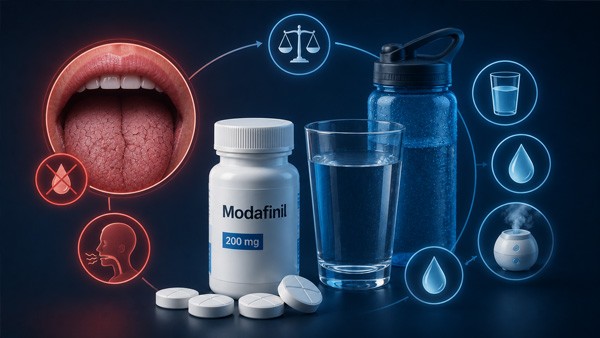
Dry mouth and mild chronic dehydration are among the most consistently reported subjective side effects of modafinil — and unlike most side effects, the underlying mechanism is partly perceptual rather than purely pharmacological. Modafinil reduces thirst signaling in many users, meaning your body is asking for fluid but you are not receiving the message clearly. The drug also produces modest diuretic effect, so fluid output increases at the same time fluid intake naturally drops. The result is a predictable mild dehydration pattern that compounds many of the drug's other side effects — headache, anxiety, low-grade fatigue, decreased exercise tolerance, and cognitive sluggishness all worsen with mild dehydration, and many modafinil users mistakenly attribute these dehydration-driven symptoms to the drug itself.
This guide takes the practical management approach used in the headache, insomnia, anxiety, cardiovascular, long-term, and SJS companion articles, applied to the underappreciated hydration topic. We cover the mechanism of reduced thirst signaling and modest diuresis, the bodyweight-based hydration calculator that personalizes your daily fluid target, the electrolyte strategy for users who exercise on modafinil days or experience cramping, evidence-based dry mouth remedies that work better than just drinking more water, the dental implications of chronic dry mouth that matter for long-term users, a four-level dehydration severity classification with action steps for each, the visual urine color hydration scale that gives you immediate self-assessment, the beverage tier list ranking everything from plain water (best) through energy drinks (worst), and the structured dental care protocol that protects oral health across years of modafinil use.
Daily water (ml) = Body weight (kg) × 35 ml
OR
Daily water (oz) = Body weight (lb) × 0.5 oz
MODAFINIL DAY ADJUSTMENT (add to base):
+ 500-750 ml (17-25 oz) per modafinil day
ADDITIONAL ADJUSTMENTS:
+ 250-500 ml per cup of coffee or tea consumed
+ 500-1000 ml for moderate exercise (30-60 min)
+ 750-1500 ml for intense exercise or hot weather
+ 250 ml per alcoholic drink (catch-up)
Worked example: 70 kg adult, modafinil 200 mg, 2 cups coffee, 45-minute gym session:
• Base: 70 × 35 = 2,450 ml
• + Modafinil: + 600 ml = 3,050 ml
• + 2 coffees: + 500 ml = 3,550 ml
• + Exercise: + 750 ml = 4,300 ml total target (~ 4.3 liters / 146 oz / 18 cups)
That total may sound high but it includes all fluid sources — water, tea, soup, juicy fruits and vegetables, all count. Aim for roughly 60-70% as plain water; the rest can come from other fluid sources. Spread intake across the day rather than front-loading or back-loading.
🧠 Why Modafinil Reduces Thirst Signal
The thirst-suppression effect of modafinil is one of the more interesting (and under-discussed) elements of its pharmacology. Most CNS stimulant medications produce some reduction in thirst perception — caffeine, amphetamines, and methylphenidate all do this to varying degrees — but modafinil's effect is particularly notable because it persists for the drug's full 12-15 hour half-life rather than tapering off within a few hours like caffeine's effect does.
The mechanism is multifactorial:
- Hypothalamic arousal pathway engagement. Modafinil acts on the orexin and histamine systems in the hypothalamus — the same region that contains thirst-regulating neurons. The arousal-pathway activation appears to interfere with the normal thirst perception circuit, meaning your body's "I need water" signal is generated but not received as strongly by conscious awareness.
- Sympathetic nervous system activation. Modafinil mildly increases sympathetic tone (which is also why it produces mild heart rate and blood pressure elevation — see Modafinil Cardiovascular Effects). Sympathetic activation generally suppresses thirst and salivary flow as part of the broader "fight or flight" physiological state where eating and drinking are deprioritized.
- Mild diuretic effect. Modafinil increases urinary output modestly through its effects on renal blood flow and the renin-angiotensin system. The increased output combined with reduced input creates the mild dehydration pattern most users experience.
- Reduced salivary flow (xerostomia). The same sympathetic activation that suppresses thirst also reduces salivary gland output, producing the dry mouth sensation that affects approximately 15-25% of modafinil users. Reduced saliva makes the mouth feel dry but does not by itself indicate dehydration — the perception and the underlying hydration status are partially independent.
- Focus and task engagement. Modafinil produces sustained focus that often manifests as reduced attention to background bodily signals including thirst. Users absorbed in work for hours may not recognize they have not had fluid in 4-5 hours until a headache or fatigue cues them.
🎯 Hydration Target (Personalized by Body Weight)
The bodyweight-based formula in the opening callout gives you a personalized daily target. The general principles for distributing that target across the day on modafinil:
| Time of day | Target intake (% of daily total) | Practical guidance |
|---|---|---|
| Pre-dose (waking through dose time) | 15-20% | 500-750 ml glass of water on waking; another with breakfast |
| First 2 hours post-dose | 15-20% | Another 500-750 ml during the early modafinil window |
| Mid-morning (peak) | 15-20% | Sip steadily during peak window; don't wait for thirst |
| Lunch (midday) | 15-20% | Water with meal plus a separate glass |
| Afternoon (plateau) | 15-20% | Continue steady intake; ~ 300 ml per hour |
| Late afternoon | 10-15% | Last substantial intake before reducing for evening |
| Evening (taper) | 5-10% | Reduce intake 3-4 hours before bed to avoid nocturnal urination |
| Pre-bed | Minimal | Small sips only; avoid full glass close to bed |
Sources that count toward your fluid target:
- Plain water (100% counts): The reference standard. Aim for 60-70% of total daily intake as plain water.
- Sparkling water and seltzer (100% counts): Same hydration value as plain water. Good for users who find plain water boring.
- Herbal tea (100% counts): Caffeine-free herbal teas hydrate as effectively as water.
- Milk and milk alternatives (95% counts): Modest electrolyte content; well-tolerated as hydration source.
- Coffee and black tea (90% counts): Despite reputation, regular coffee drinkers are not net-dehydrated by their coffee — the diuretic effect is real but smaller than the fluid content delivers. However, count for slightly less and add the modafinil-day adjustment.
- Sports drinks (95% counts): Good for active days; sugar content varies by product.
- Juicy fruits and vegetables (variable): Watermelon, cucumber, oranges, strawberries, and similar produce contain 85-95% water. A cup of watermelon adds ~ 150 ml of fluid plus electrolytes.
- Soup, broth, smoothies (variable): Mostly water content; useful contribution to total.
Sources that do NOT count toward fluid target:
- Alcohol: Net dehydrating despite fluid content. Each alcoholic drink adds 250 ml to your water replacement target rather than contributing to it.
- Energy drinks and pre-workout supplements: High caffeine content makes the diuretic load substantially exceed the fluid contribution. Treat as negative for hydration.
- Strong espresso shots: Not enough fluid volume to offset the caffeine diuretic effect.
- Sugary sodas: Technically provide fluid but the sugar load creates osmotic stress that partially offsets hydration value. Better choices exist.
⚡ Electrolyte Strategy
Pure water replaces fluid but not electrolytes (sodium, potassium, magnesium, chloride, calcium). For most modafinil users with normal eating patterns and moderate activity, dietary electrolyte intake from regular food is sufficient — added electrolyte supplements are unnecessary. The specific scenarios where electrolyte supplementation matters:
- Exercise on modafinil days: Sweat loss includes substantial sodium (~ 500-1500 mg per liter of sweat). Combined with modafinil's reduced thirst signaling, post-exercise replenishment with water alone can produce relative hyponatremia and worse cramping/fatigue than the dehydration itself would cause.
- Hot weather modafinil days: Same logic — sweat losses are amplified by environmental heat, and replacement with water alone is inadequate.
- Users on low-sodium diets or with diuretic medications: Already-low electrolyte status compounded by modafinil's mild diuresis can produce notable electrolyte issues.
- Users with cramping or weakness during modafinil window: Often a sign of electrolyte depletion rather than just water depletion.
- Hangover days (if combining alcohol with modafinil days): Alcohol depletes both fluid and electrolytes; modafinil compounds the problem.
- Long modafinil days with intense cognitive work and no real meal breaks: Skipped meals = skipped natural electrolyte intake.
Practical electrolyte strategy:
- Simplest approach — a pinch of salt: Add a pinch of salt to one of your water bottles each day on modafinil days. Provides ~ 500-800 mg sodium with negligible taste impact. Pair with a banana or piece of fruit for potassium balance.
- Sports drinks (diluted): Mix sports drink 50/50 with water to reduce sugar load while maintaining electrolyte content. Useful for exercise days.
- Low-sugar electrolyte powders: Brands like LMNT, Nuun, Liquid IV, and similar provide standardized electrolyte profiles. Convenient and portable. Use 1 packet per liter of water, especially after exercise.
- Bone broth: Natural source of sodium, potassium, and other minerals plus protein. Useful for users who enjoy savory beverages.
- Coconut water: Natural source of potassium with modest sodium; reasonable post-exercise option.
- DIY electrolyte mix: 1 liter water + 1/4 teaspoon salt + 1/4 teaspoon "no-salt" (potassium chloride) + 1 tablespoon lemon juice + optional honey or stevia. Provides ~ 600 mg sodium + 600 mg potassium per liter at very low cost.
👄 Dry Mouth Remedies
Dry mouth (xerostomia) from modafinil is partly independent from systemic dehydration. Even well-hydrated users can experience the subjective dry mouth sensation because the underlying mechanism is reduced salivary flow, not just reduced fluid. Drinking more water helps but does not fully resolve dry mouth in many users. Effective dry mouth remedies operate at the local salivary level rather than just systemic hydration:
- Sugar-free chewing gum or lozenges: The mechanical action of chewing stimulates salivary flow. Sugar-free is critical for dental reasons (see Dental Implications section below). Xylitol-containing products have the additional benefit of dental caries reduction.
- Frequent small sips of water: Rather than drinking large volumes occasionally, sip 50-100 ml every 15-30 minutes during peak dry mouth periods. The frequent moisture exposure helps more than less-frequent larger doses.
- Ice chips: Slow melting provides extended oral moisture exposure. Useful during long work sessions.
- Saliva substitute products: Available OTC (Biotene, Oasis, MouthKote, and similar brands). Spray, gel, or rinse forms. Provide artificial lubrication for severe persistent dry mouth.
- Humidifier in workspace or bedroom: Ambient humidity affects perceived mouth dryness. 40-50% relative humidity is the target range.
- Citrus-flavored sugar-free candy: Sour taste strongly stimulates salivary flow. Sugar-free critical.
- Lemon water or other slightly acidic beverages: Mild acidity stimulates salivation. Avoid strong acidity which damages enamel.
- Breathing through nose rather than mouth: Mouth breathing accelerates oral drying. Conscious nasal breathing during work helps.
- Avoid mouth-drying substances: Alcohol (including alcohol-containing mouthwash), tobacco, caffeine, and many antihistamines all compound modafinil's dry mouth effect.
- Prescription saliva-stimulating medications: Pilocarpine and cevimeline are FDA-approved for severe xerostomia. Reserved for cases where OTC approaches fail and dry mouth significantly affects quality of life. Discuss with physician.
🦷 Dental Implications
Chronic dry mouth has real dental consequences that matter for long-term modafinil users. Saliva is not just lubrication — it provides antibacterial enzymes, mineral replacement that rebuilds tooth enamel, acid neutralization that protects against caries, and physical washing that removes food particles. Reduced salivary flow over years increases risk of dental caries, gum disease, oral fungal infections, and bad breath. The protective dental routine below addresses these risks systematically:
| Dental concern | Risk from chronic dry mouth | Protective intervention |
|---|---|---|
| Dental caries | 2-3× elevated risk | Fluoride toothpaste; xylitol gum; fluoride rinse weekly |
| Gum disease | Elevated risk | Daily flossing; antibacterial rinse; quarterly hygienist visits |
| Oral candidiasis (thrush) | Increased risk | Watch for white patches; nystatin if symptomatic; reduce sugar |
| Bad breath (halitosis) | More common | Tongue scraping; sugar-free mints; adequate hydration |
| Enamel erosion | Risk with acidic beverage substitution | Use straw for acidic drinks; don't brush immediately after |
| Cracked lips | Common | Lip balm with SPF; humidifier; nose breathing |
| Difficulty swallowing pills | More common | Adequate water before/with pills; saliva substitute if severe |
| Altered taste perception | Possible | Usually resolves with hydration; persistent → physician evaluation |
Recommended dental protection protocol for long-term modafinil users:
- Brush twice daily with fluoride toothpaste. Higher fluoride concentration (1450 ppm or 5000 ppm prescription) is appropriate for high-caries-risk patients.
- Floss daily. Reduced salivary protection makes interproximal caries more likely; mechanical removal of food debris becomes more important.
- Use a fluoride mouthrinse 1-3 times per week. Adds enamel protection beyond what toothpaste alone provides.
- Chew sugar-free xylitol gum after meals. Stimulates saliva and xylitol specifically inhibits cariogenic bacteria.
- Visit dental hygienist every 3-4 months rather than the standard 6 months. Catches caries and gum issues earlier; deep cleaning compensates for reduced salivary self-cleaning.
- Inform your dentist that you take modafinil long-term. They can adjust the prophylaxis protocol accordingly and may recommend prescription-strength fluoride.
- Annual oral cancer screening. Routine but particularly important for long-term users of any chronic medication that affects oral environment.
- Watch for early signs of issues: persistent bad breath, gum bleeding, mouth sores that don't heal, white patches, taste changes — all warrant dental or medical evaluation.
🚦 Dehydration Level Classification
Dehydration exists on a spectrum from mild to life-threatening. The 4-level classification below helps you identify where you are and what action is appropriate:
Level 1 — Mild dehydration (1-3% body weight fluid loss). Most common presentation in modafinil users. Signs: thirst (when not suppressed by modafinil), dry mouth, slightly darker urine (color 4-5 on the urine scale below), mild fatigue, mild headache, decreased exercise tolerance, mild cognitive sluggishness. Most modafinil users experience this state intermittently without realizing it. Action: drink 500-1000 ml of water over the next 1-2 hours; reduce caffeine; consider electrolyte addition if associated with exercise.
Level 2 — Moderate dehydration (3-6% body weight fluid loss). Notable physical signs appear. Sunken eyes appearance, decreased skin turgor (skin "tents" when pinched), reduced urinary output, definitely darker urine (color 6-7), pronounced fatigue, definite headache, mild dizziness on standing, dry mucous membranes throughout. Action: stop activities; sit or lie down; drink 1500-2000 ml of fluid (preferably with electrolytes) over 2-3 hours; consider stopping modafinil for today; medical evaluation if symptoms persist after rehydration.
Level 3 — Severe dehydration (6-9% body weight fluid loss). Significant systemic involvement. Tachycardia (rapid heart rate even at rest), orthostatic hypotension (dizziness or near-syncope on standing), very dark urine or anuria (no urine output), severe fatigue, confusion or altered mental status, severe headache. Action: medical evaluation today, possibly emergency department; IV rehydration often needed; stop modafinil; identify and address underlying cause beyond just modafinil.
Level 4 — Critical dehydration (>9% body weight fluid loss). Life-threatening. Significant cardiovascular compromise, possibly unconsciousness, kidney injury risk, severe electrolyte abnormalities. Action: emergency services immediately. This level should essentially never occur from modafinil-related dehydration alone — if you reach this level, there is something else going on (gastrointestinal illness, untreated diabetes, kidney problem) and emergency evaluation is required.
| Level | % body weight loss | Key signs | Action |
|---|---|---|---|
| 1 (Mild) | 1-3% | Thirst, dry mouth, mild headache | 500-1000 ml water; restore over 1-2 hr |
| 2 (Moderate) | 3-6% | Definite headache, dizziness on standing | 1500-2000 ml; consider electrolytes; stop modafinil today |
| 3 (Severe) | 6-9% | Tachycardia, orthostatic hypotension, confusion | Medical evaluation today; possibly IV fluids |
| 4 (Critical) | >9% | Cardiovascular compromise, altered consciousness | Emergency services immediately |
🎨 Urine Color Hydration Scale
The single best at-home indicator of hydration status is urine color. The scale below provides immediate self-assessment without measurement equipment. Check your urine color throughout the day; the goal is to maintain pale yellow (Level 2-3) consistently:
| Level | Color description | Hydration status | Action |
|---|---|---|---|
| 1 | Clear / colorless | Overhydrated | Slow down intake; check for excess plain water without electrolytes |
| 2 | Very pale yellow (light straw) | Well-hydrated 🎯 IDEAL | Maintain current intake |
| 3 | Pale yellow (straw) | Adequately hydrated 🎯 IDEAL | Maintain current intake |
| 4 | Yellow (lemon) | Mildly underhydrated | Drink 250-500 ml in next 30 min |
| 5 | Dark yellow (gold) | Mild dehydration | Drink 500-750 ml in next hour |
| 6 | Amber / honey | Moderate dehydration | Drink 750-1000 ml; consider electrolytes |
| 7 | Dark amber / orange | Significant dehydration | Aggressive hydration; consider stopping activities |
| 8 | Brown / very dark | Severe dehydration OR muscle breakdown | Medical evaluation today; possible rhabdomyolysis |
Caveats for using urine color:
- Morning first void is normally darker than the rest of the day's urine — use mid-morning readings as the more accurate hydration indicator.
- B-vitamins (particularly riboflavin / B2) cause bright yellow urine that does not indicate dehydration. Multivitamin users may see misleadingly dark urine.
- Certain foods affect urine color: beets (red), asparagus (greenish), rhubarb (pink/orange), carrots (orange) — adjust interpretation accordingly.
- Certain medications affect color: rifampin (orange-red), metronidazole (dark), phenazopyridine (orange) — known medications should be factored in.
- Brown urine without obvious cause warrants medical evaluation — possible rhabdomyolysis, severe dehydration, or kidney/liver issue.
🏆 Beverage Tier List for Hydration
Not all beverages contribute equally to hydration. The tier list below ranks common beverages from best (S-tier) to worst (F-tier) for modafinil-day hydration:
| Tier | Beverages | Why |
|---|---|---|
| S-tier (Best) | Plain water, sparkling water, herbal tea | 100% hydration value; no caffeine; no diuretic load; no calories |
| A-tier (Excellent) | Coconut water, diluted sports drinks, low-sugar electrolyte mixes | Hydration + electrolytes; ideal for active days |
| B-tier (Good) | Milk, plant milks, fruit-infused water, smoothies | Good hydration value; modest electrolyte/nutrient content |
| C-tier (Acceptable) | Bone broth, light fruit juice diluted with water, weak tea | Reasonable hydration with some additional benefit |
| D-tier (Limited) | Regular coffee, regular black/green tea, full-sugar sports drinks | Hydration value reduced by caffeine diuretic effect; high sugar offset |
| E-tier (Poor) | Sugary sodas, sweetened iced coffee, lemonade | Hydration partially offset by sugar osmotic load |
| F-tier (Avoid) | Alcohol, energy drinks, pre-workout supplements | Net dehydrating; compound modafinil's diuretic effect |
Practical beverage strategy on modafinil days:
- Prioritize S-tier: 60-70% of total fluid intake.
- Use A-tier strategically: Particularly on exercise days or in hot weather.
- B-tier as variety: Useful for users who get bored with plain water; nutritional bonus.
- Limit D-tier: Coffee and tea are part of most people's routine; keep them but count against your hydration target. Add 250-500 ml extra water per cup.
- Avoid F-tier on modafinil days: Energy drinks especially — combined with modafinil they create cardiovascular load that compounds anxiety risk too.
✨ Bottom Line
Modafinil-related dehydration and dry mouth affect a meaningful fraction of users through a combination of reduced thirst signaling, mild diuretic effect, and reduced salivary flow. The mechanism is partly perceptual — your body asks for fluid but the signal does not reach consciousness clearly. Structured intervention substitutes for the suppressed thirst signal: bodyweight-based daily target calculation, distributed intake across the day, electrolyte addition for exercise or hot weather, and frequent urine color self-checks throughout the day.
The personal hydration calculator (35 ml per kg body weight + 500-750 ml modafinil adjustment + additional adjustments for caffeine and exercise) gives you a personalized target rather than relying on the oversimplified "8 glasses" rule that does not account for individual variation or modafinil-specific needs. The urine color scale (target pale yellow 2-3) provides immediate at-home self-assessment. The beverage tier list (S-tier water through F-tier alcohol/energy drinks) helps you choose hydrating drinks rather than counterproductive ones.
Dry mouth specifically responds to local interventions beyond just systemic hydration — sugar-free gum, frequent small sips, saliva substitutes, humidifier use, and conscious nasal breathing. The dental protection protocol (twice-daily fluoride brushing, daily flossing, weekly fluoride rinse, xylitol gum, quarterly hygienist visits, dentist informed about modafinil use) prevents the chronic dental complications that can develop over years of dry mouth.
The 4-level dehydration classification (Mild → Moderate → Severe → Critical) helps you recognize when intervention should escalate from "drink more water" through "stop activities and rehydrate" to "seek medical evaluation today." For most modafinil users, hydration management is at Level 1 (Mild) territory and responds completely to structured intake increase. Levels 3-4 should essentially never occur from modafinil alone — if you reach them, there is something else going on that needs evaluation.
For pharmaceutical-grade modafinil with consistent dosing, Modalert 200 mg from Sun Pharma remains the most widely used legitimate generic. The hydration management principles apply identically to all modafinil products (Modalert, Modvigil, Provigil) and to armodafinil products (Waklert, Artvigil, Armod) — the underlying thirst-suppression and diuretic mechanisms are the same across the modafinil family.
For broader context on related side effects that are amplified by inadequate hydration, see our companion articles Modafinil Headaches (dehydration is the most common cause of modafinil headache), Modafinil and Anxiety (dehydration amplifies anxiety physiology), Modafinil Cardiovascular Effects (hydration affects BP/HR measurements), and Modafinil vs Caffeine (caffeine stacking compounds the dehydration mechanism).
❓ Frequently Asked Questions
Why does modafinil cause dry mouth?
Two main mechanisms: sympathetic nervous system activation (which reduces salivary flow as part of broader "alert" physiology) and reduced thirst signaling that means many users don't recognize developing dehydration that would normally trigger more fluid intake. The dry mouth sensation is partly local (less saliva produced) and partly systemic (mild dehydration). Affects approximately 15-25% of modafinil users. Usually mild but bothersome; can be significantly improved with structured hydration plus local interventions like sugar-free gum and saliva substitutes.
How much water should I drink on modafinil days?
Use the bodyweight formula: 35 ml per kg body weight as your daily base, plus 500-750 ml additional for modafinil days, plus 250-500 ml per cup of coffee or tea, plus 500-1500 ml for exercise or hot weather. A typical 70 kg adult on standard modafinil with 2 coffees and moderate exercise targets approximately 4 liters daily. Spread intake across the day; aim for pale yellow urine throughout. The "8 glasses per day" general rule is inadequate for modafinil days — you need more.
Will drinking more water prevent modafinil headaches?
For approximately 40-50% of users with modafinil headache, yes — increasing fluid intake to the target above resolves the headache pattern completely. Dehydration is the most common cause of modafinil headache, and structured hydration is the first intervention. If headaches persist despite proper hydration, other factors (caffeine stacking, dose dependency, individual sensitivity) are likely involved. See Modafinil Headaches for the full management protocol.
Do I need electrolyte supplements on modafinil?
For most users with normal eating patterns and moderate activity, no — dietary electrolyte intake is sufficient. Electrolyte supplementation matters for: users who exercise on modafinil days (sweat loss adds substantial sodium need), users in hot weather, users on low-sodium diets or diuretic medications, users with cramping or weakness during modafinil window. The simplest approach is a pinch of salt added to one of your daily water bottles, paired with a banana for potassium. More elaborate options (sports drinks, electrolyte powders, DIY mixes) are reasonable for active users.
Can I drink coffee on modafinil days?
Yes, with adjustments. Coffee adds to the diuretic load and partially offsets hydration value of the same volume of water. Add 250-500 ml of plain water for each cup of coffee consumed. Keep coffee to morning hours (before 10:00) to avoid compounding evening sleep disruption. Heavy coffee on modafinil days (3+ cups) compounds anxiety risk and amplifies the dehydration mechanism. See Modafinil vs Caffeine for full stacking guidance.
Will dry mouth from modafinil damage my teeth?
Possibly, with chronic untreated dry mouth over years. Saliva is critical for dental protection — it neutralizes acids, replaces minerals, contains antibacterial enzymes, and physically washes away food debris. Reduced salivary flow over years increases dental caries risk by 2-3×, increases gum disease risk, and elevates oral candidiasis and bad breath risk. The dental protection protocol described above (fluoride toothpaste, flossing, fluoride rinse, xylitol gum, quarterly hygienist visits, informing your dentist about modafinil use) prevents most of these complications. Active dental care matters more for long-term modafinil users than for the general population.
How do I know if I'm dehydrated on modafinil?
Urine color is the most reliable at-home indicator. Pale yellow (color 2-3 on the scale above) means adequately hydrated. Darker yellow through amber (4-6) indicates progressive dehydration. Other signs: dry mouth that doesn't resolve with sips, fatigue, mild headache, decreased exercise tolerance, mild cognitive sluggishness, dizziness on standing. The challenge is that modafinil's reduced thirst signaling means you cannot rely on feeling thirsty — you have to use external indicators (urine color, structured intake schedule, body weight tracking) instead.
Can dehydration on modafinil cause kidney damage?
Mild chronic dehydration (Level 1 — most common modafinil pattern) does not cause kidney damage in healthy users. Severe dehydration (Level 3-4) can damage kidneys if prolonged, but should essentially never occur from modafinil alone — if you reach severe dehydration, there is usually another factor (illness, intense exercise, untreated diabetes, kidney medication). For patients with pre-existing kidney disease, hydration management on modafinil should be more careful and may warrant nephrology input. Standard adult kidney function tolerates the modafinil hydration pattern well with proper structured intake.
What if I can't drink enough water without feeling sick?
Several adjustments help: distribute intake more (smaller more frequent sips rather than large glasses), use sparkling water or flavored water for variety, eat water-rich foods (watermelon, cucumber, soups) that contribute to fluid intake without volume burden, ensure adequate electrolyte intake (low sodium can make water feel "heavy"), and consider whether your overall target may be set too high for your body composition. Excessive plain water intake without electrolytes can produce hyponatremia (low sodium) which itself causes nausea — adding even small amounts of sodium often resolves this paradoxical effect.
Does the dehydration get worse over years of modafinil use?
No — the dehydration mechanism is the same on day 1 as on year 5. The drug's effect on thirst signaling and salivary flow doesn't compound over time. What does compound is your habituation to managing it — long-term users typically have well-established hydration routines, dental care protocols, and structured intake patterns that make the dehydration effect functionally minor. The challenge is primarily during initial weeks before habits form. After 2-3 months on modafinil with structured hydration management, most users barely notice the underlying mechanism even though it persists.
📚 References & Further Reading
- FDA prescribing information for Provigil (modafinil) — adverse effect profile including dry mouth and related symptoms.
- European Food Safety Authority — adequate intake recommendations for water and electrolytes.
- Institute of Medicine (US) — dietary reference intakes for water, potassium, sodium, chloride, and sulfate.
- American Dental Association — clinical guidelines on xerostomia management and protective dental care.
- Sreebny & Schwartz, Gerodontology — comprehensive review of drug-induced xerostomia.
- Kleiner, American Journal of Lifestyle Medicine — practical hydration guidance with body weight calculations.
- Armstrong & Kavouras, Frontiers in Nutrition — urine color as hydration biomarker.
- Sawka et al., Medicine & Science in Sports & Exercise — exercise hydration and electrolyte replacement.
- Cochrane reviews on saliva substitutes and xerostomia interventions.
- American Academy of Sleep Medicine — practice parameters for modafinil's FDA-approved indications.
- Modafinil Headaches — companion article; dehydration is the most common cause of modafinil headache.
- Modafinil and Anxiety — companion article; dehydration amplifies anxiety physiology.
- Modafinil Cardiovascular Effects — companion article; hydration affects BP/HR measurements.
- Modafinil Insomnia — companion article; evening hydration timing matters for sleep.
- Modafinil Long-Term Side Effects — companion article; chronic hydration management context.
- Modafinil and Stevens-Johnson Syndrome — companion serious-event article.
- Modafinil vs Caffeine — caffeine stacking compounds dehydration mechanism.
- Best Time to Take Modafinil — timing affects when hydration intake should be highest.
- Modalert 200 mg, Modvigil 200 mg, Waklert 150 mg — primary product pages on the RXshop antinarcoleptic catalogue.
- RXshop Editorial Team — content reviewed by licensed pharmacist; for adult patient education, not a substitute for individual medical consultation.
Medical Disclaimer: The information in this article is for educational and informational purposes only and is not a substitute for professional medical advice, diagnosis, or treatment. Always seek guidance from a qualified healthcare provider with any questions you may have regarding a medical condition, and before starting, stopping or changing any medication.