Buy Modalert 200 mg Online — Generic Modafinil Tablets

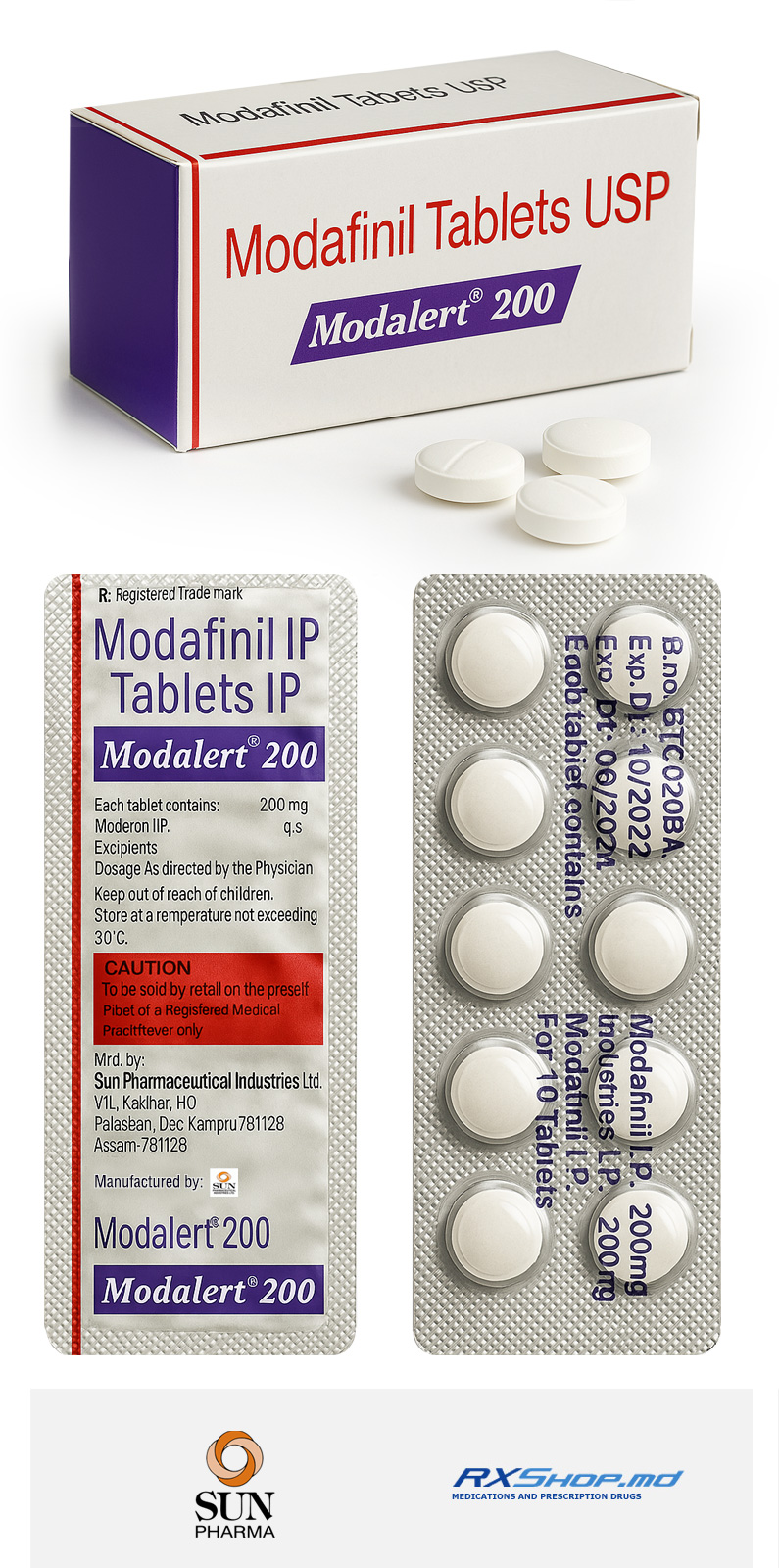
Modalert 200 mg is generic modafinil made by Sun Pharma, one of the largest regulated pharmaceutical manufacturers in the world. Each white, scored tablet holds 200 mg of modafinil, the same wakefulness-promoting compound found in Provigil. For adults who need steady daytime alertness without the harsh pull of stimulants, Modalert is the long-trusted generic choice behind the brand name.
A single morning dose keeps most users focused and awake for 8 to 12 hours of real productive time. Modafinil does not kick in like coffee or push the heart the way amphetamine stimulants do. It quietly lifts excessive daytime sleepiness by acting on dopamine, histamine and orexin pathways in the wake-regulating centers of the brain. When night falls, normal sleep returns.
Modalert is prescribed worldwide for three sleep conditions. Narcolepsy patients use it to prevent sudden sleep attacks and reduce reliance on daytime naps. People with obstructive sleep apnea take it alongside CPAP therapy when residual drowsiness persists. Shift work sleep disorder is the third approved use — nurses, pilots and night-shift crews rely on modafinil to stay sharp when the body wants to sleep.
📦 Made by Sun Pharma under WHO-GMP standards. Each strip carries a verifiable batch number, holographic seal, and tamper-proof foil for authenticity. The 200 mg strength is the global clinical standard.
Most users take one tablet in the morning, with or without food. Onset is felt within 30 to 60 minutes, with peak concentration between hours 2 and 4 and a half-life of around 15 hours. Modalert can be split along the score line to produce a 100 mg dose when first starting out.
⚕️ FDA-approved for narcolepsy, OSA residual sleepiness and shift work sleep disorder. Modafinil has been in clinical use since 1998 and sits on the WHO Model List of Essential Medicines.
⏳ Many patients use Modalert daily for years at the standard 200 mg dose without a strong tolerance build-up. Adults new to modafinil often begin at 100 mg before stepping up to full strength.
Free prescription
Discrete packaging
Have questions?
Quality Assurance
- Obstructive Sleep Apnea (OSA): For patients with OSA who still experience excessive daytime sleepiness despite proper CPAP therapy. Modafinil can help enhance wakefulness and cognitive function.;
- Shift Work Sleep Disorder (SWSD): For individuals who experience sleep disturbances due to night shifts or irregular working hours. Modafinil helps reduce fatigue and improve mental performance during work hours;
- Attention Deficit Hyperactivity Disorder (ADHD) (off-label use): Although not FDA-approved for ADHD, Modafinil has shown benefits in enhancing focus, concentration, and reducing impulsivity in some adult patients;
- Multiple Sclerosis (MS)-related fatigue: Used to combat fatigue associated with MS, improving the patient’s energy levels and overall quality of life;
- Depression related fatigue: Sometimes prescribed alongside antidepressants to reduce residual fatigue and low energy in treatment-resistant depression;
- Chronic Fatigue Syndrome (CFS): Modafinil may be used to reduce persistent tiredness and cognitive fog in people with CFS;
- Cognitive enhancement in sleep-deprived individuals (non-medical/controversial use): Some use Modalert to improve mental clarity, reaction time, and alertness during periods of sleep deprivation. This is not a recommended or approved indication but is a common real-world usage;
- Jet Lag Syndrome: Helps individuals adjusting to new time zones by managing excessive sleepiness and restoring wakefulness during the day;
- Parkinsons Disease related fatigue: Used to help manage tiredness in individuals living with Parkinson’s disease when standard therapy does not fully address fatigue;
- Cancer-related fatigue: Prescribed in certain oncology settings to counteract fatigue during chemotherapy or advanced illness;
- Post-Anesthesia or ICU Sedation Recovery: Occasionally used to speed recovery of mental alertness in patients after sedation in intensive care settings;
- Traumatic Brain Injury (TBI)-related fatigue or cognitive dysfunction: May help individuals recovering from TBI by improving wakefulness, focus, and motivation;
- Sleep inertia: Helps combat the groggy, disoriented state some people feel upon waking, particularly when abrupt awakening is needed for performance;
- Bipolar depression adjunct therapy: Modafinil has been trialed as an add-on treatment to traditional mood stabilizers in cases of bipolar depression with fatigue or cognitive symptoms.
- Improves Mental Focus and Attention: It boosts concentration, increasing attention span and cognitive clarity, especially helpful for individuals with ADHD or attention-related challenges;
- Reduces Fatigue: Whether due to chronic illness, shift work, or neurological conditions, Modafinil helps combat persistent tiredness and low energy levels;
- Boosts Productivity in Shift Workers: For those working night shifts or rotating schedules, Modafinil helps maintain sharpness and mental performance during odd hours;
- Enhances Cognitive Function: It can improve memory, decision-making speed, and executive function, making it popular among professionals and students;
- Mood Stabilization: Some studies suggest Modafinil may offer mood-elevating effects, helping those with depression feel more engaged and energetic;
- Minimizes Jet Lag Effects: Used by travelers and pilots, it can counteract jet lag, especially when crossing multiple time zones;
- Improves Reaction Time: In sleep-deprived individuals, Modafinil has been shown to reduce response latency and improve reaction accuracy;
- Supports Recovery from Sedation: It may accelerate post-anesthesia cognitive recovery in intensive care patients or after prolonged sedation;
- Reduces Brain Fog: Many users report clearer thinking and less mental sluggishness, especially when under stress or after poor sleep;
- Enhances Motivation: By activating certain brain pathways, Modafinil can increase motivation to complete tasks, particularly in demanding or repetitive work;
- May Help with Weight Control: Some people experience reduced appetite while using Modafinil, which may aid in weight management;
- Low Risk of Addiction Compared to Other Stimulants: While Modafinil is a controlled substance, its risk of dependency is considered lower than traditional stimulants like amphetamines;
- Does Not Typically Cause a "Crash": Unlike caffeine or energy pills, Modafinil provides stable energy without a rebound crash, allowing users to function normally when the effect wears off;
- Does Not Disrupt Night Sleep When Taken Early: If used correctly (in the morning), Modafinil usually does not cause insomnia or sleep disturbances at night;
- Improves Performance in Demanding Situations: Often used by military personnel, first responders, and surgeons, it helps sustain performance during high-stress or long-duration tasks;
- May Improve Learning Capacity: Some research indicates it may enhance learning, especially in complex or multitask environments;
- Useful for Cognitive Rehabilitation: In patients recovering from stroke or traumatic brain injury, Modafinil might support mental alertness and faster rehabilitation.
Generic Modafinil (Modalert 200 mg) Medication guide:
💊 What Is Modafinil and How Modalert Compares
Clients buy Modalert 200 mg as the Sun Pharma generic version of modafinil — the active ingredient first synthesized by French laboratory Lafon in the 1970s and brought to the US market by Cephalon in December 1998 under the Provigil brand. More than twenty-five years of clinical experience, over four hundred published trials and millions of client-years of exposure sit behind the drug that today arrives at your door as Modalert.
🎯 What modafinil was designed to do
Modafinil is a wakefulness-promoting agent — a drug that reduces excessive daytime sleepiness without the agitation, euphoria, insomnia or crash patterns of classical stimulants. Its primary mechanism is modest inhibition of the dopamine reuptake transporter, with additional effects on orexin, histamine and norepinephrine. The result: sustained alertness during the biological day without triggering the reward pathways that drive amphetamine addiction.
💡 What that means in practice: clients report alertness without the jittery edge, longer-lasting effect than methylphenidate, and no classical rebound when the dose wears off.
💊 The approved indications at a glance
| Approved indication | Why modafinil fits |
|---|---|
| Narcolepsy with and without cataplexy | First-line for excessive daytime sleepiness |
| Obstructive sleep apnea residual sleepiness | For CPAP-adherent clients still sleepy |
| Shift work sleep disorder | Taken before the night shift to maintain alertness |
| Idiopathic hypersomnia (US) | Off-label; established clinical use |
| Adult ADHD (off-label) | Alternative when stimulants are contraindicated |
| Depression augmentation (off-label) | For residual fatigue and anergia |
| MS and Parkinson fatigue (off-label) | Mixed evidence; selective use |
🏭 Why Modalert specifically
🛡️ Quality assurance built in
Sun Pharmaceutical Industries manufactures Modalert at facilities inspected by the US FDA, UK MHRA, Australian TGA and EMA. The product carries the same active ingredient at the same 200 mg strength as the original Cephalon Provigil — bioequivalent at a fraction of the brand cost.
💊 How Modalert is supplied
Modalert comes as 200 mg scored tablets, usually dispensed in blister strips of ten. The scoring allows division into 100 mg half-doses for titration, split-dose shift work regimens, or dose reduction with age or hepatic impairment. There is no commercial IV or liquid formulation — the oral tablet is the only route and absorption is excellent.
🗺️ How this guide is organised
- Sections 2-11 walk through each clinical indication where modafinil is used
- Sections 12-17 cover mechanism, pharmacokinetics and dosing in detail
- Sections 18-21 compare Modalert against Provigil, Modaheal, Modvigil and Waklert
- Sections 22-28 address alcohol, side effects, cardiovascular safety and the rare skin reaction
- Sections 29-34 cover interactions, missed doses and long-term use
- Sections 35-40 handle special populations, storage, contraindications and ordering mechanics
😴 Modafinil for Narcolepsy Treatment
Narcolepsy is the indication for which modafinil was first developed. The disease affects roughly 1 in 2,000 people, produces lifelong excessive daytime sleepiness, and in many cases responds dramatically to wakefulness-promoting therapy. For most clients ordering Modalert for this condition, the drug returns function that had been lost to uncontrollable sleep attacks.
😴 What narcolepsy actually is
Narcolepsy type 1 results from autoimmune loss of hypocretin (orexin) neurons in the lateral hypothalamus — often triggered by viral or vaccine exposure in genetically susceptible individuals carrying HLA-DQB1*06:02. Narcolepsy type 2 shares the daytime sleepiness without cataplexy and probably reflects partial hypocretin loss or alternative pathology.
🧬 The classic pentad
Narcolepsy presents through five hallmark features, though no client has all of them equally:
- Excessive daytime sleepiness — the near-universal feature; irresistible urge to sleep
- Cataplexy — sudden muscle weakness triggered by emotion (type 1 only)
- Sleep paralysis — brief inability to move when falling asleep or waking
- Hypnagogic hallucinations — vivid dreamlike experiences at sleep onset
- Fragmented night sleep — frequent awakenings despite daytime sleepiness
📊 Where Modalert sits in narcolepsy treatment
| Symptom | First-line therapy | Role of Modalert |
|---|---|---|
| Excessive daytime sleepiness | Modafinil 200-400 mg daily | First-line in AASM 2021 guideline |
| Cataplexy | Sodium oxybate, pitolisant, venlafaxine | Minimal direct effect |
| Fragmented night sleep | Sodium oxybate | No direct effect |
| Sleep paralysis, hallucinations | SSRIs, SNRIs, TCAs | No direct effect |
🕛 Standard regimen
🔬 What the pivotal trial showed
The 1998 US Modafinil in Narcolepsy Multicenter Study established the efficacy that led to FDA approval. In the 9-week randomised trial, modafinil at 200 and 400 mg daily produced substantial improvement in Epworth Sleepiness Scale scores, Maintenance of Wakefulness Test performance and overall clinical ratings compared with placebo. Benefits were sustained over 40-week open-label extension. The response is often transformative — clients describe reclaiming their lives after years of struggling with uncontrollable sleep attacks.
⚠️ What Modalert does not do
Modalert reduces daytime sleepiness but has essentially no effect on cataplexy. Clients with narcolepsy type 1 typically also need pitolisant, sodium oxybate or a cataplexy-active antidepressant for muscle-weakness episodes triggered by emotion. Modafinil alone addresses only half the narcolepsy picture for type 1 clients.
👨⚕️ The ongoing clinical relationship
Narcolepsy is lifelong and chronic Modalert use is the norm. Regular follow-up with a sleep medicine specialist, periodic reassessment of response, dose and adverse effects, driving safety planning, workplace accommodation, and transition planning for different life stages (pregnancy, menopause, retirement) all factor in. The drug works best inside a continuing medical relationship.
💤 Modafinil for Obstructive Sleep Apnea with CPAP
Obstructive sleep apnea (OSA) affects a quarter of middle-aged adults in Western populations, and most benefit substantially from continuous positive airway pressure (CPAP) therapy. A meaningful minority of CPAP-adherent clients, however, continue to experience excessive daytime sleepiness despite good adherence and resolved apneas on sleep study. For this subgroup, modafinil has an established role.
🎯 The residual sleepiness problem
CPAP eliminates apnea events that fragment sleep architecture, and most clients wake refreshed within weeks of adherent therapy. Roughly 10 to 15 percent of CPAP users do not. These clients have confirmed therapy effectiveness (AHI below 5), excellent adherence (over 6 hours per night, 80 percent of nights), optimised sleep schedules, and still report Epworth scores in the 10-16 range.
🤔 Why this happens
The mechanisms are not fully understood. The leading explanations include:
- Irreversible hypoxic injury to wake-promoting neurons from untreated years of OSA
- Co-existing narcolepsy or other primary sleep disorder
- Circadian dysregulation independent of apnea
- Residual sleep fragmentation not captured by standard sleep metrics
📊 When Modalert is appropriate for OSA
| Clinical scenario | Modalert role |
|---|---|
| Newly diagnosed OSA, no CPAP trial yet | Not indicated — CPAP first |
| CPAP intolerant with persistent OSA | Address CPAP alternatives first |
| CPAP adherent with resolved AHI, still sleepy | Appropriate indication — 200 mg morning |
| Mild OSA on positional therapy, residual sleepiness | Reasonable with documented adherence |
| Multi-level sleep disorder (OSA plus narcolepsy) | Modafinil for the narcolepsy component |
🚫 Modafinil is not a substitute for CPAP
Untreated OSA produces cardiovascular, metabolic and cognitive morbidity that no wakefulness-promoting agent can reverse. The appropriate sequence: sleep study → CPAP titration → several months of adherent therapy with documented effectiveness → only then consideration of modafinil for residual sleepiness. Skipping CPAP in favor of a wakefulness drug is a dangerous substitution.
🔬 What the evidence shows
Pack et al. 2001 and multiple subsequent trials demonstrated that modafinil at 200 to 400 mg daily meaningfully improved Epworth scores and Maintenance of Wakefulness Test performance in CPAP-adherent OSA clients with residual sleepiness. Effects were maintained over long-term follow-up.
Regulatory split: the FDA approved this indication in 2004 based on this evidence; the EMA removed it from EU labeling in 2010 because they judged the benefit-risk balance less favourable in a non-narcolepsy population. Clinical practice varies by region accordingly.
💚 Practical dosing
Standard dosing is 200 mg once daily in the morning, with escalation to 400 mg in a single morning dose if the response at 200 mg is inadequate. The AASM-recommended CPAP adherence of 4 hours per night, 70 percent of nights is a reasonable floor before adding modafinil — but better adherence often correlates with better modafinil response. Continue CPAP indefinitely; modafinil is additive, not substitutive.
🌙 Shift Work Sleep Disorder Protocol
Shift work sleep disorder (SWSD) affects a substantial fraction of night-shift workers, rotating-shift employees, long-haul transportation workers and others whose work schedules outstrip ordinary human circadian rhythms. The 2005 Czeisler NEJM landmark trial established modafinil as drug therapy for this disorder.
🎯 What SWSD looks like
SWSD is more than ordinary tiredness. It is the inability to sustain alertness during scheduled work hours plus the inability to sleep during scheduled rest hours. Workers struggle to stay awake during overnight shifts, make errors they would not make during the day, drive home in a sleep-deprived state, cannot fall asleep in the morning when they finally reach bed, and often cycle through this pattern for years.
📈 The downstream cost of chronic shift work
Rates of errors, injuries, traffic accidents, cardiovascular disease, type 2 diabetes and some cancers rise with chronic shift work. SWSD is not just about feeling tired — it is a measurable risk amplifier.
🔬 The Czeisler 2005 protocol
| Element | Specification |
|---|---|
| Dose | Modafinil 200 mg |
| Timing | 30 to 60 minutes before start of night shift |
| Frequency | Each scheduled night shift |
| Outcomes | Improved sleep latency, reduced driving errors on simulator, improved alertness |
| Trial duration | 12 weeks with maintained benefit |
🌙 How clients use Modalert in practice
The standard regimen: Modalert 200 mg taken 30 to 60 minutes before each night shift. Most clients find the single morning-of-shift dose covers them through the critical 2 AM to 6 AM window where circadian pressure for sleep peaks. A split-dose approach — 100 mg at shift start plus 100 mg at 3 AM — works for some, but increases the risk of sleep difficulty when the shift ends.
💤 Protecting daytime sleep
Modafinil has a half-life of about 15 hours. A dose taken at 10 PM at the start of a 12-hour shift is still at roughly half its peak at 1 PM the following day. Timing the single dose, maintaining blackout curtains and strict sleep hygiene for daytime sleep, and avoiding caffeine in the second half of the shift all matter.
🤝 What else matters for shift workers
Modalert is not a complete solution. The full shift-work survival stack includes:
- Scheduled naps before and during shifts
- Bright light exposure during shift, darkness during post-shift sleep
- Avoiding alcohol as a sleep aid
- Consistent sleep timing on days off
- Support from colleagues and family
Shift workers should also ensure that CPAP (if OSA coexists), antihypertensive therapy, antidiabetic medication and other chronic therapies are optimised, because shift work worsens all of these conditions.
🌍 Regulatory variation
The FDA approved modafinil for SWSD in 2004 based on the Czeisler trial and others; the EMA removed this indication from EU labeling in 2010. In EU countries, modafinil for shift work is used off-label by physicians comfortable with the evidence base. In the US and most other markets it remains on-label. The clinical case for its use in appropriately screened shift workers remains strong regardless of the regulatory label.
🧠 Off-label Cognitive Enhancement Context
Modafinil has one of the most extensive off-label use patterns in modern pharmacy. Beyond the sleep medicine indications, clients take it for cognitive enhancement during demanding work, study or creative projects. This use has generated a substantial research literature, serious ethical debate, and a global grey-market distribution network.
🧠 What enhancement users report
Non-sleep-disordered users typically describe:
- Sustained focus for 8 to 12 hours
- Reduced impulse to interrupt tasks
- Modest improvement in working memory and executive function
- Absence of the agitation or come-down associated with amphetamines
Users commonly describe the experience as feeling like a good day at work on command rather than the euphoric or wired quality of other wakefulness drugs. These subjective reports are reasonably consistent across published surveys and controlled studies.
🔬 What controlled trials show
The Battleday and Brem 2015 systematic review in European Neuropsychopharmacology analysed 24 published trials of modafinil in healthy non-sleep-disordered participants. The authors concluded modafinil consistently improved attention, executive function and learning on complex tasks, with modest effect sizes. Benefits were most apparent on tasks of 60 minutes or longer.
| Cognitive domain | Reported effect |
|---|---|
| Sustained attention over hours | Reliable improvement |
| Working memory | Modest improvement |
| Executive function (planning, inhibition) | Modest improvement |
| Learning complex material | Modest improvement |
| Simple reaction time | Minimal effect |
| Creativity, divergent thinking | Possibly reduced in some studies |
| Mood | Modest elevation |
🚫 The off-label caveat
Modafinil is a prescription medication regulated as a Schedule IV controlled substance in the US. Use without a prescription is illegal in many jurisdictions. The drug has real side effects including headaches, insomnia, cardiac effects, serious skin reactions (rare but potentially fatal) and interactions with hormonal contraception. Users should at minimum understand these risks, and ideally obtain the drug through a legitimate medical pathway.
🤔 The ethical debate
Academic and professional communities continue to debate whether cognitive enhancement with safe wakefulness-promoting drugs is a reasonable extension of individual autonomy or an unfair advantage. Universities, military forces, medical training programs and professional sports have taken different positions. The individual decision rests with the user and the physician they consult, but the broader social question remains unresolved.
🛒 The purchase landscape
Sun Pharma Modalert is the most frequently chosen brand for cognitive enhancement because of quality assurance and cost. Where the drug is obtained outside a legitimate prescription pathway, individual users carry the regulatory risk and lose access to the physician relationship that would support safe use. Where it is obtained through a legitimate prescription for an on-label condition and the client happens to notice cognitive benefit, the ethical and practical picture is different.
🎯 Adult ADHD and Modafinil as Alternative
Attention-deficit/hyperactivity disorder (ADHD) in adults is treated principally with stimulants — methylphenidate, amphetamine salts — that remain first-line. Modafinil has an off-label role as an alternative for clients who do not tolerate or cannot take classical stimulants.
🎯 Where ADHD treatment stands
Methylphenidate (Ritalin, Concerta) and mixed amphetamine salts (Adderall, Vyvanse) remain first-line for adult ADHD because of robust efficacy and decades of clinical experience. Atomoxetine, bupropion, guanfacine and clonidine fill out the non-stimulant options. Modafinil sits in a middle position — not approved for ADHD by FDA in adults, used off-label where clinically appropriate.
📊 When Modalert enters the ADHD algorithm
| Scenario | Role of Modalert |
|---|---|
| Treatment-naive adult ADHD | First-line stimulants typically used |
| Stimulant intolerance (anxiety, cardiac symptoms, GI effects) | Modafinil reasonable alternative |
| Substance use disorder history limiting stimulant use | Modafinil considered (Schedule IV lower abuse potential) |
| ADHD plus narcolepsy or sleep disorder | Modafinil addresses both |
| Shift worker with ADHD | Modafinil fits both patterns |
| Pediatric ADHD | Not routinely used; see Section 35 |
⚖️ Why some clients prefer Modalert over stimulants
✅ Advantages of modafinil
- Lower abuse potential (Schedule IV)
- Less jitteriness or anxiety
- Lower cardiovascular stimulation
- No classical rebound or crash
- Less effect on appetite
- Easier prescribing (refills allowed)
⚠️ Trade-offs vs stimulants
- Smaller effect on core ADHD symptoms
- Not FDA-approved for adult ADHD
- Less insurance coverage for this use
- Longer time to peak effect
- Harder to time to short tasks
- Headache more common than with stimulants
🔬 What the evidence shows for ADHD
Multiple randomised trials in both adults and children have shown modafinil efficacy for ADHD symptoms, though effect sizes are smaller than for methylphenidate or amphetamines. The FDA declined to approve a pediatric ADHD indication for modafinil in 2006 primarily because of concern about serious skin reactions in that population. Adult off-label use continues at prescriber discretion.
🛒 Dosing for adult ADHD
Typical off-label adult ADHD dosing is 200 mg once in the morning, with escalation to 400 mg daily if needed. Some clients benefit from split morning and midday dosing. Clients wanting to maintain afternoon function usually need the split-dose approach because single-morning dosing can leave coverage gaps in late afternoon.
👨⚕️ Off-label use needs a prescriber
Adult ADHD is a clinical diagnosis that benefits from structured evaluation. Self-diagnosed clients who buy Modafinil for perceived ADHD may be treating the wrong condition — fatigue from sleep disorders, mood disorders, stimulant withdrawal or ordinary life stress. A proper evaluation establishes the diagnosis, identifies co-existing conditions, and supports informed choice.
🌐 Depression Fatigue Augmentation Role
Treatment-resistant depression is one of the most difficult clinical problems in modern psychiatry, and modafinil has a specific augmentation role for the residual fatigue, anergia and daytime sleepiness that often persist even when the mood symptoms of depression respond to antidepressant therapy.
🎯 The residual fatigue problem
SSRI and SNRI therapy improves mood symptoms in most depression clients but often leaves fatigue, apathy, low energy and daytime sleepiness inadequately treated. These residual symptoms predict relapse and are often the biggest remaining barrier to functional recovery.
📊 The evidence picture
Multiple randomised trials have tested modafinil augmentation of SSRIs and SNRIs for major depressive disorder with residual fatigue or sleepiness. Results are mixed but generally positive for improvement in energy, concentration and daytime function rather than core mood symptoms. The 2013 meta-analysis by Goss et al. in the Journal of Clinical Psychiatry found modest but statistically significant benefit.
| Depression picture | Modalert augmentation value |
|---|---|
| Core mood responsive to SSRI, residual fatigue | Reasonable augmentation |
| Treatment-resistant depression with hypersomnia | Appropriate; targets specific cluster |
| Bipolar depression with daytime sleepiness | Use with mood stabiliser; mania risk considered |
| Melancholic depression with anergia | Modest adjunct role |
| Atypical depression with hypersomnia and increased appetite | Fits the hypersomnia component |
| Depression without fatigue component | Little rationale for augmentation |
🛒 Typical dosing for augmentation
Standard augmentation dosing is 100 to 200 mg in the morning, titrated to effect. Some clients benefit from 400 mg daily; most do not need higher doses. The augmentation is added to an existing antidepressant adequately treating mood, rather than used as monotherapy.
🚨 The bipolar depression caveat
Modafinil augmentation in bipolar depression can precipitate mania or mixed states, similar to the risk with classical stimulants. Use requires an adequately dosed mood stabiliser (lithium, valproate, lamotrigine, atypical antipsychotic) as a base, careful screening for bipolar history, close symptom monitoring, and client education about early mania signs. Clients purchasing Modafinil for depression without disclosed bipolar history represent one of the risk scenarios psychiatrists worry about.
🤔 What makes a client a good candidate
✅ Likely to benefit:
- Core depression symptoms responding to current antidepressant
- Specific residual fatigue, sleepiness or anergia
- No bipolar features in history or family
- Established psychiatrist relationship
- Baseline cardiac screening satisfactory
❌ Less likely to benefit:
- Primary mood symptoms not controlled
- Monotherapy for depression (not augmentation)
- Undisclosed or screening-positive bipolar features
- No fatigue component to the depression picture
👩⚕️ The psychiatric context
Clients considering Modalert for depression augmentation should discuss with their treating psychiatrist. The decision depends on which depression symptoms are residual, whether the primary antidepressant dose is already optimised, whether bipolar features have been excluded, and whether modafinil interactions with other psychiatric medications create problems. In the right client with the right context, modafinil augmentation can meaningfully improve function.
🪫 ME/CFS and Chronic Fatigue
Chronic fatigue syndrome — now termed myalgic encephalomyelitis/chronic fatigue syndrome (ME/CFS) — is a disabling multisystem illness characterised by persistent fatigue, post-exertional malaise, cognitive impairment and non-restorative sleep. Treatment remains largely symptomatic.
🎯 What ME/CFS actually is
The IOM 2015 diagnostic criteria define ME/CFS by profound fatigue of at least six months duration, post-exertional malaise, unrefreshing sleep, and cognitive impairment or orthostatic intolerance. The underlying pathophysiology likely involves immune dysregulation, autonomic dysfunction, mitochondrial impairment and persistent microbial triggers.
⚠️ The post-exertional malaise concern
Clients who take modafinil for ME/CFS fatigue sometimes find that it allows them to push through activity levels that trigger severe post-exertional malaise for days or weeks afterward. The drug does not treat underlying pathophysiology — it masks the fatigue signal while the body continues to accumulate exertional damage. For ME/CFS, pacing within functional limits is more valuable than pushing beyond them with pharmacology.
📊 Where Modalert sits in ME/CFS management
The CDC and NICE do not endorse specific drug therapy for ME/CFS fatigue. Management is multi-modal:
- Pacing within established functional limits
- Treatment of orthostatic intolerance
- Sleep hygiene optimisation
- Management of concurrent depression or anxiety
- Symptomatic therapy for pain and sleep disruption
Modafinil is sometimes trialed for daytime function in highly motivated clients who can tolerate the risk of worsening their post-exertional malaise.
🔬 Evidence base
Published trials of modafinil in ME/CFS are small, heterogeneous and generally underpowered. Results have been mixed — some clients report meaningful subjective improvement, others no benefit, and some worsening with over-exertion-triggered crashes.
🛒 Dosing when used
Clients with ME/CFS typically start at low doses — 100 mg once daily or alternate-day dosing — rather than full 200-400 mg regimens. The lower dosing reduces the risk of pushing clients into post-exertional crashes.
🎯 Who might benefit
Clients with mild-to-moderate ME/CFS who have established their functional ceiling through pacing, want to improve daytime function within that ceiling without pushing beyond it, and understand the distinction. Clients with severe ME/CFS, substantial post-exertional malaise, or inadequate self-pacing discipline are more likely to be harmed than helped.
🦽 Multiple Sclerosis Fatigue
Multiple sclerosis (MS) causes fatigue in roughly 80 percent of clients, and MS fatigue is one of the most disabling symptoms of the disease. Modafinil has been studied extensively for this indication with mixed results.
🦽 The MS fatigue problem
MS fatigue is a distinct symptom from ordinary tiredness, from sleep-deprivation fatigue and from the fatigue of depression. It presents as sudden overwhelming exhaustion out of proportion to activity, worsens with heat exposure (Uhthoff phenomenon), typically peaks in the afternoon, and interferes profoundly with work, parenting and daily routines.
📊 Where Modalert fits in MS fatigue
| Approach | Role |
|---|---|
| Lifestyle (cooling, pacing, exercise) | First-line; established benefit |
| Treat concurrent depression | Essential; depression amplifies fatigue |
| Address sleep disorders | OSA, restless legs, insomnia common and treatable |
| Modafinil 100-400 mg daily | Trial reasonable; mixed evidence |
| Amantadine 100 mg BID | First-line pharmacologic in many MS centers |
| Methylphenidate | Alternative stimulant option |
🔬 What the evidence shows
Early open-label studies suggested modafinil benefit. The larger 2010 US Multicenter MS Fatigue Trial failed to demonstrate statistically significant benefit over placebo, though substantial subgroup effects were seen. Subsequent meta-analyses have been equivocal.
💡 The practical conclusion
Modafinil helps some MS clients substantially and others not at all. An individual 4-week trial is reasonable, but the overall effect size at a population level is smaller than originally hoped. Clients who note meaningful benefit continue; those who do not benefit after 4-6 weeks at 400 mg daily are unlikely to respond further and should discontinue.
🤝 Combining with MS disease-modifying therapy
Modafinil does not interact meaningfully with:
- Interferons (interferon beta-1a, interferon beta-1b)
- Glatiramer acetate
- Dimethyl fumarate
- Teriflunomide
- Ocrelizumab, natalizumab
- Most other MS disease-modifying therapies
Clients can continue their background MS regimen without adjustment when adding or discontinuing Modalert.
👩⚕️ The MS neurologist relationship
MS clients typically have an established neurologist managing disease-modifying therapy, relapses, and symptom management. The decision to try modafinil for fatigue is appropriately made in that context rather than independently, both because of the mixed evidence base and because MS fatigue can reflect disease progression, new MRI activity, or secondary depression that deserves specific attention beyond symptomatic suppression.
🤝 Parkinson Daytime Sleepiness
Parkinson disease produces excessive daytime sleepiness through a combination of the disease itself (neurodegeneration affecting wake-promoting circuits), the dopaminergic medications used to treat it (particularly dopamine agonists), and co-existing sleep disorders.
🤝 The Parkinson sleep picture
Daytime sleepiness in Parkinson disease has multiple sources:
- Direct neurodegeneration affecting arousal systems
- Dopamine agonist effect (pramipexole and ropinirole more than levodopa)
- Nighttime sleep fragmentation from motor symptoms and REM sleep behavior disorder
- Co-existing obstructive sleep apnea
- Depression
Any client with significant daytime sleepiness should be assessed for all of these before reaching for symptomatic therapy.
📊 Treatment hierarchy
| Underlying driver | First approach |
|---|---|
| Dopamine agonist-related sleep attacks | Reduce dopamine agonist dose; consider switch |
| OSA (common in Parkinson) | Sleep study and CPAP |
| REM sleep behavior disorder | Melatonin, clonazepam |
| Depression | SSRI, SNRI or venlafaxine |
| Residual sleepiness after above | Modafinil 100-400 mg daily |
🛒 Dosing in Parkinson disease
Standard dosing is 200 mg once daily in the morning, with careful titration. Many Parkinson clients are older and more sensitive to CNS medications — starting at 100 mg daily and titrating up is prudent. Afternoon dosing is avoided because of insomnia risk, and sleep disturbance worsens Parkinson motor symptoms the following day.
🚨 Driving safety and sleep attacks
Parkinson clients on dopamine agonists have a well-documented risk of sudden sleep attacks at the wheel. Modafinil can reduce overall daytime sleepiness but does not eliminate sleep attacks. Clients should be counseled about driving safety, documented sleep attack history should influence driving decisions, and ongoing self-assessment of alertness while driving is essential. Modafinil does not restore safe driving for a client with documented sleep attacks.
🔬 What the evidence shows
Several randomised trials have tested modafinil in Parkinson daytime sleepiness with mixed results. The Hogl 2002 trial showed benefit; some subsequent trials did not. The overall picture is similar to MS — individual response varies substantially, trial is reasonable in appropriate clients, and ongoing use is justified when subjective benefit is clear.
👩⚕️ Specialist supervision
Modafinil in Parkinson disease should be prescribed by the treating movement disorders neurologist or in close coordination. Dose optimisation of levodopa, dopamine agonist review, assessment for OSA and depression, and the choice between modafinil and alternatives all require specialist judgment.
✈️ Military Aviation and Operational Fatigue Use
Military forces across the world have investigated modafinil as a fatigue countermeasure for sustained operations, and aviation authorities have evaluated it for similar uses. These settings are among the best-documented examples of modafinil deployment under conditions of acute sleep deprivation.
✈️ What the military studies showed
The US Air Force, French Armee de lAir, and militaries of several other countries conducted controlled studies in pilots and ground troops during sustained operations. Modafinil at 100-200 mg at 4-6 hour intervals maintained alertness, reaction time and decision-making performance during 24 to 48 hours of continuous wakefulness in simulator and real operational conditions. Dextroamphetamine performed similarly on acute metrics but with more side effect burden.
📊 Military use parameters
| Setting | Protocol |
|---|---|
| Combat air patrol over 10 hours | Modafinil 100 mg every 4-5 hours or 200 mg every 8 hours |
| Sustained ground operations | Modafinil 200 mg at operational start, repeat as needed |
| Submarine watch rotations | Modafinil considered for extended watch demands |
| Special operations extended missions | Variable use; often protocol-driven |
🚀 Why militaries chose modafinil over classical stimulants
- Better preserved judgment under extended demand
- Lower cardiovascular side effects
- Less impairment of subsequent recovery sleep
- Lower abuse potential
- Smoother alertness without the amphetamine edge
🛫 Aviation authority positions
The FAA and other aviation regulators prohibit general-population pilots from flying while taking modafinil without specific medical clearance. Military aviation and some specific operational contexts are exceptions with their own protocols. Commercial pilots who need modafinil for narcolepsy or shift work typically require specialist evaluation and may need to limit flying activity.
🛡️ Operational safety data
Reports from military modafinil programs show that the drug maintained performance under conditions where unmedicated personnel showed substantial deterioration. However, the data also show that no pharmacologic agent fully substitutes for sleep. Modafinil extends functional performance during acute deprivation but cannot indefinitely sustain performance across multiple sleep-deprived days.
🤔 Civilian high-performance analogies
Firefighters, emergency physicians, intensive care staff, resident physicians, air traffic controllers and long-haul truckers sometimes consider modafinil for sustained demanding shifts. The military evidence supports the pharmacologic case; the regulatory, workplace and safety contexts vary by profession and jurisdiction. Clients in these roles should think about both the pharmacology and the professional context.
🧬 How Modafinil Promotes Wakefulness
Modafinil has one of the most unusual mechanism profiles among wakefulness-promoting drugs. It is not an amphetamine, not a classical stimulant, not a direct dopamine agonist, and not a norepinephrine releaser. Decades of pharmacology research have gradually clarified what it actually does.
🧬 The primary action: dopamine transporter inhibition
Modafinil binds the dopamine reuptake transporter (DAT) with modest affinity. By blocking dopamine reuptake from the synaptic cleft, it raises extracellular dopamine levels in regions where DAT regulates dopamine signaling — particularly the striatum, prefrontal cortex and hypothalamic wake-promoting nuclei. The 2009 Volkow PET imaging study confirmed this mechanism in healthy humans at therapeutic doses.
📊 Beyond dopamine — the broader action profile
| System | Modafinil effect | Clinical correlate |
|---|---|---|
| Dopamine transporter | Modest reuptake inhibition | Primary wakefulness mechanism |
| Norepinephrine transporter | Modest reuptake inhibition | Alertness, focus |
| Orexin (hypocretin) neurons | Activation of orexin signaling | Sustained wake drive |
| Histamine (TMN neurons) | Activation of wake-promoting histamine | Alertness |
| GABA transmission | Reduced GABA release in cortex | Cortical activation |
| Glutamate | Modest increase in cortical glutamate | Attention, working memory |
| 5-HT (serotonin) | Modest modulation | Mood effects reported |
🎯 Why orexin matters
The 1999-2000 discovery that narcolepsy type 1 results from loss of orexin neurons established orexin as the master wake-promoting neuropeptide. Modafinil appears to activate the remaining orexin neurons in healthy brains and to enhance the activity of downstream wake-promoting systems. This explains why it works for both narcolepsy (replacing some of what orexin loss took away) and in healthy clients (amplifying what orexin normally does).
🌮 The histamine connection
The tuberomammillary nucleus in the posterior hypothalamus is the brains main histamine source and a key wake-promoting system. Modafinil increases histamine release from these neurons, which contributes to its alerting effect. The histamine connection also explains why first-generation antihistamines (which cross the blood-brain barrier and block histamine receptors) oppose modafinil action — clients should avoid diphenhydramine and similar drugs around modafinil dosing.
🔬 What makes modafinil unusual
Classical stimulants (amphetamine, methylphenidate) raise dopamine primarily by inducing its release from presynaptic neurons, producing much larger dopamine signals than natural rewards. Modafinil raises dopamine more modestly by inhibiting reuptake, producing smaller signals that stay closer to physiologic levels.
💡 Clinical signature: the combination of modest DAT action with broader activation of multiple wake-promoting systems appears to produce the distinctive alertness without agitation that defines the clinical experience.
🔬 Why Modafinil Is Not Like Amphetamines
Modafinil is sometimes grouped colloquially with amphetamines or classical stimulants, but the pharmacology, subjective experience, abuse potential and clinical profile differ substantially.
⚖️ Head-to-head comparison
| Feature | Modafinil | Amphetamines | Methylphenidate |
|---|---|---|---|
| Primary mechanism | Modest DAT reuptake inhibition | Dopamine release + DAT reversal | DAT reuptake inhibition |
| Peak dopamine | Modest | Large, rapid | Moderate |
| Reward pathway | Low activation | High | Moderate |
| DEA schedule | IV | II | II |
| Half-life | 12-15 hours | 10-14 hours | 2-4 h (IR), 10-12 (ER) |
| Appetite effect | Minimal | Substantial suppression | Moderate suppression |
| Cardiovascular | Modest | Substantial | Moderate |
| Rebound/crash | Minimal | Common | Common with IR |
🔬 Why the subjective experience differs
Amphetamines produce large, rapid dopamine spikes that activate reward pathways substantially. The subjective result is euphoria, physical energy, confidence and agitation. The dopamine spike also drives the addictive potential that defines amphetamines pharmacologically. Modafinil produces smaller, more sustained dopamine elevation that targets alertness without triggering the reward response.
💀 The abuse potential story
🏷️ Schedule IV classification
The FDA classified modafinil as Schedule IV in 1998 based on both animal and human abuse-potential studies. These studies found modafinil has detectable but modest abuse potential — humans can distinguish it from placebo and will self-administer it at low rates, but far less than for amphetamines or methylphenidate. Schedule IV is the same category as benzodiazepines, zolpidem and tramadol. This classification allows outpatient prescription with refills in many states, unlike Schedule II amphetamines and methylphenidate.
🔄 What clients notice when switching
Clients who switch from amphetamine or methylphenidate to modafinil for ADHD, narcolepsy or off-label uses commonly report:
- Smaller peak effect but longer duration
- Absence of jitteriness and physical restlessness
- Smoother alertness without the amphetamine edge
- Preservation of normal appetite
- Reduced cardiovascular stimulation
- Absence of classical rebound
- Sense that productivity is easier rather than forced
These advantages come at the cost of smaller peak effect on some outcomes.
🤝 When amphetamines still have advantages
For many clients with ADHD, amphetamine-class drugs produce stronger symptom control. For clients needing rapid-onset short-duration effect for a specific task, methylphenidate IR has a more flexible profile. For clients where the goal is immediate powerful alertness in an acute situation, dextroamphetamine provides larger peak effects. These contexts favor classical stimulants over modafinil.
💡 The practical conclusion
Modafinil and amphetamines overlap in some clinical uses but represent genuinely different pharmacologic categories with different advantages, risks and user experiences. Choosing between them is a specific clinical decision rather than a generic stimulant question, and the right answer varies by indication, client characteristics and treatment goals.
📏 Modafinil 200 mg Dosing Guide
Dosing centers on 200 mg once daily in the morning for most adult indications, with escalation to 400 mg daily (either single morning or split 200 mg morning plus 200 mg noon) for inadequate response.
📏 Dosing by indication
| Indication | Starting | Typical maintenance | Maximum |
|---|---|---|---|
| Narcolepsy | 200 mg morning | 200-400 mg daily | 400 mg daily |
| OSA residual sleepiness | 200 mg morning | 200-400 mg daily | 400 mg daily |
| Shift work sleep disorder | 200 mg before shift | 200 mg per shift | 200 mg per shift |
| Idiopathic hypersomnia | 200 mg morning | 200-400 mg daily | 400 mg daily |
| Adult ADHD (off-label) | 100-200 mg morning | 200-400 mg daily | 400 mg daily |
| Depression augmentation | 100 mg morning | 100-200 mg daily | 400 mg daily rarely |
| MS fatigue | 100 mg morning | 200-400 mg daily | 400 mg daily |
| Parkinson sleepiness | 100 mg morning | 100-200 mg daily | 400 mg daily rarely |
🛒 Why 200 mg is the standard starting dose
The 200 mg dose was established in the original narcolepsy registration trials as effective and reasonably tolerated. It provides adequate response for the majority of clients and produces a therapeutic plasma concentration maintained across the biological day. Lower doses work for some clients — 100 mg is often adequate in older adults, in combination therapy, and for off-label uses where the goal is modest alertness rather than full narcolepsy suppression.
🕛 When to use 400 mg
Clients with inadequate response at 200 mg can escalate to 400 mg either as:
🌅 Single morning dose
400 mg at wake. Simpler regimen; avoids afternoon-dose insomnia complications; standard choice for most.
🔄 Split regimen
200 mg morning + 200 mg noon. Better late-afternoon coverage; useful for clients with afternoon slump.
Clinical trials have shown similar efficacy for both patterns, so the choice is driven by client preference and side effect profile.
👩⚕️ Dose adjustments for special populations
| Population | Adjustment |
|---|---|
| Elderly (over 65) | Start at 100 mg daily; titrate cautiously |
| Severe hepatic impairment | Reduce dose by half; monitor |
| Severe renal impairment | No specific adjustment required |
| Pediatric use | Not routinely recommended; specialist decision |
| Pregnancy | Avoid where possible; specialist decision |
🛒 Why the scored 200 mg tablet
The scored tablet lets clients buy a single dosage strength and tailor it:
- Narcolepsy clients take a full 200 mg morning dose and a half 100 mg noon dose
- Shift workers take the full 200 mg before the shift
- Starting ADHD or depression augmentation clients often begin with half the tablet
- Older adults often maintain on half-tablet doses long-term
The scoring is practical and avoids needing multiple strength products.
📋 Starting a new regimen
🔄 Split Dose for Shift Work
Split dosing is a specific strategy that many narcolepsy clients, shift workers and off-label users adopt when they order Modafinil for conditions where single-morning coverage falls short. Instead of taking the full daily dose at one time, the dose is divided across two or three strategic timepoints to extend effective coverage.
🔄 Why split dosing works
Modafinil has a half-life of about 15 hours in healthy adults. A single 200 mg morning dose produces peak concentrations within 2-3 hours and provides good coverage through the morning and early afternoon. By late afternoon, concentrations are falling toward the therapeutic threshold. A client needing sustained alertness until 10 PM may notice a late-afternoon slump on single-morning dosing. Adding a smaller dose at noon or 2 PM lifts afternoon concentrations and smooths the daily profile.
📊 Common split-dose strategies
| Pattern | Timing | Target scenario |
|---|---|---|
| Simple split | 100 mg at wake, 100 mg at noon | Mild narcolepsy, cognitive enhancement |
| Standard split | 200 mg at wake, 100 mg at noon | Narcolepsy with afternoon slump |
| Full double | 200 mg at wake, 200 mg at noon | Severe narcolepsy, full 400 mg daily |
| Shift start split | 100 mg 60 min before shift, 100 mg 4 h into shift | Shift work with 12-hour overnight demands |
| Early split for night owls | 100 mg at 10 AM, 100 mg at 2 PM | Later risers who want evening coverage |
🛒 Shift workers who buy Modalert in bulk
Night-shift workers who buy Modalert online for a 4-nights-on, 4-nights-off rotation typically use a split-dose approach for the 12-hour overnight shifts. A standard pattern is 100 mg taken 30-60 minutes before shift start, with a second 100 mg at the 4-hour mark if the shift extends past 2 AM. This covers the full shift while leaving some headroom for the client to transition to morning sleep after the shift ends.
🕛 The afternoon-dose cutoff
After 2 PM is risky for day workers
A modafinil dose at 2 PM is still producing meaningful plasma concentrations at bedtime 10 hours later. Clients who dose later than mid-afternoon risk significant insomnia that undoes the next-day benefit of the drug. The standard rule for day workers is no modafinil dose after 2 PM. Night-shift workers follow a different timing calibrated to their reversed schedule.
🤔 Who should not split
Clients who respond fully to a single 200 mg morning dose have no reason to split. Older adults sensitive to insomnia often do better on single-morning rather than split dosing. Clients with chronic insomnia independent of their modafinil regimen should avoid splitting. The principle is to use the simplest regimen that provides adequate coverage, and only add the second dose if the first-dose strategy fails on specific afternoon-coverage grounds.
💡 Practical experimentation
A reasonable approach for clients starting a split-dose regimen is to try the standard 100 mg + 100 mg pattern for two weeks, assess afternoon coverage and nighttime sleep, then adjust toward either higher morning dose or earlier midday dose based on where the gaps occur. Clients who order Modalert for chronic use often arrive at a stable individualized dosing pattern over 4-8 weeks of experimentation.
⏱️ Onset Peak and 15 Hour Half-life
Modafinil pharmacokinetics determine how quickly it starts to work, how long it lasts, and when to time doses. The numbers are reasonably consistent across clients and understanding them helps clients who buy Modalert online use the drug effectively.
⏱️ Onset and peak concentration
Oral modafinil absorbs rapidly, with peak plasma concentration reached 2 to 4 hours after a dose on an empty stomach. Food modestly delays absorption but does not reduce the total amount absorbed. Clinical effect begins within 30 to 60 minutes as plasma concentrations rise toward peak, with full effect by 2-3 hours. Clients notice first improvement in alertness during the first hour after dosing.
📊 Pharmacokinetic parameters
| Parameter | Typical value | Range |
|---|---|---|
| Oral bioavailability | Over 80 percent | Minimal food effect |
| Time to peak | 2-4 hours | Longer with food |
| Elimination half-life | 12-15 hours | Longer in older adults, hepatic impairment |
| Protein binding | 60 percent | Mostly albumin |
| Metabolism | CYP3A4 primarily; CYP2C19 | Minor pathways |
| Elimination | Renal (as metabolites) | Less than 10 percent unchanged |
| Steady state | 2-4 days of daily dosing | Clinical response often earlier |
🕛 The 15-hour half-life explained
A 15-hour half-life means that 12 hours after a dose, plasma concentration is roughly half of peak. For a 200 mg morning dose taken at 7 AM, peak occurs around 10 AM and plasma is near half-maximum by 10 PM. This profile is favourable for a day-long coverage pattern but produces insomnia risk if the morning dose is unusually large or if a second dose is added in the afternoon.
📊 Duration of clinical effect
Clinical wakefulness effect from a single 200 mg dose typically lasts 8 to 12 hours depending on individual sensitivity and baseline sleepiness. Narcolepsy clients with severe daytime sleepiness may need the 400 mg daily dose to maintain effect through the afternoon; others get full day coverage from 200 mg. Shift workers taking a dose before an 8-10 hour overnight shift usually get full-shift coverage from one dose.
👩⚕️ Half-life variations
- Older adults - half-life extends to 18-24 hours; dose reduction and single-morning dosing preferred
- Severe hepatic impairment - half-life extended; reduce dose by half
- Pregnancy - modestly altered pharmacokinetics; use is uncommon
- Potent CYP3A4 inhibitors (ketoconazole, ritonavir) - extend half-life; reduce dose
- CYP3A4 inducers (rifampin, carbamazepine) - shorten half-life; dose increase may be needed
🔀 Enantiomer biology
Modafinil is a racemic mixture of two enantiomers - R-modafinil and S-modafinil. R-modafinil has a longer half-life (about 15 hours) and is thought to drive most of the clinical effect. S-modafinil has a shorter half-life and smaller effect. Armodafinil (sold as Nuvigil and generically as Waklert) is the pure R-enantiomer, which produces smoother coverage with a somewhat different pharmacokinetic profile. Section 21 compares Modalert and Waklert in detail.
💡 Practical implications
Understanding these pharmacokinetics guides sensible dosing. The no-dose-after-2-PM rule for day workers follows directly from the half-life. The split-dose strategy for extended afternoon coverage follows from the predictable late-afternoon decline. The dose adjustments for older adults follow from extended half-life in that population. Clients who purchase Modafinil and treat it as a short-acting stimulant like methylphenidate IR will mistime their doses and get worse results than clients who respect the long half-life.
🍞 Taking Modafinil With or Without Food
Modafinil can be taken with or without food, and clients who buy Modalert online often ask whether meal timing matters. The honest answer is that it matters modestly - food changes absorption kinetics without materially affecting total exposure, and the choice is driven mostly by GI tolerance and client routine.
🍞 How food affects modafinil absorption
A standard meal taken with modafinil delays peak concentration by about an hour but does not change the total amount absorbed. Fasting administration produces faster onset; fed administration produces slower, slightly smoother onset. For most clients the practical difference is modest - the clinical effect is still obvious within an hour regardless of meal timing.
📊 Practical food timing options
| Approach | Advantage | Disadvantage |
|---|---|---|
| Empty stomach on waking | Fastest onset; well-defined timing | Nausea in some clients |
| With breakfast | Reduces nausea; routine built-in | Slightly slower onset |
| Before meal (30 min pre-breakfast) | Clean onset timing; absorption during meal | Requires routine |
| With first coffee | Dual stimulant effect; routine | Caffeine may compound side effects |
🤧 Managing nausea with timing
Nausea is one of the common side effects of modafinil and is more likely on an empty stomach. Clients who develop nausea on fasting administration should simply take Modalert with or immediately after breakfast. The small sacrifice in onset speed is almost always worth the improved GI tolerance. Chronic daily users who initially had nausea often find it resolves after the first week or two as the client develops tolerance.
☕ Caffeine and modafinil
Modafinil and caffeine have additive effects on alertness and some side effects. Clients who normally drink 2-3 cups of coffee in the morning will often find that their first cup remains part of their routine on modafinil, but subsequent cups push them into agitation, palpitations and insomnia territory. A reasonable approach is to reduce caffeine intake by about half when starting modafinil, then calibrate individually to the combination that works.
🍇 Grapefruit juice and modafinil
Modest CYP3A4 interaction
Grapefruit juice inhibits intestinal CYP3A4 and modestly raises modafinil plasma levels. The interaction is less dramatic than with some other drugs, but regular grapefruit juice consumption with modafinil increases the risk of side effects. Occasional grapefruit juice is fine; daily use alongside Modalert is best avoided or standardized so the dose can be calibrated to the actual plasma exposure.
🛒 Routine over perfection
The most important consideration for clients who order Modafinil for chronic use is consistency of routine. Taking the dose at the same time each day with the same meal pattern produces more predictable response than optimising absorption on any given day. Narcolepsy clients maintained on stable Modalert regimens for years typically develop a dose timing and meal pattern that they keep consistent across weekdays, weekends and travel.
🤔 What not to do
Chewing or crushing the tablet does not accelerate onset meaningfully but can produce an unpleasant taste. Dissolving the tablet in liquid is unnecessary and may degrade the dose. Taking modafinil hours after the planned time to catch up on a missed dose is usually a bad idea for day workers because the half-life then produces nighttime insomnia. Section 33 covers missed-dose approach in detail.
🏭 Sun Pharma Manufacturing Quality
Clients who buy Modalert online are purchasing a product manufactured by Sun Pharmaceutical Industries, one of the largest generic pharmaceutical companies in the world. Understanding the manufacturing context helps clients make informed decisions and explains why Modalert has become the global benchmark for generic modafinil.
🏭 Who makes Modalert
Sun Pharmaceutical Industries is an Indian multinational pharmaceutical company founded in 1983, headquartered in Mumbai, with global revenues above USD 5 billion annually. Sun Pharma operates over 40 manufacturing facilities across 6 continents, with its headquarters manufacturing sites inspected regularly by the US FDA, UK MHRA, Australian TGA, EMA and other major regulators. Modalert specifically is manufactured at Sun Pharma facilities with current GMP certification.
📊 Regulatory oversight for Modalert manufacturing
| Oversight body | Role |
|---|---|
| CDSCO (India) | Primary national regulator for manufacturing authorisation |
| US FDA | Inspects Sun Pharma facilities for products exported to US; Sun Pharma holds US ANDA approvals |
| UK MHRA | Inspects for products exported to UK |
| Australian TGA | Inspects for TGA-approved Sun Pharma products |
| EMA | Inspects for EU-exported products |
| WHO Prequalification | Sun Pharma facilities WHO-prequalified for several essential medicines |
✅ Why clients trust Sun Pharma for Modafinil
Sun Pharma has become the preferred generic modafinil manufacturer globally because of combination of quality assurance through major regulatory inspection, consistent product availability, competitive pricing, and reliable supply chain to pharmacies worldwide. The 200 mg tablet of Modalert is bioequivalent to the original Provigil, meaning that the active ingredient reaches blood at the same concentration and timing as the brand original.
🔬 Bioequivalence to Provigil
Generic approval of modafinil in major markets required Sun Pharma to demonstrate bioequivalence to the original Provigil - essentially identical absorption, peak concentration and total exposure within standard regulatory tolerances. Head-to-head client experience data support that Modalert produces the same clinical effect as Provigil at the same dose. Clients switching between the two typically notice no difference beyond the lower cost of Modalert.
🛒 What to look for when you order Modalert
- Authentic Sun Pharma branded blister strips with "MODALERT 200" imprint on each scored tablet
- Batch number and expiry date printed clearly on blister foil
- Lot numbers that pharmacies can verify with Sun Pharma if needed
- Reasonable price range - substantially below branded Provigil but not implausibly cheap
- Delivery from reputable international pharmacies with established client reviews
⚠️ Counterfeit and quality concerns
The risk of unverified sources
The grey-market online pharmacy space includes some counterfeit modafinil products that imitate Sun Pharma Modalert branding but contain variable active ingredient (sometimes under-dose, sometimes substitute compounds, occasionally no modafinil at all). Clients should purchase Modafinil only from pharmacies with verifiable regulatory status and strong reputations. Price substantially below the global average is a warning sign rather than a bargain.
🤝 The regulatory variance
In the US, Modalert is not an FDA-approved generic brand (Sun Pharma manufactures different modafinil products for the US market through its US-approved ANDAs). In Canada, UK, EU, Australia, India and most of Latin America and Asia, Modalert is an approved generic product. Clients ordering across borders should be aware of this regulatory variance and purchase through legitimate channels appropriate to their jurisdiction.
🟰 Modalert and Provigil Compared
Provigil is the original Cephalon (now Teva) brand of modafinil approved by the FDA in December 1998. Modalert is the Sun Pharma generic equivalent. Clients who buy Modalert instead of Provigil are typically making a cost decision - the active ingredient and clinical effect are the same.
⚖️ Head-to-head comparison
| Feature | Provigil (Teva) | Modalert (Sun Pharma) |
|---|---|---|
| Active ingredient | Modafinil 200 mg | Modafinil 200 mg |
| Pharmacokinetics | Standard | Bioequivalent to Provigil |
| Clinical effect | Full modafinil effect | Equivalent to Provigil |
| FDA approval | Original brand (1998) | Not US-approved under this brand |
| Regulatory status elsewhere | Approved in EU, Canada, UK, Australia | Approved in EU, UK, Canada, Australia, India |
| Approximate per-tablet cost | USD 30-50 (US) | USD 2-5 (international pharmacies) |
| Insurance coverage (US) | Often covered for narcolepsy | Not typically covered as not US-approved |
| Tablet shape and scoring | Oval, scored | Oval, scored |
| Clients who prefer | Insured US clients with narcolepsy indication | International clients, uninsured, off-label use |
🔬 What bioequivalence means
Generic approval requires that Modalert produces the same plasma concentration-time profile as Provigil within standard regulatory tolerances (90 percent confidence interval between 80 and 125 percent of brand concentration). In practice, bioequivalent generics produce clinical effects indistinguishable from brand products. Clients switching between Modalert and Provigil typically notice no change beyond the different tablet appearance and the different cost on their pharmacy bill.
💰 The cost reality
Branded Provigil in the US costs USD 30-50 per 200 mg tablet. Insurance coverage for the narcolepsy indication can reduce out-of-pocket cost substantially, but uninsured and off-label use faces the full price. Modalert from international pharmacies typically costs USD 2-5 per tablet, which translates to a dramatic difference for chronic use - clients on daily 200 mg modafinil for narcolepsy face annual branded costs over USD 10,000 vs international generic costs under USD 2,000.
🛒 Why clients cross borders to buy Modalert
The combination of equivalent clinical effect, substantially lower cost, and relatively easy access through international pharmacy networks drives the global pattern of clients choosing to buy Modalert online rather than fill domestic Provigil prescriptions at full price. In EU countries where generic modafinil is widely available at reasonable prices, this cross-border pattern is less common; in the US where branded prices remain high and insurance coverage can be challenging, it is a major driver of Sun Pharma Modalert sales.
🌍 Regulatory and legal context
Personal importation
The FDA applies enforcement discretion to personal small-quantity importation of foreign-approved prescription drugs for individual use where the client has a legitimate prescription, the quantity is reasonable (typically up to 90 days), and the drug is for a serious condition not well-treated by US alternatives. Modafinil for narcolepsy fits this framework for most clients. Cognitive enhancement off-label use is a greyer area with no formal regulatory position. Clients should familiarise themselves with their jurisdiction before ordering Modafinil internationally.
🤝 What switching looks like
Clients transitioning from Provigil to Modalert do not need any clinical adjustment - same dose, same timing, same expected effect. The tablet appearance differs and the cost on the pharmacy receipt is different, but the pharmacologic exposure is the same. Most clients who make the switch for cost reasons report no change in clinical response, side effects or tolerance over time.
🔀 Modaheal Modvigil and Other Generic Alternatives
Beyond Modalert, Sun Pharma manufactures or markets several other modafinil brands including Modaheal and Modvigil. Other Indian manufacturers produce additional generic modafinil brands. Understanding the landscape helps clients who order Modafinil make informed brand choices.
⚖️ Modalert vs Modaheal vs Modvigil
| Brand | Manufacturer | Active ingredient | Common use |
|---|---|---|---|
| Modalert | Sun Pharmaceutical Industries | Modafinil 200 mg | Most widely ordered generic |
| Modaheal | Healing Pharma (also Sun Pharma marketing) | Modafinil 200 mg | Alternative Sun Pharma-group brand |
| Modvigil | HAB Pharma | Modafinil 200 mg | Alternative Indian generic |
| Modafil MD | Intas Pharmaceuticals | Modafinil 200 mg (ODT) | Orally disintegrating variant |
| Vilafinil | Centurion Laboratories | Modafinil 200 mg | Alternative Indian generic |
🔀 Are they all the same?
Within reasonable quality assurance, generic modafinil products from reputable Indian manufacturers produce equivalent clinical effect. All contain modafinil 200 mg as the active ingredient and are bioequivalent to the Cephalon Provigil original. Modalert is the most widely recognized brand and has the longest track record of client experience through international pharmacy channels; Modaheal and Modvigil are reasonable alternatives when Modalert is unavailable.
🤔 Why clients ask about alternative brands
- Supply availability - Modalert supply can be intermittent due to manufacturing or shipping constraints; Modaheal and Modvigil fill the gap
- Price - Different brands have different wholesale pricing that affects final cost
- Pharmacy stocking preferences - Different pharmacies carry different brand catalogues
- Client preference - Some clients develop a preference for a particular tablet appearance or packaging
- Trial of alternatives - Occasional reports of slightly different subjective effect between brands drive brand switching
🏭 Manufacturer quality considerations
Sun Pharma (Modalert, Modaheal) has the longest and strongest regulatory inspection track record among the Indian modafinil manufacturers. HAB Pharma (Modvigil) and other smaller manufacturers have varying regulatory profiles. Clients concerned about manufacturing consistency generally gravitate to Modalert; clients willing to try alternatives on cost or availability grounds often find Modvigil equivalent in practice.
🛒 If Modalert is temporarily unavailable
Reasonable alternatives
Supply chains for Modalert sometimes face disruptions - customs delays, manufacturing throughput variations, shipping constraints. During temporary Modalert unavailability, clients can switch to Modaheal (same Sun Pharma group) or Modvigil (HAB Pharma) at the same 200 mg dose without clinical adjustment. The active ingredient is the same, the dosing is identical, and the clinical effect is equivalent. Return to Modalert when supply is restored if the client prefers that brand.
💡 Practical advice
For clients establishing new modafinil therapy, Modalert remains the first choice because of its established track record and Sun Pharma quality assurance. For clients experiencing supply issues or looking for cost alternatives, Modaheal and Modvigil are reasonable substitutes. For clients experimenting with modafinil for the first time, sticking with Modalert minimises variability in subjective experience when evaluating response.
⚖️ Armodafinil Waklert Alternative Compared
Beyond different brands of modafinil, Sun Pharma and others market armodafinil as a separate product - sold internationally as Waklert (Sun Pharma) or Nuvigil (Teva, the US branded version). Armodafinil is not a different drug class but the purified R-enantiomer of modafinil with somewhat different pharmacokinetics.
⚖️ Modafinil (Modalert) vs Armodafinil (Waklert)
| Feature | Modalert (modafinil) | Waklert (armodafinil) |
|---|---|---|
| Active ingredient | Racemic modafinil (R + S) | Pure R-modafinil |
| Typical dose | 200 mg (half tablet = 100 mg) | 150 mg (half tablet = 75 mg) |
| Half-life | 12-15 hours | 15-20 hours |
| Onset | 30-60 min | 45-90 min |
| Duration of effect | 8-12 hours | 10-15 hours |
| Afternoon smoothness | Modest afternoon decline | More consistent afternoon coverage |
| Nighttime insomnia risk | Lower if dosed before 2 PM | Higher if dosed late |
| Approximate cost | Similar | Similar |
| FDA approval | Modafinil approved (Provigil) | Armodafinil approved (Nuvigil) |
🎯 What armodafinil offers
Clients who buy Waklert instead of Modalert typically do so for one of two reasons: smoother afternoon coverage from the longer half-life, or specific preference developed through personal experience. The R-enantiomer provides most of the clinical effect of racemic modafinil, so armodafinil at 150 mg produces similar wakefulness to modafinil at 200 mg while contributing less S-modafinil that clears quickly. The practical result is a flatter plasma profile.
🔄 When clients switch between them
- Switch Modalert to Waklert - looking for smoother afternoon coverage; trying to reduce late-day slump; late-shift workers wanting extended coverage
- Switch Waklert to Modalert - experiencing nighttime insomnia from longer half-life; wanting cleaner cut-off at end of day; cost availability
- Neither clearly better overall - individual variation determines which fits a given client better
🛒 Practical dose conversion
Clients switching between racemic modafinil and armodafinil can approximate Modalert 200 mg to Waklert 150 mg and vice versa. Fine titration based on individual response then follows. Some clients find they need the 200 mg Waklert dose for full equivalence to 200 mg Modalert; others find 150 mg Waklert sufficient. The scored tablets in both products allow half-dose titration.
🔬 What the trials show
Head-to-head comparisons of modafinil and armodafinil have shown generally equivalent clinical efficacy in narcolepsy, OSA residual sleepiness and shift work sleep disorder. The pharmacokinetic differences do not translate into major clinical differences at standard doses. Both drugs are FDA-approved for the same indications; the armodafinil approval (Nuvigil, 2007) was in part a patent-life extension strategy by Cephalon as modafinil approached generic status.
💡 Which should clients buy?
The pragmatic answer
For most clients, starting with Modalert 200 mg is the simplest first choice because of its longer track record, familiar dosing and strong availability. Clients who experience late-afternoon coverage gaps or who need extended coverage for long shifts can trial Waklert 150 mg as an alternative. Clients who experience insomnia from longer half-life stay with Modalert. The choice is often individual and may require experimentation to find the better personal fit.
🍷 Modafinil and Alcohol Interaction
Modafinil does not have a classical pharmacokinetic interaction with alcohol - there is no acetaldehyde reaction and no shared primary metabolic pathway. But the subjective and functional effects of combining the two create a specific set of considerations that clients who order Modalert should understand before mixing social drinking with their regimen.
🍷 What actually happens with the combination
Modafinil raises alertness and reduces the sedating effect of alcohol. Clients can drink more than they would otherwise and feel less drunk - a potentially dangerous pattern. The alcohol still produces its full effect on judgment, coordination and the liver; the client simply does not feel it as much. Reports of substantial alcohol-related harm occurring in modafinil users who thought they were handling drinks fine are consistent with this profile.
🚨 The paradoxical risk
Reduced subjective drunkenness increases risk
Clients taking modafinil who drink socially often report they can drink three or four drinks and feel sober compared to what the same amount would normally produce. The alcohol is still being absorbed, still impairing coordination and judgment, and still causing liver stress. Blood alcohol levels after a drinking session on modafinil are the same as they would be without modafinil. Driving home feeling fine but with legally intoxicated blood alcohol is a documented problem.
📊 Practical scenarios
| Scenario | Approach |
|---|---|
| Morning Modalert for narcolepsy, evening social drinking | Modafinil largely cleared by late evening; low interaction |
| Afternoon Modalert dose, same-evening drinking | Significant modafinil in system; be cautious about drinking amount |
| Shift work Modalert, drinking during off days | Modafinil largely cleared; standard risk |
| Chronic daily Modalert, chronic daily drinking | Consider both liver and overall cardiovascular load |
| Modalert for depression augmentation plus alcohol | Both affect mood; combined use not recommended |
📊 The CYP3A4 interaction angle
Chronic heavy alcohol use induces CYP3A4 activity over time, which can modestly accelerate modafinil clearance. Acute alcohol consumption does not meaningfully change modafinil kinetics. For most clients taking standard Modalert doses with occasional social drinking, pharmacokinetic interaction is clinically irrelevant - the behavioural interaction (masked drunkenness) is the real issue.
🤔 Guidance for Modalert users
- Avoid drinking on the same day as a Modalert dose if possible; evening-only drinking after morning Modalert is lower risk
- If drinking occurs, drink no more than you would without modafinil - count drinks, do not use subjective feel
- Do not drive after drinking on modafinil regardless of how you feel
- Watch for the pattern of escalating alcohol consumption on days when Modalert is active
- Avoid combination with hepatic impairment, chronic heavy drinking or during medication adjustment phases
👩⚕️ Specific risk scenarios
Shift workers taking Modalert before an evening shift and then drinking after the shift ends should be particularly cautious. Chronic sleep deprivation, modafinil, alcohol and the drive home create a high-risk combination for traffic accidents. Clients using Modalert for cognitive enhancement during study and then attending social events in the evening should consider timing their drug use so the modafinil effect has waned by social hours.
😌 Common Side Effects You May Notice
Modafinil is generally well tolerated and most clients who buy Modalert online for its intended uses report a side effect profile that is modest, dose-related and manageable. The common adverse effects are predictable extensions of mechanism; serious adverse effects are rare but have specific profiles worth knowing.
😌 Common side effects by frequency
| Side effect | Approximate rate | Pattern |
|---|---|---|
| Headache | 30-35% | Most common; often responds to caffeine reduction, hydration |
| Nausea | 10-15% | More common on empty stomach; adapt within days |
| Insomnia | 10-15% | Dose-timing related; avoid afternoon dosing |
| Anxiety or nervousness | 5-10% | More common at 400 mg than 200 mg |
| Dry mouth | 5-10% | Mild |
| Diarrhea | 3-6% | Mild and often transient |
| Dizziness | 3-6% | Mild |
| Rhinitis | 2-5% | Mild |
| Palpitations | 3-5% | Dose-related; see Section 25 |
| Rash | Under 1% | Important - see Section 26 for serious skin reactions |
🤔 Why side effects usually fade
Many clients notice headache, mild nausea or anxiety during the first week of Modalert therapy that resolves or substantially diminishes as they continue the drug. This adaptation reflects central nervous system adjustment to the sustained wakefulness-promoting effect and does not represent loss of efficacy. Clients who stop the drug early because of first-week side effects miss the fact that most will tolerate it well after the initial adjustment.
🕛 Side effect timing within a day
Morning dose produces side effects that peak with plasma concentration at 2-4 hours. Headache often emerges mid-morning. Mild nausea during the first hour or two settles after breakfast. Insomnia from the morning dose, if present, affects nighttime sleep. Afternoon doses add significant insomnia risk and are the main reason the no-dose-after-2-PM rule exists. Clients who order Modafinil for shift work follow a reversed timing - the dose before shift start produces side effects during the shift, with wind-down during post-shift sleep.
💡 Managing common side effects
- Headache - reduce caffeine, maintain hydration, consider acetaminophen or ibuprofen as needed; see Section 24
- Nausea - take with breakfast rather than fasting; split dose if needed
- Insomnia - avoid afternoon dosing; strict sleep hygiene; consider lower dose or earlier dosing
- Anxiety - reduce dose; consider dividing to lower peak
- Palpitations - reduce dose; evaluate for cardiac risk factors
- Dry mouth - hydration; sugar-free gum or lozenges
🚨 When to stop immediately
Seek medical attention
- Any new rash, mouth or genital sores (Stevens-Johnson syndrome risk)
- Chest pain or significant palpitations
- Severe headache or vision changes
- Severe anxiety or panic attacks
- Hallucinations or signs of mania
- Signs of allergic reaction (facial swelling, breathing difficulty)
- Yellowing of skin or eyes (liver concern)
- Severe mood changes or suicidal thoughts
🔙 Side effects on discontinuation
Clients who stop Modalert after chronic use typically experience return of baseline sleepiness but not classical withdrawal. There is no rebound insomnia or acute discontinuation syndrome at therapeutic doses. Clients returning to the pre-treatment state of narcolepsy or sleep disorder are experiencing their disease, not drug withdrawal. For chronic users who want to discontinue, no taper is required at therapeutic doses - the drug can simply be stopped.
🤕 Modafinil Headache: Why It Happens and What Helps
Headache is by a wide margin the most common side effect reported by clients who order Modafinil. Roughly 30 to 35 percent of users experience headache during modafinil therapy, and it is the single most common reason clients discontinue the drug in the first weeks. Understanding why headaches occur and how to manage them determines whether a client stays on therapy long enough to see benefit.
🤕 Why modafinil causes headache
The specific mechanism is not fully established. Proposed contributors include vasomotor changes from catecholamine effects, dehydration from reduced subjective thirst, caffeine interaction when regular coffee intake is unchanged on modafinil, and cerebral vasoconstriction similar to other dopaminergic drugs. The headaches are typically bilateral, mild to moderate, dull and respond to standard analgesics - the pattern of a tension-type or mild vascular headache rather than migraine.
📊 Headache patterns on Modalert
| Pattern | Characteristics | Approach |
|---|---|---|
| Early-day headache | Builds mid-morning as drug peaks | Hydration; reduce caffeine intake |
| Afternoon headache | Develops 6-8 hours after morning dose | Hydration; consider dose reduction |
| Rebound tension headache | Daily use produces chronic daily headache | Review analgesic overuse; reassess dose |
| Severe or atypical headache | Unusual quality, severity, or associated symptoms | Medical evaluation; consider discontinuation |
💡 First-line management
The most effective single intervention is hydration. Many Modalert clients drink less water than usual because the drug reduces subjective thirst. Deliberate increased water intake - 2.5 to 3 litres of total fluid per day - resolves headaches in a substantial fraction of clients. Reducing caffeine by 30-50 percent from pre-modafinil levels addresses the second most common contributor.
💊 Pharmacologic approaches
Acetaminophen 500-1000 mg or ibuprofen 400-600 mg at headache onset is appropriate for most Modalert-related headaches. Prescription triptans are not routinely needed because the headaches are usually not migrainous. Daily preventive medication is rarely indicated specifically for modafinil-induced headache; the better approach is to resolve the drug-related headaches with hydration, timing adjustment or dose change.
🔄 Dose and timing adjustments
Clients with persistent headache on 200 mg Modalert daily can trial 100 mg daily (half tablet) to see if the lower dose provides adequate wakefulness without headache. Split dosing (100 mg morning + 100 mg noon) sometimes produces fewer headaches than 200 mg single morning dose by avoiding the single peak. Clients maintaining 400 mg daily with persistent headaches should reduce to 200-300 mg to see if headache improves.
🔀 The adaptation window
For many clients, Modalert-related headaches improve substantially after 2-4 weeks of continuous dosing. Clients who buy Modalert and discontinue after a bad first week may miss the adaptation period. A reasonable approach is to maintain hydration, use acetaminophen as needed, continue the drug for at least 2 weeks, and reassess at that point rather than deciding on day 3 or 4.
🚨 When headache signals something serious
Not just a Modalert side effect
Severe headache with any of: visual changes, focal neurological symptoms, confusion, fever, neck stiffness, seizure, rash, or sudden onset "thunderclap" quality. These warrant immediate medical evaluation. Modafinil can rarely contribute to posterior reversible encephalopathy syndrome, cerebral vasoconstriction syndrome, or hypertensive crisis in susceptible clients. These are rare but important to recognize because they are not just side effects to tolerate.
🩸 Blood Pressure and Heart Rate on Modafinil
Modafinil has modest effects on blood pressure and heart rate at therapeutic doses, with a cardiovascular safety profile generally better than classical stimulants. The 2007 FDA review highlighted specific cardiac considerations that clients who buy Modalert should understand before starting therapy.
🩸 What modafinil does to blood pressure and heart rate
At the 200 mg standard dose, modafinil produces modest increases of 2-5 mmHg in systolic blood pressure and 2-4 bpm in heart rate in most clients. At 400 mg, these effects are slightly larger. The changes are smaller than those from amphetamines, methylphenidate or caffeine, and in most clients are clinically unimportant. In clients with existing hypertension or borderline control, the increases can push them into needing adjustment of antihypertensive therapy.
📊 Cardiovascular risk considerations
| Baseline risk | Approach to Modalert |
|---|---|
| Healthy adult, normal BP and ECG | Low risk; standard dosing |
| Controlled hypertension on treatment | Reasonable with BP monitoring; may need dose adjustment of antihypertensive |
| Uncontrolled hypertension | Address BP control before starting modafinil |
| Known coronary disease, prior MI | Specialist consultation; often avoided |
| Significant left ventricular hypertrophy | Contraindication per FDA labeling |
| History of ischemic ECG changes with stimulants | Avoid modafinil |
| Known arrhythmia | Specialist evaluation |
| Mitral valve prolapse (symptomatic) | Consider risk-benefit carefully |
🤔 Why left ventricular hypertrophy matters
The FDA cardiovascular contraindication for modafinil specifies clients with known left ventricular hypertrophy, mitral valve prolapse with symptoms on other stimulants, and recent myocardial ischemia. The concern is that modafinil can produce chest pain, dyspnea or arrhythmia in clients with these conditions at rates higher than in healthy adults. The contraindication is based on post-marketing reports rather than prospective trials.
🗓️ Pre-treatment cardiovascular assessment
A reasonable pre-treatment approach for clients considering Modalert long-term:
- Baseline blood pressure (ideally repeated on separate days)
- History of chest pain, dyspnea on exertion, syncope, palpitations
- Family history of sudden cardiac death or premature cardiac disease
- ECG at baseline, especially for clients over 40 or with any risk factors
- Echocardiogram if LVH suspected or symptoms concerning
- Review of other medications affecting heart rate or blood pressure
🚨 What to watch during treatment
Discontinue and seek evaluation
- New chest pain or pressure
- Significant palpitations
- New shortness of breath on exertion
- Syncope or near-syncope
- Sustained blood pressure elevation above baseline target
- Resting heart rate above 100 bpm consistently
📊 Follow-up monitoring
For most clients on Modalert long-term, periodic monitoring includes blood pressure at each follow-up, review of any new cardiovascular symptoms, and ECG every 1-2 years or sooner if symptoms develop. Clients with pre-existing cardiac risk factors may need more intensive monitoring. The overall cardiovascular safety profile of modafinil at therapeutic doses in appropriately screened clients is favourable - most adverse events occur in clients with pre-existing conditions that should have been identified before treatment.
🚫 Stevens-Johnson Syndrome and Serious Skin Reactions
The most important rare adverse effect of modafinil is serious cutaneous reaction. Stevens-Johnson syndrome (SJS), toxic epidermal necrolysis (TEN) and drug reaction with eosinophilia and systemic symptoms (DRESS) have all been reported with modafinil and prompted the FDA 2007 boxed warning. These reactions are rare but life-threatening, and understanding the warning signs matters more than any other single safety consideration.
🚨 Why this risk sits at the top of the warning list
Stevens-Johnson syndrome and toxic epidermal necrolysis are severe skin reactions in which skin and mucous membranes blister and shed over large body areas, often with fever and systemic illness. Mortality from TEN is 20-30 percent even with intensive care; SJS is somewhat less lethal but still life-threatening. These reactions can begin within days or weeks of starting a new drug and progress rapidly.
📊 Modafinil-specific skin reaction data
| Finding | Context |
|---|---|
| SJS/TEN reports with modafinil | Dozens of cases documented in post-marketing surveillance |
| Rate estimate | Approximately 1-5 per million users; higher in pediatric population |
| Onset timing | Usually within 1-5 weeks of starting modafinil |
| Pediatric population | Rate appears higher in children; drove FDA 2007 pediatric non-approval |
| FDA position | Boxed warning in 2007 for cutaneous and hypersensitivity reactions |
🚨 Warning signs clients must know
Stop Modalert immediately for
- Any new rash, especially one that spreads
- Blisters or peeling skin
- Sores inside the mouth, nose, eyes or genitals
- Fever accompanying any skin changes
- Swelling of face, lips or tongue
- Difficulty breathing or swallowing
- Painful burning sensation on skin
- Red, purple or bruised skin patches
Seek emergency medical care for any of these. Do not wait to see if the rash resolves.
🤔 DRESS syndrome
Drug reaction with eosinophilia and systemic symptoms is a related serious reaction that presents with rash, fever, lymphadenopathy, and internal organ involvement (hepatitis, nephritis, myocarditis). DRESS typically develops 2 to 8 weeks after starting a drug and can have delayed severity. Modafinil-related DRESS has been reported in post-marketing surveillance. The warning signs overlap substantially with SJS/TEN plus the specific concern about organ involvement.
🌍 Who is at higher risk
SJS/TEN risk is higher in children than adults - which is why the FDA declined pediatric ADHD approval in 2006. Risk is higher in clients with HIV, in clients of Asian ancestry with specific HLA genotypes (relevant for some other drugs more than modafinil), and in clients with previous drug hypersensitivity reactions. Clients purchasing Modafinil without having disclosed previous drug reactions may be exposing themselves to additional risk.
👨⚕️ What to do if you develop a rash
Any new rash on Modalert should prompt immediate drug discontinuation and medical evaluation. A simple localised rash may be an ordinary drug exanthem that resolves with discontinuation; a progressing rash with mucous membrane involvement is an emergency. Err on the side of caution. Dermatologic consultation can identify SJS/TEN early where the diagnosis is uncertain. Re-exposure to modafinil after any serious skin reaction is contraindicated.
💡 The overall perspective
Despite the serious nature of these reactions, their absolute rarity at an estimated 1-5 per million users means that most clients will never encounter them. The warning exists because the consequences when the reaction does occur are severe. Clients who buy Modalert online should know the warning signs, respond to them promptly, and otherwise proceed with the drug confident that the risk at a population level is small while being alert at an individual level.
🌀 Psychiatric Side Effects Anxiety and Mania Risk
Modafinil can produce or worsen psychiatric symptoms in a subset of clients. The pattern includes anxiety, agitation, mood changes, and in rare cases mania or psychosis. Understanding the psychiatric side effect profile helps clients who order Modafinil recognize when the drug is contributing to a problem.
🌀 The psychiatric side effect spectrum
| Effect | Approximate rate | Clinical features |
|---|---|---|
| Anxiety or nervousness | 5-10% | Mild to moderate; dose-related |
| Insomnia | 10-15% | Afternoon dosing-related; disrupts next-day function |
| Irritability | Reported | Mild in most clients |
| Mood elevation | Common | Modest; often perceived as benefit |
| Hypomania or mania | Rare but documented | Particularly concerning in bipolar clients |
| Psychosis or hallucinations | Rare | Reported with high doses and in predisposed individuals |
| Suicidal thoughts | Rare | Reported; monitoring recommended |
| Panic attacks | Reported | Occasional |
📊 Anxiety and the dose-response
Anxiety on modafinil is dose-related - more common at 400 mg than 200 mg, and more common at 200 mg than 100 mg. Clients prone to anxiety at baseline, including those with generalised anxiety disorder, often tolerate the drug poorly. The combination of modafinil plus caffeine amplifies anxiety substantially. For clients who develop anxiety on Modalert, options include dose reduction, caffeine reduction, split dosing to lower peaks, or discontinuation if the problem persists.
🚨 The mania risk in bipolar clients
Bipolar screening before Modalert
Modafinil can precipitate mania or mixed states in clients with bipolar disorder, similar to classical stimulants and antidepressants. Clients should be screened for bipolar history before starting modafinil for any indication. Those with established bipolar disorder on mood stabilizers can sometimes use modafinil carefully for narcolepsy or depression augmentation, but the risk is real and specialist supervision is appropriate. Clients who buy Modafinil without disclosing bipolar history represent a documented pattern of iatrogenic mania.
🤔 Psychosis - rare but important
Psychotic symptoms including hallucinations, delusions and paranoia have been reported with modafinil, usually at high doses, with underlying predisposition, or in combination with other stimulant drugs. The incidence at therapeutic doses in appropriately screened clients is very low. Clients with history of psychotic disorder or first-degree family history should be approached cautiously; clients who develop psychotic symptoms on modafinil should discontinue and seek psychiatric evaluation.
📉 Suicidal thoughts monitoring
FDA labeling notes rare reports of suicidal thoughts in modafinil users, though a causal relationship has not been clearly established. Clients with depression, particularly early in treatment, warrant monitoring for mood changes. The addition of Modalert to an antidepressant for depression augmentation (Section 7) specifically requires attention to this risk, as it does with any medication added to a depression regimen.
🚨 When to stop and seek help
- Any new or worsening suicidal thoughts
- Hypomanic or manic symptoms (reduced sleep need, grandiosity, impulsivity, pressured speech)
- Hallucinations or delusions
- Severe anxiety or panic attacks
- Severe irritability affecting function or relationships
- Any psychiatric symptom that was not present before Modalert
👩⚕️ Who should supervise psychiatric use
Clients using Modalert for depression augmentation, with any history of bipolar disorder, with current psychiatric medication, or with concerning psychiatric history should have the modafinil use supervised by a psychiatrist. Clients purchasing Modafinil independently for off-label uses with these backgrounds may be creating problems that would be avoided with appropriate medical oversight.
🧪 Dependence Tolerance and Abuse Potential
Modafinil has modest but real abuse and dependence potential compared to classical stimulants. The FDA Schedule IV classification reflects this - lower than Schedule II amphetamines but non-zero. Understanding the actual data helps clients who buy Modafinil online think realistically about long-term use.
🧪 Why modafinil has lower abuse potential
Classical stimulants (amphetamine, methylphenidate, cocaine) produce rapid, large dopamine spikes in the nucleus accumbens that drive reward and addiction. Modafinil produces smaller, more sustained dopamine elevation that activates reward pathways much less dramatically. The 2009 Volkow PET imaging study documented this difference directly - modafinil at therapeutic doses occupies the dopamine transporter without producing the striatal dopamine surge seen with cocaine or amphetamine.
📊 What the human abuse studies show
| Study type | Finding |
|---|---|
| Human self-administration | Modafinil distinguishable from placebo but far less self-administered than amphetamines |
| Subjective liking scales | Mild positive effect; much lower than amphetamine or methylphenidate |
| Drug discrimination studies | Modafinil shares some discriminative features with stimulants but weakly |
| Chronic use data | No evidence of dose escalation requirement in narcolepsy clients over years |
| Discontinuation | No classical withdrawal syndrome; return to baseline sleepiness |
| Addiction treatment context | Modafinil tested as treatment for cocaine addiction |
🏷️ The Schedule IV classification
DEA Schedule IV places modafinil alongside benzodiazepines (alprazolam, lorazepam), zolpidem, tramadol and other drugs with recognized but modest abuse potential. Prescriptions can be refilled up to 5 times within 6 months. This contrasts with Schedule II stimulants (methylphenidate, amphetamines) which require new prescriptions each time. The classification acknowledges real abuse potential without the severe restrictions appropriate for classical stimulants.
🤔 Signs of problematic use
Problematic modafinil use looks different from classical stimulant abuse. Rather than binge patterns or escalating dose seeking a high, concerning patterns include: dose escalation beyond therapeutic range looking for larger cognitive effect; using modafinil to work excessive hours in ways that damage health; using it to maintain unsustainable performance demands; psychological reliance on the drug for ordinary functioning; and using modafinil instead of addressing underlying sleep deficits, depression or burnout.
🔄 Tolerance - is it real?
True pharmacologic tolerance to modafinil appears minimal over years of use. Narcolepsy clients maintained on stable doses for 10 or more years do not typically require dose escalation to maintain effect. Some clients report subjective tolerance to modafinil, meaning the drug feels less effective over time. Whether this represents true tolerance, adaptation of attention and expectation, or disease-specific factors is not clearly established. Taking occasional drug-free days (so-called drug holidays) has not been shown to prevent any tolerance that may develop.
💀 Dependence considerations
Psychological rather than physical
Modafinil does not produce classical physical dependence - stopping the drug abruptly does not produce withdrawal symptoms beyond return of baseline sleepiness. Psychological dependence does occur in some long-term users, particularly in off-label cognitive enhancement contexts where clients feel they cannot function well without the drug. This is distinct from pharmacologic dependence but still clinically meaningful. Clients who notice they cannot imagine working or studying without their Modalert dose should consider whether their use pattern has become psychologically problematic.
🤝 Who should be cautious
Clients with history of substance use disorder, particularly with amphetamine or cocaine, should approach modafinil cautiously. Not because modafinil directly triggers relapse (evidence suggests it may be useful as a treatment for cocaine addiction), but because the psychological dynamic of regular drug use can be challenging for clients in recovery. Discussion with addiction medicine specialists supports informed decisions in these cases.
💡 The overall picture
Modafinil has real but modest abuse potential, minimal physical dependence, and genuine utility across many indications. Clients who order Modalert for appropriate uses and respect reasonable dose limits (typically 200-400 mg daily) use the drug safely for years. The abuse concerns primarily apply to high-dose use for performance maximisation in high-stakes contexts, not to standard therapeutic use.
🔗 Modafinil Drug Interactions Overview
Modafinil has a well-defined set of drug interactions dominated by its action on CYP enzyme activity. The drug is both a CYP3A4 inducer (reducing levels of CYP3A4 substrates) and a CYP2C19 inhibitor (raising levels of CYP2C19 substrates). This dual profile creates specific interaction considerations that clients who order Modafinil should know.
🔗 High-priority interactions by mechanism
| Mechanism | Example drugs | Effect |
|---|---|---|
| Modafinil induces CYP3A4 | Hormonal contraceptives, cyclosporine, tacrolimus, midazolam, triazolam | Reduced plasma; reduced efficacy |
| Modafinil inhibits CYP2C19 | Phenytoin, diazepam, omeprazole, (S)-warfarin, clomipramine | Raised plasma; higher effect and side effects |
| Potent CYP3A4 inhibitors | Ketoconazole, itraconazole, ritonavir, clarithromycin | Raise modafinil levels |
| Potent CYP3A4 inducers | Rifampin, carbamazepine, phenytoin, St Johns wort | Reduce modafinil levels |
| Serotonergic drugs plus MAOIs | Rare theoretical | Caution with MAOI combinations |
| Other wake-promoting drugs | Caffeine, armodafinil, classical stimulants | Additive alertness and cardiovascular effects |
💊 Critical hormonal contraception warning
The single most important interaction for clients who buy Modalert online is with hormonal contraception. Modafinil induces CYP3A4, which accelerates estrogen and progestin metabolism and reduces plasma concentrations below contraceptive effectiveness threshold. Section 30 covers this in detail - the practical bottom line is that oral contraceptives, patches, rings, implants and some IUD-based progestin methods may be insufficiently protective during and for a month after modafinil use.
🩸 Warfarin and INR
Modafinil inhibits CYP2C19 and modestly affects (S)-warfarin metabolism. INR increases of 15-30 percent are typical with modafinil co-administration. Clients on stable warfarin starting modafinil need more frequent INR monitoring during the first month and possible warfarin dose adjustment. Section 31 covers warfarin interactions in detail.
🚫 Transplant immunosuppressants
Modafinil reduces plasma concentrations of cyclosporine, tacrolimus and sirolimus through CYP3A4 induction. In transplant clients, this can threaten rejection. Modafinil is generally avoided in solid organ transplant clients unless specific indications justify its use with specialist supervision and intensive drug level monitoring.
🤝 Interactions that are not meaningful
Most ACE inhibitors and ARBs, statins (except simvastatin at high doses), metformin, insulin, levothyroxine, SSRIs (as a class, with specific exceptions), most antibiotics, and most over-the-counter products do not have clinically important interactions with modafinil. Clients can continue the bulk of their chronic medication regimen without adjustment while taking Modalert.
👨⚕️ Medication reconciliation before Modalert
Clients starting Modalert should have a brief medication reconciliation covering: current contraception method; anticoagulants (warfarin, DOACs); transplant immunosuppressants; anticonvulsants (phenytoin, carbamazepine, valproate); antifungals (azoles); antiretrovirals (particularly ritonavir); common OTC products (grapefruit juice, St Johns wort); and other prescription drugs. This review catches most interactions that need action before therapy starts.
🔄 CYP3A4 inducers combination
Clients on potent CYP3A4 inducers (rifampin for tuberculosis, carbamazepine for seizures, phenytoin, St Johns wort) may have reduced modafinil plasma levels and need higher doses to achieve therapeutic effect. The 400 mg daily dose is sometimes needed when 200 mg would be adequate without the inducer. Review of combined therapy supports appropriate dose adjustment rather than trial-and-error dose escalation.
💊 Hormonal Contraception and Modafinil Birth Control Failure Risk
The modafinil-hormonal contraception interaction is the single most important safety consideration for premenopausal women who buy Modalert online while using hormonal birth control. The interaction is predictable, well-documented, and has resulted in documented unintended pregnancies when counseling was inadequate.
💊 The mechanism
Modafinil induces hepatic CYP3A4 activity, which accelerates metabolism of ethinyl estradiol, progestins and other steroid hormones used in contraception. Plasma concentrations of contraceptive hormones fall by roughly 15-50 percent during modafinil use, which can drop below the threshold needed for reliable ovulation suppression. The induction effect begins within one to two weeks of starting modafinil and persists for about one month after discontinuation.
📊 Affected contraceptive methods
| Method | Interaction | Recommendation |
|---|---|---|
| Combined oral contraceptive pills | Significant reduction in efficacy | Add barrier method or switch |
| Progestin-only pills (mini-pill) | Significant reduction in efficacy | Add barrier method or switch |
| Contraceptive patch | Significant reduction | Add barrier method or switch |
| Vaginal ring (NuvaRing) | Significant reduction | Add barrier method or switch |
| Progestin implant (Nexplanon) | Possible reduction | Specialist consultation; consider alternative |
| Progestin-containing IUD (Mirena, Kyleena) | Minimal interaction - IUD acts locally | Reliable; may continue |
| Copper IUD | No interaction | Reliable; may continue |
| Depot medroxyprogesterone (Depo-Provera) | Possible reduction | Specialist consultation |
| Emergency contraception (levonorgestrel) | May be less effective during modafinil use | Consider copper IUD for emergency contraception |
🚨 What the FDA label specifies
Explicit warning
FDA labeling specifically warns that hormonal contraception may not be effective during modafinil use and for one month after discontinuation. Clients should use an alternative or additional contraceptive method during this entire period. Clients who become pregnant while using hormonal contraception plus modafinil may be making an unwanted decision because of inadequate counseling. This is one of the most well-documented practical consequences of ordering Modafinil without appropriate medical oversight.
🔧 Practical contraceptive strategies
- Switch to copper IUD or hormonal IUD - most reliable; local progestin action; no interaction
- Add barrier method - condoms or diaphragm throughout modafinil use and for one month after
- Switch to higher-dose combined pill - sometimes considered for short modafinil courses; discuss with gynecologist
- Use dual methods - continue existing hormonal method plus add barrier for extra protection
- Avoid relying on fertility awareness methods alone - modafinil can affect menstrual cycle regularity
🕛 Timing of the interaction
The CYP3A4 induction effect takes about 1-2 weeks to reach peak after starting modafinil, meaning clients starting Modalert do not have an immediate contraceptive failure. However, by the time of the first missed period or pregnancy test, the interaction is fully established. Clients should start alternative contraception immediately when beginning modafinil, not wait for the induction effect to develop.
🔄 After Modalert discontinuation
The CYP3A4 induction effect persists for about one month after stopping modafinil because new enzyme protein must be metabolically degraded. Clients discontinuing Modalert should continue their alternative or additional contraception for one month after the last dose before returning to their previous hormonal-only method.
👩⚕️ Gynecologic consultation
Any woman of reproductive age ordering Modalert should have a brief conversation with her gynecologist, primary care physician or pharmacist about contraception before starting therapy. This 15-minute conversation prevents the vast majority of modafinil-related unintended pregnancies. Clients who purchase Modafinil independently without medical oversight have an elevated rate of unintended pregnancies specifically because this counseling step is bypassed.
🩸 Warfarin Interaction and INR Monitoring
Warfarin and modafinil interact through modafinil inhibition of CYP2C19, which affects S-warfarin metabolism. The clinical result is a modest but real increase in INR during modafinil use, requiring attention to anticoagulation monitoring.
🩸 What the interaction does
INR increases of 15-30 percent are typical when modafinil is started in a client on stable warfarin. The effect develops over 1-2 weeks as modafinil reaches steady-state and inhibits CYP2C19 metabolism. Discontinuation of modafinil produces a mirror-image INR decrease over the following 1-2 weeks. The direction and magnitude are predictable, which makes management straightforward.
📊 Practical management
| Scenario | Approach |
|---|---|
| Starting modafinil in warfarin client | Check INR weekly for first month; adjust warfarin dose as needed |
| Stable modafinil, stable warfarin | INR monitoring per usual anticoagulation schedule |
| Stopping modafinil | Check INR in 1-2 weeks; expect decline; adjust warfarin dose if needed |
| Dose change of modafinil | Check INR 1-2 weeks after change |
| Variable modafinil use (shift work) | Consider switch to DOAC for anticoagulation if feasible |
🔄 DOAC alternatives
Direct oral anticoagulants (apixaban, rivaroxaban, dabigatran, edoxaban) do not have clinically important interactions with modafinil. For clients requiring both anticoagulation and modafinil, switching from warfarin to a DOAC avoids the interaction entirely and eliminates the need for monitoring adjustments. This is particularly useful for clients using Modalert intermittently for shift work, where warfarin management would require repeated adjustment.
👩⚕️ What to tell your anticoagulation team
Clients on warfarin who are starting Modalert should inform their anticoagulation management team (whether INR clinic, primary care, or hematology). The team can arrange appropriate monitoring and preemptively discuss dose adjustment thresholds. Clients who order Modafinil without disclosing warfarin use may experience out-of-range INR without the context needed to identify the cause.
⚠️ What out-of-range INR looks like
Bleeding and clotting risks
INR above 4.0 raises serious bleeding risk - gastrointestinal hemorrhage, intracranial hemorrhage, or spontaneous bleeding. Signs include bruising easily, nosebleeds, bleeding gums, blood in urine or stool, black tarry stools, severe headache, or any unexplained bleeding. INR below the target range raises clotting risk - stroke in atrial fibrillation, DVT or PE recurrence, mechanical valve thrombosis. Both scenarios need prompt attention.
🕛 Timing considerations
The CYP2C19 inhibition from modafinil develops over 1-2 weeks and reverses over similar timeframe. INR monitoring during the first month of combined therapy catches the maximum effect; stability thereafter means less frequent monitoring is adequate. For clients using modafinil intermittently, each on-off cycle requires attention, which is why DOAC switch is often more practical.
💡 The pragmatic approach
For a one-time short course of modafinil in a warfarin client (for example, modafinil for shift work during a specific travel period), INR check at 1 and 3 weeks is usually adequate. For chronic modafinil in a warfarin client, consider either switching to DOAC or establishing warfarin dose that targets the therapeutic INR during ongoing modafinil use with INR check every 4-6 weeks.
⚠️ CYP3A4 Interactions with Antifungals and Immunosuppressants
CYP3A4 interactions with modafinil work in both directions. Modafinil induces CYP3A4 (reducing levels of CYP3A4 substrates), and strong CYP3A4 inhibitors or inducers can affect modafinil plasma levels. The most clinically important setting is transplant immunosuppression, where modafinil can threaten graft survival.
⚠️ Transplant immunosuppressant interactions
Rejection risk
Modafinil reduces plasma levels of cyclosporine, tacrolimus and sirolimus through CYP3A4 induction. Reductions of 20-40 percent in trough levels are typical, which can drop clients below the therapeutic range needed to prevent rejection. Modafinil is generally avoided in solid organ transplant clients. When specific indications justify its use, intensive drug level monitoring and immunosuppressant dose adjustment are mandatory.
📊 Substrates of CYP3A4 affected by modafinil induction
| Drug class | Examples | Clinical impact |
|---|---|---|
| Immunosuppressants | Cyclosporine, tacrolimus, sirolimus | Reduced trough; rejection risk |
| Hormonal contraceptives | Combined and progestin-only | Reduced efficacy; see Section 30 |
| Benzodiazepines (CYP3A4 metabolized) | Midazolam, triazolam, alprazolam | Reduced effect; may need dose increase |
| Opioid analgesics | Oxycodone, fentanyl, methadone (partially) | Possible reduced analgesic effect |
| Statins | Simvastatin, lovastatin, atorvastatin | Modest reduction |
| Antiarrhythmics | Amiodarone, propafenone, quinidine | Reduced levels |
| Antivirals | HIV protease inhibitors, some direct-acting antivirals | Significant interaction; consultation |
| Calcium channel blockers | Verapamil, diltiazem, felodipine | Modest reduction |
🔄 CYP3A4 inhibitors that raise modafinil levels
Strong CYP3A4 inhibitors can raise modafinil plasma concentrations and increase side effect risk:
- Ketoconazole, itraconazole, voriconazole, posaconazole (azole antifungals)
- Clarithromycin, erythromycin (macrolide antibiotics)
- Ritonavir, lopinavir and other HIV protease inhibitors
- Nefazodone (antidepressant)
For clients needing short courses of these drugs while on Modalert, dose reduction of modafinil to 100 mg daily during the overlap period is reasonable. For chronic combinations, modafinil may need to be discontinued or substituted.
🔄 CYP3A4 inducers that lower modafinil levels
Potent CYP3A4 inducers accelerate modafinil clearance and may require dose increase:
- Rifampin, rifabutin (antimycobacterials)
- Carbamazepine, phenytoin, phenobarbital (anticonvulsants)
- St Johns wort
- Efavirenz (some HIV regimens)
Clients on these drugs who need modafinil may require 400 mg daily rather than 200 mg to achieve the usual therapeutic plasma concentration. Response rather than dose is the practical guide.
🤝 Combinations that need specialist review
Clients needing modafinil alongside transplant immunosuppressants, HIV antiretrovirals, chemotherapy, or chronic azole antifungals should have the combination reviewed by appropriate specialists before starting. Many of these combinations can be managed, but the specific approach needs individualization based on the clinical priorities on each side.
💡 The core principle
Clients who order Modafinil for standard indications without other complex medications can proceed with little interaction concern beyond hormonal contraception, warfarin and the obvious CYP3A4 inducers and inhibitors. Clients on complex regimens benefit from pharmacist or specialist review before adding Modalert. The interactions are predictable and manageable with appropriate attention.
⏰ Missed Doses and Weekend Drug Breaks
Modafinil is dosed once daily or split-daily rather than reactively, which means missed doses are a common question. Weekend drug breaks are another common topic - whether clients should take Modalert daily or skip weekends when they do not need the alertness. Both deserve clear answers.
⏰ Missed morning dose
For clients on scheduled daily morning Modalert for narcolepsy, OSA residual sleepiness or similar indications, the standard rule is: take the missed dose as soon as remembered if it is still morning, or skip it if the hour is past 2 PM. Taking a late dose risks nighttime insomnia; skipping avoids the insomnia and the client simply has a lower-alertness day. The next scheduled dose returns to normal timing.
📊 Missed dose by scenario
| Scenario | Approach |
|---|---|
| Missed morning dose, remembered before noon | Take now; continue normal schedule tomorrow |
| Missed morning dose, remembered after 2 PM | Skip; resume normal dose tomorrow morning |
| Missed shift-work dose discovered during shift | Take now with awareness of post-shift insomnia risk |
| Missed noon dose in split regimen | Take if before 2 PM; skip if later |
| Missed dose on travel | Reset schedule to new local timing |
| Missed several doses in a row | Resume at normal dose and schedule; no catch-up needed |
🚫 What not to do
- Do not double the next dose to catch up
- Do not take an afternoon dose after missing the morning one if sleep that night matters
- Do not substitute caffeine or other stimulants without thinking about the interaction
- Do not drive if you missed a dose and your alertness is impaired
📆 Weekend drug breaks - the debate
Some clients taking Modalert daily for narcolepsy or chronic indications ask whether to skip weekends to prevent tolerance, give the body a break, or allow recovery sleep. The evidence is mixed but generally supports taking the drug consistently when clinical response is good.
📊 Weekend break considerations
| Approach | Pros | Cons |
|---|---|---|
| Daily Modalert | Consistent alertness; established routine | Weekend sleepiness becomes problematic |
| Weekday-only Modalert | Weekend sleep catch-up; potential cost savings | Weekend sleepiness; weekday Monday ramp-up |
| Shift-based Modalert | Logical for shift workers | Pattern-specific |
| Occasional holidays (1-2 weeks per year) | Reset; reassess ongoing need | Return of symptoms during holiday |
🤔 What the evidence shows about tolerance
Clinical trials and long-term observational data do not clearly show that drug holidays prevent tolerance or improve long-term efficacy of modafinil. Narcolepsy clients maintained on stable doses for a decade or more do not typically require dose escalation whether they take weekend breaks or not. The main practical consideration for daily vs weekday-only dosing is subjective quality of weekends for the client.
💡 Pragmatic approach
For narcolepsy clients, daily Modalert is standard because the disease does not take weekends off. For shift work indication, dosing follows shifts. For off-label cognitive enhancement, weekday-only or as-needed dosing can be appropriate. For MS or Parkinson fatigue, daily is typical. The clinical use case determines the pattern more than any tolerance consideration.
🛒 Buying patterns
Clients who buy Modalert online for daily use typically order 90-180 day supplies at a time, which both reduces per-tablet cost and smooths out any supply chain delays. Clients using Modalert intermittently (shift work, specific projects, occasional travel) often order smaller quantities more frequently. Either pattern works - the choice depends on individual use intensity and the specific pharmacy policies.
📆 Long Term Use Safety Research
Modafinil has one of the longer safety track records among wakefulness-promoting agents. More than two decades of clinical use, millions of client-years of exposure, and continuous pharmacovigilance have produced substantial data on long-term safety and efficacy. Clients who order Modalert for chronic conditions can look to this body of evidence with reasonable confidence.
📆 Long-term efficacy data
Long-term open-label extension studies in narcolepsy have followed clients for up to 40 weeks and multiple years on continuous modafinil therapy. Efficacy for excessive daytime sleepiness remained stable across these periods. Dose escalation was not required for most clients. Discontinuation rates were primarily driven by side effects rather than loss of effect. The real-world experience of narcolepsy specialists supports stable effectiveness over many years in appropriately responding clients.
📊 What long-term safety studies show
| Safety concern | Long-term data |
|---|---|
| Tolerance | Not clinically significant over years in narcolepsy populations |
| Dependence | No classical physical dependence; psychological dependence occasionally seen |
| Cardiovascular safety | Modest BP and HR effects; serious cardiac events rare in screened populations |
| Serious skin reactions | Rare but documented; typically early in therapy |
| Psychiatric effects | Occasional anxiety, mood changes; rare mania or psychosis |
| Hepatic safety | Liver enzyme changes rare at therapeutic doses |
| Renal safety | Minor renal effects at therapeutic doses |
| Cognitive effects | No evidence of cognitive decline from chronic use |
| Mortality signals | No specific long-term mortality signal in appropriately selected clients |
🔬 Research gaps
Despite the substantial dataset, specific long-term questions remain less well-characterized. The modafinil effect on pregnancy outcomes is based on limited observational data (Section 36). The long-term effect of chronic use decades into the future remains partially unknown because the drug has only been available since 1998. The effect of chronic use on cerebrovascular health is reasonable but not deeply characterized. These gaps do not invalidate the drug but do argue for ongoing surveillance.
📊 Narcolepsy registry data
National and international narcolepsy registries have followed thousands of modafinil-treated clients across years to decades. The overall safety signal has remained favourable, with the specific concerns (serious skin reactions, cardiovascular events, psychiatric effects) occurring at rates consistent with pre-marketing trials. No new unexpected safety signals have emerged in long-term use that were not identified in the original approval process.
🤔 Cognitive outcomes of chronic use
A specific concern that research has addressed is whether chronic modafinil use affects cognitive function over time, either positively through sustained alertness benefit or negatively through adaptation effects. Available data suggest that chronic use for narcolepsy maintains the acute wakefulness benefit without producing cognitive decline. Off-label cognitive enhancement users are less well-studied but anecdotal reports suggest similar maintained response. Modafinil does not appear to produce the cognitive problems associated with chronic classical stimulant use.
💡 The practical implication
Clients who need chronic Modalert for narcolepsy, chronic OSA residual sleepiness, or ongoing indications can continue the drug long-term with reasonable confidence in the safety profile. Periodic reassessment of ongoing need, cardiovascular monitoring, and attention to any new symptoms remain appropriate. The data support the drug as a stable long-term option rather than a short-term bridge.
📈 The ongoing evidence base
Modafinil continues to be studied in new indications - neuroprotection after stroke, cognitive deficits in schizophrenia, chemotherapy-induced cognitive effects, long COVID fatigue, and others. Some of these studies will add to the safety database and some will reveal new indications. Clients who purchase Modafinil for standard uses benefit from being part of a drug class with active ongoing research rather than one with static knowledge.
🧒 Children and Modafinil: What Parents Should Know
Modafinil pediatric use is restricted and the regulatory story is instructive. The FDA declined pediatric approval for ADHD in 2006 because of concerns about serious skin reactions in children, and the drug does not have a routine pediatric indication in any major market. Specialist use occurs for pediatric narcolepsy under careful supervision.
🧒 Why the FDA declined pediatric approval
The 2006 FDA pediatric ADHD review identified higher rates of serious cutaneous reactions in children than in adult studies. Several pediatric cases of Stevens-Johnson syndrome and related reactions emerged during clinical trial exposure. The absolute numbers were small but the pattern suggested elevated pediatric risk compared with adult use. Combined with modest ADHD efficacy below that of methylphenidate, the risk-benefit led to non-approval for the pediatric indication.
📊 Where modafinil has a pediatric role
| Condition | Pediatric modafinil role |
|---|---|
| Pediatric narcolepsy | Reasonable off-label use under sleep specialist supervision |
| Pediatric OSA residual sleepiness | After CPAP adherence; specialist decision |
| Pediatric ADHD | Not approved; off-label use rare, usually when stimulants contraindicated |
| Idiopathic hypersomnia in adolescents | Specialist off-label use |
| Chemotherapy-induced fatigue in children | Investigational; limited data |
👶 Pediatric narcolepsy context
Narcolepsy in children is rare but devastating. Severe daytime sleepiness interferes with school performance, social development, and safety. Specialist pediatric sleep medicine centers manage these clients and sometimes use modafinil off-label when sodium oxybate or newer agents are not available or appropriate. Modafinil dosing for pediatric narcolepsy is typically 100-200 mg daily, titrated based on response and tolerance.
🚨 The pediatric skin reaction warning
Children at higher SJS/TEN risk
Any pediatric modafinil use requires explicit parent and client (where appropriate) education about serious skin reaction warning signs. Any new rash, mouth sores, blisters, fever or combination of these warrants immediate drug discontinuation and medical evaluation. The elevated pediatric risk relative to adults makes this warning particularly important. Parents considering off-label modafinil for a child should discuss this specific concern with the prescribing specialist.
👨⚕️ Who prescribes pediatric modafinil
Pediatric modafinil use should be managed by a pediatric sleep medicine specialist, pediatric neurologist, or developmental-behavioral pediatrician depending on the indication. The specialist can establish the diagnosis, confirm that modafinil is appropriate, counsel the family on the specific pediatric risks, and arrange monitoring. Primary care-only management is not appropriate for this use.
🤔 Why alternatives are usually preferred
For pediatric ADHD, methylphenidate and amphetamine-based stimulants remain first-line because of better efficacy and extensive pediatric safety data. For pediatric narcolepsy, sodium oxybate is approved for children aged 7 and above and has established efficacy. For pediatric OSA, CPAP and adenotonsillectomy are the mainstay of treatment. Modafinil comes into pediatric use when standard therapies have been tried or are contraindicated, not as first-line.
💡 The parent considering purchase
Parents considering ordering Modafinil for a child outside a specialist-managed context are usually making a serious judgment error. The risks are higher in children than adults, the evidence base is thinner, and the pathways to specialist care usually offer better alternatives. Where modafinil is clinically appropriate for a child, the specialist can arrange legitimate prescription supply through legal channels.
🤰 Pregnancy Category C and Modafinil
Modafinil use during pregnancy carries potential risks that have become clearer in recent years. The drug is Pregnancy Category C in US labeling (and comparably restricted in other markets), with specific concerns about congenital malformations suggested by registry data. Clients who order Modafinil while pregnant or planning pregnancy need to understand this evolving evidence picture.
🤰 The current evidence
Early animal studies showed modafinil teratogenicity at high doses. Early human data were limited. Post-marketing pregnancy registries including the Teva Pregnancy Registry and the Nordic Register-based study have reported higher rates of congenital malformations among infants exposed to modafinil in utero compared with background rates. The 2019 Scandinavian cohort study showed a roughly 2-fold increase in major malformations, particularly cardiac defects and cleft palate.
📊 Current regulatory positions
| Agency | Position |
|---|---|
| FDA | Pregnancy Category C; label warnings about possible fetal harm |
| EMA | 2019 safety communication strengthening pregnancy warnings |
| Health Canada | Updated pregnancy warnings 2019 |
| UK MHRA | Strong recommendation against modafinil use in pregnancy |
| Overall direction | Toward stronger warnings as registry data accumulate |
🚫 Contraception emphasis
Because of the pregnancy risk, contraception during modafinil use takes on double importance: reliable contraception prevents both unplanned pregnancy and the specific teratogenicity risk from in-utero modafinil exposure. Section 30 covers the critical interaction between modafinil and hormonal contraception, which further emphasizes why the complete contraception conversation matters.
🤔 What to do if pregnancy is planned
Women on chronic Modalert for narcolepsy or other indications who are planning pregnancy should have the discussion with their specialist before conception. Options include:
- Discontinue modafinil before conception; manage symptoms with behavioural measures during pregnancy
- Switch to an alternative (sodium oxybate category B, pitolisant category B/C, scheduled daytime naps)
- Continue modafinil with informed consent about possible fetal risk if alternatives inadequate for severe narcolepsy
The specific choice depends on how severe the underlying disease is and how well alternatives would control symptoms.
🚨 Unplanned pregnancy on modafinil
Prompt medical consultation
Women who discover they are pregnant while taking modafinil should contact their physician promptly rather than discontinue the drug on their own or continue without discussion. The decisions include whether to continue or discontinue the drug for the pregnancy, enhanced fetal screening (level 2 ultrasound at 18-20 weeks, fetal echocardiogram), and planning for ongoing symptomatic management of the underlying condition. Pregnancy registries exist specifically to collect data from these exposures and clients can contribute by enrolling.
📊 Pregnancy registry
The Modafinil Pregnancy Registry at the manufacturer collects outcomes data for pregnancies exposed to modafinil. Clients can enroll by contacting the registry. The accumulated data from these registries continue to refine the risk estimate and guide clinical recommendations as the evidence base grows.
👩⚕️ The specialist conversation
Any woman of reproductive age considering ordering Modalert should discuss with her sleep medicine or treating specialist: current contraception; pregnancy intentions; family history relevant to congenital anomalies; and the specific risk-benefit calculation for her underlying condition. This conversation is more important for Modalert than for many other prescription drugs because of the specific contraception interaction plus the specific teratogenicity concern.
🍼 Breastfeeding While Taking Modafinil
Modafinil excretion into breast milk and its effects on nursing infants remain less well-characterized than for many prescription drugs. The available data suggest modest excretion, but clinical safety data in nursing infants are limited and most authorities recommend caution.
🍼 What is known about milk transfer
Modafinil passes into breast milk at concentrations roughly similar to or modestly lower than maternal plasma levels. For a nursing infant consuming typical daily volumes, the estimated infant exposure is 1-5 percent of the weight-adjusted maternal dose. In absolute terms this is a small amount, but it is higher than for some other wakefulness-affecting drugs and the specific effects on infant alertness and sleep patterns are not well-studied.
📊 Clinical compatibility assessments
| Resource | Classification |
|---|---|
| LactMed (NIH) | Limited data; use with caution; monitor infant |
| Hale Medications and Mothers Milk | L3 (moderately safe); monitor |
| American Academy of Pediatrics | No specific classification; general caution for CNS stimulants |
| Overall position | Decision based on individual risk-benefit |
👶 What to watch for in nursing infants
- Excessive wakefulness or difficulty sleeping
- Irritability or crying
- Feeding changes
- Weight gain concerns
- Rash or any unusual skin changes
- Behavioral changes
Routine infant monitoring during maternal modafinil use includes attention to these specific concerns. Any unusual symptom warrants reassessment of the maternal drug use.
🕛 Timing to minimize exposure
Dose timing after feeding
Mothers who take Modalert while nursing can time doses to minimize infant exposure. Taking the morning dose immediately after morning feeding allows some drug clearance before the next scheduled feed. The long half-life of modafinil means that steady-state concentrations persist throughout the day regardless of specific timing - timing optimization provides modest rather than major reduction in infant exposure.
🤔 The decision framework
Mothers considering continued Modalert while nursing weigh several factors: the severity of the maternal condition requiring the drug; the availability and adequacy of alternatives (sodium oxybate is more established for nursing narcolepsy clients but has its own considerations); the age and health status of the infant; and the mothers overall capacity to breast feed while managing her condition. There is no single right answer applicable to all cases.
👩⚕️ The clinical consultation
Lactating women who need to continue Modalert should discuss with their sleep specialist, pediatrician and ideally a lactation consultant. Options include:
- Continue Modalert and breast feed with infant monitoring
- Continue Modalert and provide expressed milk from before pregnancy or formula to minimize ongoing exposure
- Discontinue Modalert and manage symptoms with alternative measures
- Switch to a different narcolepsy therapy with better lactation data
- Combine breast and formula feeding to reduce total infant exposure
📊 Pediatric considerations
Infant exposure to modafinil through breast milk is modest but not negligible. For an infant with no pre-existing cardiac or neurological concerns, the risk is low. For a preterm or premature infant, or an infant with other health concerns, the threshold for alternative approaches is lower. Discussion with the pediatrician about the specific infant and family situation guides individualized decisions.
💡 The pragmatic view
Clients who need chronic Modalert during the breastfeeding period often continue the drug with careful attention to the infant. The small infant exposure and favourable safety profile at low exposures mean that abrupt discontinuation of nursing is usually not required. Each situation benefits from individualized medical consultation rather than blanket avoidance or blanket continuation.
🧓 Modafinil in Older Adults: Dosing and Monitoring
Older adults have specific pharmacokinetic and physiologic changes that affect how Modalert works and how it should be dosed. Clients over 65 who buy Modalert online for narcolepsy, OSA residual sleepiness or other indications need adjusted approaches.
🧓 Why age matters for modafinil
| Age-related factor | Effect on modafinil |
|---|---|
| Reduced hepatic CYP3A4 activity | Higher plasma modafinil at same dose |
| Extended elimination half-life (18-24 hours) | Longer effect; higher insomnia risk |
| Baseline cardiac risk | More impact from modafinil cardiovascular effects |
| More QT-affecting medications | Greater interaction landscape |
| Reduced cardiovascular reserve | Less tolerance of BP and HR increases |
| Hypertension more common | May need antihypertensive adjustment |
| Falls risk | Sleep disruption can precipitate falls |
| Cognitive baseline variations | Response may vary more than in younger clients |
🛒 Dosing adjustments for elderly clients
Standard elderly starting dose is Modalert 100 mg once in the morning (half of the standard 200 mg tablet). Titration to 200 mg daily if needed is cautious and gradual. Doses above 200 mg daily are less commonly needed in older adults and carry higher adverse effect risk. Split-dose regimens are generally avoided in older clients because of greater insomnia risk from afternoon dosing.
📊 Common elderly indications
- Narcolepsy in older adults - typically clients diagnosed years earlier who continue therapy; dose may be reduced over time
- OSA residual sleepiness - common in older OSA population after CPAP adequacy established
- Parkinson disease daytime sleepiness - discussed in Section 10
- Residual depression fatigue - specialist psychiatric indication
- Chronic fatigue after illness - occasional specialist use
💀 Cardiovascular considerations in elderly
Baseline cardiac assessment matters more
Older clients should have baseline ECG, blood pressure assessment and cardiac history review before starting modafinil. Co-existing hypertension, coronary disease and arrhythmias are more common. Modafinil can push an elderly client with borderline-controlled blood pressure into needing antihypertensive adjustment. Baseline screening and periodic reassessment catch these shifts early.
🕛 Sleep timing considerations
Older adults often have altered sleep patterns - earlier bedtime, earlier wake time, more fragmented sleep. A morning Modalert dose at 7 AM in a 70-year-old who goes to bed at 9 PM has a different impact than the same dose in a 30-year-old who sleeps 11 PM to 7 AM. The modafinil may still be at meaningful levels at the older clients bedtime. Earlier dosing (6 AM) is sometimes used to shift the clearance curve to accommodate earlier bedtimes.
🤔 Drug interactions in polypharmacy
Older adults are more likely to be on multiple medications. The CYP3A4-induction effect of modafinil can affect levels of statins, calcium channel blockers, benzodiazepines, warfarin and other common medications. A medication reconciliation before starting Modalert in an older client catches most interactions that need attention. This is particularly important for clients purchasing Modalert without the oversight of a physician who sees all their medications.
👨⚕️ Specialist supervision for new elderly initiation
New initiation of Modalert in a client over 65 is appropriately a specialist decision rather than primary care alone. Sleep medicine, neurology or specialist geriatric input ensures that the diagnosis is correct, the risk-benefit is favourable, the dose is right, the interactions are addressed, and the monitoring plan is in place. Elderly clients continuing long-standing Modalert regimens into older age typically remain stable but benefit from periodic reassessment.
🛒 How to Buy Modalert Online Safely
Clients who buy Modalert online navigate a specific set of considerations around purchasing, shipping, customs, authentication and delivery timing. Understanding how legitimate international pharmacy networks work helps clients get authentic Sun Pharma Modalert at reasonable prices through legitimate channels.
🛒 How reputable international pharmacies work
Legitimate international pharmacies licensed in their home jurisdictions dispense Modalert on prescription basis, package it for international shipping, and deliver it through postal or courier networks. Clients provide a prescription or complete an online medical consultation that generates a prescription where legally permitted. Payment is typically by credit card, bank transfer or cryptocurrency depending on the pharmacy. Delivery takes 1-4 weeks depending on origin, destination and shipping method chosen.
📊 What to look for in a reputable pharmacy
| Signal | What it means |
|---|---|
| Registered pharmacy license in home jurisdiction | Legitimacy baseline |
| Prescription requirement | Appropriate regulatory practice |
| Pharmacist available for consultation | Clinical support included |
| Established client reviews over years | Track record of reliable service |
| Secure payment processing | Financial safety |
| Reasonable prices (not implausibly cheap) | Authentic product likely |
| Clear shipping and return policies | Professional operation |
| Transparent manufacturer sourcing | Supply chain visibility |
🚨 Warning signs to avoid
Red flags
- Prices far below the global generic average (likely counterfeit)
- No prescription required at all (regulatory concern)
- Unverifiable pharmacy identity
- Only cryptocurrency payment accepted
- No client service contact information
- Promises of overnight international delivery
- Products with unusual packaging or missing identifiers
- Websites that look rapidly created or copy other pharmacies
📦 Delivery timing expectations
| Shipping option | Typical timeline |
|---|---|
| Standard international post | 14-28 days |
| Express international courier | 5-10 days |
| EMS (government express mail) | 7-14 days |
| Private courier (DHL, FedEx) | 3-7 days (highest cost) |
| Customs delays | Add 0-14 days to standard times |
🌍 Customs considerations
Clients ordering Modafinil internationally should know their jurisdictions personal importation rules. In the US, FDA enforcement discretion generally applies to personal small-quantity importation of foreign-approved prescription drugs with legitimate medical need, though formal legality is grey. In EU countries, importation from outside EU is more restricted. In Australia, personal importation for 3-month supply with prescription is explicitly permitted. In Canada, personal importation is restricted. Research your jurisdictions position before ordering.
🛒 Planning ongoing supply
Clients using chronic Modalert typically order every 90-180 days to maintain supply with buffer for delivery delays. First-time clients often order smaller quantities (30-60 tablets) to confirm quality and delivery reliability before committing to larger quantities. Supply chain delays can occur - keeping at least 30 days reserve supply avoids running out during unexpected shipping or customs delays.
🔄 Supply chain variability
International shipping of pharmaceutical products is subject to customs policy changes, carrier capacity constraints, political and public health events, and manufacturing throughput variations. Clients who buy Modalert online may occasionally encounter delays or temporary unavailability. Established pharmacies with multiple shipping routes and manufacturer relationships navigate these variations better than newer or smaller operations.
💡 The pragmatic approach
Clients looking to order Modalert online benefit from: starting with a reputable established pharmacy; verifying the product on receipt (authentic Sun Pharma blister strips with proper imprints); maintaining appropriate medical supervision despite buying internationally; planning supply with buffer for delays; and keeping documentation of prescriptions and purchases. The international generic pharmacy ecosystem works well for clients who approach it informed and carefully.
🛑 Who Should Not Take Modafinil
Modalert contraindications and warnings reflect the drug cardiovascular, psychiatric and dermatologic profiles. The specific contraindication list is shorter than for many drugs but each item deserves attention because the consequences of ignoring them can be severe.
🚫 Absolute contraindications
Do not use Modalert
- Known modafinil or armodafinil hypersensitivity
- Previous Stevens-Johnson syndrome, toxic epidermal necrolysis, or DRESS with any medication
- Severe uncontrolled hypertension
- Known left ventricular hypertrophy, significant structural heart disease, or recent myocardial ischemia
- History of symptomatic mitral valve prolapse with other stimulants
- Active significant arrhythmia
- Severe hepatic impairment (Child-Pugh C)
- Pregnancy without specific obstetric clearance
⚠️ Warnings and precautions
| Condition | Approach |
|---|---|
| Hypertension (controlled) | Monitor BP; may need antihypertensive adjustment |
| Coronary artery disease | Specialist evaluation before starting |
| Bipolar disorder | Mood stabilizer base; monitor for mania |
| History of psychosis | Specialist evaluation; monitor |
| History of substance use disorder | Addiction medicine consultation; monitor pattern |
| Severe anxiety disorder | Lower dose; consider alternative |
| Severe insomnia disorder | Earlier dosing; address insomnia separately |
| Pregnancy or planning pregnancy | Specialist consultation; see Section 36 |
| Breastfeeding | Risk-benefit discussion; see Section 37 |
| Pediatric age (under 17) | Specialist decision; see Section 35 |
| Elderly over 65 | Reduced starting dose; see Section 38 |
| Severe renal or hepatic impairment | Dose adjustment; monitoring |
| Hormonal contraception | Must address alternative method; Section 30 |
| Warfarin anticoagulation | INR monitoring; Section 31 |
| Transplant immunosuppression | Specialist decision; drug level monitoring |
💀 Overdose profile
Modafinil overdose is less dramatic than classical stimulant overdose. Reported overdoses in the gram range have produced agitation, insomnia, tachycardia, palpitations, elevated blood pressure, nausea and tremor. Serious cardiac arrhythmias are rare but documented. Management is supportive - continuous ECG monitoring, blood pressure control, sedation if agitation is severe, and extended observation given the long half-life. There is no specific antidote.
🤝 What to tell your pharmacist and physician
Clients being prescribed Modalert or planning to buy it benefit from brief discussion covering: cardiac history and current blood pressure; psychiatric history including bipolar features; medication list including hormonal contraception; pregnancy status or intentions; previous drug reactions especially skin reactions; current indication and expected duration of use. This conversation catches the issues that matter and allows appropriate counseling and monitoring.
👨⚕️ When to involve a doctor during therapy
Any client on Modalert who develops: new rash, mouth sores, blisters or fever (serious skin reaction concern); chest pain, significant palpitations, syncope or severe hypertension (cardiac concern); hallucinations, mania, severe anxiety or suicidal thoughts (psychiatric concern); should discontinue the drug and seek evaluation. Milder issues (ordinary headache, mild nausea, mild insomnia) can usually be managed with dose or timing adjustments at next scheduled follow-up.
🛒 The overall perspective on who should buy Modalert
Modafinil is one of the better-tolerated and most-studied wakefulness-promoting agents, and clients across many indications benefit substantially from its appropriate use. Clients who buy Modalert online and respect the contraindications, counsel with their physicians about relevant interactions and risks, start at appropriate doses, titrate gradually, and attend to the warning signs can use the drug safely for years. The combination of established efficacy, favourable safety profile at therapeutic doses, and relative affordability through international generic sources explains why Modalert remains the most ordered wakefulness-promoting drug across global pharmacy networks.
Modafinil — Frequently Asked Questions
-
What is Modafinil (Modalert)?
Modafinil, sold under the brand name Modalert, is a medication used to promote wakefulness and treat sleep disorders. -
How does Modafinil work?
Modafinil affects certain chemicals in the brain that control sleep and wakefulness, promoting alertness. -
What conditions does Modafinil treat?
Modafinil is primarily prescribed to treat narcolepsy, sleep apnea, and shift work sleep disorder.
-
Is Modafinil a stimulant?
While Modafinil has stimulant-like effects, it is distinct from traditional stimulants like amphetamines. -
Can Modafinil be used for cognitive enhancement?
Modafinil is sometimes used off-label for cognitive enhancement, but it's crucial to consult a healthcare professional. -
Is Modafinil addictive?
Modafinil has a lower potential for addiction compared to traditional stimulants, but it should be used as prescribed. -
How quickly does Modafinil take effect?
Modafinil usually takes effect within 30 to 60 minutes after ingestion.
See all Modafinil questions (33)
📚 Drug Description Sources:
The information in this Modalert (modafinil) guide is compiled from authoritative pharmaceutical, medical, and regulatory sources covering narcolepsy, obstructive sleep apnea residual sleepiness, shift work sleep disorder, off-label cognitive enhancement research, and more than twenty-five years of clinical experience with modafinil as a wakefulness-promoting agent.
🏛️ Regulatory and government agencies
- FDA (US Food and Drug Administration) - modafinil first approved December 1998 under the Provigil brand (Cephalon) for narcolepsy; indications expanded to obstructive sleep apnea residual sleepiness and shift work sleep disorder in 2004; scheduled as a Schedule IV controlled substance because of modest abuse potential; FDA boxed warning for severe cutaneous reactions added 2007
- EMA (European Medicines Agency) - 2010 benefit-risk review restricted European narcolepsy-only indication; removed OSA, shift work and idiopathic hypersomnia from EU labeling due to limited benefit-to-risk assessment in these populations
- WHO (World Health Organization) - modafinil included in guidance on narcolepsy management in multiple regional essential medicines lists
- DEA (US Drug Enforcement Administration) - Schedule IV classification; prescription required; no refills without new prescription in most states
- Central Drugs Standard Control Organization (CDSCO, India) - approves Modalert manufactured by Sun Pharmaceutical Industries for narcolepsy, obstructive sleep apnea, and shift work sleep disorder
- Health Canada - Alertec Product Monograph; approved for narcolepsy; off-label use for other wakefulness indications
- MHRA (UK) - aligned with EMA 2010 restriction; narcolepsy-only labeled indication
📚 Professional societies and clinical guidelines
- American Academy of Sleep Medicine (AASM) Clinical Practice Guideline for Narcolepsy (Maski et al. 2021) - endorses modafinil as a first-line pharmacologic agent for daytime sleepiness in narcolepsy type 1 and type 2
- AASM Practice Parameters for Shift Work Sleep Disorder - modafinil recommended as adjunctive therapy for persistent sleepiness despite behavioural interventions
- European Federation of Neurological Societies (EFNS) Guidelines on Narcolepsy - modafinil as first-line wakefulness therapy
- International Classification of Sleep Disorders (ICSD-3) - diagnostic framework underlying modafinil indications
- American Academy of Neurology (AAN) MS fatigue guidance - modafinil considered for refractory multiple sclerosis fatigue despite inconsistent trial evidence
- UK NICE guidance on narcolepsy and excessive daytime sleepiness - modafinil remains part of standard UK narcolepsy therapy
- World Federation of Sleep Research and Sleep Medicine Societies - international consensus on wakefulness-promoting therapy
🔬 Landmark clinical research
- Lafon and Lafon-Cazal 1976 (Laboratoire L. Lafon, France) - original synthesis of adrafinil, from which modafinil (the active metabolite) was later developed as a dedicated wakefulness-promoting agent
- US Modafinil in Narcolepsy Multicenter Study Group 1998 (Neurology) - the pivotal registration trial establishing modafinil efficacy in reducing excessive daytime sleepiness in narcolepsy; led to FDA approval
- Czeisler et al. 2005 (NEJM) - landmark randomized trial of modafinil for shift work sleep disorder showing meaningful improvement in alertness and performance during night shifts
- Mignot and colleagues orexin/hypocretin discovery (1999-2000) - foundational neuroscience of narcolepsy that frames how wakefulness-promoting agents including modafinil fit into pathophysiology
- Pack et al. 2001 (American Journal of Respiratory and Critical Care Medicine) - established modafinil benefit for residual sleepiness in OSA clients adherent to CPAP therapy
- Battleday and Brem 2015 systematic review (European Neuropsychopharmacology) - comprehensive analysis of modafinil off-label use for cognitive enhancement in healthy individuals
- Minzenberg and Carter 2008 (Neuropsychopharmacology) - defined modafinil pharmacology distinct from classical stimulants, emphasizing dopamine transporter action
- Volkow et al. 2009 (JAMA) - PET imaging confirming modafinil action at the dopamine transporter and raising reward-pathway considerations
📖 Medical references and textbooks
- Principles and Practice of Sleep Medicine (Kryger, Roth, Dement) - the standard sleep medicine textbook; narcolepsy and wakefulness-promoting therapy chapters
- Harrison Principles of Internal Medicine - sleep disorders and daytime sleepiness evaluation
- Goodman and Gilman Pharmacological Basis of Therapeutics - wakefulness-promoting agents and dopaminergic pharmacology
- Katzung Basic and Clinical Pharmacology - modafinil pharmacokinetics, CYP3A4 induction and drug interactions
- UpToDate - modafinil monograph and topic reviews on narcolepsy, shift work sleep disorder, obstructive sleep apnea residual sleepiness, and off-label use
- Lexicomp and Micromedex - comprehensive drug interactions including hormonal contraception, warfarin, cyclosporine
- Stahl Essential Psychopharmacology - mechanism of wakefulness-promoting agents and comparison with classical stimulants
- Sleep (journal of the AASM) - continuous clinical and translational research on narcolepsy, shift work and modafinil response
Note: This information is educational and does not replace consultation with qualified healthcare providers. Individual medical circumstances vary substantially. Always follow prescriber instructions and report concerns promptly. Order Modalert from pharmacies you trust and only after confirming the appropriate indication with a clinician.
🩺 Medical Expert Review:
Content reviewed for accuracy by sleep medicine, neurology, and circadian rhythm authorities with particular expertise in narcolepsy, obstructive sleep apnea residual sleepiness, shift work sleep disorder, and the pharmacology of wakefulness-promoting agents. The following experts represent authoritative research and clinical practice perspectives on modafinil use across more than two and a half decades of clinical experience with the drug.
Prof. Emmanuel Mignot, MD, PhD
Craig Reynolds Professor of Sleep Medicine; Director, Stanford Center for Sleep Sciences and Medicine, Stanford University School of Medicine — Palo Alto, USA
Prof. Mignot led the team that discovered orexin/hypocretin as the neuropeptide system lost in narcolepsy type 1 in 1999-2000, one of the defining neuroscience findings of the last three decades. His work defined the pathophysiology that modafinil, sodium oxybate and newer orexin receptor agonists all target. He remains the central authority on narcolepsy genetics, immunology and emerging therapeutics.
Prof. Michael J. Thorpy, MD
Professor of Neurology, Albert Einstein College of Medicine; Director, Sleep-Wake Disorders Center, Montefiore Medical Center — Bronx, USA
Prof. Thorpy has directed clinical trials of nearly every wakefulness-promoting agent in modern narcolepsy care, including the pivotal US modafinil narcolepsy registration study and later studies of sodium oxybate, pitolisant and solriamfetol. His clinical algorithms shaped how modafinil is positioned relative to newer agents in American narcolepsy practice.
Prof. Jerome M. Siegel, PhD
Distinguished Professor of Psychiatry, UCLA; Chief, Neurobiology Research, Sepulveda VA Medical Center — Los Angeles, USA
Prof. Siegel has defined much of what is known about the neural circuitry of sleep and wakefulness, including the brainstem systems that modafinil engages. His work on hypocretin neurons in narcolepsy and on the comparative sleep biology of mammals anchors the mechanistic understanding of why modafinil produces wakefulness without the reward-pathway activation of classical stimulants.
Prof. Charles A. Czeisler, PhD, MD
Baldino Professor of Sleep Medicine, Harvard Medical School; Chief, Division of Sleep and Circadian Disorders, Brigham and Womens Hospital — Boston, USA
Prof. Czeisler led the 2005 NEJM landmark trial establishing modafinil efficacy in shift work sleep disorder. His decades of work on human circadian physiology have shaped how modafinil, scheduled naps and light therapy are combined for shift workers, resident physicians, aviation personnel and others whose work schedules outstrip ordinary biological rhythms.
Prof. Yves Dauvilliers, MD, PhD
Professor of Physiology and Sleep Medicine, University of Montpellier; Director, National Reference Center for Narcolepsy and Idiopathic Hypersomnia — Montpellier, France
Prof. Dauvilliers leads the European Narcolepsy Network and has conducted multiple phase 3 trials of pitolisant, sodium oxybate and solriamfetol that frame how modafinil fits into current European treatment hierarchies. His work on H1N1 vaccine-associated narcolepsy also shaped European post-marketing pharmacovigilance for central nervous system drugs.
Disclosure: Expert names and credentials are cited for educational reference. This content is not endorsed by named experts. Content prepared by RXshop editorial team based on published literature and clinical guidelines.
More Anti-Narcoleptic Medications